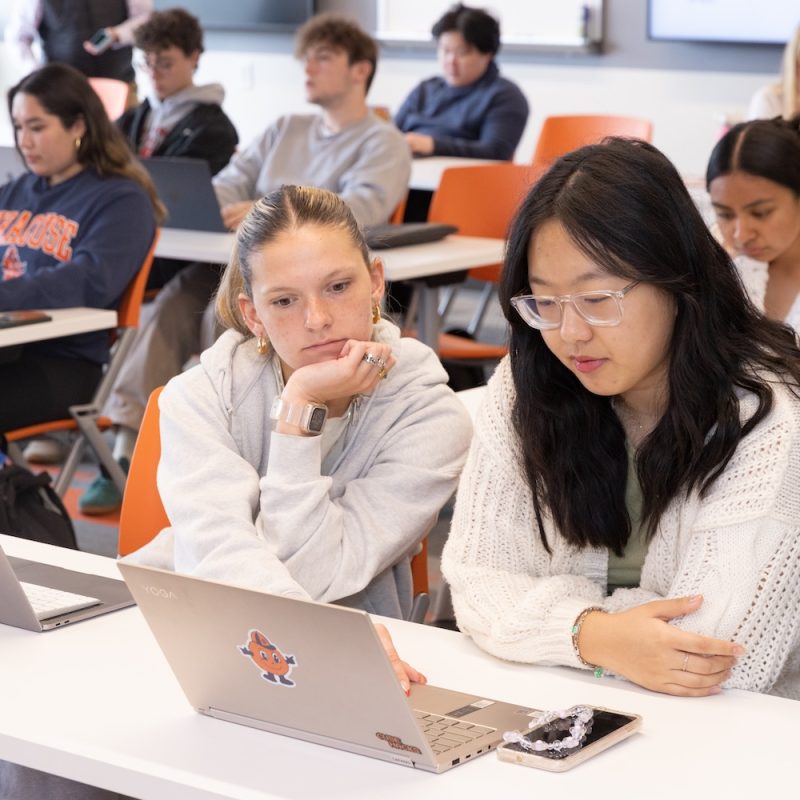
Kevin Crowston's Sloan-funded research examines whether generative AI tools help developers learn programming or prevent them from building essential coding skills through practice.
Engineering and computer science students are learning how to build the next generation of AI approaches that run responsibly, efficiently and ethically.
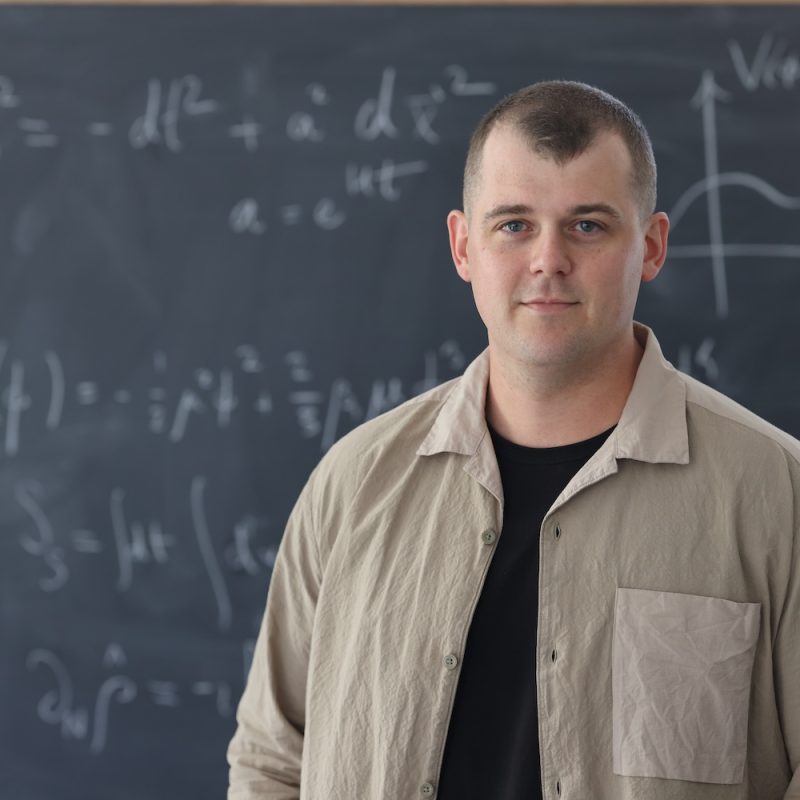
Eric Coughlin's groundbreaking research explores the feeding habits of super-massive black holes using a predictive model forecasting when a star will be shredded.
New research from scientists at Syracuse University and the University of Auckland highlights the connections between climate, tectonics and human evolution.
University chemists are testing a novel method of using sound waves to activate chemotherapy drugs precisely where they're needed while sparing healthy cells.
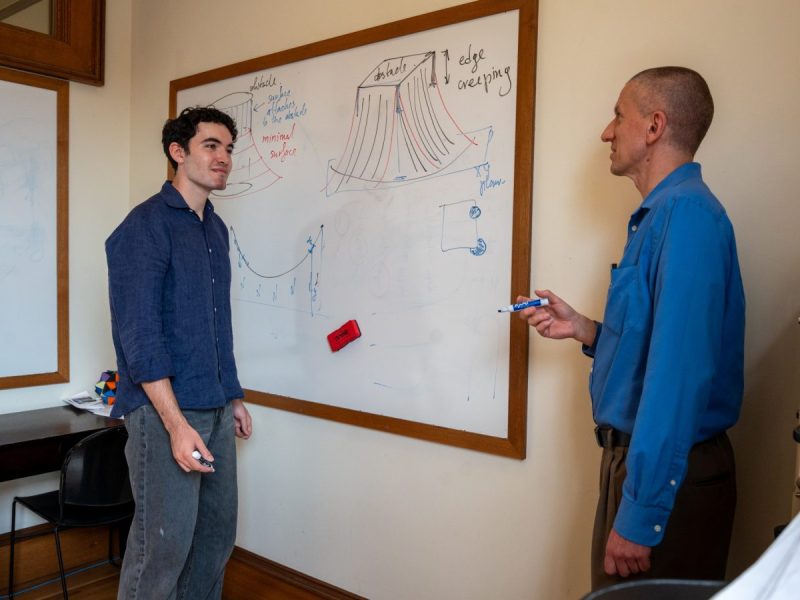
Yuming Jiang ’25 turns undergraduate math-based research into a published physics breakthrough that could transform how scientists predict drug-protein interactions.
The achievement by Zhao Qin and Reza Zafarani underscores the widespread impact and scholarly importance of their research across the global scientific community.
The Electrical Engineering and Computer Science professor will address metacognitive artificial intelligence at the Singapore conference in January 2026.
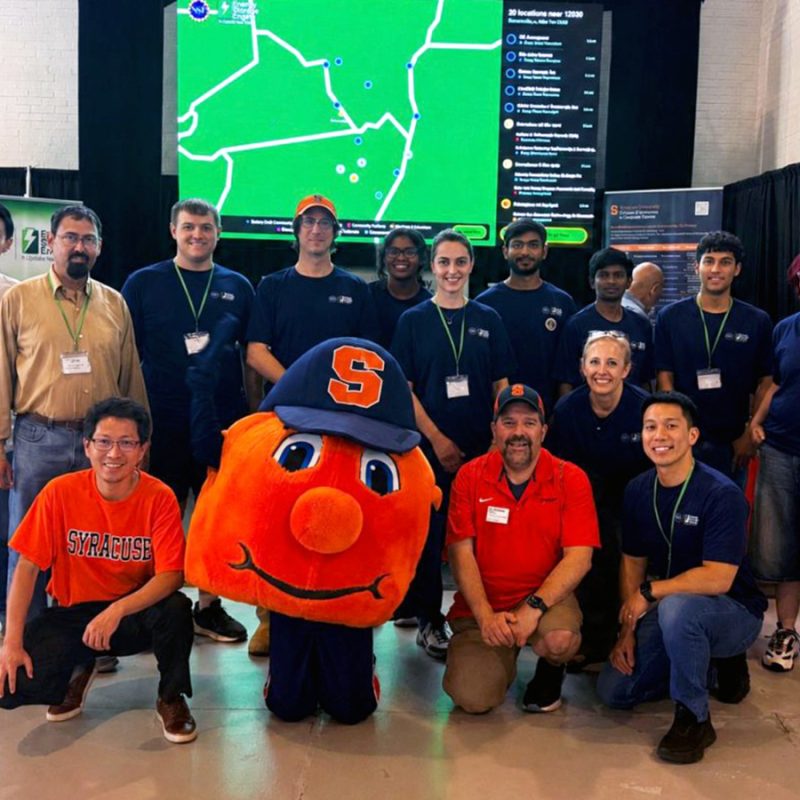
Two Syracuse Center of Excellence in Environmental and Energy Systems startups received $7,500 for research and development projects through the Innovation Fund pitch competition.
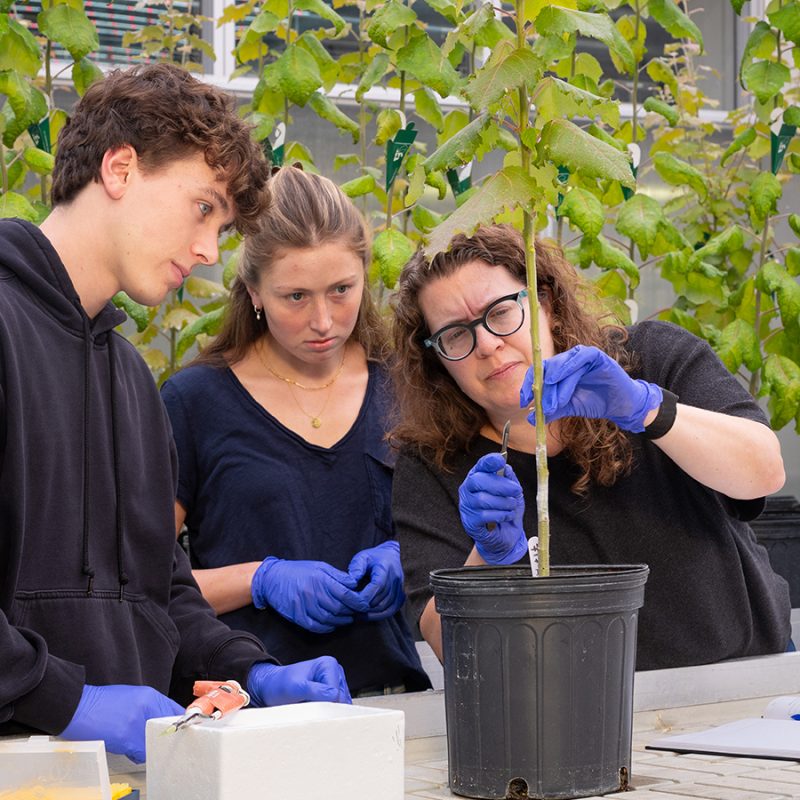
Revealing the chemical rules behind how some drying out proteins return to function when water is re-introduced could lead to longer-lasting medicines and drought resistant