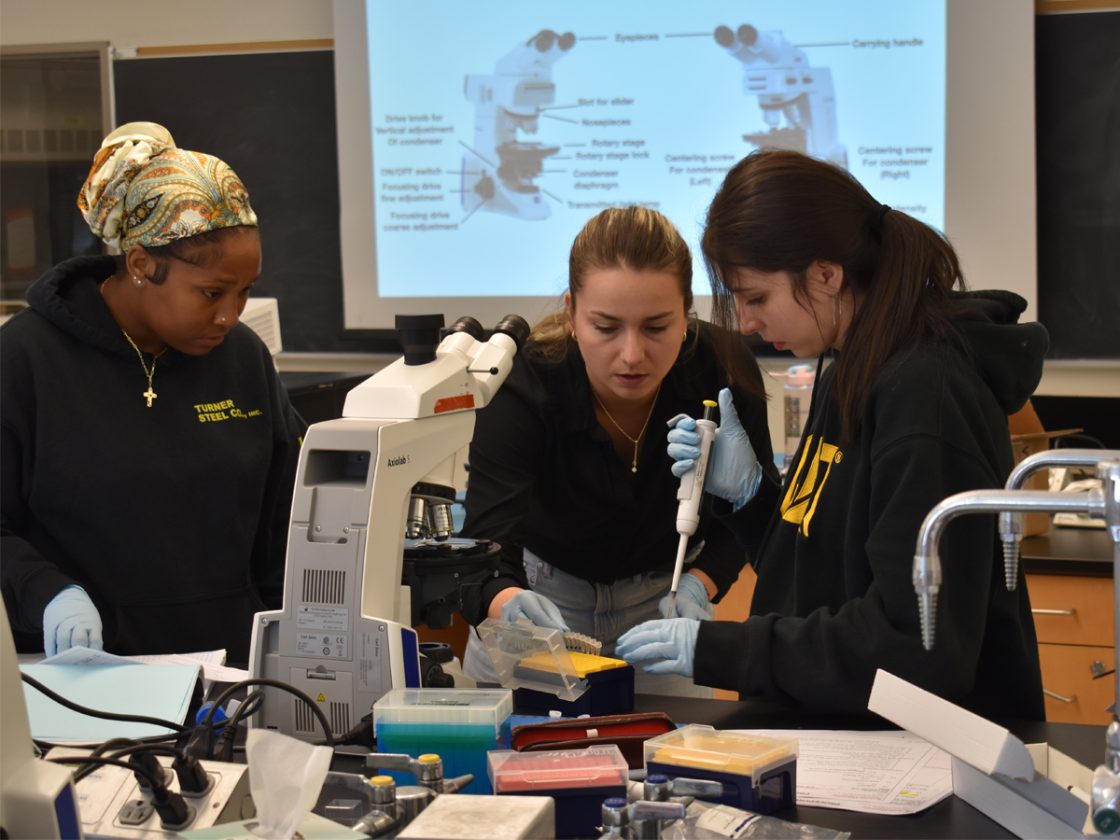
Professor Natalie Novotna helps advanced lab students prepare cheek swab samples for counting cells with a hemocytometer.
Hands-On Training Prepares Forensic Science Graduates for Dream Careers
Joelle Provino G’25 and Lilah Effron G’26 are in their first forensic science jobs, and they’re already doing work that matters to their communities and is meaningful to them.
Provino is living her “dream job” as a firearms examiner with the Onondaga County Center for Forensic Sciences. Effron, a medicolegal death investigator (MDI) trainee with the Bergen County (New Jersey) Medical Examiner’s Office, is building a career around helping grieving families find answers.
They both credit the classroom instruction—featuring accomplished faculty who are current and former practitioners in the field—and hands-on, immersive internship opportunities afforded to them as graduates of the forensic science master’s program in the College of Arts and Sciences.
“As graduate students, we were doing everything that you will be doing in the field once you graduate,” Provino says. “It’s such a great, hands-on experience that you can’t get anywhere else. I left feeling prepared and confident heading into the job.”
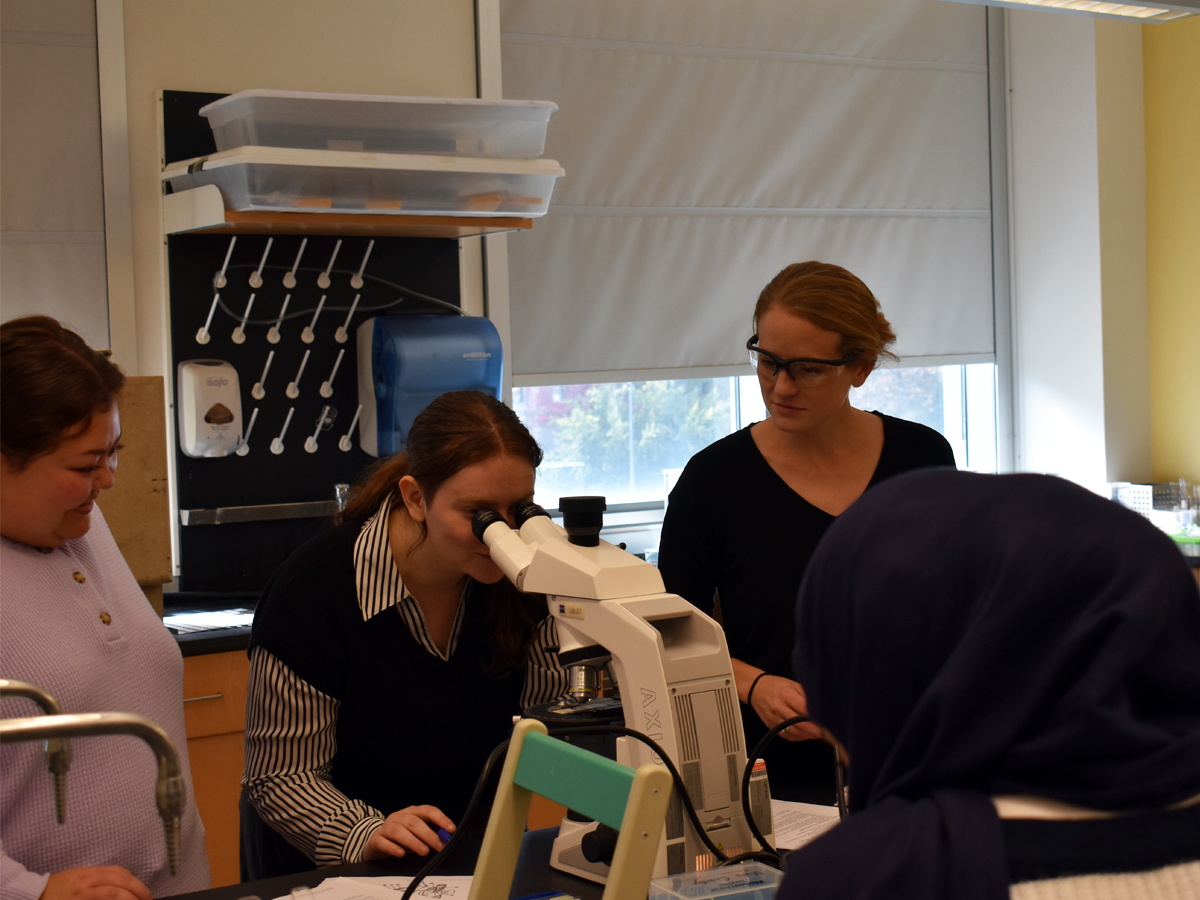
“I fell in love with forensic pathology and MDI during my second semester at Syracuse,” Effron says. “After those classes, I knew I wanted to become a medical legal death investigator, and Syracuse University provided me with the training and the confidence to start this career.”
From Neuroscience to Firearms
Provino knew when she finished high school that she wanted to pursue forensic science.
“Forensic science to me isn’t about putting criminals behind bars; it’s about making sure the right people are behind bars and that no wrongful convictions happen with the science available to us,” Provino says.
She earned a neuroscience degree at Binghamton University, then after spending a semester at another institution deciding between crime scene and lab work, looked into Syracuse’s program. Provino wound up transferring in because of “how many courses Syracuse had for firearms and fingerprints, whatever route I ended up choosing.”
She earned a master’s degree in forensic science and a certificate of advanced study in firearm and tool mark examination.
Provino had never handled a firearm until her first firearms examination course with Matt Kurimsky, now her coworker. In her favorite course, students acquired test shots and examined the cartridge cases under comparison microscopes.
“This is when I was like, ‘I can’t see myself doing anything else,’” she says.
In those courses, students compiled notebooks and binders documenting comparisons of best-known matches and non-matches, with microscope photographs, worksheets on class characteristics and labeled photos of every disassembled part.
Provino is now in a training program, and she still refers to those binders for guidance.
“I have them all in my office, and I remember seeing this in class,” she says. “It helps me become a stronger examiner since I already have that good base.”
Committed to Serving Families
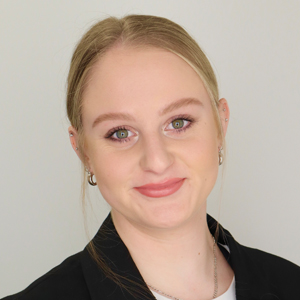
Effron started as a biology major at Long Island University, planning to become a medical examiner, before switching to forensic science. At Syracuse, she earned a master’s degree in forensic science and a certificate of advanced study in medicolegal death investigation.
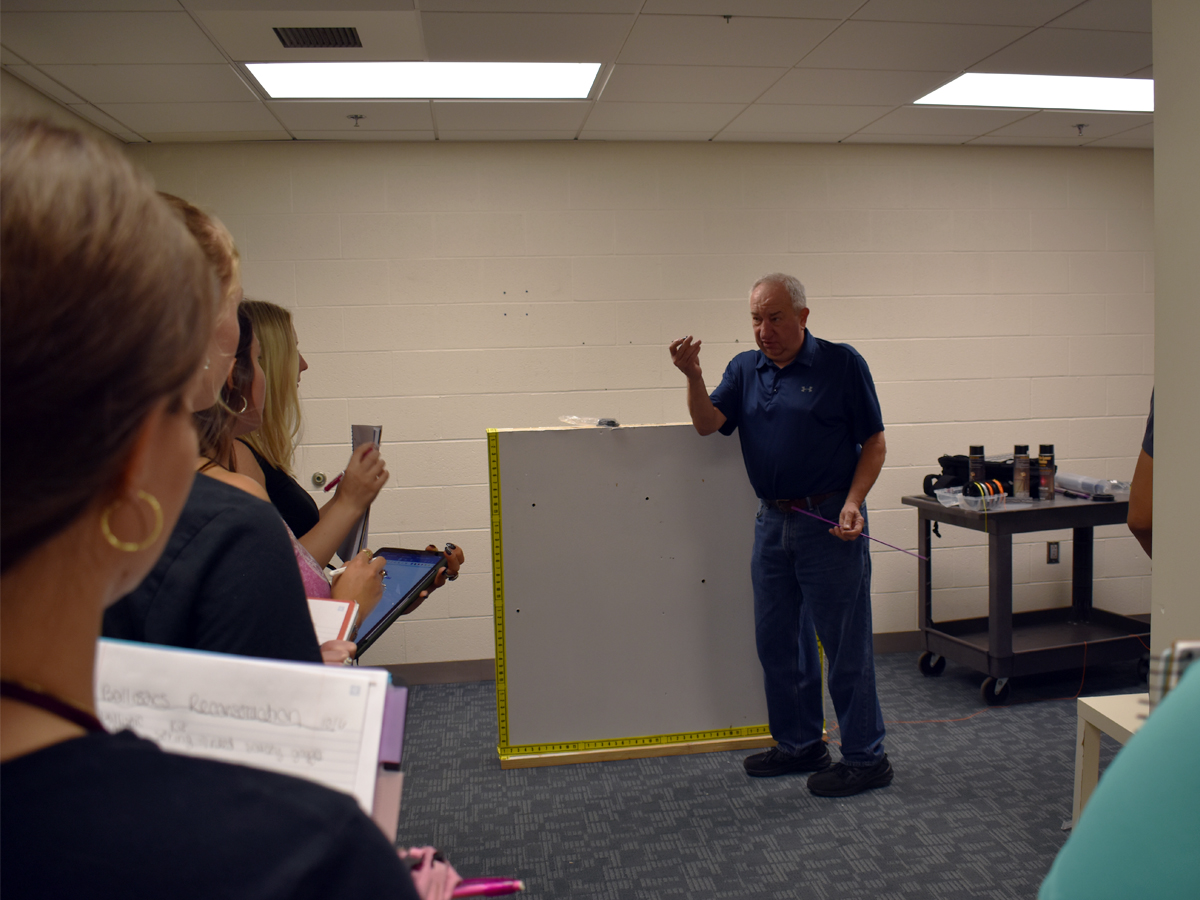
In her second semester, she took forensic pathology and medicolegal death investigation, both taught by Brian Ehret, chief forensic investigator for Onondaga County. Ehret brought in medical examiners from his office to lecture and answer questions. The MDI course showed her the human side of the work.
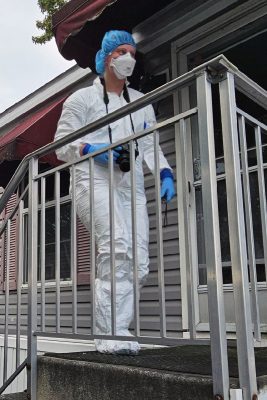
“What I didn’t realize until I took MDI was that you’re serving families in this role,” Effron says. “As much as I am an investigator, I’m also an early crisis grief counselor.”
Medicolegal death investigators help determine whether a death falls under the medical examiner’s jurisdiction.
“I like to explain to families that we are the eyes and the ears of the medical examiner,” she says. “I’m an investigator, but I’m not investigating crimes. We need to be there for these families and help give them answers during such a painful time.”
Students also wrote reports on mock scenes, with board-certified investigators reviewing and revising their work.
“That was a big deal, honestly, for me to pretty much be doing the job without doing the job,” Effron says.
Real-World Lessons From Accomplished Faculty Members
Students like Provino and Effron benefit from learning from well-rounded faculty who bring years of relevant professional experience.
Faculty serve on numerous state and national boards, including the New York State Commission on Forensic Science, Virginia’s Forensic Science Advisory Board and forensic science committees with the National Institute of Standards and Technology.
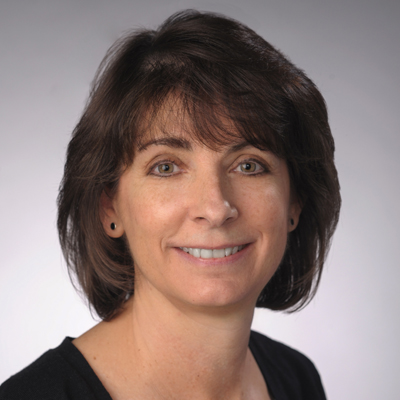
“Our degree allows students to concentrate in their area of interest, gaining that depth of knowledge in their field from our faculty that helps them stand out when it comes to job placement,” says forensics executive director Kathy Corrado. “The program has put nearly 500 students directly into the field.”
Internships play a big role in setting students up for career success after graduating. Recently, master’s students interned with the New York State Forensic Investigation Center, the New York City Office of the Chief Medical Examiner, the FBI, the Drug Enforcement Administration, Homeland Security Investigations and the Onondaga County Center for Forensic Sciences, among others.
Corrado says police agencies, crime laboratories and medical examiner’s offices looking to fill open positions are always interested in speaking with Syracuse graduates because they know “our students have been taught the newest technologies and trends in the field, as well as quality assurance practices and professional ethics.”
“There’s a great job market for people who have the right training in these fields,” she says. “Graduates leave with really strong hands-on skills, and I think employers recognize that.”