Haley Greene ’26 Launches Free App to Expand Eating Disorder Care
Growing up in Los Angeles, Haley Greene ’26 saw friends and family members struggle with eating disorders and watched the emotional and financial toll those illnesses took on patients and the people closest to them.
Once on the Syracuse University campus, she decided to do something about it and found the entrepreneurial resources on campus to help build her idea.
After consulting with clinicians along with patients in recovery and their parents, Greene developed Miirror, a predominantly free, clinically guided, eating disorder-specific digital platform to fill the gaps in the healthcare system.
“I built Miirror because I refused to watch people keep disappearing into a system that had no room for them,” says Greene, who earned an advertising degree from the S.I. Newhouse School of Public Communications. “There is no platform built specifically for eating disorders and around eating disorder recovery that works. This is the gap I am trying to fill, and every single day I wake up knowing exactly why this matters.”
Miirror offers inclusive and stigma-free tools, support circles, crisis resources and therapy matching, providing a safe space for those in recovery. The app is available on the App Store by searching “Miirror: Recovery Support.”
“I grew up wishing I could create a support system for the people I knew who had eating disorders instead of feeling like there was nothing I could do to help, so this is my way of helping people,” says Greene, who serves as Miirror’s chief executive officer and founder.
Creating Real Connections
The platform combines product development with clinical collaboration to reduce stigmas, address gaps in the healthcare system and create technology that meets patients where they are.
“We want users to have real human connection built into their experience from day one,” says Greene, who credits the LaunchPad at Syracuse University Libraries, the Couri Hatchery Incubator in the Martin J. Whitman School of Management and the Startup Garage in the Newhouse School with developing her entrepreneurial skills.
Greene says Miirror was used in a pilot program with an eating disorder clinic for clinical validation before being released to the public.
Among the app’s primary goals and features:
- a therapeutic toolbox with more than 20 evidence-based techniques users can access anytime, anywhere
- a clinician dashboard that lets providers monitor patients between sessions, “closing a gap that the current healthcare system doesn’t address,” Greene says.
- a patterns page that tracks a user’s progress over time, creating a recovery process that feels personal and measurable
- a peer mentorship component to reduce the isolation and loneliness patients often experience
Baseline features are free, while users seeking a more personalized experience can purchase premium upgrades.
For University students seeking help with an eating disorder, please visit the Barnes Center at The Arch for more information about the available treatments and support services offered through the Eating Disorder Treatment Team.
Collaborative Spirit Fuels Team Success
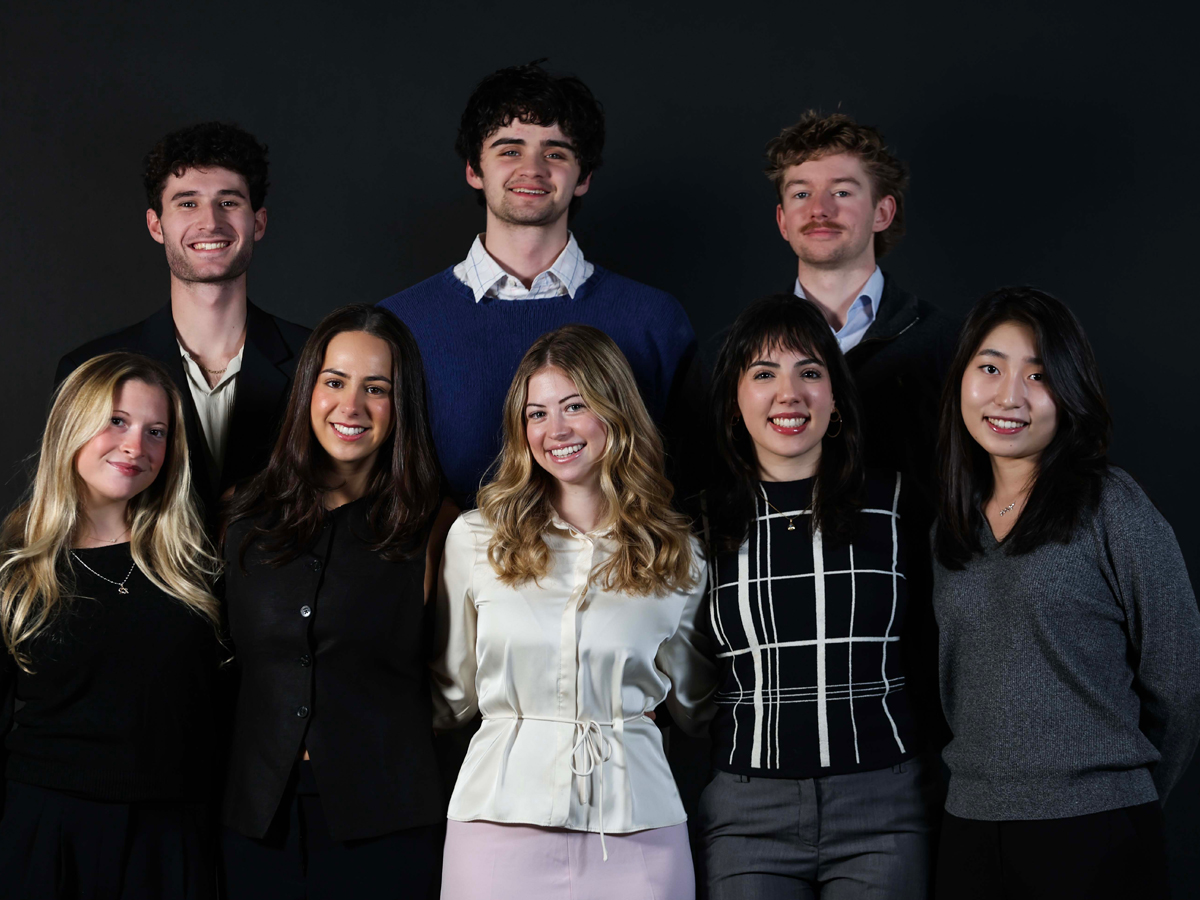
Running Miirror is a full-time job for Greene and her nine team members, all full-time students balancing classes, coursework and company responsibilities.
The platform features a research department, a branding department and a development team, and Greene meets weekly with each of the department heads to reflect on successes and share research updates.
“It’s not easy being part of a student-run startup company, but what has helped is creating that sense of community on the team,” says Greene, who organizes team building activities like a Miirror Friendsgiving where colleagues can laugh and bond with each other.
Greene has also assembled a team of medical clinicians who ensure all platform resources are evidence-based, so users can trust them in their recovery.
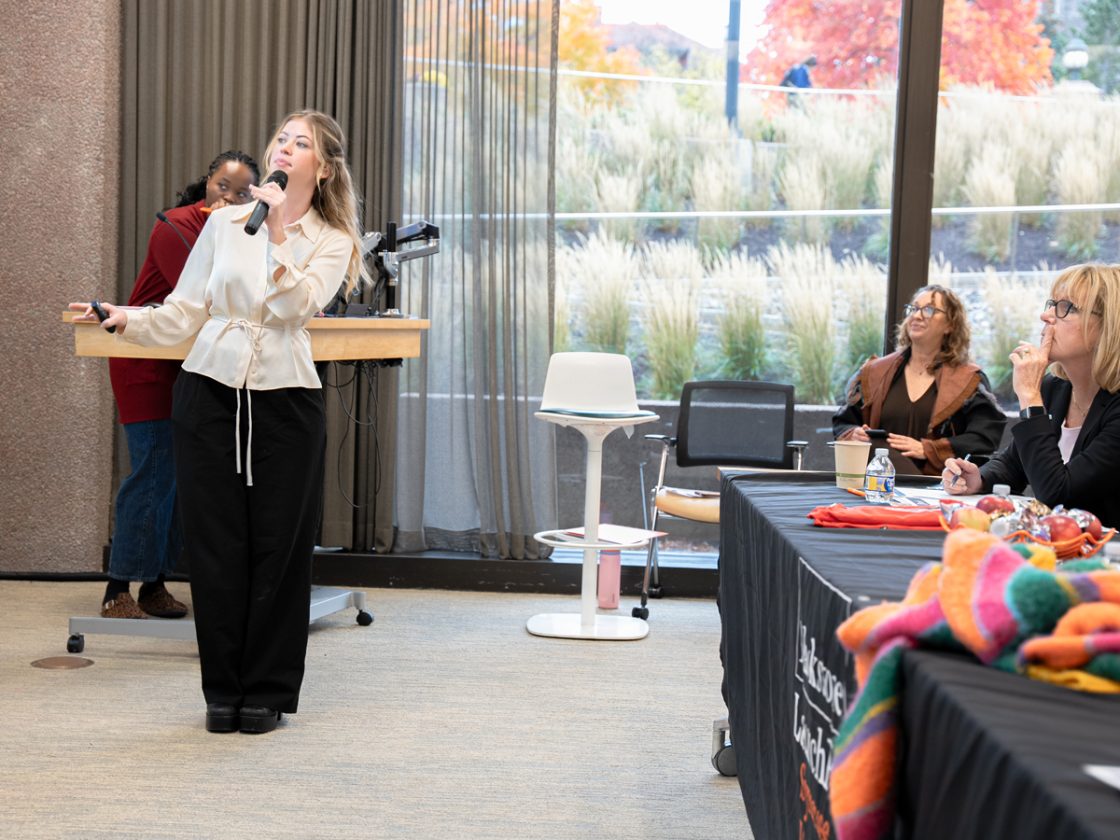
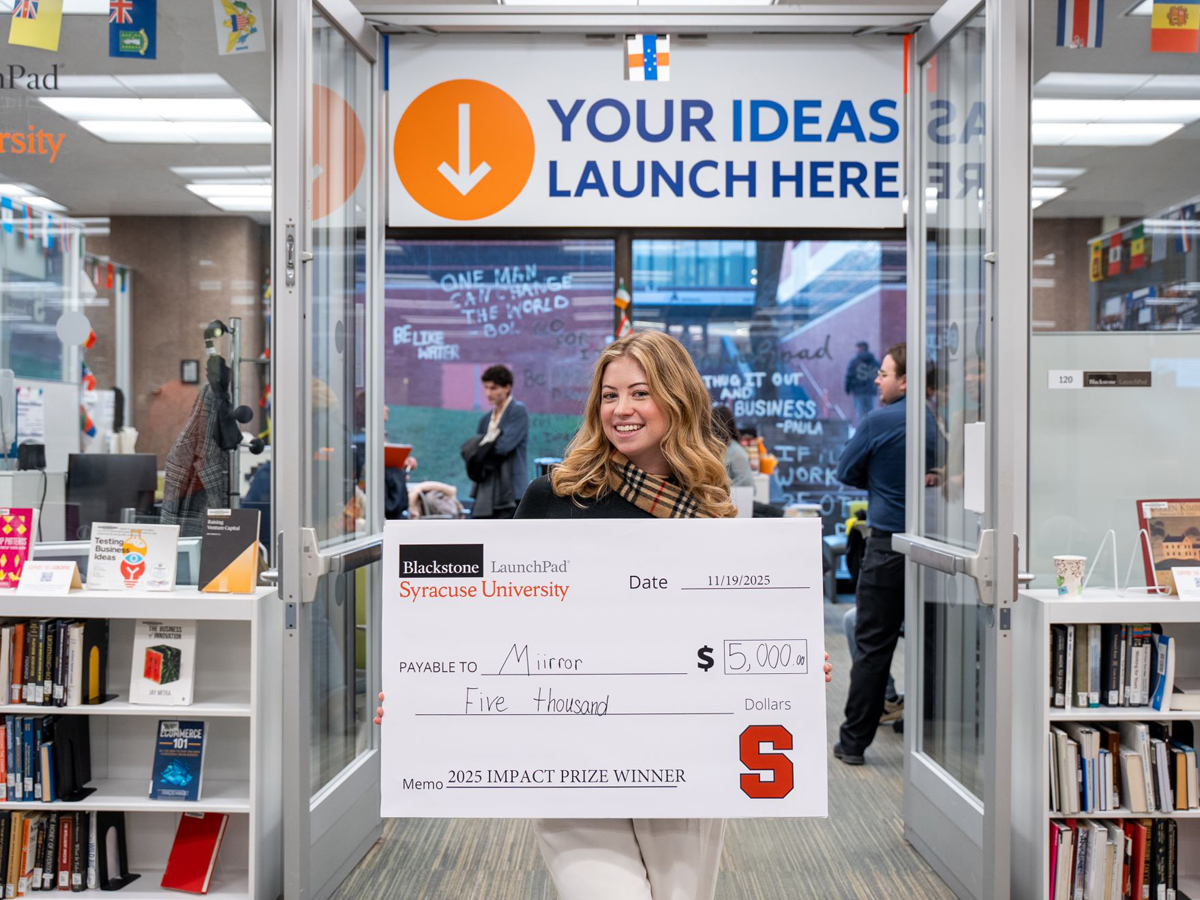
To date, Miirror has won more than $21,000 in grant money at business competitions, including a first-place finish in the health and wellness category at the New York Business Plan Regional competition.
“Building something meaningful means nothing without the right people behind it. Everyone on this team brings something irreplaceable, and I truly couldn’t do this without them,” Greene says.
Her team includes Jacob Kaplan ’28 (front-end app developer, School of Information Studies (iSchool)), Shahaan Khan ’26 (cloud infrastructure architect, iSchool), Danielle Ofir ’26 (human resources director, College of Arts and Sciences), Reese Yoon ’26 (research analyst, College of Arts and Sciences and iSchool), Bri Gordon ’28 (research analyst, College of Arts and Sciences), Meghan Hoffman (user experience/user interface product designer, University of Michigan), Cole Meredith ’26 (head of branding, Newhouse School), Fernanda Kligerman ’26 (brand and digital designer, College of Visual and Performing Arts) and Martin Beredo ’26 (social media manager, Newhouse School).