New Federal Grant Funds Specialized Training in Health and Aging Research
A new grant recently awarded to two faculty members by the National Institutes of Health (NIH) underlines Syracuse University’s national reputation in public policy, population health and aging research.
The $1.3 million Ruth L. Kirschstein National Research Service Award, a training grant awarded to Maxwell School of Citizenship and Public Affairs professors Shannon Monnat and Emily Wiemers, provides support to outstanding doctoral students who will lead the next generation of population health science on how policies and place-level factors shape the health and well-being of U.S. midlife and older adults. Their work will help tackle two troubling national trends: a decline in the health and longevity of U.S. midlife and older adults, along with large and increasing geographic differences in those populations’ health and longevity.
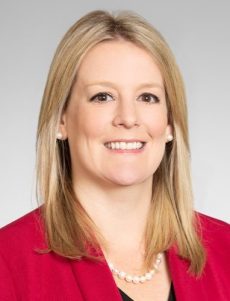
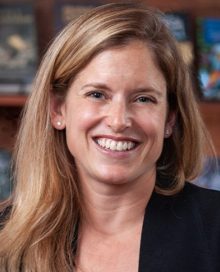
“This grant signifies that Syracuse University and the Maxwell School are on the map nationally for policy, population health and aging research as the national scientific community responds to declining health and longevity among U.S. midlife and older adults and a growing geographic divide in life expectancy,” says Monnat, who is a professor of sociology, Lerner Chair in Public Health Promotion and Population Health and director of the Center for Policy Research. Wiemers is Maxwell Dean Professor of Aging, Demography and Public Policy and director of the Center for Aging and Policy Studies.
The award, implemented through the NIH’s National Institute on Aging, funds doctoral students in economics, public administration and sociology (in the Maxwell School) and human development and family science (in the College of Arts and Sciences), and supports specialized training to study why residents of some American communities are experiencing poor health and dying years ahead of others.
The Maxwell School is augmenting the grant funds with additional support for the scholars.
Multi-Disciplinary Model
In a multi-layered, multi-disciplinary model, the students conduct mentored research with a home-department faculty member. They are also paired with faculty from disciplines across the University known for shaping national conversations about health policy. Those faculty will serve as secondary mentors. Biweekly, cross-disciplinary lab sessions, research seminars, data and methods workshops and research working groups, as well as cross-disciplinary professional networking events, enhance the learning environment.
“What’s great is that this structure pulls together doctoral students, postdoctoral scholars and faculty from across departments, creating a more connected multidisciplinary research community studying issues of crucial importance for the health of midlife and older Americans,” Wiemers says.
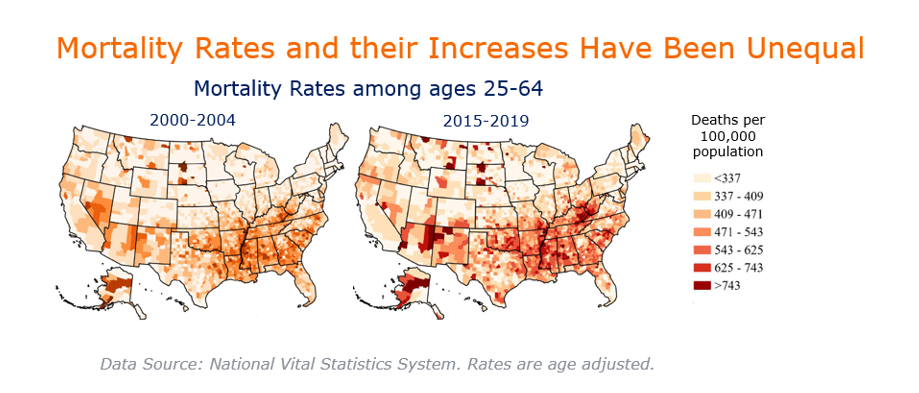
The researchers’ shared goal is to prepare the next generation of scholars to study how the policies that are adopted and the places where people live shape how Americans age, then translate that evidence for the people who make health policy decisions, Monnat and Wiemers say.
Who’s Eligible, How to Apply
Applicants accepted to those four Ph.D. programs, having a strong academic record, outstanding research skills and methods preparation and demonstrated interest in population health and aging, and who are a good fit with program mentors, are welcome to apply.
Application requirements vary by department and according to two different entry tracks. More information is available on the program webpage.