Alumna Shows Students How Far a Nutrition Degree Can Go
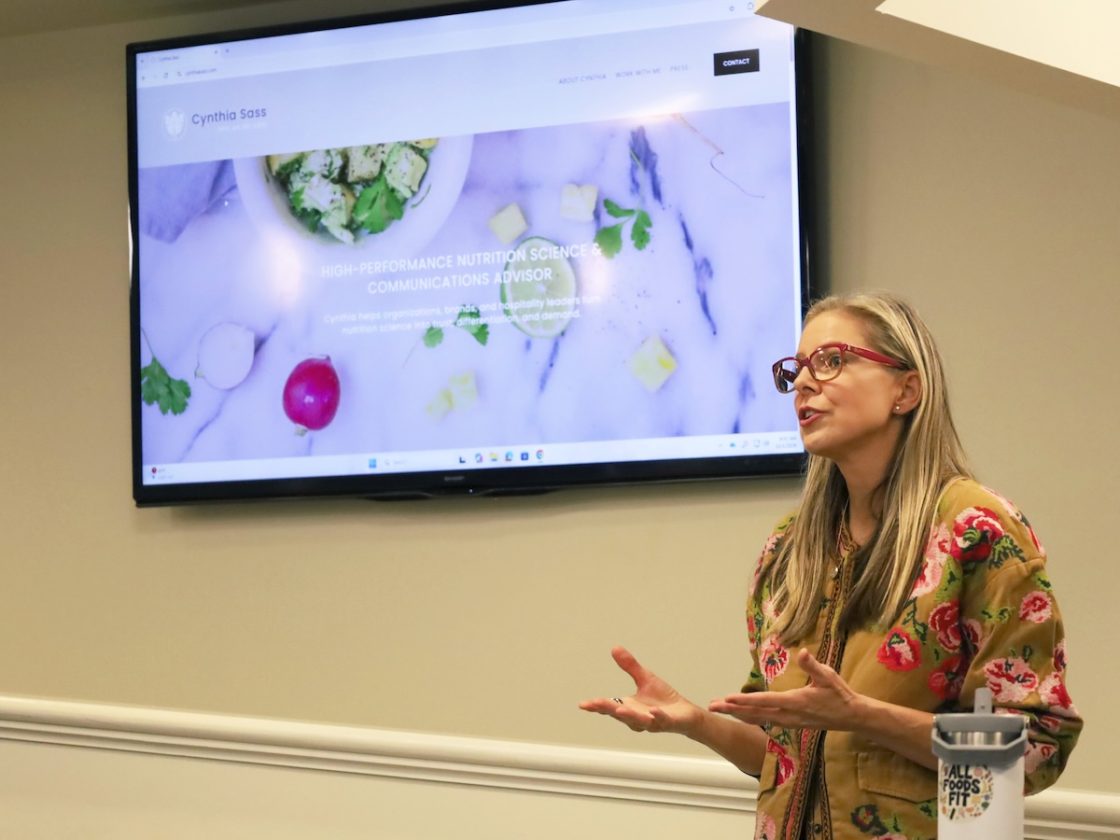
When Cynthia Sass studied nutrition at Syracuse University, the athletic department had no sports dietitian. Returning this semester to campus as a guest of the Falk College of Sport, where the nutrition program is now housed, she found dietitians supporting Syracuse University Athletics, underscoring the growth of the nutrition field beyond the traditional health care setting.
Sass, a Syracuse native, earned a bachelor’s and master’s degrees at the University and went on to become a registered dietitian and a board-certified specialist in sports dietetics. She has consulted for seven professional teams, including the New York Yankees and the New York Rangers. She has advised Fortune 500 executives, written for national publications, appeared on network television and consulted for corporate wellness programs and well-known brands.
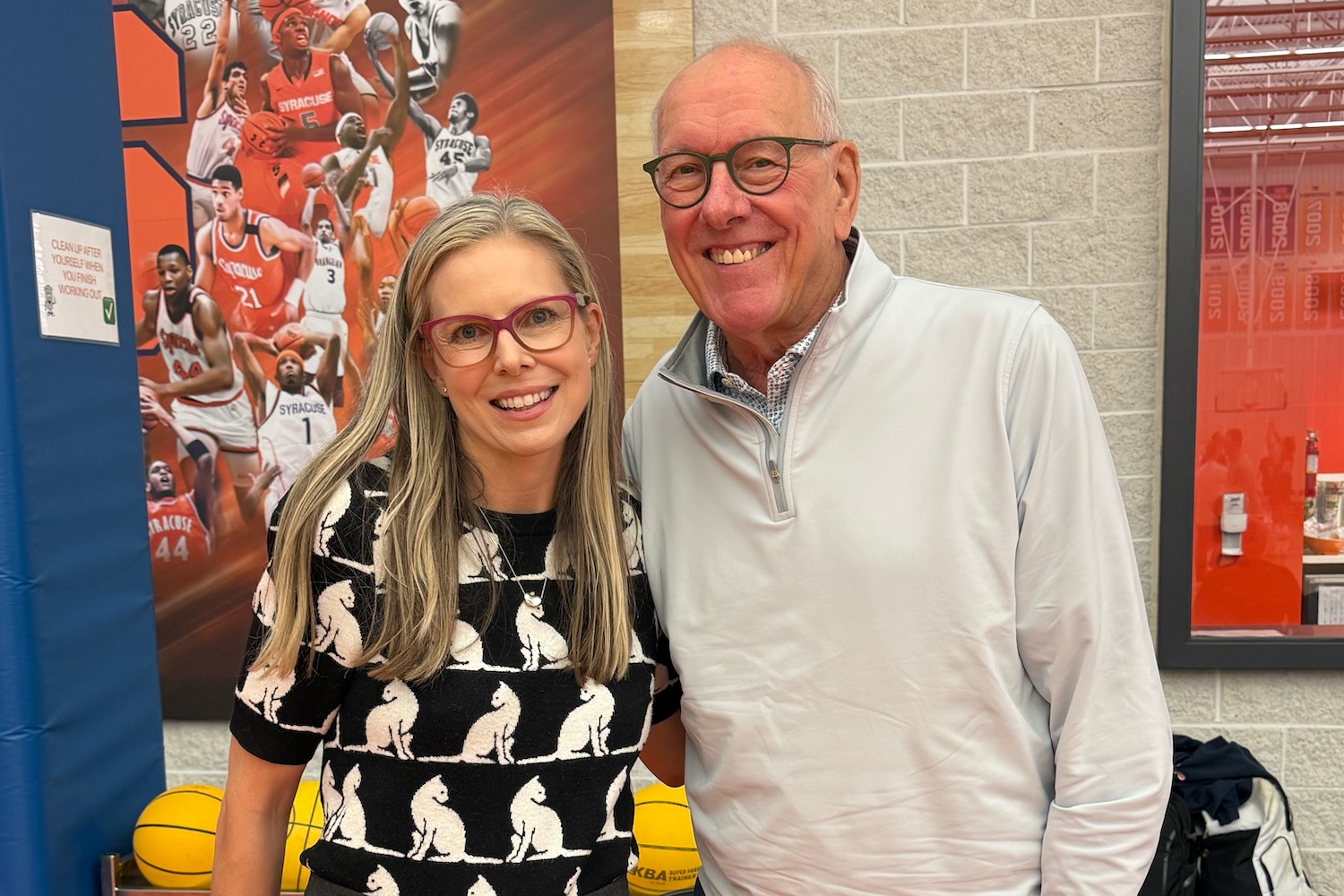
She credits the range in her career to the education she received, particularly her professor and mentor Sarah “Sally” Short, who joined the University in 1966. Short taught an estimated 55,000 students before retiring in 2016, and she was a respected researcher in sports nutrition. She passed away in 2024 at the age of 99.
“She was a pioneer in sports nutrition as well as in media,” Sass says. “If it wasn’t for her, I probably would not have done many of the things I’ve done in my career.”
Sass now offers that same encouragement to students.
“There are so many things you can do with that degree and credential,” she says, naming professional sports, private practice, public relations, media, product development and corporate wellness, adding that no choice is permanent. “You’re not stuck. Everybody eats, so everybody is touched by nutrition in some way.”
Students took the message to heart. Alexandra Laduca, a first-year student in the Nutrition Science master’s program, plans to become a registered dietitian and a certified specialist in sports dietetics, with a goal of working in collegiate or professional sports.
Hearing Sass describe marketing, journalism and product development “piqued [her] interest because [she] hadn’t considered using [her] future credentials in those ways,” she says.
Caroline Thaxton plans to attend law school and pursue nutrition policy. She was inspired by Sass’s belief that dietitians belong in all types of professional spaces, beyond the traditional health care setting.
“It highlighted how nutrition and lifestyle can have an impact far beyond individual health, influencing public health, the food industry and society as a whole… and it showed me that a nutrition background can open the door to many different career paths,” Thaxton says.
The agenda during Sass’s campus visit highlights her far-reaching experience. She observed and spoke with students in NSD 222: Introduction to Culinary Arts and NSD 216: Food Service Operations, which are taught in the Susan R. Klenk Learning Café and Kitchens, a full-scale commercial kitchen and experimental food lab; she toured the John A. Lally Athletics Complex and met with Julia Zalewski, director of football performance nutrition, and Alyson Onyon, director of performance nutrition; she spoke with the University’s women’s rowing and field hockey teams; and she visited the University’s Wellness Initiative, a campuswide program that encourages staff and faculty members to lead mindful, balanced lives.
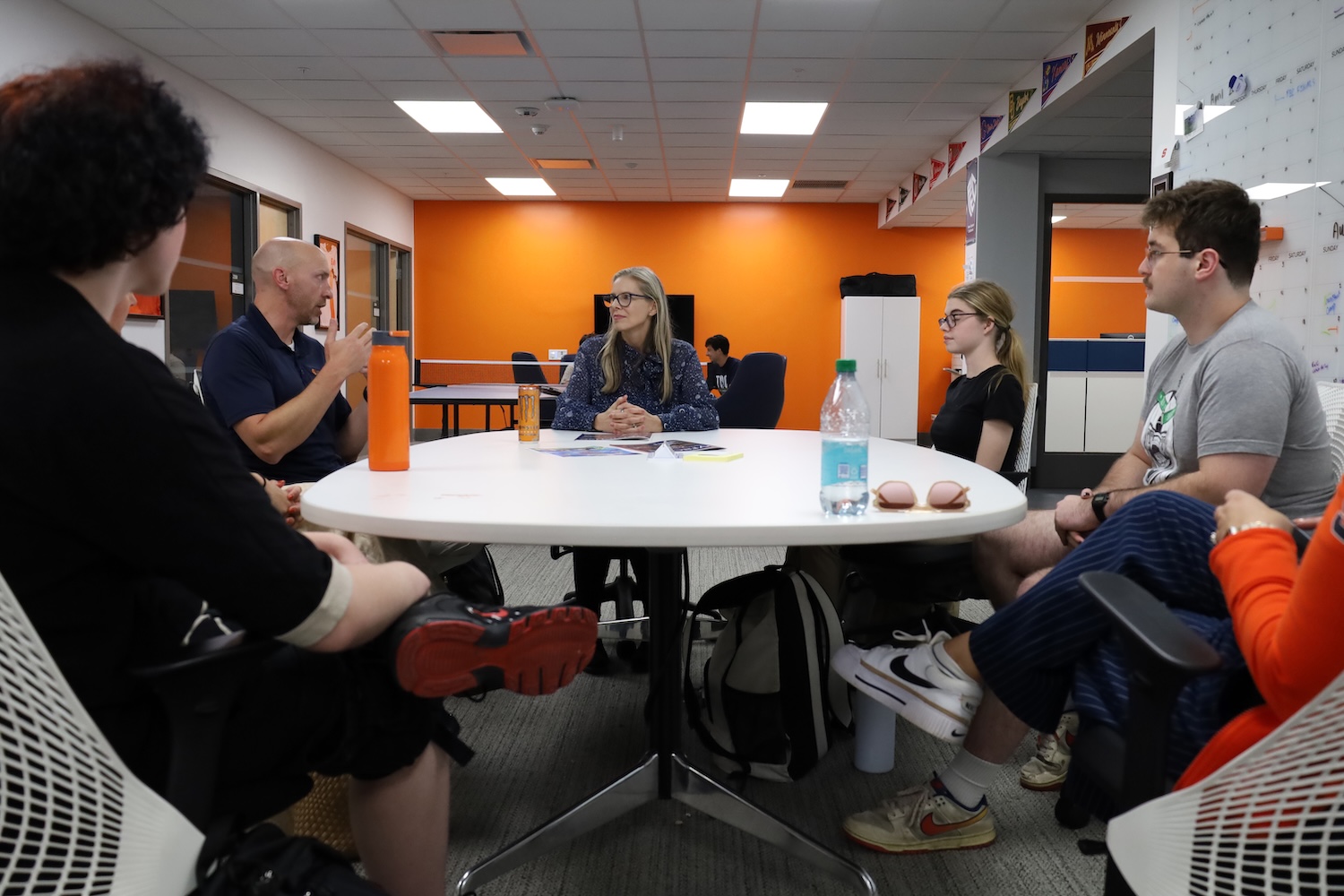
Her visit also included a session with students involved in gaming and esports on campus to get an idea of how they approach nutrition, sleep and other factors that influence performance. Through her work as a consultant, she’s counseled a variety of clients, including esports athletes and skateboarders.
“When it comes to something like esports, a lot of the same core performance nutrition principles apply, but just in a different way,” Sass says. “Whether esports, basketball, football, it’s about not only physical performance but mental performance. Things like sleep, mood, immune support, the sustainability of energy, mental and physical endurance.”
The diverse range of career paths in the nutrition field is reflected in the built-in flexibility of Falk College’s offerings. Students receive authentic, real-world experience in culinary labs, join faculty-led research and travel with classes to places like Italy and India. Many nutrition students work directly with Syracuse University Athletics and club sports, providing support for athletes. The Didactic Program in Dietetics is accredited by the Accreditation Council for Education in Nutrition and Dietetics.
At the start of the 2026-27 academic school year, Falk College brought together its nutrition and exercise science programs under one department, the Department of Human Performance, creating opportunities for greater collaboration across complementary disciplines, and reaffirming Falk College’s holistic approach to sport education.
Beginning in fall 2026, Falk College launched a new Applied Nutrition track within the Nutrition B.S. program that adds another pathway, specifically designed for students pursuing sport nutrition, graduate study or health professions beyond the RDN credential.
“Whether a student sees themselves on the sidelines of a championship game or in a hospital consulting with patients,” says Jason DeFreitas, chair of the Department of Human Performance, “This program gives them the foundation to get there.”