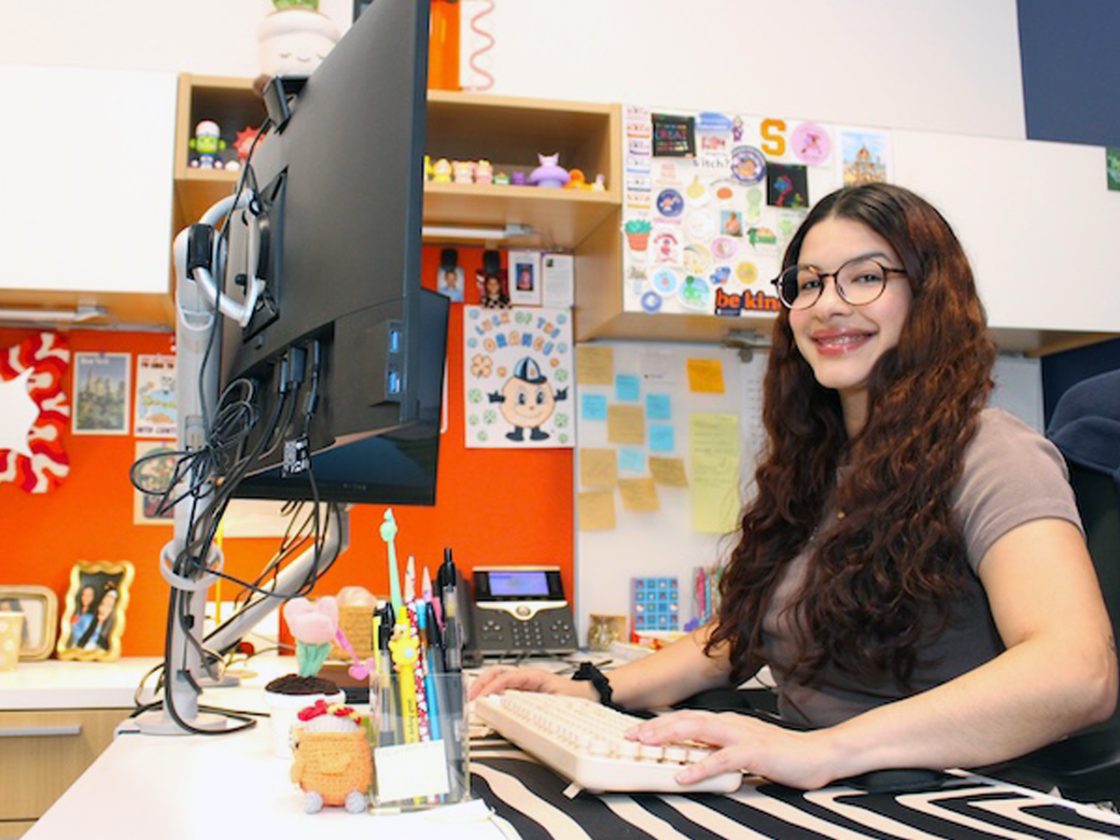
Aaliyah Muolo Vergara is pursuing a master's of social work degree on the advanced clinical practice track.
Challenges Become Purpose in the Social Work Program
Aaliyah Muolo Vergara’s interest in mental health first took root in high school, when she started taking courses that introduced her to concepts in psychology, sociology and human development. The new perspective these disciplines provided was revelatory.
“I grew up in a culture where we didn’t really talk about mental health. I’d always struggled, since childhood, with my emotions, but I didn’t have the language to express them,” she says. “Those courses were the start for me of realizing that there are tools out there that help. People don’t just have to figure it all out on their own.”
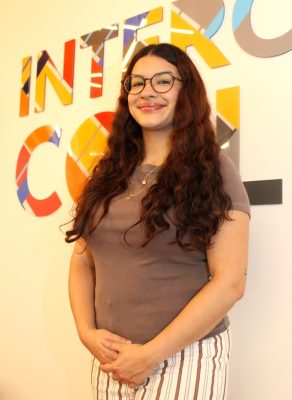
Muolo Vergara credits this early shift of perspective for setting her on the path that, eventually, led to her enrolling in the master’s degree in social work (M.S.W.) program through the School of Education. Inspired particularly by a belief in the transformative potential of mental health counseling, Vergara is pursuing the advanced clinical practice concentration within the M.S.W. curriculum.
This focus will allow her to serve as a therapist or counselor in a range of professional settings: “I want to help people, individuals and communities,” Muolo Vergara says. “There are so many people who struggle through dark times because they don’t have access to the support or resources that could help them. I want to be part of making those resources available.”
Taking a Holistic View
Many of those drawn to the field of social work share an ethic similar to Muolo Vergara’s, says Jennifer Cornish Genovese G’83, G’13, an associate teaching professor and graduate M.S.W. director. Turning challenges that they have experienced or witnessed into insight and motivation, such students are committed to using their education and degree to help others.
Social work provides a powerful platform for putting such a commitment into practice because it takes a holistic view of the health of individuals and communities, Genovese says. “In our work, we see a person as an individual and as part of their larger family systems and cultural contexts,” she says. “Social work takes a whole-person perspective; we see the whole network.”
The largest percentage of practicing therapists in the U.S. are social workers, Genovese says, but the versatile training of a master’s in social work prepares students for work at many registers and in many sectors of society.
“An M.S.W. opens doors to working with groups and communities, and to serving in educational, administrative and leadership roles as well as working in one-on-one and clinical settings,” Genovese says. “The program provides an overview of interrelated areas, and the degree is a ticket to more, and continuing, learning in a wide range of further specializations.”
Service to Community
Genovese says that one of the most important things social work students learn is how to navigate emotionally difficult situations, so they’re able to help others through their hardships without being overwhelmed themselves.
In recent years, Muolo Vergara has had many opportunities to cultivate her capacities for navigating challenging experiences. And many of these, she says, have also been crucial in helping her discover her path and sense of purpose.
For example, shortly after graduating with bachelor’s degrees in psychology and sociology, Muolo Vergara was in a serious car accident and rendered immobile. It took her nearly a year to regain the ability to walk.
“For someone who has always been very independent, this was a very difficult time for me,” she says. But it was during her recovery that she saw an opening to support disability culture programming as part of the University’s Intercultural Collective. “I recognized that my experiences—not only with the disabling aspects of mental health challenges but also as someone living with a temporary physical disability—were sources of insight that I could draw on to help me serve in this position,” Muolo Vergara says.
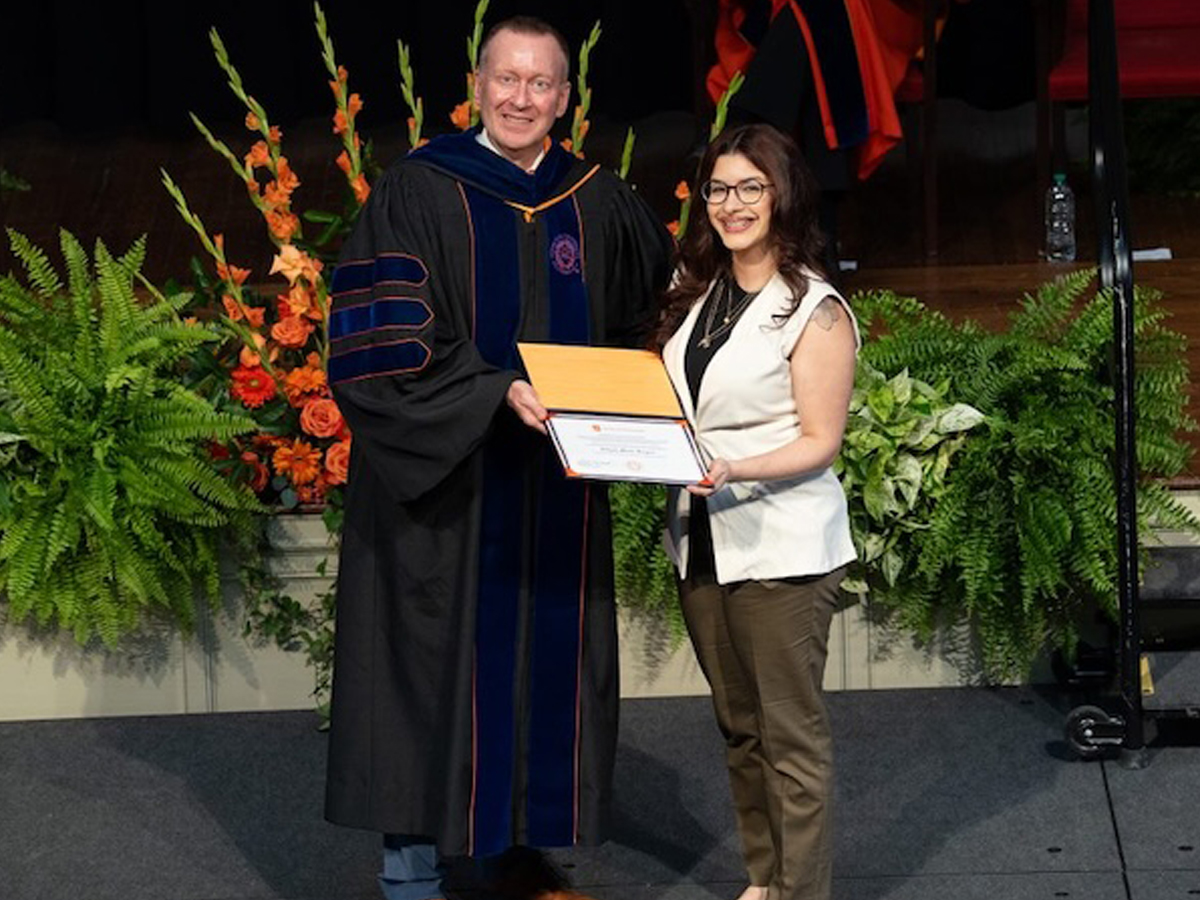
Indeed, as a staff member at the Intercultural Collective, Muolo Vergara has thrived. She has taken on roles with increased responsibility, and in spring 2026, Vergara was awarded the prestigious Chancellor’s Citation for Excellence for Outstanding Contributions to the Student Experience and University Initiatives.
Story by Sarah H. Griffin