Syracuse University Art Museum Names 4 Faculty Fellows for 2026-27
Four faculty members have been named Syracuse University Art Museum Faculty Fellows for the 2026-27 academic year. Now in its fifth year, the program pairs faculty with museum curators and staff to build object-based teaching into courses across the University. The fellows integrate the museum’s collection into their courses and ask students to consider how a photograph or a hand-thrown sake bottle offers its own kind of insight, much like a passage in a textbook.
The fellows this year come from four very different corners of the University including law, economics, music composition and geography, and each is putting the collection to a different use. Together, their projects show just how many doors the museum’s collection can open.
“This year’s cohort shows just how interdisciplinary the uses of the museum’s collection can be and the possibilities it holds for object-based teaching across wildly different, yet interconnected, fields,” says Emily Dittman, director of the Syracuse University Art Museum. “The same collection, in the hands of these faculty, provides opportunities for four completely different conversations. That is at the heart of this program: showing that the museum belongs to every discipline.”
The 2026-27 Faculty Fellows are:
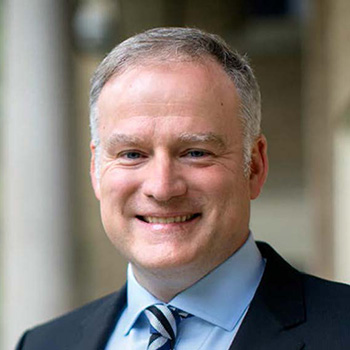
John Cawley, Daniel Patrick Moynihan Chair in Public Policy and professor of economics and public affairs in the Maxwell School of Citizenship and Public Affairs and the College of Arts and Sciences
Cawley will integrate the museum’s collection into his course, The Economics and Regulation of Risky Health Behaviors. This course uses the social science of economics to understand the causes and consequences of risky health behaviors such as poor diet, alcohol and drug abuse and smoking. He identified more than a dozen objects, ranging from tobacco advertising posters, Prohibition-era cartoons, photographs romanticizing alcohol and more, to engage students with the ideas presented in the course. Cawley says that the collection highlights the contrast between the marketing of these behaviors and their real-world consequences, arguing that tangible, visual evidence reaches students in ways readings alone can’t.
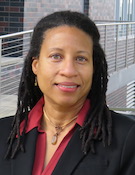
Kristen Barnes, professor of law and associate dean for faculty research, in the College of Law
This fall, Barnes will bring museum objects into her Housing Law course. She identified photographs and prints for her students to examine that touch on subjects including worker housing, environmental injustice and high-pollution sites located next to residential communities. During class visits to the museum, she will ask students to think about the interconnectedness of housing and climate.

Loren Loiacono, assistant professor of music theory and composition, in the Setnor School of Music, College of Visual and Performing Arts
As part of her course, Class Composition, Loiacono will ask her students to compose two different works in response to objects from the museum’s collection, building on historical examples like Feldman’s “Rothko Chapel” and Rachmaninoff’s “Isle of the Dead,” both inspired by visual art. Students will complete a short in-class response after an initial museum visit, then return independently to choose a work for a longer piece that will be performed at the end of the semester.
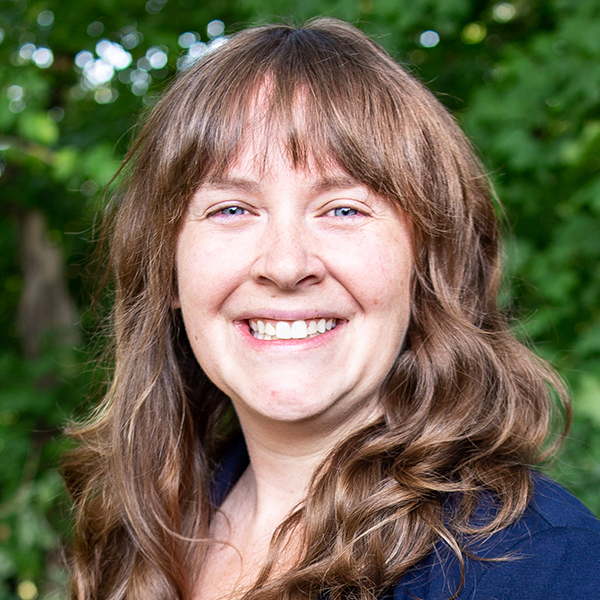
Meghan Kelly, assistant professor of geography and the environment, in the Maxwell School of Citizenship and Public Affairs and the College of Arts and Sciences
Kelly will bring object-based teaching to her course, Transformative Cartographies, a graduate seminar exploring feminist, decolonial and social-justice approaches to mapping. Students will spend the semester with weekly readings that will be paired with hands-on analysis of map-based objects, such as 1965 satirical map of global disease by Boris Artzybasheff. Kelly sees synergy between object-based teaching and geography and cartography, as the disciplines blend theoretical and hands-on training.