Expert Available to Discuss Arrest of Nicolás Maduro
A historian specializing in Latin America and the Caribbean, Gladys McCormick analyzes political violence, corruption and U.S.–regional relations shaping Venezuela’s crisis.
Reporters looking for an expert to discuss the situation in Venezuela and the arrest of the former president and first lady, Syracuse University professor of history Gladys McCormick is available.
McCormick, the Jay and Debe Moskowitz Endowed Chair in Mexico-U.S. Relations in the Maxwell School of Citizenship and Public Affairs, studies the political and economic history of Latin America and the Caribbean with a focus on the corruption, drug trafficking and political violence.
In regards to the recent news, McCormick shared these thoughts:
- “The inconsistent rationale for capturing Maduro has been jarring. On Saturday morning, Senator Mike Lee said that Marco Rubio told him there would be no follow-up action in Venezuela past the capture of Maduro and his wife, which implies that the State Department will not claim that this was regime change,” says McCormick. “This action lined up with the justification that this was merely an arrest given Maduro’s indictment in the U.S. court system. At the subsequent press conference, President Trump announced that the U.S. government was taking over Venezuela, which Rubio walked back on Sunday. While the military and intelligence parts of the operation were a success, the follow-through has been sloppy and inconsistent.”
- “While the news of Maduro’s capture was shocking, it should not come entirely as a surprise. The Trump administration’s bombings of boats in the southern Caribbean could not go on much longer without generating political backlash in the U.S. and across the region,” says McCormick.
- “Three reasons help us understand why the Trump administration was running out of time. First, the U.S. has dramatically increased its military presence in the region and it could not risk pulling back on it without some form of victory to justify the build-up. Second, the growing toll of bodies washing up on shores from the bombings of boats along with calls from the international community that these actions were illegal increased pressure. Third, the Trump administration could not risk having ‘boots on the ground’ by the U.S. military beyond a Delta Force extrication. These reasons combined to push the U.S. government into a corner,” McCormick says.
- “Removing Maduro does not guarantee there will be a peaceful or democratic outcome because the existing institutions that supported Hugo Chávez and subsequently Maduro have been around for decades and remain intact,” says McCormick. “These include military beholden to Maduro and deep patronage networks tied to illicit economies and organized crime. The absence of a clear post-Maduro transition plan means there will likely be a power vacuum and enormous uncertainty in Venezuela’s near future. For the moment, Maduro’s vice-president, Delcy Rodriguez, is in control. It is unclear how long she will remain in place or how she will negotiate with the U.S. given her public posturing backing Maduro.”
- “There is a real possibility that this power vacuum will lead to strife among warring factions of organized criminal groups. No matter what the configuration, this level of uncertainty is highly worrisome for what comes next for Venezuela,” says McCormick.
To arrange an interview, contact Ellen James Mbuqe, executive director of media relations, at ejmbuqe@syr.edu.
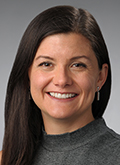
Professor of History and the Jay and Debe Moskowitz Endowed Chair in Mexico-U.S. Relations
Ellen James Mbuqe
Executive Director of Media Relations