A Robot Broke the Half-Marathon World Record. What Comes Next?
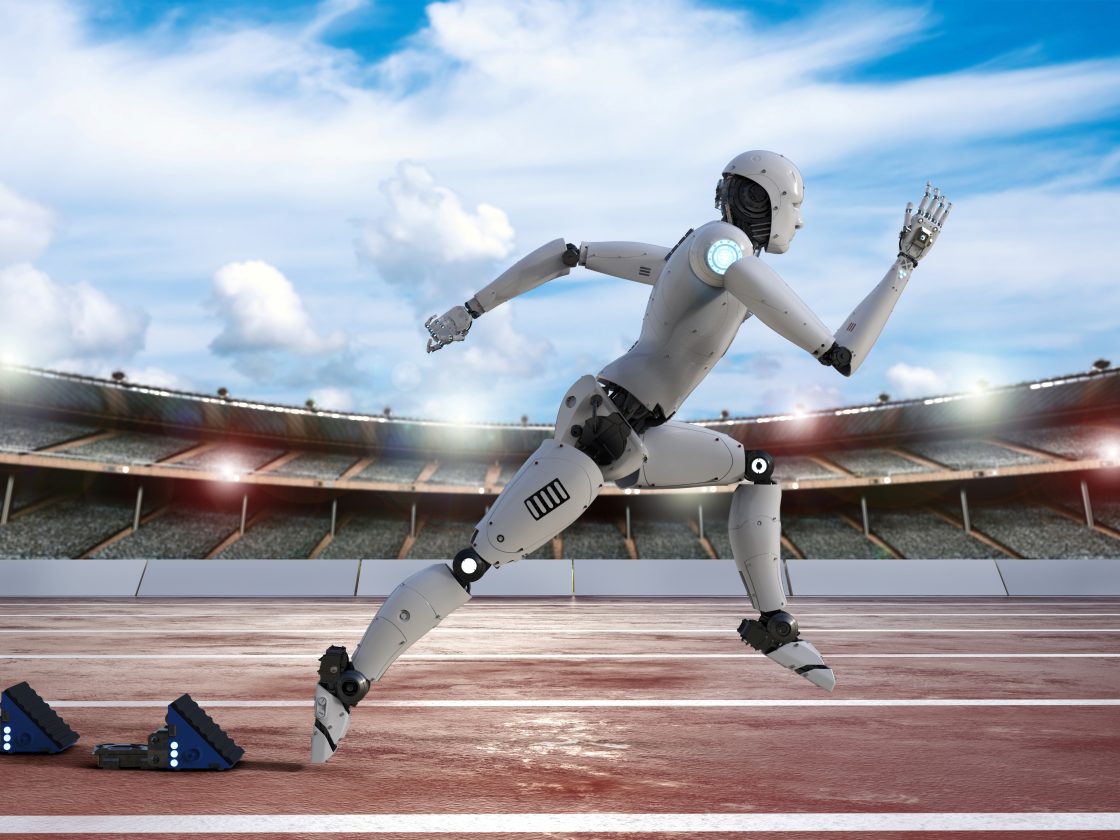
On April 19, 2026, a humanoid robot developed by Chinese smartphone maker Honor completed a Beijing half-marathon in 50 minutes and 26 seconds, faster than the human world record by almost seven minutes. The improvement from 2025’s inaugural race has generated widespread attention. But what does it tell us about the future of robotics off the track?
Zhenyu Gan is an assistant professor in the College of Engineering and Computer Science and director of the Dynamic Locomotion and Robotics Lab, where he researches legged locomotion. He is a 2026 recipient of the NSF CAREER Award for his research on how animals transition seamlessly between movement patterns and how to give robots that same kind of physical intelligence. Gan helped put the race results in context.
On the Technological Improvements
- “Last year’s winning robot took over two hours, with few teams finishing. This year, a much larger field saw many completions, and the fastest robot surpassed human racers. This reflects advances in energy efficiency, control and morphology, especially with a known benchmark.”
On the Work Still to Be Done
- “The race highlights that humanoid robotics is progressing rapidly in task-specific dynamic locomotion. However, these are structured conditions. We still have work ahead before achieving robust, general performance in everyday scenarios.”
On the Limits of Controlled Conditions
- “While controlled settings allow us to test locomotion in isolation, real-world applications are far more complex. Uneven terrain, obstacles and safety factors require significant advances in perception and adaptability.”
On What to Expect in the Near Future
- “In the next decade, we’ll likely see humanoid robots in well-defined roles—for example, industrial inspections, logistics or hazardous environments—where tasks are repeatable and structured to their strengths.”
Faculty Expert