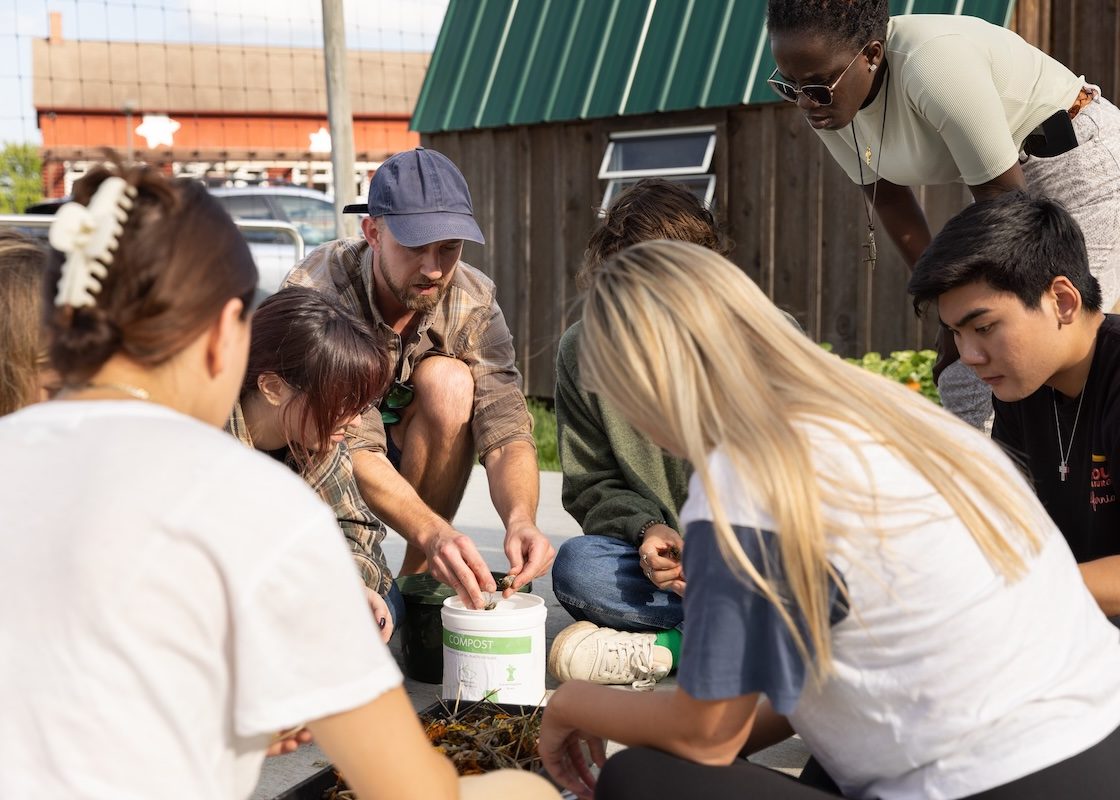
Students add compost to plants in Pete’s Giving Garden. (Photo by Marilyn Hesler)
Sustainability Initiatives Encourage Making the Most of Materials During Their Lifespan
Is that plastic container recyclable? Are those leftovers compostable? Does anyone want this used furniture?
These are questions that staff at Syracuse University’s Institute for Sustainability Engagement (ISE) and the Sustainability Management office regularly encounter—and the answers aren’t always as straightforward as they may appear. But through public education and outreach campaigns and campus initiatives, the two organizations work to reduce waste and shape a sustainable future. The mantra of reduce, reuse, repair, recycle is a guiding force.
“We’re trying to inspire this idea that these materials have value, and they can should be used over and over, again and again,” says Lisa Ruggero, assistant director at ISE.
Sorting Through Recycling Rules
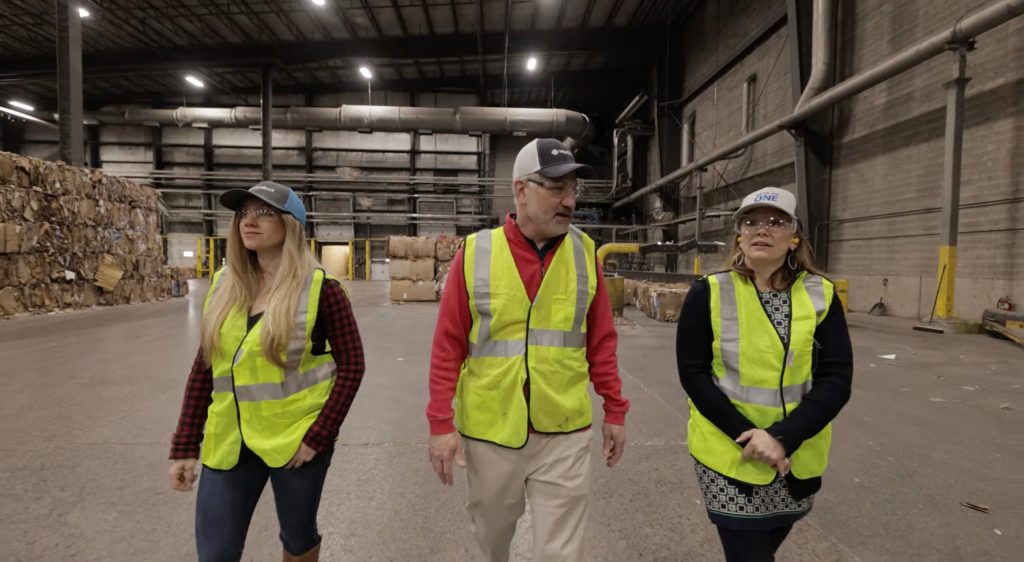
Both ISE and Sustainability Management work closely with the Onondaga County Resource Recovery Agency (OCRRA) to stay apprised of its guidelines. In fiscal year 2026, the University had a 30% recycling rate, which is based on the amount collected and processed into new materials, according to Lydia Krayenhagen G’26, sustainability project manager for Sustainability Management.
Among ISE’s initiatives—in partnership with the Center for Sustainable Materials Management at the SUNY College of Environmental Science and Forestry—is the Recycle Right New York campaign, a comprehensive effort to educate the public with current information and resources. The campaign creates social media content for recycling coordinators across New York state to share on their accounts, ensuring consistency and unifying messaging statewide. The campaign, for example, features the New York Recyclopedia, local recycling guidelines and reuse, repair and electronic recycling locator tools.
Reducing Single-Use Plastics
ISE also collaborates with local businesses to enact waste-reduction strategies. In Orange County, for example, it established the Green Grub program to help local food establishments reduce their waste, including single-use plastics. A similar initiative in Monroe County, ROC the Reusable, works with restaurants to eliminate single-use items.
In 2023, the University launched a plan aimed at reducing single-use plastics—bottles, eating utensils, straws and stir sticks, beverage cups, to-go containers and condiment packets among them—by the 2027-28 academic year across campus. Alternative options, such as compostable to-go containers, have been introduced, and single-use utensils were one of the first items eliminated. “We had a big push from students,” Krayenhagen says. “They really wanted us to reduce our single-use plastics as do we.”
Students Pitching In
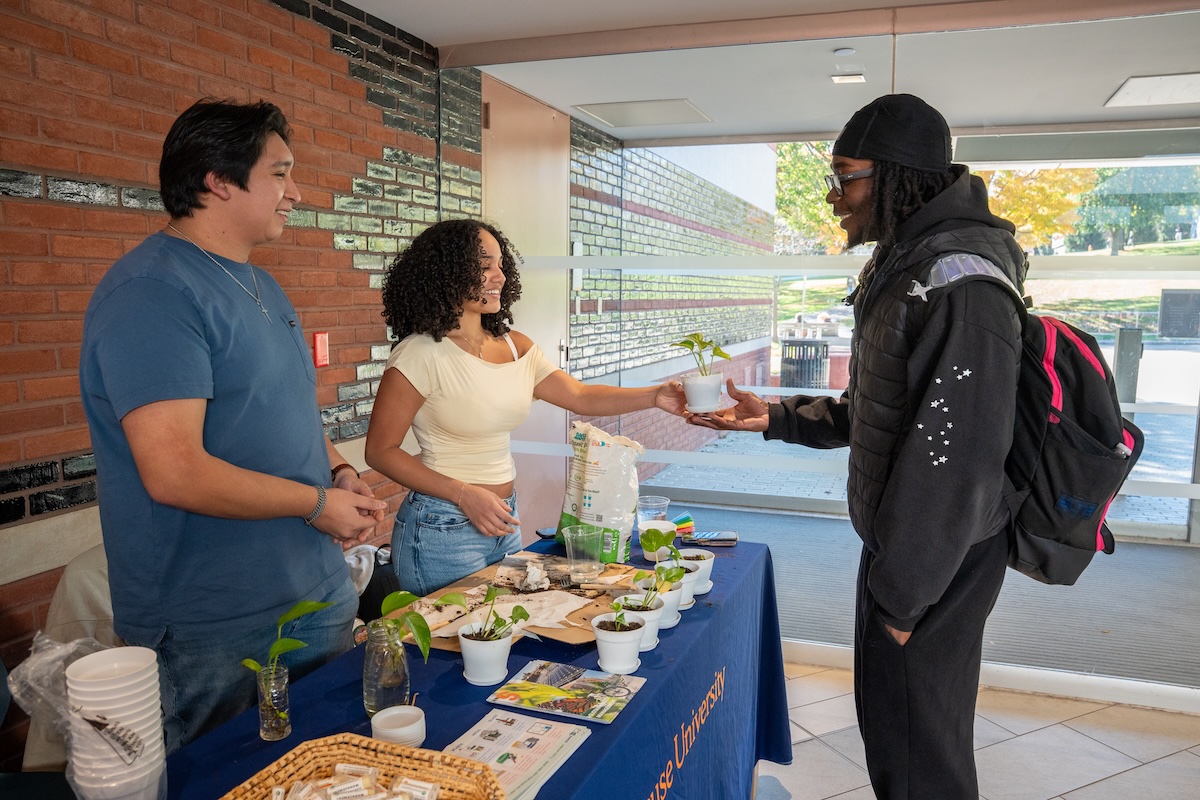
As a peer-to-peer intern for Sustainability Management, Evan Garcia ’29 promotes campus sustainability efforts through tabling and in-person events and social media. He has interviewed students about commonly mis-recycled items and explained the proper disposal of items and spreads the word about how to compost properly.
“Sustainability is important to me because it’s the underlying foundation of how to make the world better to live in,” says the architecture major. “It isn’t a one-time action, but an ongoing, conscious choice that should be made every day.”
Keep Up the Composting
When students scrape away their leftovers at campus dining halls, it all adds up. In fiscal year 2026, the University composted 460.69 tons, with the food waste going to the OCRRA composting site. University Food Services also monitors food consumption in each dining hall to help gauge the amount of food it purchases, reducing waste that way.
Ruggero praises composting for its environmental benefits and independence from global market demands. ISE supports organics management practices through workshops for farmers in partnership with the New York Center for Organics Recycling and Education at Cornell University and through involvement with the New York State Organics Summit. “Compost use is a big focus for us,” Ruggero says.
Pass It on for Reuse
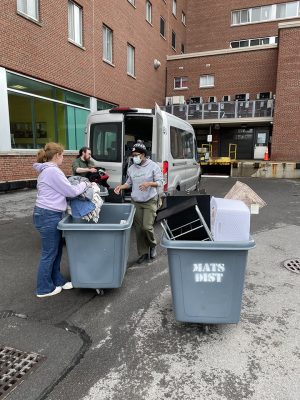
When the University transformed the former Sheraton into Riley Hall, nearly all the furniture and mattresses found new homes with local nonprofits and community organizations. When campus renovations turn up chairs and other items that can’t be reused at the University, Krayenhagen connects with organizations. “It’s been great,” she says. “If it’s something they need and want, we’ll get it into their hands.”
The same is true for student donations to ’Cuse Collections—with household items, small appliances, clothing and other goods gathered at the end of spring semester finding new life through local organizations.
As Ruggero points out, waste reduction is challenging, but reuse programs—from lending libraries and community garage sales to clothing swaps and repair cafes—contribute to reduction efforts.
For students like Garcia, it’s important to take a holistic view of sustainability and understand its role in shaping tomorrow’s world. “Sustainability is a mindset people must have that ensures the actions of today don’t ruin or limit the choices available in the future,” he says.