Chronic Illness Linked to Higher Prescription Drug Misuse
Working-age adults who manage more chronic health conditions are more likely to misuse prescription medications, researchers in the Maxwell School of Citizenship and Public Affairs found.
In a data slice published by the Lerner Center for Public Health Promotion and Population Health in June, researchers found misuse of prescription drugs rises from 2.8% among adults with no chronic conditions to 11.7% among those with three or more. That is more than a fourfold increase.
The Substance Abuse and Mental Health Services Administration estimated that 7.6 million Americans misused prescription opioids and 3.9 million misused stimulants in 2024.
“These are not small numbers; they represent millions of working-age adults whose health, relationships and livelihoods are at risk. Importantly, the consequences of this extend beyond just individuals, families and even the healthcare systems to the general society at large,” says Esther Oshaji, the third-year sociology doctoral student who led the search for an association between chronic disease and misuse of prescription drugs alongside her advisor, Andrew London, Maxwell Dean Professor of Health and Aging and professor of sociology.
Oshaji says despite the acknowledged scope of the nationwide addiction crisis, little is known about who is at risk for misusing prescription drugs and why. Previous research linked chronic pain to higher rates of opioid misuse, but the broader question of overall disease burden and drug misuse hasn’t been fully examined.
That is the gap she and London sought to address with their research.
“We talk about the overdose crisis in epidemic terms,” London says. “It affects some populations more than others. We wanted to broaden that narrative a little bit and talk about prescription drug misuse more generally, because it’s not just prescription opioid misuse [that is happening].”
A Unique Dataset
To pursue their question, Oshaji and London drew on the National Wellbeing Survey (NWS), which was collected annually from 2021 to 2025 at Syracuse University with Shannon Monnat, the Lerner Chair in Public Health Promotion and Population Health, professor of sociology and director of the Center for Policy Research, as principal investigator. A public-use version is now available to the broader scientific community.
The survey offers something other national datasets do not, London says. Some surveys measure chronic disease and others measure prescription drug misuse, but few capture both.
“There’s no place that you can put it together like in the NWS,” he says.
For their analysis, Oshaji and London pooled five annual waves of data from 2021 to 2025 for adults ages 18-64.
Respondents reported whether a health professional ever told them they had any of 10 conditions: hypertension, high cholesterol, diabetes, heart disease, obesity or being overweight, chronic obstructive pulmonary disease, post-traumatic stress disorder, traumatic brain injury, depression or anxiety. Misuse was defined as taking a medication that was not prescribed to the person or taking it in a way a doctor did not intend, such as more often than prescribed or by crushing the pills. The researchers looked at opioids, tranquilizers, sedatives and stimulants and whether the misuse took place in the previous 12 months.
Misuse Rises With Each Added Condition
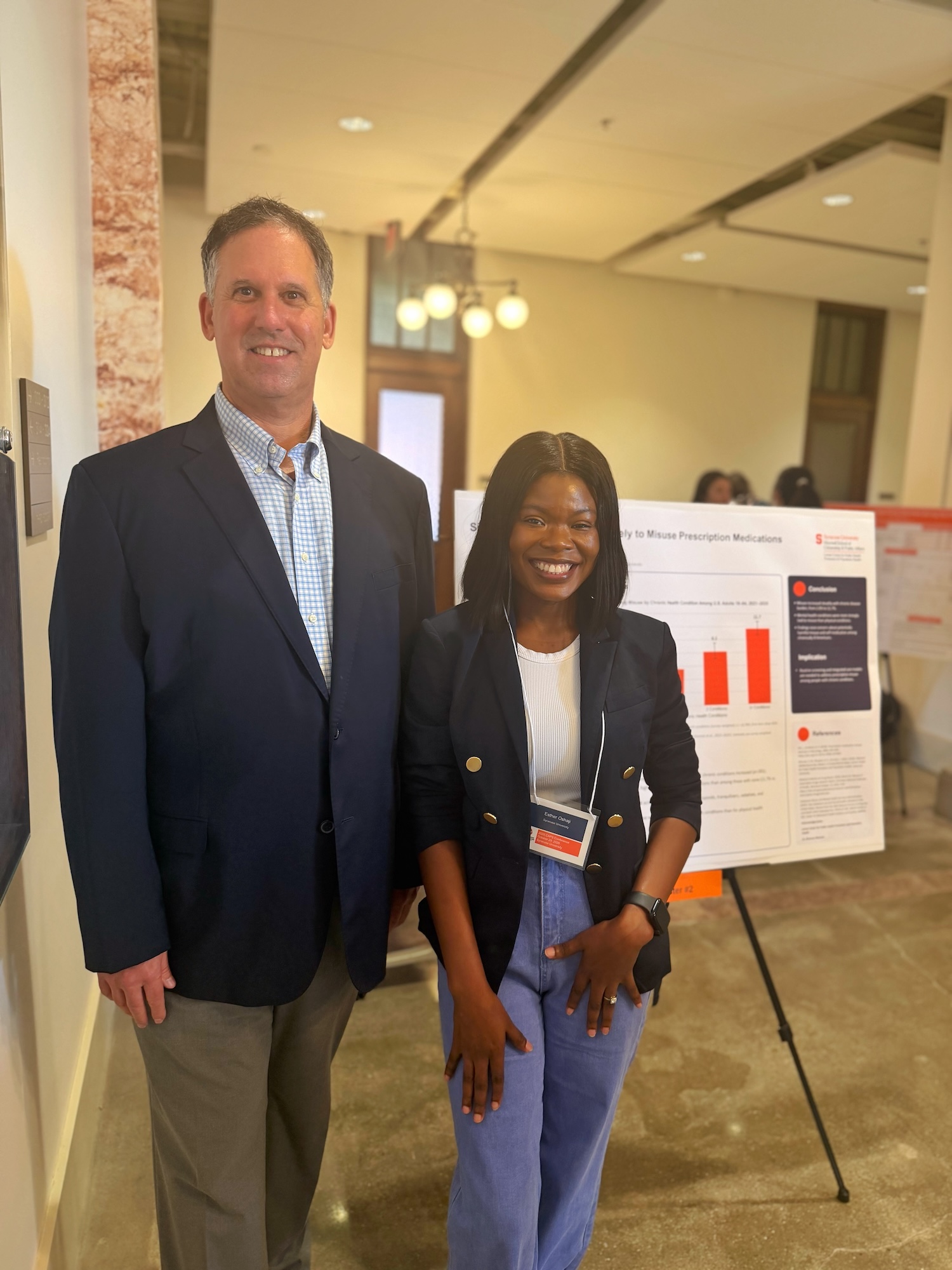
The results showed what Oshaji calls a clear dose-response pattern. Misuse was 2.8% among respondents with no chronic conditions, 5.6% among those with one, 8.2% among those with two and 11.7% among those with three or more.
“This simply tells us that the more conditions an individual manages, the higher the likelihood of misusing medications,” Oshaji says.
People with anxiety or depression reported more misuse than those with physical chronic health conditions, such as obesity or diabetes.
The researchers say the data cannot explain why, but they point to several possibilities. People with multiple conditions have more contact with healthcare providers and greater access to prescriptions. They may also turn to medications on their own to manage symptoms.
“Management of chronic disease requires active decision-making, so people make choices about how they’re managing doctors’ orders,” London says. “We know that patienthood, self-medication and agency are probably part of the story.”
There’s a whole set of potential factors, London says. And while their study establishes a pattern, they “cannot investigate the mechanisms that produce it and play out over time.”
“We think we are making a contribution by establishing these patterns and raising awareness and questions within the scientific community about the need for further research and better and different data collection to pursue these questions,” he says.
What It Could Mean for Care and Future Research
Even with more research needed, Oshaji says their current findings indicate changes in practice could be helpful. Clinicians could routinely screen patients with multiple chronic conditions for misuse.
“We know that people who have more chronic health conditions are more likely to misuse drugs,” she says. “Thus, we could develop targeted interventions to help healthcare personnel identify and treat these people more effectively.”
Care providers should routinely screen for both physical and mental conditions, such as anxiety and depression, in relation to drug misuse, she says.
“It helps us to know that anxiety and depression are driving misuse among chronically ill patients,” Oshaji says. “Given that it is widely assumed that people misuse drugs because of physical health problems and chronic pain, it is important to show that depression and anxiety are actually driving misuse rates more than physical health conditions.”
Oshaji and London’s work would not have been possible without the NWS, which was funded by the National Institute on Drug Abuse and the Lerner Center for Public Health Promotion and Population Health. They are now examining whether chronic disease burden is also associated with illicit drug use, including marijuana, and whether patterns differ by gender, age, socioeconomic status and education.