How Newhouse Trains the Next Generation of Women in Sports Media
When Jazaleen Salinas ’27 heard her name called for the Beth Mowins Award last year, she felt a flood of feelings.
The scholarship, established in 2019, recognizes students pursuing a career in sports media, honoring a Newhouse School of Public Communications alumna play-by-play pioneer.
Salinas, a broadcast and digital journalism major, was one of two award recipients last year.
“Beth Mowins is a legend,” she says. “To be recognized by her and by Newhouse was honestly one of the biggest honors and accomplishments I’ll have at Syracuse.”
The industry Salinas is entering looks very different from the one Mowins started out in. It’s no longer uncommon for women to lead sports coverage from a newsroom or booth. At the same time, interest in women’s professional sports is surging.
Alumni credit Newhouse for the decades spent helping graduates build the networks, mentorship and hands-on experiences that aided women breaking through in sports media. Now, the audience, and industry, is catching up.
The Newhouse Network

(Photo by Phil Ellsworth / ESPN Images)
Mowins enrolled in Syracuse during the first year of the Newhouse graduate program.
“By that point, I knew I wanted to be a play-by-play announcer, and there weren’t a whole lot of women doing it,” she says. “In fact, there weren’t any.”
As women’s sports began to take off on TV, she found plenty of work calling women’s games other announcers passed on. She says such alumni as Marv Albert ’63, Bob Costas ’74 and Sean McDonough ’84 offered a blueprint for her career.
“It’s still, like everything else, a people business,” says Mowins, who calls games for ESPN. “It’s who you know and who you network with.”
Mowins says students should always reach out to established professionals.
“We love to talk to young people and young women about ways they can find their way,” she says. “Things are so much different than they were 30 years ago, and there are so many incredible opportunities for young women today.”
Katie McInerney ’12 found that network in the newsroom. She studied newspaper journalism, worked at The Daily Orange for three years and served as editor in chief for the 2010-11 academic year.
Among her peers, she says, gender barely registered.
“That was a really good thing because I didn’t let any sort of perceived insecurities affect what I was pursuing while I was in school,” she says.
It was only after graduation that McInerney, now senior assistant sports editor at The Boston Globe, says she was struck by “how big of a deal it was to be a woman pursuing sports.”
Olivia Stomski ’01, professor of practice and director of Newhouse’s sports media center, built her career at a time when women were rare in production trucks. She credits John Nicholson, professor emeritus, who was “tough and honest and frank” about what she was getting into as she entered the industry.
Changing Who Succeeds
Stomski, who went on to be an executive producer and continues to work as a live game producer, says she returned to Syracuse in 2017 to help change who succeeds and is accepted in the industry.
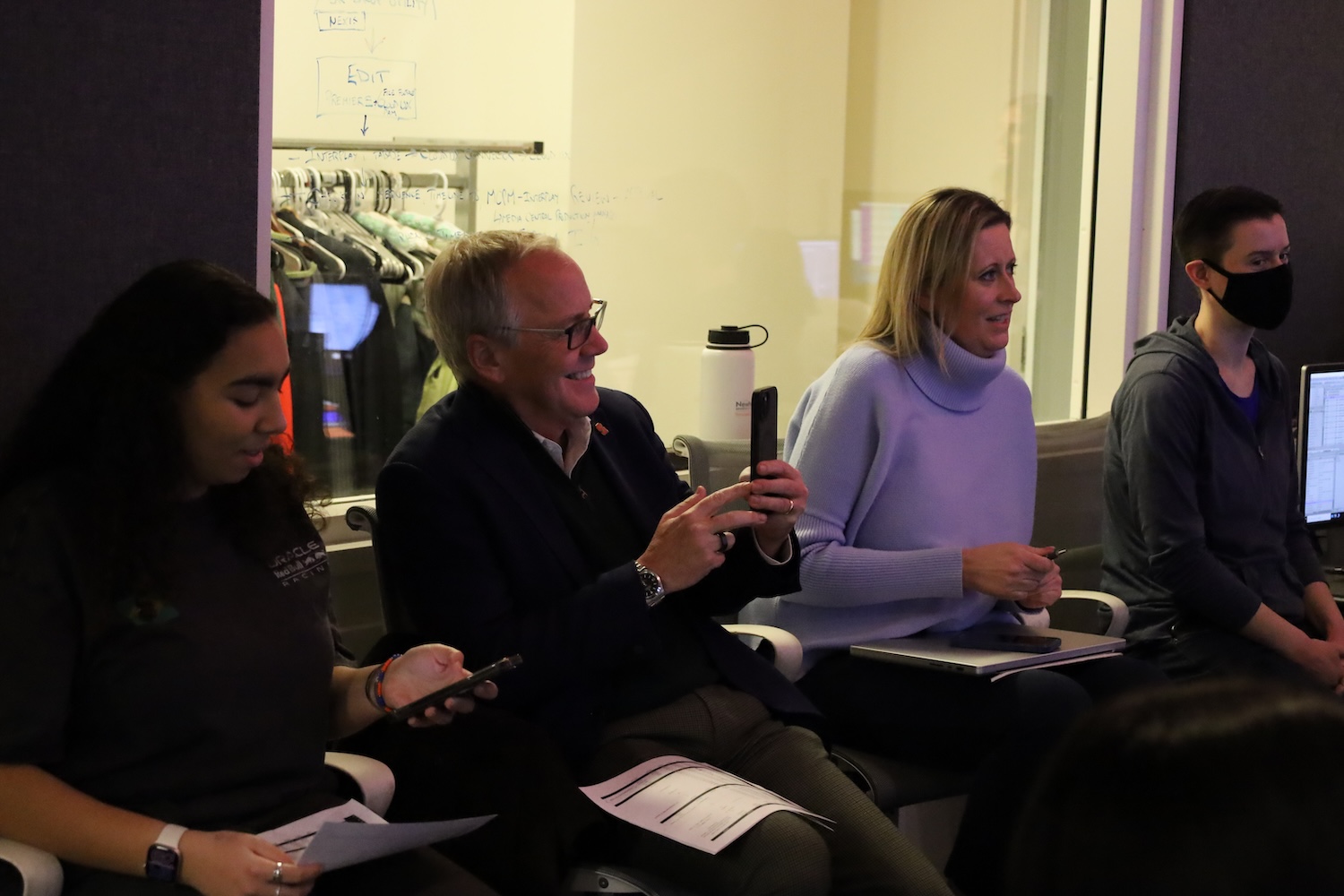
“If you look at our student body now, it is far different than it was 20 years ago when I was a student here when it comes to sports,” Stomski says. “The majority of our student leaders in sports are female students.”
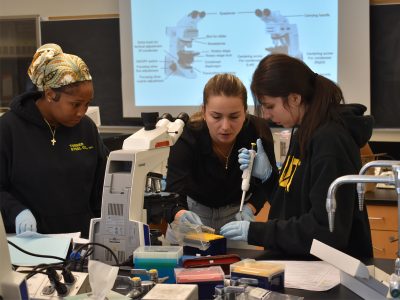
Today, there’s a women in sports media student group of about 35 that meets monthly. Upperclass students recruit first-years so they have support during their time on campus. Women have held executive producer and director roles on the ACC Network studio show, and many of the leads at Citrus TV are women.
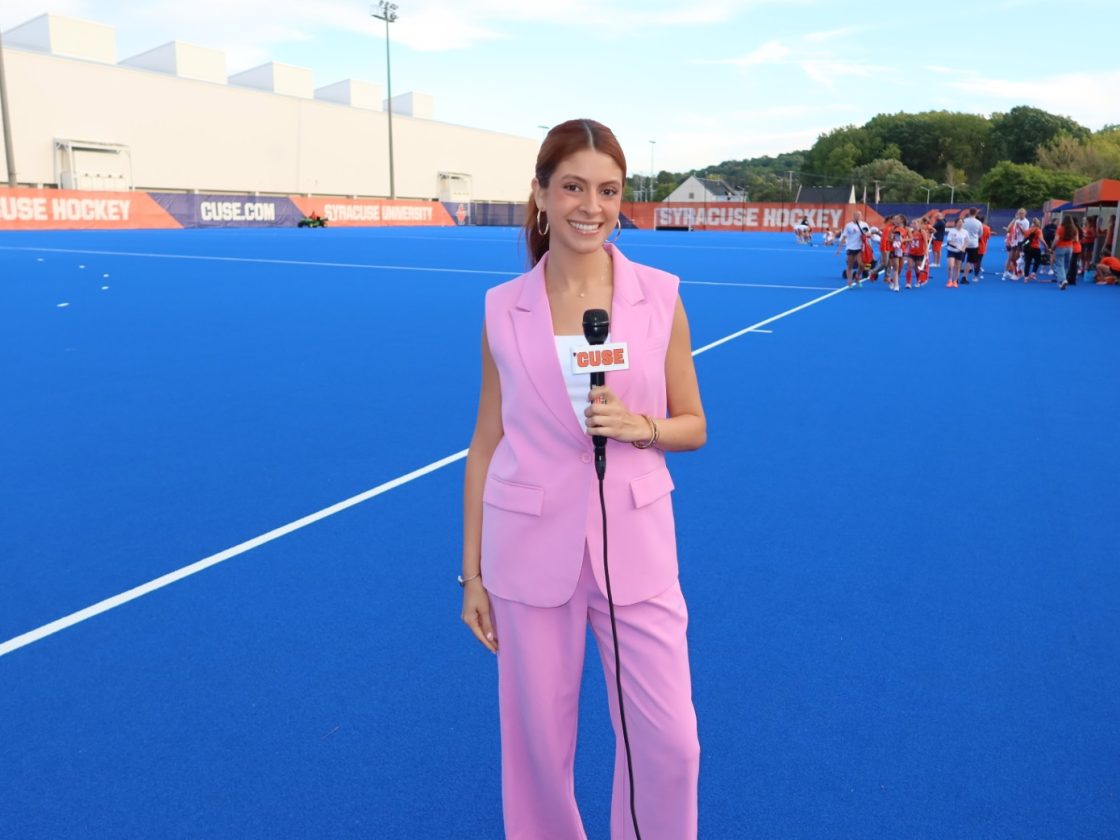
Salinas started on the social media team for the ACC Network studio shows as a first-year student and now leads that team, while also doing on-air hits.
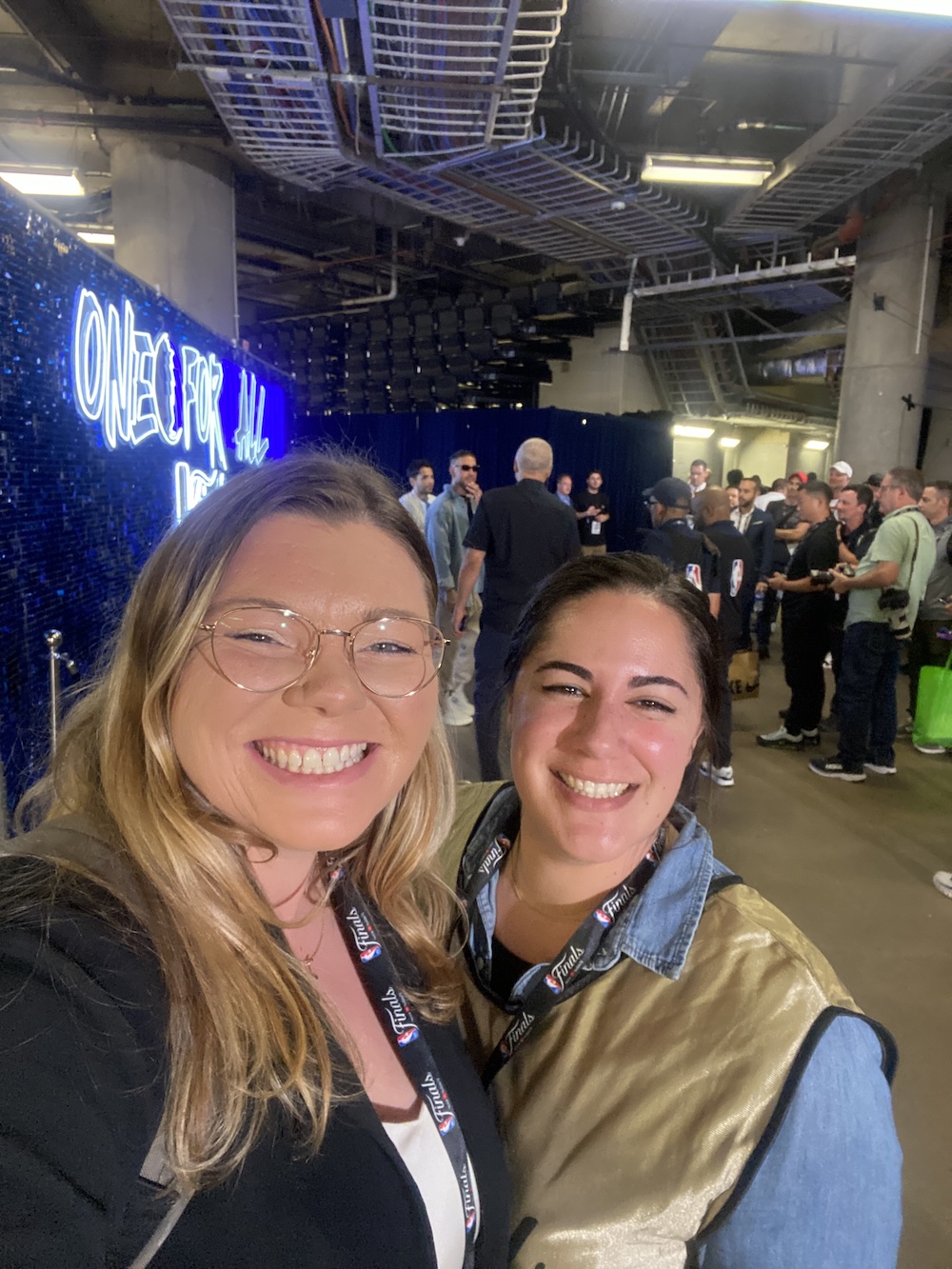
In February, Salinas was one of eight students Stomski sent to Super Bowl Media Week. She did social media and on-air reporting and met Newhouse alumni on Radio Row, calling it “the most magical week” of her life.
Stomski says it’s encouraging that all-women broadcasts on campus today are “not news, it’s normal.”
But it is still not the case in the broader industry.
“When we do an all women’s broadcast at ESPN or the ACC Network, it makes news,” Stomski says. “We’re not there yet, but we’re getting there.”
Being ‘It,’ For Others to Follow
Growing up in North Syracuse, Mowins covered local sports and University games for a cable channel while still in high school. She knew from a young age she wanted to be a sportscaster.
“When I asked my mom if I could be a sportscaster, she said, ‘Yes, you can,’” Mowins says. “It all took off from there.”
Stomski says the maxim “if you see it, you can be it” is true. For her, it was an interaction when she was 9 with NBA executive Leah Wilcox, who told her girls could work in the NBA.
“That was all I needed,” Stomski says. “I needed somebody I could relate to telling me I could do something. That changed the entire trajectory of my life.”
McInerney is seeing the power of that representation firsthand for young fans as she covers new women’s pro leagues in New England: hockey (the Boston Fleet), soccer (Boston Legacy FC) and baseball (Boston Hunters).
A Growing Audience for Women’s Sports
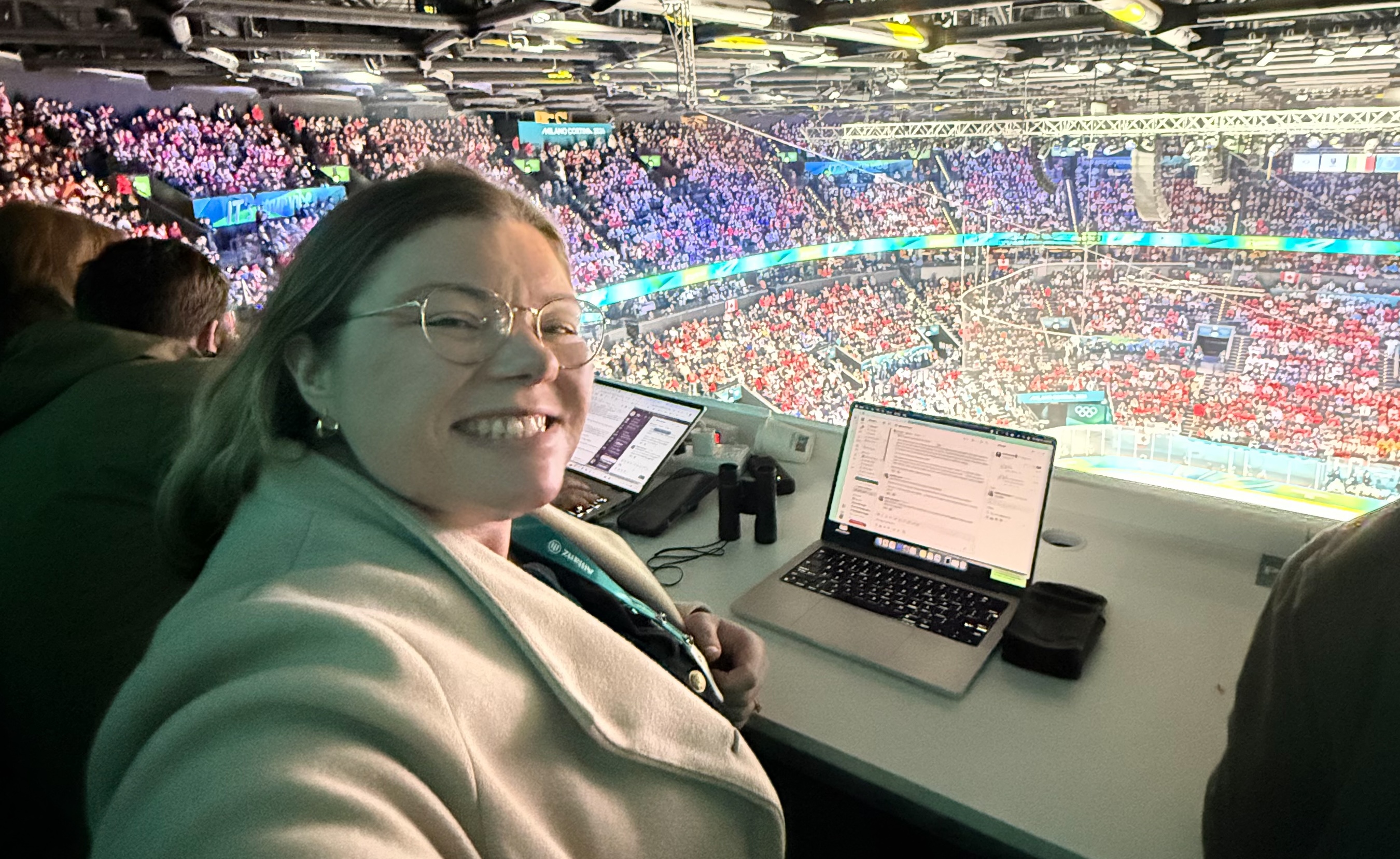
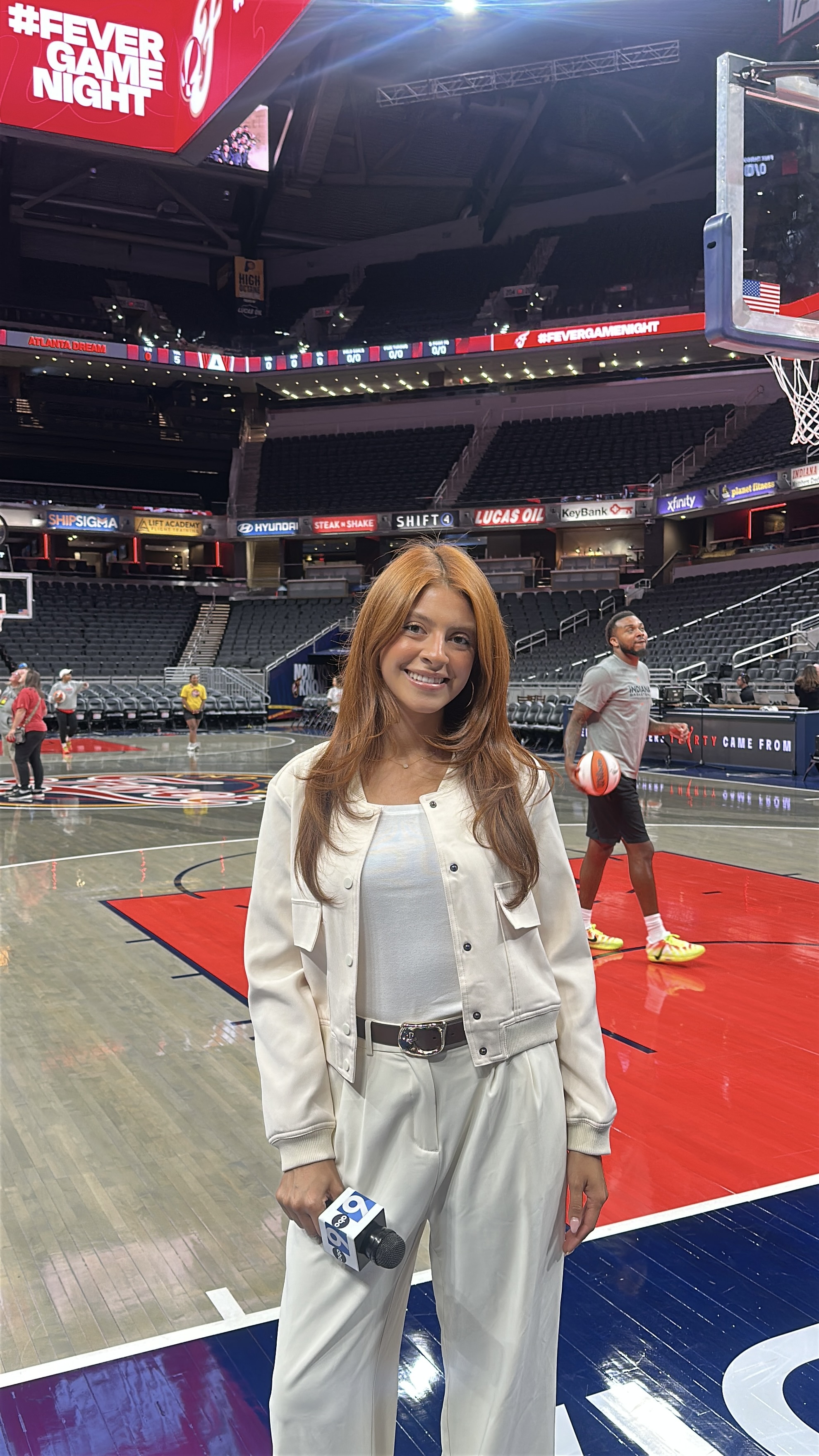
Meanwhile, the audience and coverage of women’s sports has surged. Mowins notes five or six outlets now carry the WNBA, something she says no one would have predicted a decade ago. Salinas saw, and covered, sold-out Fever games during her summer internship in Indianapolis alongside her work reporting on other sporting events.
Stomski sees the shift in interest and demand on campus. More students want to cover Syracuse women’s basketball, field hockey and soccer, and the growth gives women broadcasters a way to get “those reps.”
McInerney helped the Globe add a women’s sports beat writer, and she sees the interest and demand for the assignments to cover the events from co-ops to peers, alike.
“No longer is it just the domain of a junior reporter or someone who just needs an assignment; it’s an assignment people want,” she says.
In addition to her responsibilities at the Globe, McInerney started The Fixture, a newsletter focused on covering women’s sports more broadly. She says the word she comes back to is “impatience” when it comes to covering women’s sports.
“I think it’ll open up new doors for women, too, as they watch these sports or watch any kind of sport and realize there’s a path for them where their gender feels like an asset in terms of bringing a new level of reporting and insight,” McInerney says.