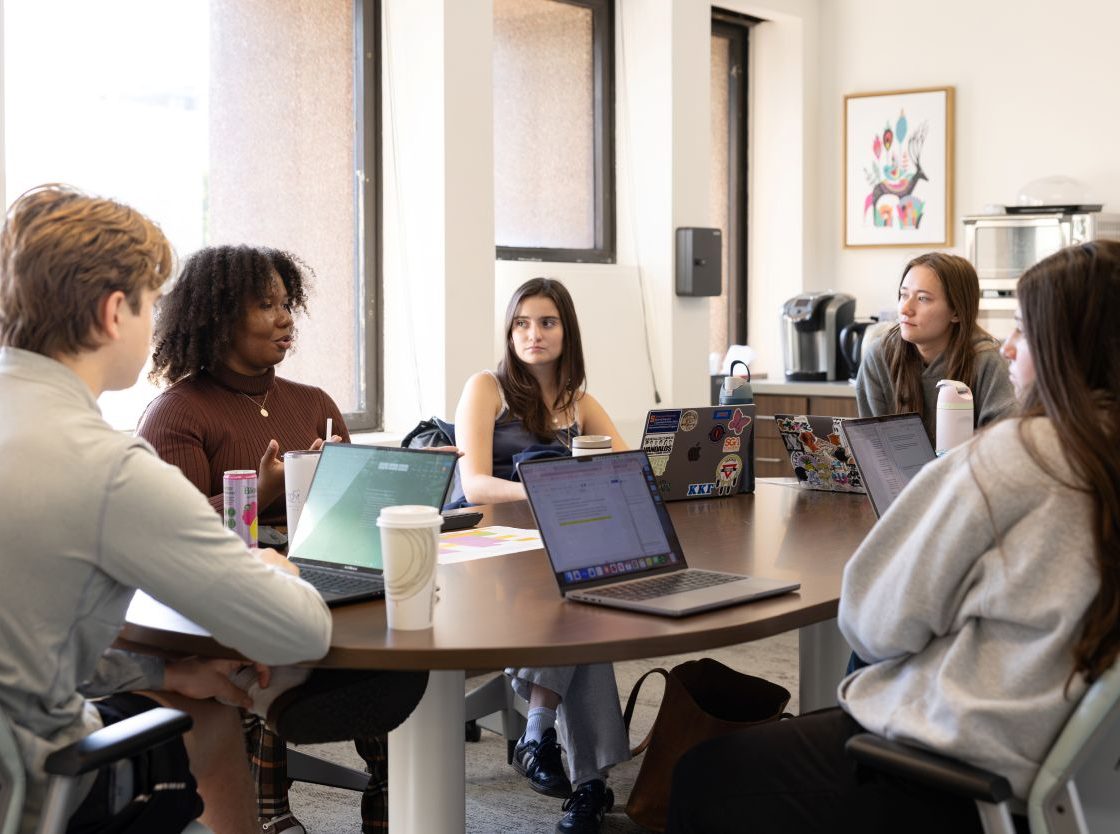
SCOT student consultants reflect on their class observation notes with the program coordinator before discussing findings with instructors. (Photo by Amy Manley)
Student Consultant Partnerships Help Instructors Sharpen Their Teaching
Educational excellence and student success at Syracuse University depend in large part on what happens in the classroom. One campus program offers instructors a unique view into their students’ classroom learning experience by facilitating student-faculty pedagogical partnerships.
Through Students Consulting on Teaching (SCOT), a Center for Teaching and Learning Excellence (CTLE) program, instructors can gain new insights into the efficacy of their teaching practices and classroom activities with help from trained student consultants. The consultants attend classes, gather early and formative feedback from students in those classes and report findings to the instructor.

The goal is to help instructors “make small but very meaningful changes,” says Ebony Graham, faculty developer and SCOT coordinator, who says instructors can define what they’d like to discover about their teaching.
“They may ask about one aspect then hear about others, such as pacing, workload or how engaged students are. It’s almost like having a mirror up to your teaching because you can’t teach and assess yourself at the same time,” Graham says.
Consultants report back to instructors by the midpoint of the course. Because the partnership is short term and focused on early, actionable feedback, instructors can then make any small adjustments that might be recommended while continuing to build on their strengths.
Since it started in spring 2023, the program has grown by 50%. So far, 79 instructors from across campus have participated and there are 18 current consultant-instructor pairs. Instructor participation is voluntary and reports are confidential.
Student consultants are trained online over the summer to collect information by writing a short course survey, observing classes, taking notes and leading a question-and-answer exercise. The program emphasizes that consultants are not experts in higher education pedagogy or class content. Rather, students learn how to leverage their experience and insights as students at the University to partner with faculty members, gather formative feedback, offer observations about the classroom learning environment and identify points for further reflection.
Look for What Works
“The consultants are taught not to label teaching as good or bad but to ask what is most effective to improve student learning,” Graham says. “We tell them to think about what’s working and look for human cues, like whether the content communicated is landing effectively and if there are gaps to fill.”
Consultants first meet with instructors to learn their goals. After completing observations, consultants reflect on their notes with CTLE staff then present their findings to instructors mid-semester. That leaves time for enhancements while the class can still benefit.
Pun To (Douglas) Yung, teaching professor of biomedical and chemical engineering in the College of Engineering and Computer Science, has experienced the benefits of two SCOT partnerships.
“One of the greatest strengths of SCOT is its flexibility. Faculty can identify a specific aspect of their teaching to explore, whether teaching style, experimenting with a new pedagogy or improving small-group activities. [This program] offered a fresh perspective on what happens in my classroom and provided thoughtful, candid feedback that affirmed my approaches and helped me make more intentional teaching decisions,” Yung says.
Good for Students, Too
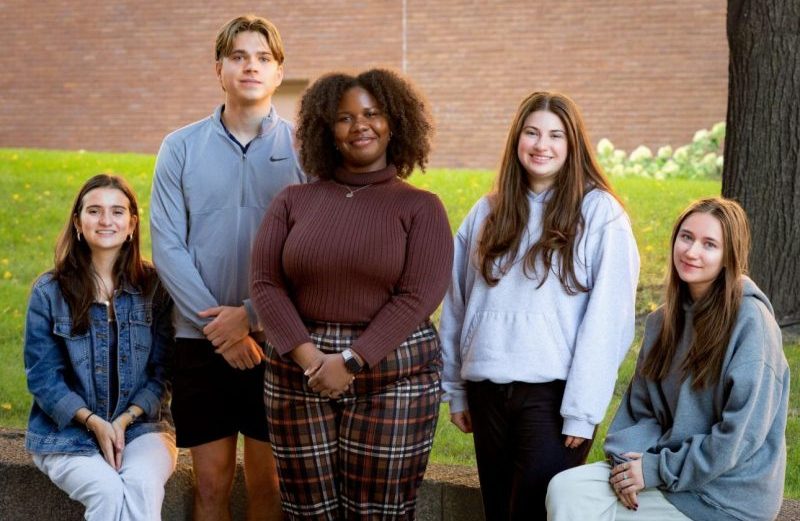
Graham hopes the program helps consultants gain confidence in their voices and see how collaboration strengthens their work while helping instructors, too.
Sara Paredes ’29, an international relations major and AI policy minor in the Maxwell School of Citizenship and Public Affairs, says being a consultant “taught me a lot about professional communication and [presenting] information with ethical, educated approaches. It’s not every day that you get an opportunity to offer new ideas to faculty to help them improve learning environments. This is a unique chance to learn more about pedagogy and the ways it impacts our learning experiences as students.”
More information about the SCOT program for both instructors and students is available on the program website. Graham is also available to meet to answer instructors’ questions about the program.