Registered dietitian and body image coach Beth Basham (left) and Falk College teaching professor Jane Burrell lead a cooking demonstration.
Experts Dish on Plant-Based Protein at Falk College Lecture
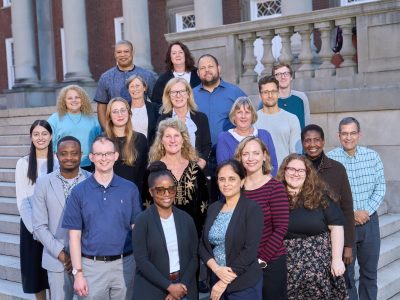
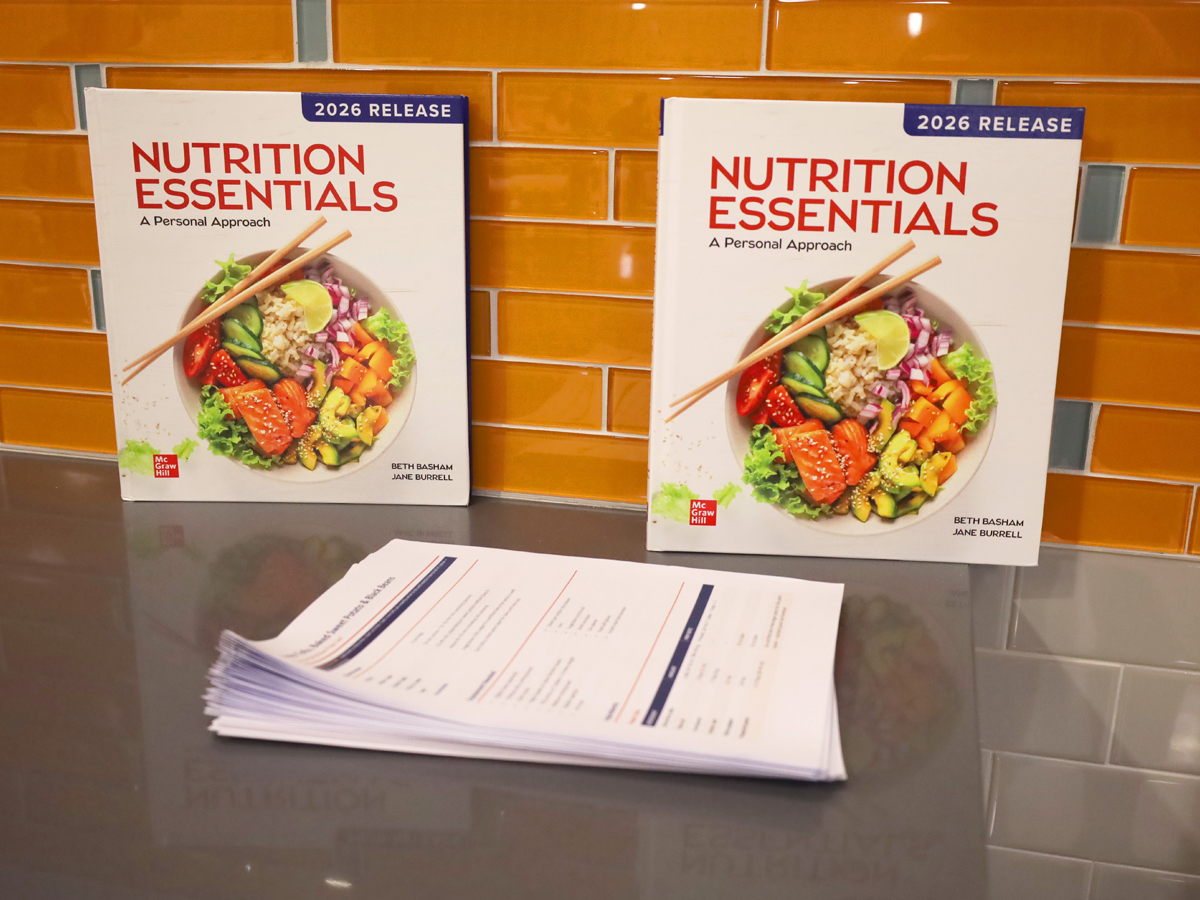
The Falk College of Sport hosted the 2026 Joan Christy Lecture Series on Food and Culture, featuring registered dietitian and body image coach Beth Basham and Falk College teaching professor Jane Burrell. The two are co-authors of the new textbook “Nutrition Essentials: A Personal Approach,” released in July by McGraw Hill.
Their talk, “Protein-Max with Real Food: Nutrition Hacks that Don’t Break the Bank,” focused on maximizing protein intake but from sources other than animals.
“We were kind of sneaky here. We got you in with ‘protein-maxxing,’ but we’re going to show you how to do it with plants,” said Burrell at the start of the lecture.
Beyond the Protein Hype
Basham, who traveled from Austin, Texas, opened by putting the current protein craze in historical context.
“When I graduated, it was all about low-fat and sugar-free. That was the phase of nutrition that I entered the world in,” she told the audience. “Every five, eight years there are trends that come through. Currently the trend is protein.” She pointed to protein popcorn, protein Pop-Tarts and protein-fortified beverages as examples.
Burrell offered a reality check. “I’d like to dispel the myth that we’re not getting enough protein. Most of us do get enough protein, but we might not be doing it right,” she said. Many people, including student-athletes, load up at dinner or after a workout and skip protein earlier in the day. Spreading it out is more effective, Burrell explained. “If you have protein throughout the day in smaller doses, you’re actually maximizing how your body can use it.”
Stay Open-Minded
Both speakers prepared a dish in the Falk College of Sport’s ACE Center demonstration kitchen, with preparation done ahead of time in the Klenk Learning Café and Kitchens by students and teaching professor Mary Kiernan.
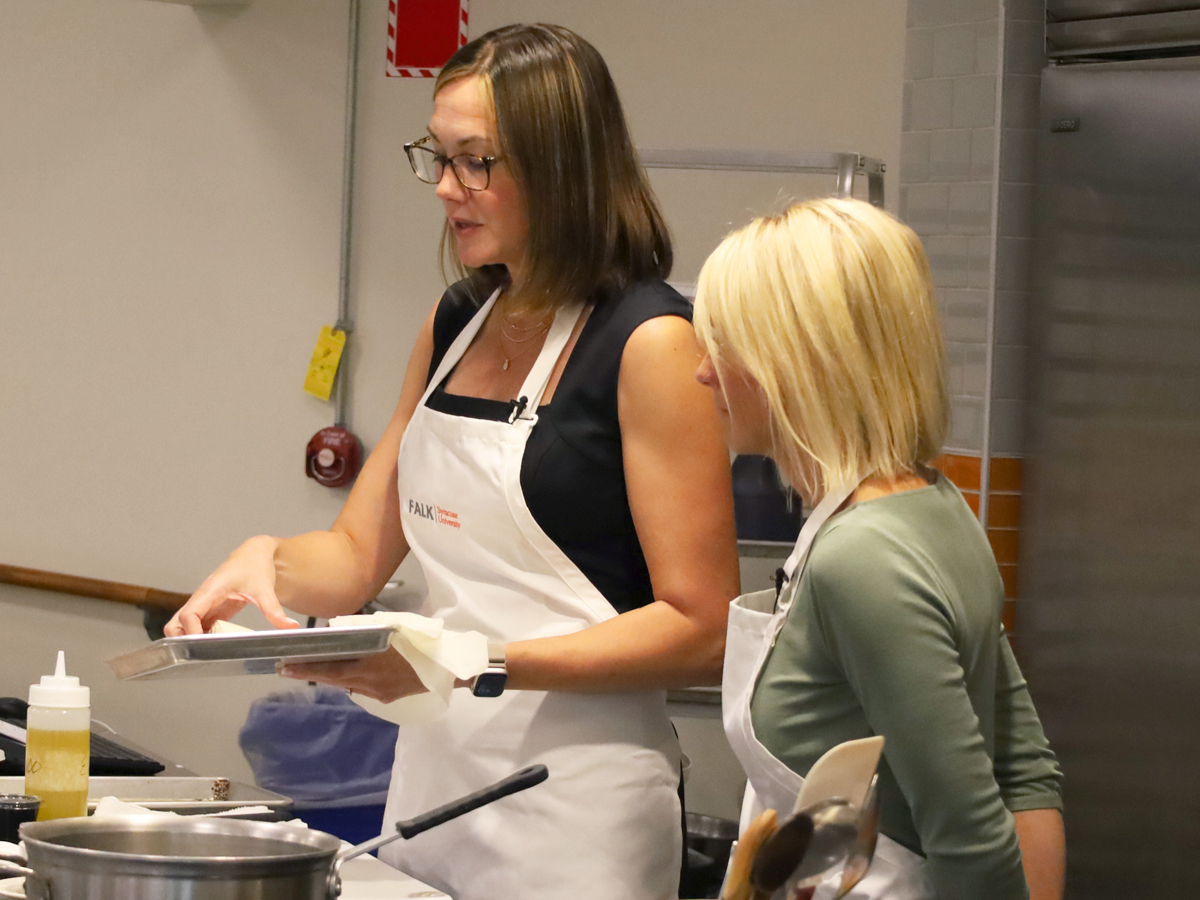
Basham made crispy pesto tofu with roasted sweet potatoes and black beans, a dish she said is a favorite of her daughter. She also addressed some of the misconceptions surrounding tofu, calling it “a highly beneficial plant-based protein” that contains all nine essential amino acids and is both accessible and affordable.
“Stay open-minded,” Basham said. “Try it in different ways, because one tofu might be different than the next depending on the recipe or the preparation method.”
Senior nutrition major Daphnee Chu said the subject matter reminded her of a phenomenon called the omnivore’s paradox, which she previously learned about in one of Burrell’s classes.
“We’re wired to be wary of new foods even though we’re capable of eating widely, which makes this lecture a natural way to help people see plants as a legitimate and delicious source of protein,” said Chu.
Burrell prepared three sisters stew, built around corn, beans and squash, the trio at the heart of Native American agricultural tradition. The plants support one another as they grow: corn provides a stalk for beans to climb, beans return nitrogen to the soil and leaves from the squash plant shade the ground.
The same logic holds on the plate. “Foods that grow together go together,” Burrell said, noting that corn and beans together supply a complete set of amino acids. While cooking, she explained that vitamin C from the stew’s peppers helps the body absorb iron from plant sources.
Keeping It Affordable
The budget theme ran through every recipe and tip. Burrell noted that the proteins featured in the most recent dietary guidelines, such as steak and full-fat dairy, tend to be the most expensive. Her advice was to save those for occasional enjoyment and to build plates around more affordable, nutritionally complex foods such as beans, tofu and seafood, which delivers omega-3 fats in addition to protein. Protein only needs to occupy about a quarter of the plate, and swapping in plant proteins even twice a week is a meaningful step, she said.
Other money-saving strategies included planning meals ahead and shopping seasonally. “This is the most abundant time of year,” Burrell said. “Everything is available. It’s cheap. It’s beautiful. It’s so nutritious.” Eating a variety of colors across the week, she added, is a simple way to cover nutritional bases without overspending.
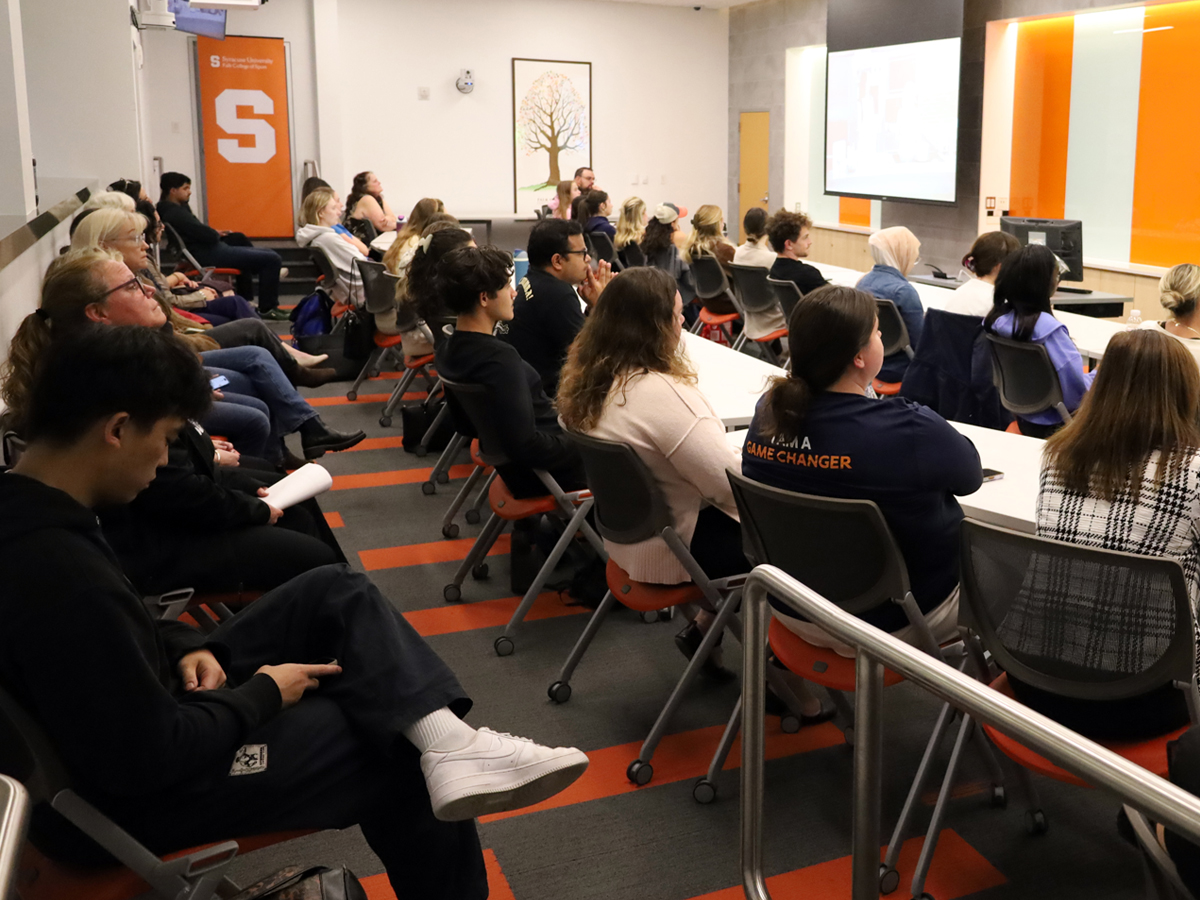
Students, faculty, staff members and community members in the audience sampled both dishes as the demonstrations wrapped up, and the food made an impression.
“I really enjoyed the food samples they handed out, and I’m thinking of how to implement their recipes into my own food prep,” said Archer Pendleton, a sophomore studying nutrition science.
Sarah Harper, a nutrition science graduate student, said she appreciated how informative the lecture and demonstration were on the benefits of plant-based eating.
“It was a lovely representation of how to prepare easy-to-make, flavorful meals that are nutrient dense. I have already made both recipes at home,” Harper said.
The Joan Christy Lecture Series is made possible by The Christy Food and Culture Fund, established in 2005 through the generosity of Syracuse University nutrition alumna Joan Christy ’78, G’81.