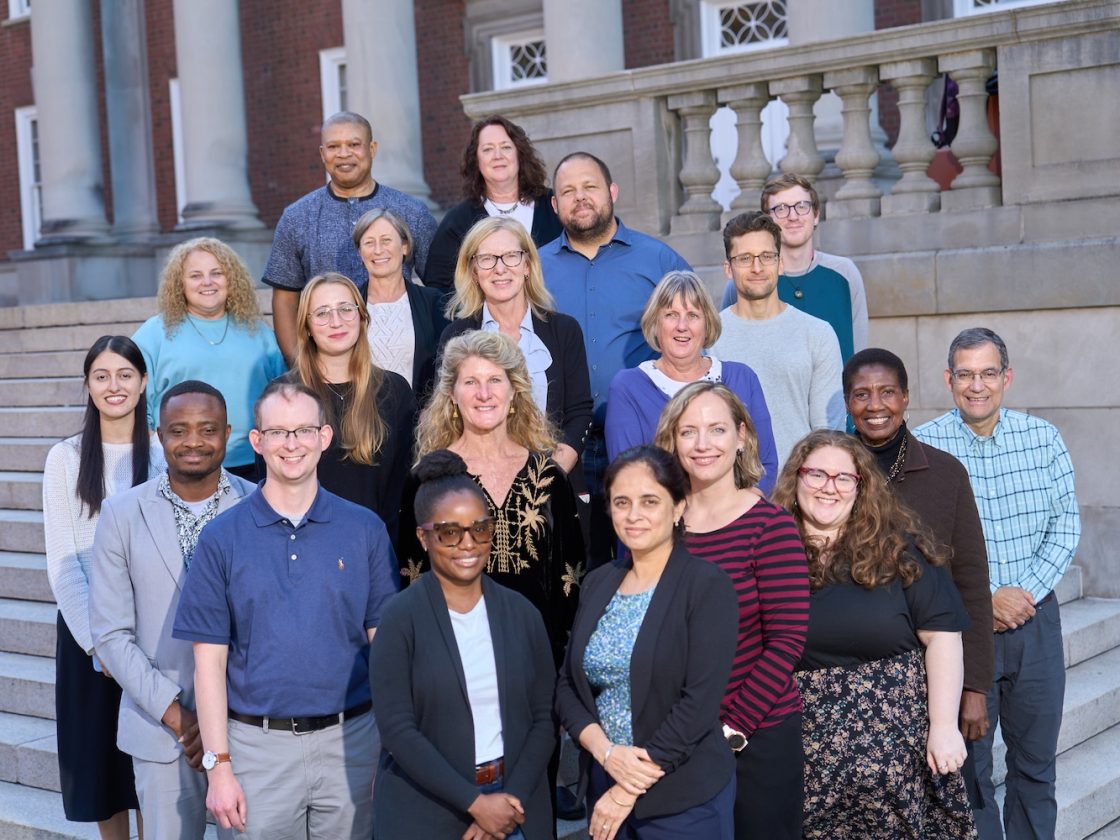
The Public Health Department has expanded offerings for the MPH degree to include concentrations in epidemiology and public health policy.
Maxwell School Adds Epidemiology, Public Health Policy Concentrations to MPH Program
The Maxwell School of Citizenship and Public Affairs is adding concentrations in epidemiology and public health policy to its master of public health (MPH) program, complementing the existing global health concentration. The move draws on the deep expertise of the department’s internationally recognized epidemiology faculty as well as Maxwell’s standing as the nation’s top-ranked graduate school for public affairs, according to U.S. News and World Report.
“Our public health faculty are already recognized around the world for their work in epidemiology, from wastewater surveillance to infectious disease modeling,” says Maxwell School Dean David M. Van Slyke. “Pairing that capability with an established expertise in global health and with Maxwell’s tradition of public policy education gives our students many more educational options and an unmatched foundation to lead in the public health field, whether they end up at a multinational nonprofit or a government agency, working for a healthcare system or in a laboratory.”
The 42-credit, two-year MPH program, accredited by the Council on Education in Public Health, provides students with the core knowledge and skills needed to develop, implement and advance evidence-based public health initiatives, programs and policies. The advanced degree can also be achieved through an accelerated bachelor of science and master’s degree program.
The epidemiology concentration trains students to investigate the patterns and causes of disease across populations, building advanced skills in biostatistics, epidemiologic study design and spatial and geographic analysis to understand how chronic and infectious diseases emerge and spread. Students will learn from top-epidemiologists, and train alongside professors and postdoctoral scholars on the cutting edge of infection disease detection and control.
The public health policy concentration trains students to understand and analyze healthcare and public health systems, including how these entities are financed, organized and reformed, and to design, evaluate and advocate for policies that improve health outcomes and address real-world public health challenges.
The global health concentration, already established in the program, trains students to examine how policies, cultural norms and environmental factors shape health outcomes around the world, learning from faculty with international expertise on environmental health, substance abuse and health communications.
David Larsen, chair of the Public Health Department, says the new concentrations formalize strengths the department has built over years of research and community partnership.
“Our faculty have been doing this work—tracking disease, shaping health policy, training public health’s next generation—for a long time,” says Larsen, who has drawn international attention for his research and initiatives such as the New York State Wastewater Surveillance Network, named a Centers for Disease Control and Prevention Center of Excellence.
Larsen adds, “These new concentrations give students more paths to build on that foundation, whether their goal is to investigate outbreaks in the field or shape the policies that determine how we respond to them.”
Visit the MPH program page for information on admissions, course requirements and the new concentrations, or register for the upcoming virtual information session.