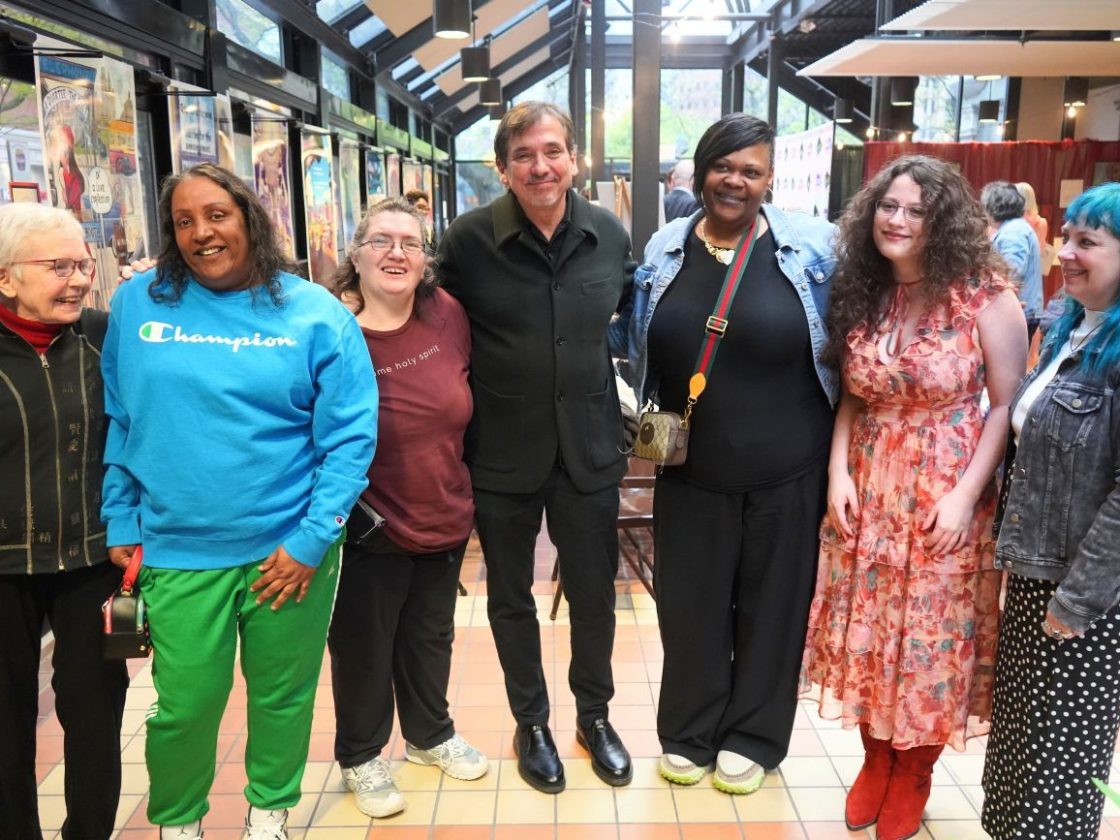
Project Mend editors attending a local event, from left, are: Bonnie Shoultz, Marion Rodriguez, Rebecca Botting, Patrick W. Berry, Melinda Agnew and Katharine Nikolau '24. At right is Amy D'Amico, a representative of the Center for Community Alternatives. (Photo by Jack VanBeveren)
Lender Center Student Fellowships Offer Unique Hands-On Storytelling Opportunity
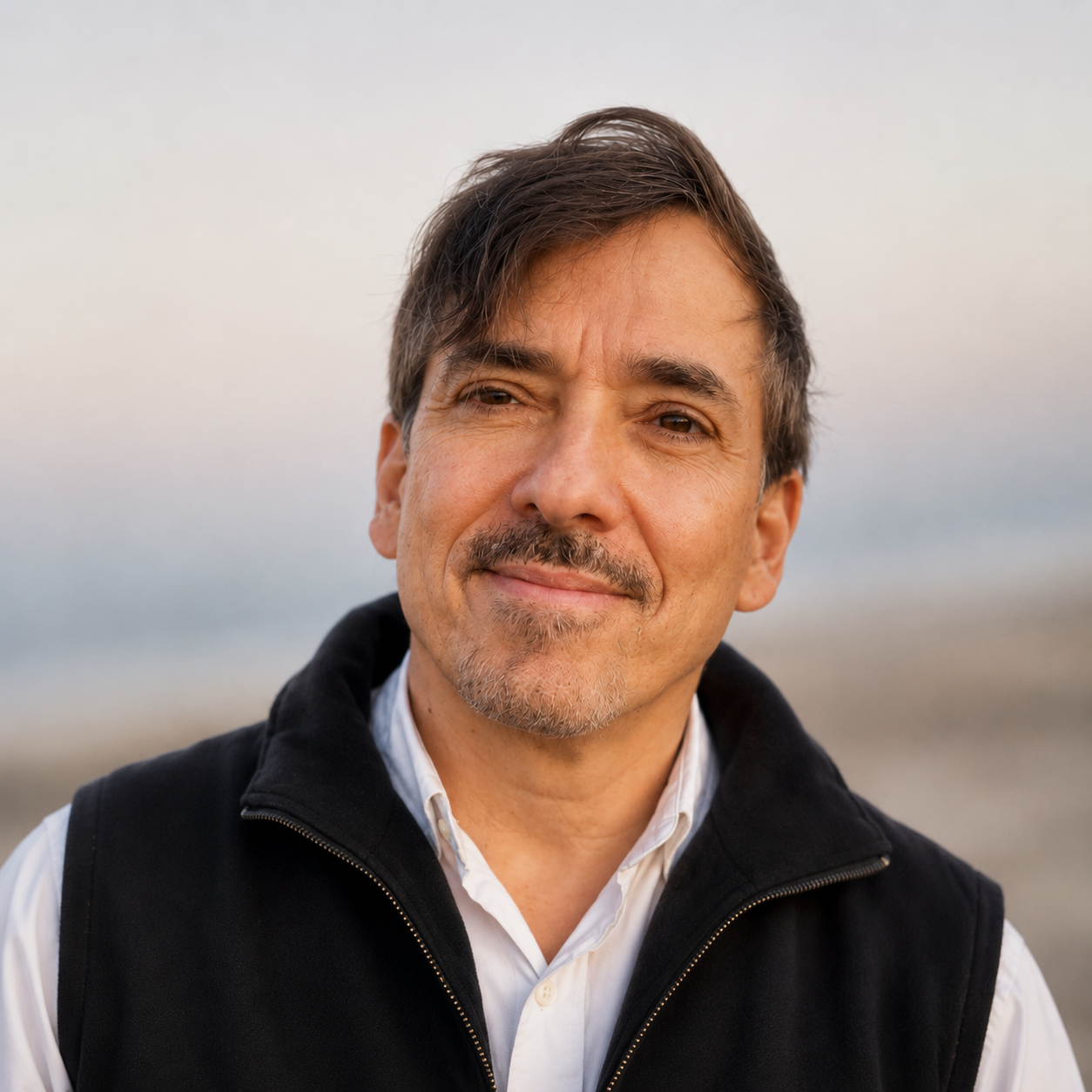
Students from all backgrounds have the opportunity to work with acclaimed researcher and storyteller Patrick W. Berry and the award-winning Project Mend by applying for the 2026-28 Lender Center for Social Justice Student Fellowship. Berry, an associate professor of writing, rhetoric and composition in the College of Arts and Sciences, is the 2026-28 Lender Faculty Fellow.
Berry’s work explores how publishing and collaborative media production can create new opportunities for civic participation, public dialogue and professional development for people impacted by the criminal legal system.
Project Mend is a multimodal, grassroots-level, open-access archive of creative works and narratives produced by incarcerated and formerly incarcerated individuals and their communities.
The fourth volume of “Mend,” a print and digital journal of published fiction, nonfiction, poetry and visual art, was released last spring.
For his work on Project Mend, Berry was awarded the $10,000 Syracuse Prize from CNY Arts. He was also recognized with the Coalition for Community Writing‘s Outstanding College-Community Partnership Award.
Hands-On Experience
Lender Student Fellowships are open to graduate and undergraduate students from all schools and colleges. Five students will be selected to work with Berry as active co-creators alongside Project Mend’s interdisciplinary editorial and production teams.
Along with hands-on experience in collaborative scholarship, community partnership and public-facing media production, students will review and edit submissions, interview writers, develop podcasts, assist with film, multimedia and theater productions or conduct research on incarceration, reentry, community publishing and the public humanities.
Berry says he hopes student fellows “gain a richer understanding of incarcerated and formerly incarcerated people beyond statistics or stereotypes… [and see] the humanities as having the potential to promote public dialogue and communication across difference.”
Stipends Provided
Undergraduate fellows receive a $2,000 stipend and graduate student fellows receive $5,000 across the two-year research term. They also have access to additional research funds and support. Fellows will present their work at a symposium in May 2028.
Application deadline is Friday, Oct. 2, at 5 p.m.
An information session will be held Wednesday, Sept. 16, at 2 p.m. in 207 Bowne Hall. For more information, visit the program webpage.