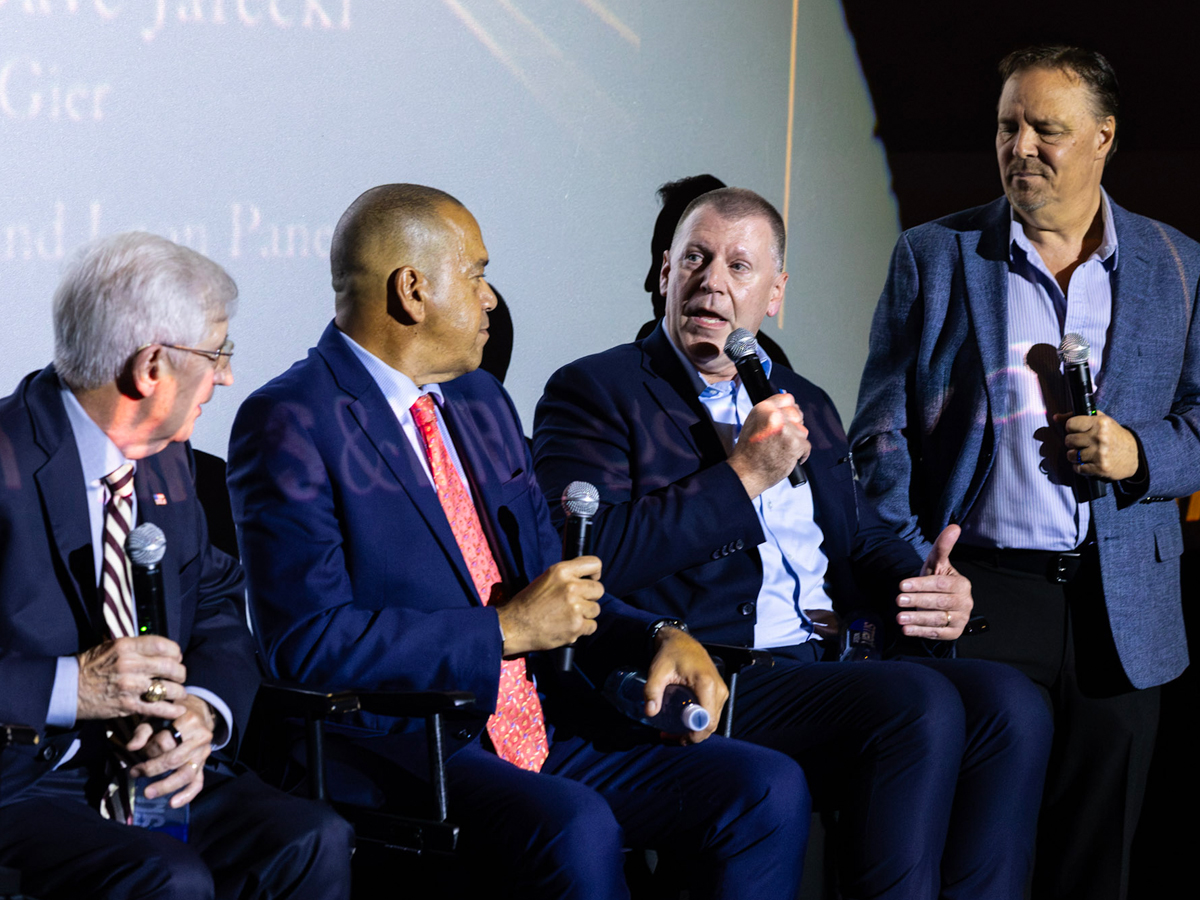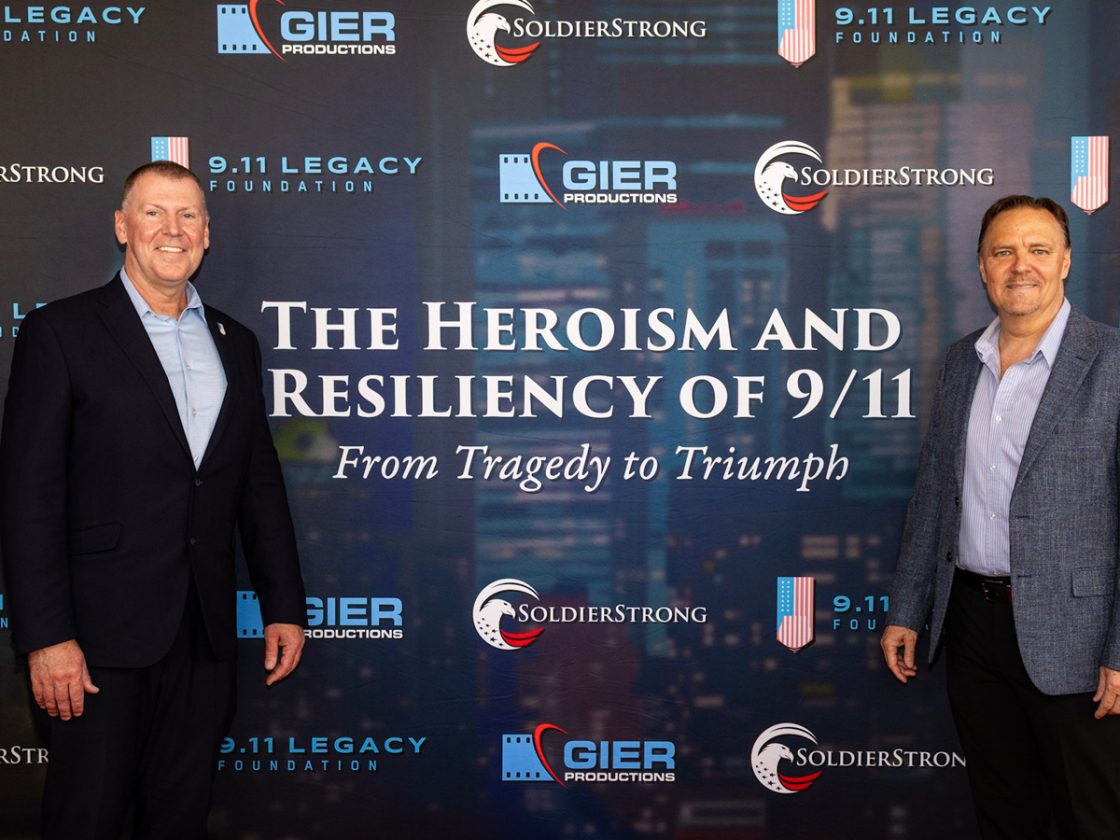
Chris Meek (left), executive producer of the new documentary, "The Heroism and Resiliency of 9/11," poses with Michael Gier, director and producer, during the documentary's premiere in New York City.
Alumnus Launches 9/11 Curriculum for a Generation Born After 2001
More than 100 million Americans weren’t born when the Sept. 11, 2001, terrorist attacks happened.
To them, the day’s events are part of a history they don’t fully understand, says Chris Meek ’92, G’18, founder and CEO of the nonprofit 9/11 Legacy Foundation. His foundation tells the stories of the survivors, first responders and the families of those lost.
As the country observes the 25th commemoration of the attacks that killed 2,977 people—including 30 Syracuse University alumni—Meek’s foundation recently launched its National 9/11 Curriculum Framework featuring engagement pathways, leadership stories and lesson plans.
Meek urges people across the country to engage in dialogue about the first responders who showed extraordinary courage in the face of unimaginable tragedy.
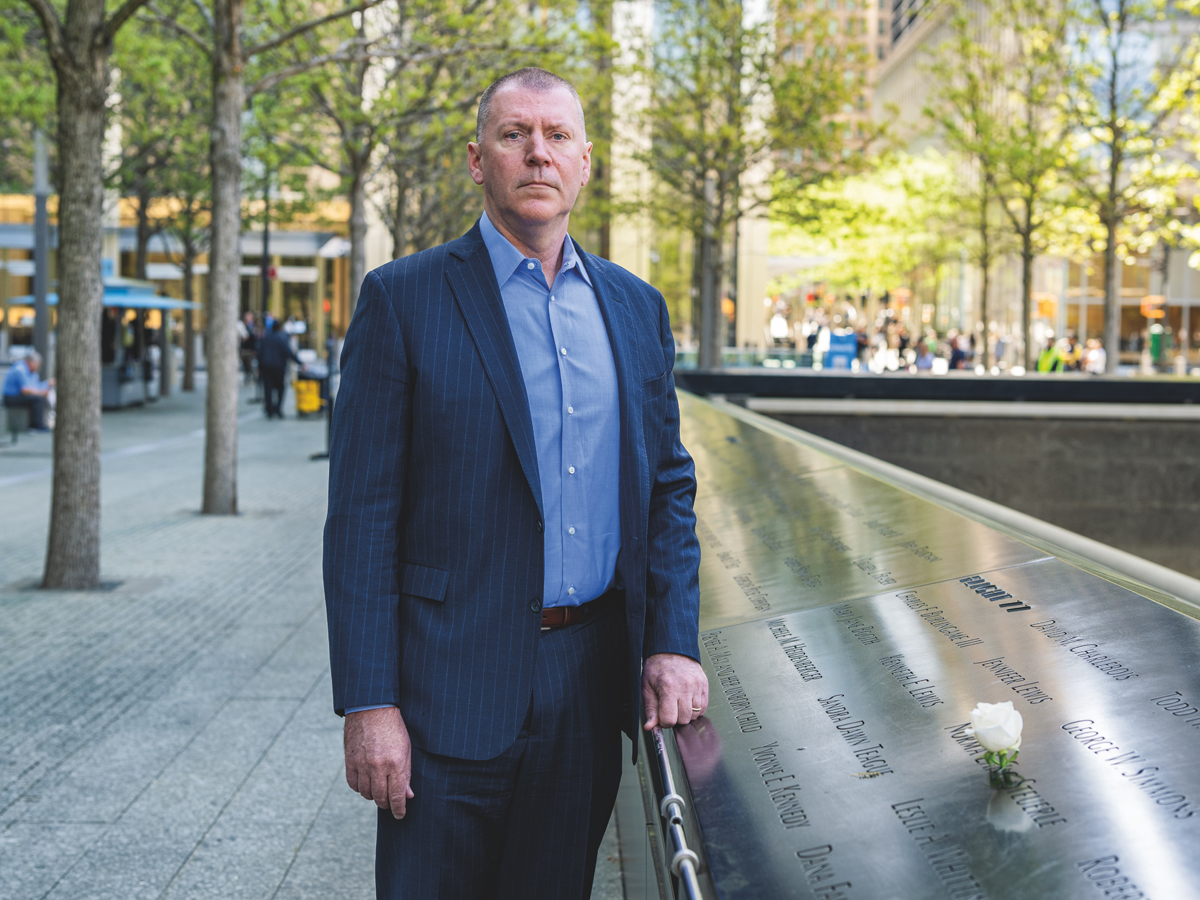
“We vowed to never forget, but there’s an entire generation of Americans who weren’t alive when Sept. 11 happened,” says Meek, executive producer of “The Heroism and Resiliency of 9/11,” a documentary that will be screened on campus on Sept. 14. “They don’t know what they’re not supposed to forget, so I’m trying to change that narrative from ‘Never Forget’ to ‘We Remember’ by sharing those stories and having people talk about what happened.”
Meek was at Goldman Sachs on Broadway Street in lower Manhattan, less than half a mile from Ground Zero, when the first plane crashed into the World Trade Center’s North Tower at 8:46 a.m. Meek and his colleagues made their way down the stairs from their 19th floor office building after the first plane crash and sought refuge at the American Stock Exchange across the street. That’s where they were when the North Tower collapsed.
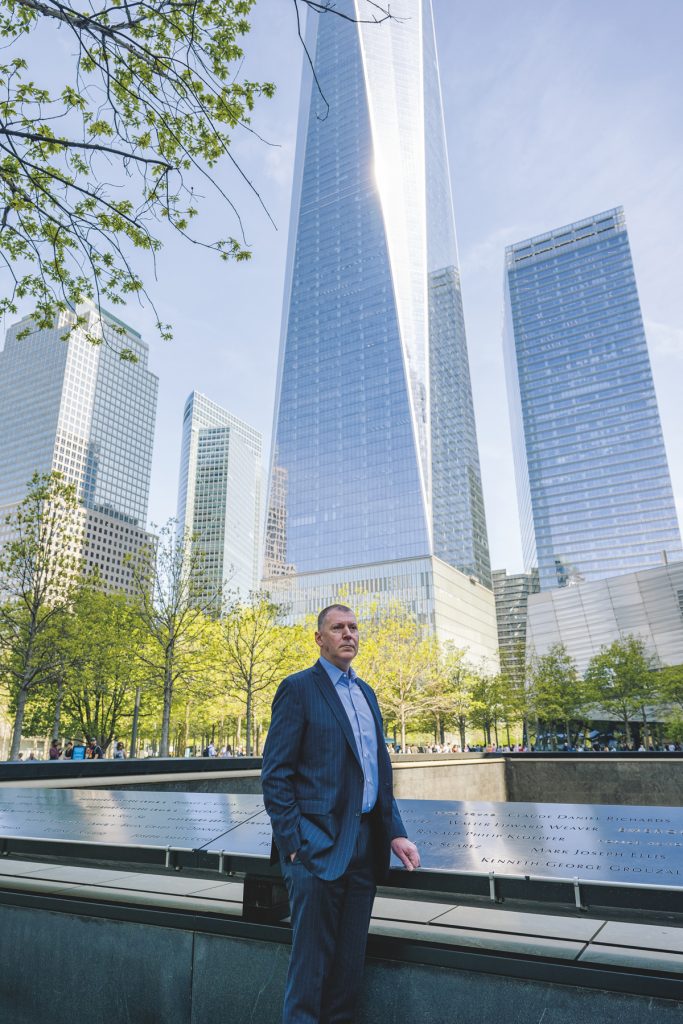
From that firsthand experience, the curriculum equips schools, families, community organizations and civic groups with tools to connect with the legacy of Sept. 11 through local memorials, firsthand testimony and stories of those who led under extraordinary pressure.
“This curriculum is reflective. There’s a writing component where everyone can sit in their own quiet moment and answer what 9/11 means to me? What does remembering mean to me? What does heroism, leadership and patriotism mean to me?” says Meek, author of “Keeping Our Nation’s Promise: 9/11 and the Stories That Still Shape Us.”
Meek, who earned bachelor’s degrees in economics and political science from the College of Arts and Sciences and the Maxwell School of Citizenship and Public Affairs, and a master’s degree in public administration from the Maxwell School, sat down with SU Today to reflect on this somber anniversary and explore the observances planned across the country.
What remembrances are planned this year?
There are remembrances at all three attack sites: Ground Zero in New York City; the Pentagon, where American Airlines Flight 77 crashed; and in Shanksville, Pennsylvania, where United Airlines Flight 93 crashed.
Our website has a listing of all the events planned across the country: observances, 5K runs, 10K bike rides, stair climbs and service projects. For those in the Washington, D.C., area, on Sept. 12, the Pentagon is hosting an official groundbreaking for the National 9/11 Pentagon Memorial Visitor Education Center, a space dedicated to explaining what happened there on Sept. 11, 2001.
What does active remembrance look like and what does that phrase mean to you?
It’s about making what happened part of you: reflecting on it, understanding why it happened and who was affected. Go learn about a victim. Learn about the family of the first responder in your town who was lost that day, and what’s happened in their firehouse or police station since. It’s not just reading a lesson plan; it’s about remembering what heroism, patriotism and resilience are all about. Our goal is to make sure those 3,000 people who were murdered are never forgotten, but we prefer to say we remember so they never are.
Through collective reflection, how can the events of that day serve to bring us closer together as a country?
We all went through it in our own different ways. Those of us who were there saw the horrors, and we must deal with it. Others saw the attacks on TV and were in shock. For our country, which saw the worst in humanity on Sept. 11, 2001, on Sept. 12, we saw the best in humanity.
Part of what we’re trying to do is to get back to how America was on Sept. 12 and unify this country. People were putting flags everywhere. They were painting American flags on their barns. Yellow ribbons were tied around trees and candlelight vigils were held nationwide. Every American was impacted by that day.