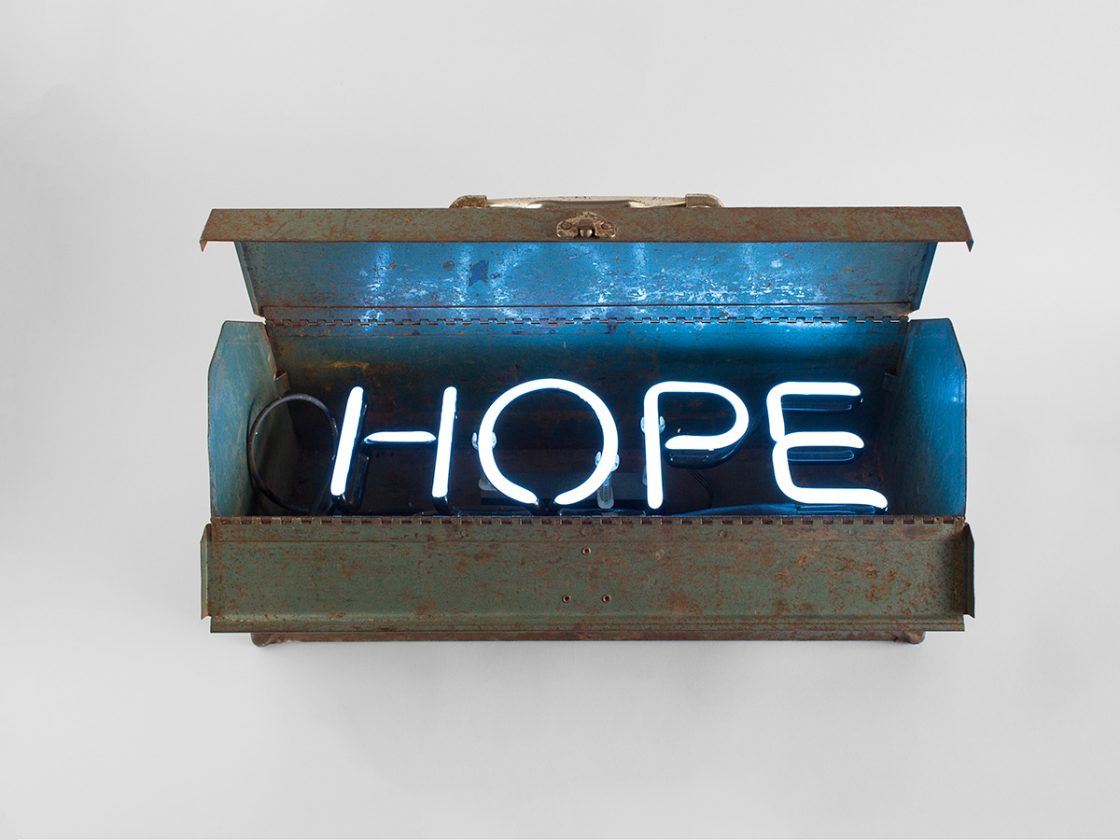
"Pandora’s Box," 2005. Andrew Junge. Neon, toolbox, 13.75 x 19.25 x 11.5 in. (Courtesy of Recology San Francisco Artist in Residence Program)
Syracuse University Art Museum Opens Fall Season With 5 Exhibitions
The Syracuse University Art Museum opens its fall season this month with four new exhibitions and the return of its permanent collection exhibition, each exploring in its own way what it means to be human.
Those exhibitions range from Letterio Calapai’s prints exploring faith and outer space, to Helen Zughaib’s large-scale installation on the mosaic of American migration, to works of art built from recycled materials, to four millennia of humanity’s evolving relationship with the environment. The museum invites the campus and Syracuse communities to consider the richness and complexity of the human experience today.
‘Reclaimed: The Art of Recology’
In the Joe and Emily Lowe Galleries, “Reclaimed” gathers the work of 33 artists who found their materials in an unlikely place: Recology San Francisco’s Public Reuse and Recycling area. Each artist was selected to participate in Recology’s coveted artist-in-residence program, in operation since 1990 with the belief that art plays a unique role in educating and inspiring the public. The premise behind the residency is that art can change how we see waste, consumption, and the possibility of sustainable communities.
Featuring 51 objects, “Reclaimed” shows artwork that is varied, unusual, yet familiar: from paintings produced with recycled house paint to tapestries made from used ties, shirts and other fabrics to sculptural vases crafted from Ethernet and coaxial cables. The hybrid concoctions are highly creative in execution and form.
“Reclaimed” offers a different way into the conversation around ecology and a sustainable future, not through data or policymaking, but through objects that ask us to look again at what we discard and consider the possibility of what it could become.
This exhibition is curated by Emilee Enders. The exhibition tour is organized by Bedford Gallery at the Lesher Center for the Arts, Walnut Creek, California.
‘Space and the Sacred: Letterio Calapai’s Prints’
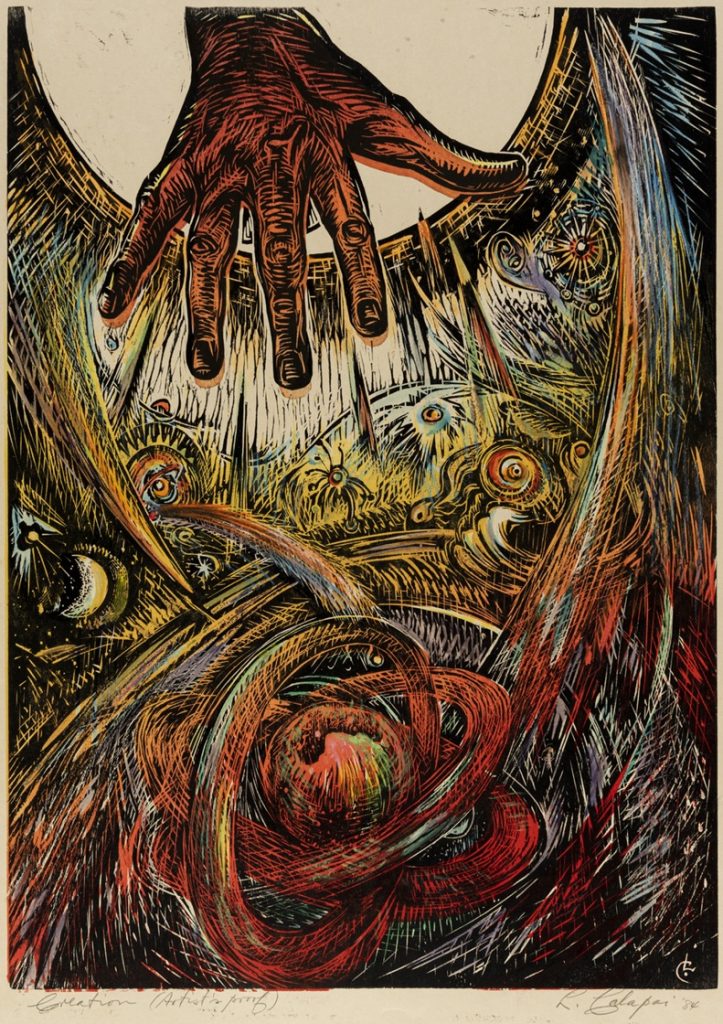
From the 1940s until his death in 1993, Letterio Calapai returned again and again to two subjects that would seem to have nothing to do with each other. One was religion, personal and rooted in centuries of Catholic tradition. The other was the Space Race, public and grounded in science and technology.
Calapai spent nearly half a century exploring these subjects side by side and in doing so illuminated the very human impulse of reaching toward something vast and unseen.
“Space and the Sacred” examines how Calapai’s prints transformed as the conversations around these subjects evolved during his lifetime. He watched humanity leave the earth and set foot on the moon for the first time, while also witnessing the Church modernize itself around him. This exhibition reveals how one man understood the changing world around him.
“Much of what Calapai explored in these works remains relevant today,” says curator Julia Neufeld. “My hope is that visitors come away examining the parallels between the present day and the mid-20th century, and considering what we can learn from looking back at our history.”
This exhibition was curated by Julia Neufeld G’23, G’24.
‘The Art Wall Project: Helen Zughaib: Patterns of Migration’
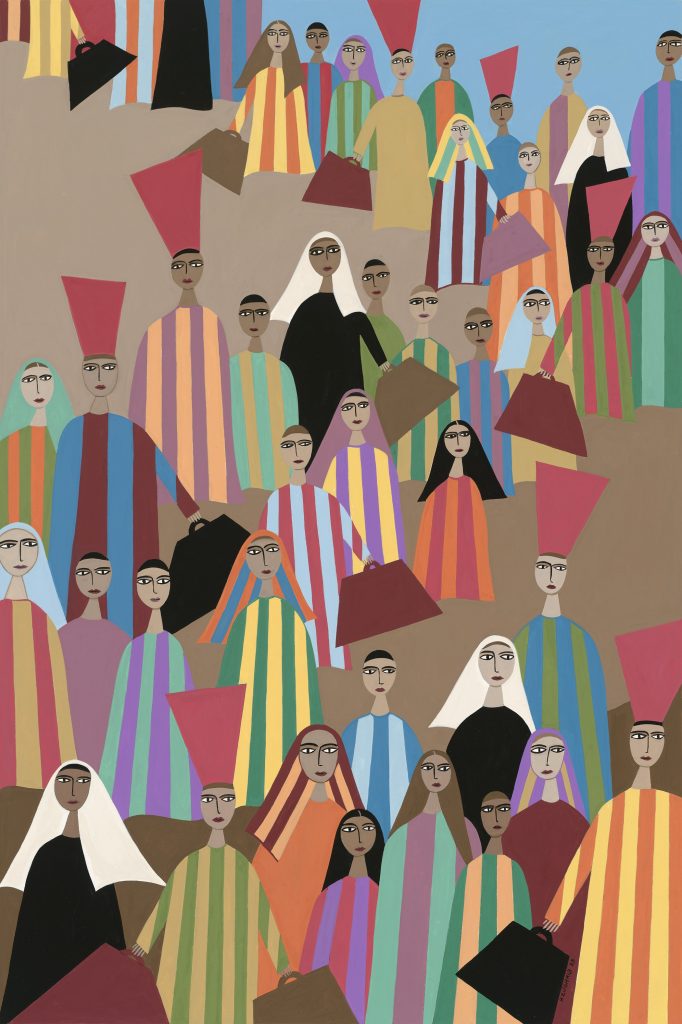
In December 1975, months into the Lebanese Civil War, Helen Zughaib and her family left their home in Beirut. She would go on to study art at Syracuse University and earn a B.F.A. from the College of Visual and Performing Arts.
This fall, the now Washington, D.C.,-based artist returns to campus with “Patterns of Migration,” the sixth installation of the SU Art Museum’s Art Wall Project.
The installation leads with Zughaib’s own family history. In “Stories My Father Told Me,” she paints her father’s childhood across Syria and Lebanon and his journey to the United States.
From there, it expands to follow the people displaced in the years around Arab Spring and the new communities they’ve forged far from home.
‘Collection Spotlight: Jill Nathanson, Contrapuntal’
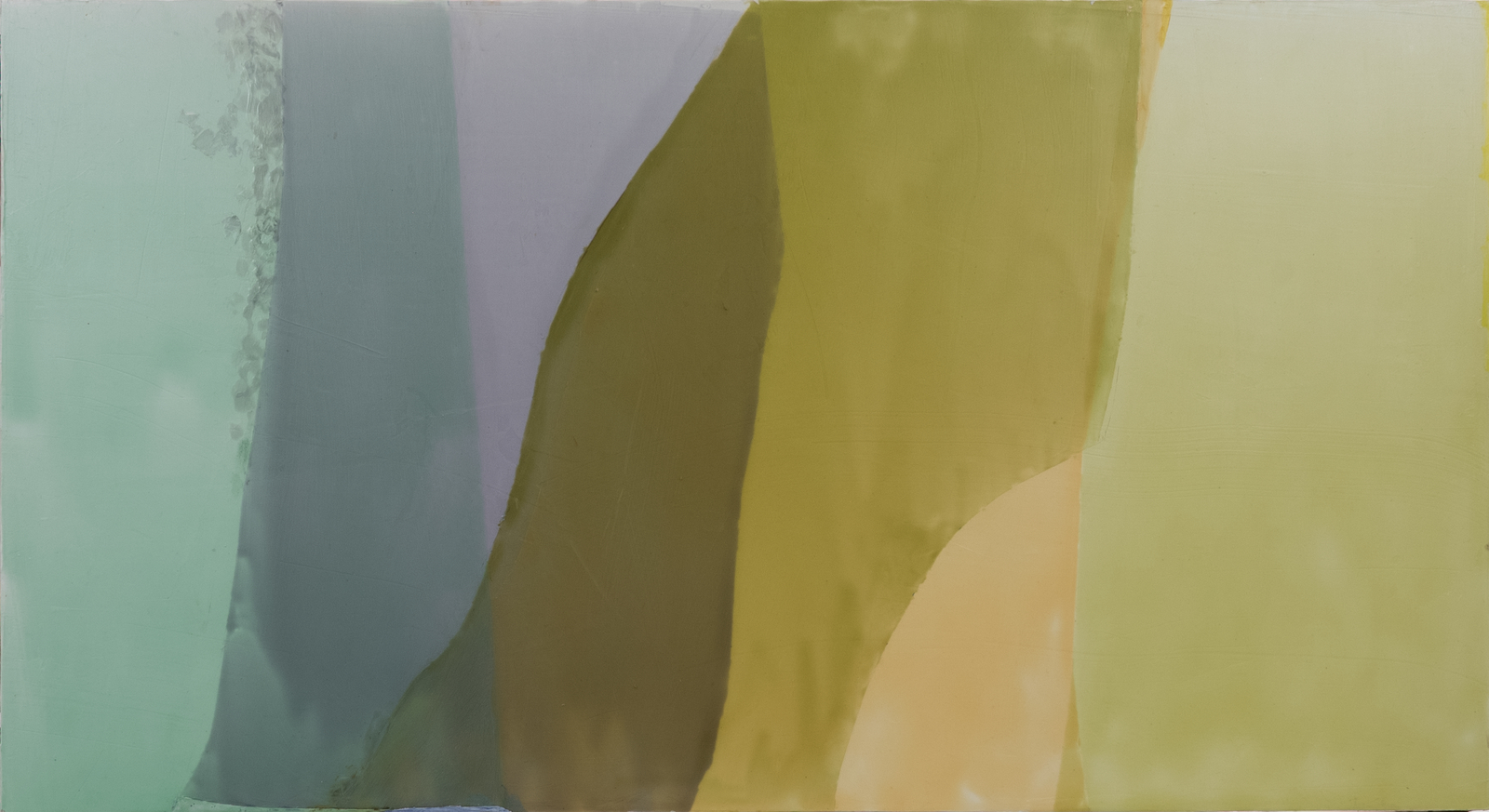
The title “Contrapuntal” comes from the world of music and roughly means “counterpoint,” or the art of composing two independent melodies distinct from one another but bound into a single harmony.
Working in the Color Field tradition, artist Jill Nathanason pours translucent layers of pigmented polymer and acrylic onto panel, one color settling over another creating different hues from the interacting colors. Before she paints, Nathanson composes her studies from cut pieces of theatrical lighting gels, translucent colored films that change the appearance of a stage light.
“Contrapuntal” celebrates a recent gift to the University from the artist and Berry Campbell Gallery and is the seed of an entire year of exploration. The museum will build a year of programming around this one painting to invite as many interdisciplinary conversations as possible, weaving together music, physics, materials science and beyond.
‘Human/Environment: 4,000 Years of Art’
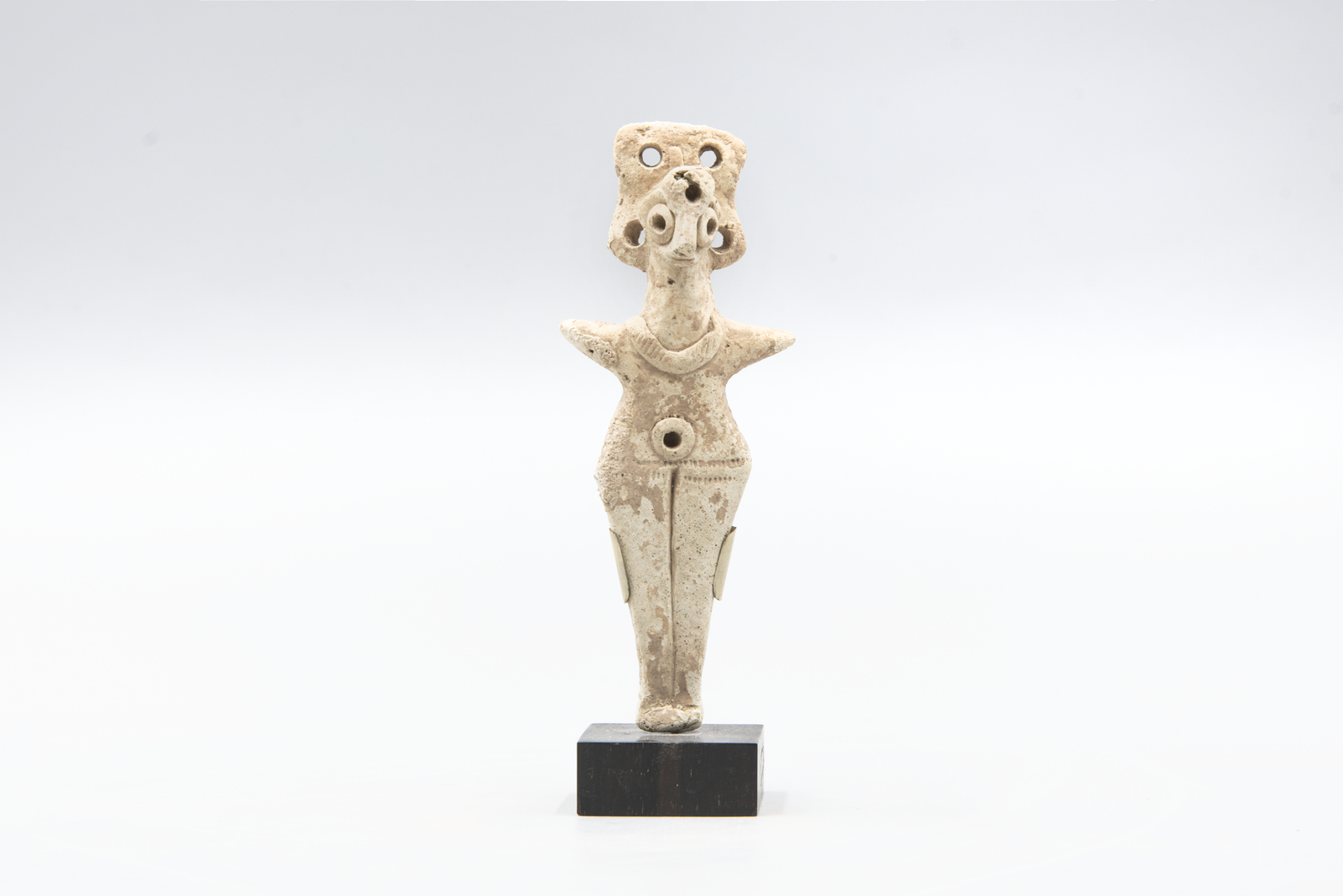
Back for its second year, “Human/Environment: 4,000 Years of Art” continues the four millennia long dialogue between humanity and its environment. The exhibition draws from the museum’s collection of over 45,000 works of art ranging from the ancient to the contemporary.
It is organized around themes such as landscape, the home, places of gathering and the human figure. “Human/Environment” asks the viewers to consider how physical, cultural and material environments shape artistic expression, and vice versa.
“This is a season with real breadth, and we can’t wait for our community to see it. What I love is how these exhibitions speak to what our students and faculty are already thinking about across the sciences, the arts, and everything in between,” says director Emily Dittman.
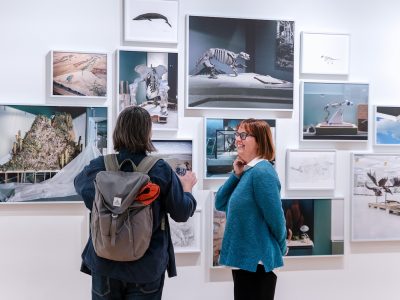
On View This Fall
“Space and the Sacred: Letterio Calapai’s Prints,” “The Art Wall Project: Helen Zughaib, Patterns of Migration,” “Spotlight: Jill Nathanson, Contrapuntal” and “Human/Environment: 4,000 Years of Art” open Aug. 25. “Reclaimed: The Art of Recology” opens Sept. 1. Celebrate the season at Opening Night on Wednesday, Sept. 10, from 4:30 to 6 p.m.