
Researcher Targets Parkinson’s With Nanoparticle Therapy
Inside every human cell, a tiny structure called a lysosome acts like a recycling center, breaking down toxic waste, clearing damaged proteins and helping keep the cell functioning properly.
When that recycling center stops working because the lysosome loses the acidic conditions it needs to function, the consequences ripple outward. Waste builds up, proteins accumulate and eventually the cell’s internal systems begin to break down. This type of dysfunction is commonly associated with neurodegenerative diseases such as Parkinson’s.
Newly published research from Jialiu Zeng, assistant professor of biomedical and chemical engineering in the College of Engineering and Computer Science, suggests that nanoscopic particles delivered into the body could help restore the recycling function, and in doing so, slow disease progression at its cellular root.
Instead of just treating symptoms, Zeng’s novel approach uses acidic nanoparticles to restore lysosomal function and repair the cell’s built-in cleanup system. The results of her study, published in Advanced Healthcare Materials, demonstrate this strategy in both cell and animal models of Parkinson’s disease.
“Rather than simply trying to block damage after it occurs, this approach aims to restore the cell’s own ability to clear toxic material and maintain homeostasis,” Zeng says. “We think this makes it especially promising, because it could be adapted to other diseases in which harmful proteins build up and the cell’s recycling system isn’t working properly.”
The study, published in April, was carried out in collaboration with assistant professor Chih Hung Lo and his lab in the College of Arts and Sciences’ Department of Biology. Zeng and Lo’s labs, part of the University’s interdisciplinary neuroscience program, work closely together to better understand the underlying disease mechanisms for conditions including Alzheimer’s, Parkinson’s and multiple sclerosis.
How the Research Works
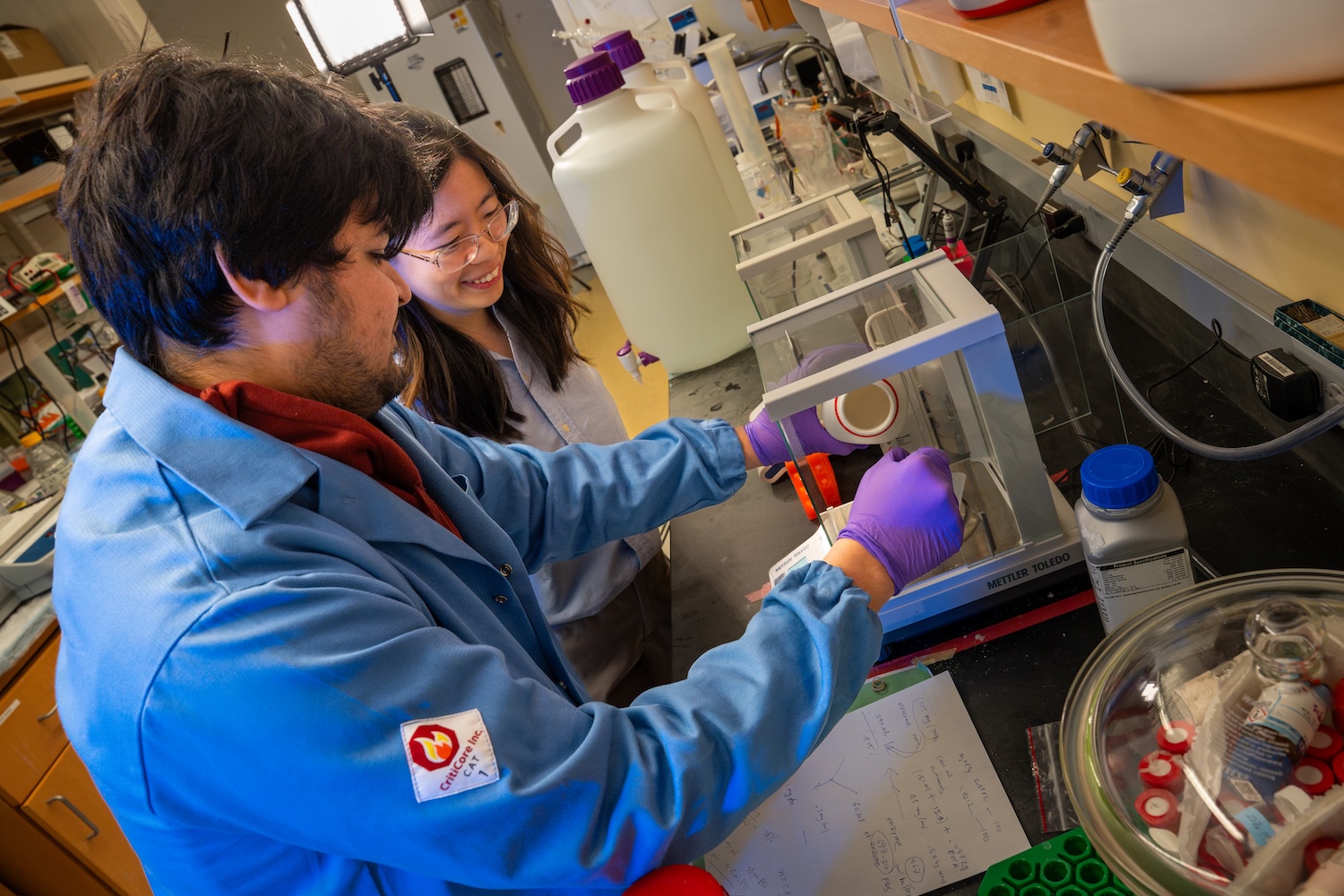
Zeng focuses on developing tools to deliver therapies more precisely within the body. One such tool is nanoparticles—tiny spherical structures formed from long, flexible polymer chains.
How small exactly is nanosized? Ten to the power of minus nine, tinier than a cell itself.
“Think of them like long, soft chains that tangle together and eventually form a tiny ball,” she says. “That’s what makes a nanoparticle. Because they’re so small, cells can take them in pretty easily.”
Zeng is applying this nanoparticle-based strategy across multiple disease areas, including metabolic disorders and Parkinson’s disease, with a focus on addressing dysfunction at the cellular level—both to better understand early changes and to deliver more precise, effective treatments.
In Parkinson’s, impaired lysosomal function and toxic protein buildup contribute to neuronal damage. Lysosomes require an acidic environment to function, similar to how stomach acid helps break down food. In disease, this acidity is reduced and the “recycling center” function stops working, allowing waste to accumulate.
“You can think of it like stomach acid—helping break things down,” Zeng says. “Lysosomes need to stay very acidic to work properly. Our nanoparticles go into the cell, break apart, and release acid, which helps restore that environment. That’s how they get the lysosomes working again.”
Her newly published study demonstrated how restoring the pH environment in lysosomes reduced toxic protein aggregation, a hallmark of Parkinson’s, in both cell and animal models, thereby protecting the brain cells responsible for movement that are progressively lost during the disease.
Zeng’s work also suggests that lysosomal dysfunction may be an early indicator of disease, observed across conditions ranging from Parkinson’s to metabolic disorders such as obesity and diabetes.
“When lysosomes start to lose function and you’re no longer able to clear unwanted material, it can signal that harmful processes are beginning to build up,” Zeng says. “It may serve as an early warning sign.”
For that reason, Zeng and Lo are also working to develop biomarkers that can detect changes in lysosomal pH at early stages.
What’s Next
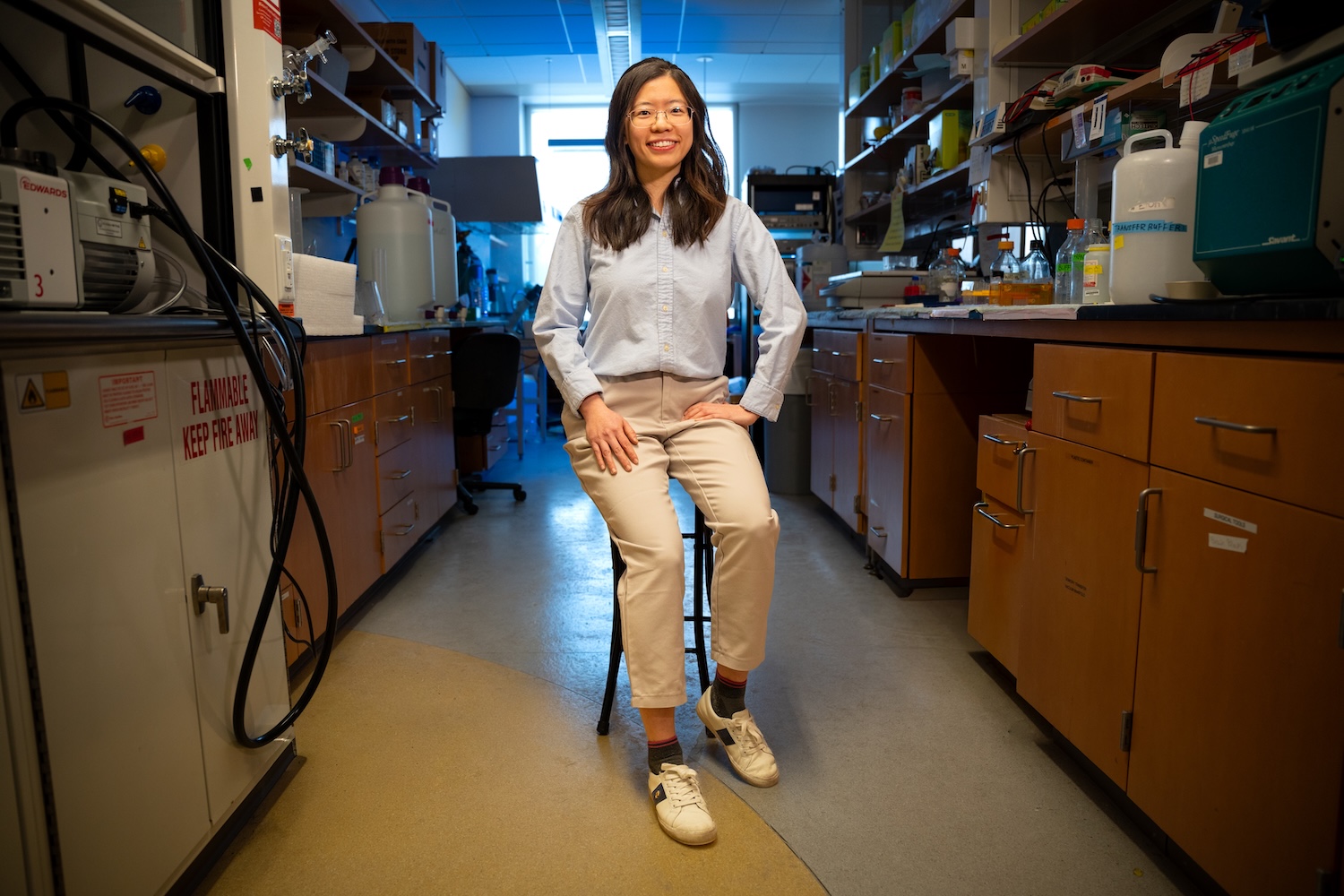
The next step Zeng is taking with her nanoparticle research is tackling how to make them better at reaching the brain, where they’re needed.
The brain has a built-in security system called the blood-brain barrier, which helps protect the organ from harmful substances but also blocks most medicines from getting through. That means even good treatments may never reach the place they are needed to work.
To address this, Zeng is designing nanoparticles with features that can be recognized by receptors at the barrier, allowing more efficient transport into the brain.
“If you inject a drug, often less than 1% actually makes it into the brain,” Zeng says. “If we can improve how well it gets across the blood-brain barrier—even by several fold—it could make treatments much more effective, or allow us to use much lower doses. That’s why this step is so important.”
Looking ahead, Zeng is working to further validate and refine this approach with an eye toward potential clinical translation.
“There are already a few FDA-approved nanoparticle-based drugs and vaccines, mainly in cancer and infectious diseases, but not yet for neurodegenerative conditions,” she says. “At this stage, we are focused on testing in mouse models and building the foundation for future studies in larger animal models.”
She shares adjacent lab space with Lo, her close collaborator, and together they pursue interdisciplinary research to develop new tools and therapies for inflammatory, metabolic and neurodegenerative diseases.
Students interested in joining the lab are encouraged to reach out.
“We welcome inquiries from motivated students who are interested in our work,” Zeng says.