2 A&S Faculty Members Receive Prestigious MIRA Research Awards
Earning a Maximizing Investigators’ Research (MIRA) Award from the National Institutes of Health (NIH) is among the most competitive distinctions a biomedical researcher can achieve. Two faculty members in the College of Arts and Sciences (A&S) have just joined those prestigious ranks.
Angela Oliverio, assistant professor of biology, and Shahar Sukenik, assistant professor of chemistry, have each been awarded the grants through NIH’s National Institute of General Medical Sciences.
The awards provide each faculty member approximately $2 million over four to five years to support their research initiatives, meaning comprehensive support for an investigator’s entire research program. By freeing recipients from the constraints of traditional grant applications, MIRA awards are designed to give researchers greater financial stability to tackle bigger, bolder questions; more freedom to shift focus when promising new discoveries emerge; and more time to conduct actual research activities and mentor junior researchers rather than having to continually write grant applications.
The awards are highly competitive and carry significant prestige. Duncan Brown, vice president for research, calls them “a phenomenal boost to a researcher’s investigative path” and says the status signals NIH recognition of “the strong work, quality and innovativeness of Syracuse University researchers.”
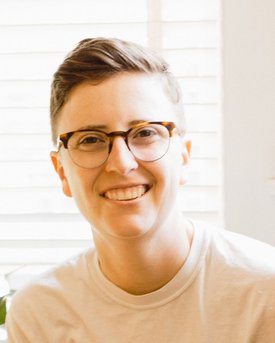
Oliverio studies how microscopic organisms—bacteria and other microbes—interact with each other and their environment, and what those interactions mean for larger ecosystems. Her team is working to is working to understand which microbes thrive together in a given environment, how microbial communities shift as conditions change and how the work microbes do in nature may be affected by climate change and other global pressures.
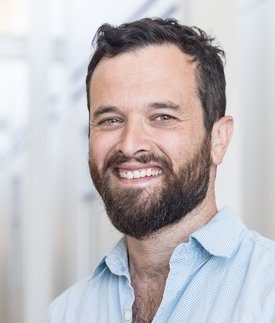
Sukenik’s research centers on how proteins, the molecules that power human cells, behave in different chemical environments both inside and outside the cell, and what happens when that behavior goes wrong in disease. His lab uses live cell imaging, large-scale experiments and computational modeling to study how cells react to stress and how a particular class of highly flexible proteins that don’t hold a fixed shape contribute to both healthy cell function and disease.
This year’s awards follow three made to Syracuse University faculty in 2025. Those recipients were Yi Zheng, assistant professor of biomedical and chemical engineering in the College of Engineering and Computer Science; Heidi Hehnly, associate professor of biology, A&S and Carlos Castañeda, associate professor of biology and chemistry in A&S.