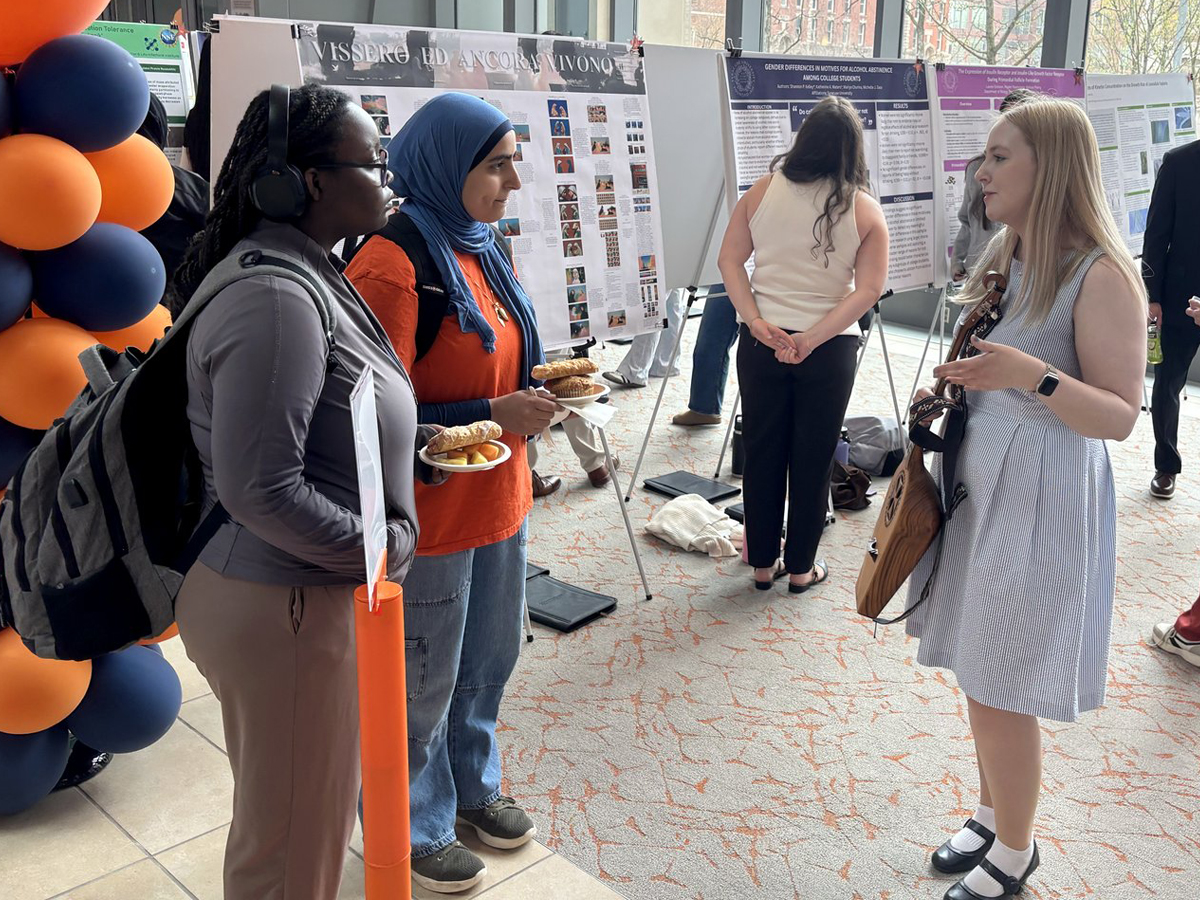
Anna Meehan holding her panduri during a trip to Georgia in spring 2026. The panduri is a traditional three-string plucked instrument widely used in Georgia for folk music, social gatherings and storytelling.
A College Experience Designed for Impact, Engagement and Growth
What makes a fulfilling college experience? For some students, it’s the opportunity for hands-on research. For others, it might be studying abroad or engaging with communities beyond campus. In the College of Arts and Sciences (A&S), students pair rigorous academics with experiences that build the confidence and skills needed for success in their careers, graduate study and life beyond the classroom.
By encouraging students to think broadly, collaborate across disciplines and connect ideas in meaningful ways, this multifaceted approach fosters intellectual flexibility, which is a cornerstone of the College’s Academic Strategic Plan, Shaping the Future: Innovation, Engagement and Impact.
The graduating seniors featured below exemplify how A&S’s wide-ranging opportunities prepare students to lead and innovate in an ever-evolving world.
Lessons Learned Through Georgian Music
Anna Meehan is a triple major in music history and cultures; Russian language, literature and culture; and international relations with a minor in history. For her, understanding the world means listening closely, sometimes across languages, borders and centuries. Her research examines how traditional music shapes and reflects cultural identity, contributing to broader conversations about community, heritage and global exchange.
Meehan’s passion for Georgian music began during a study abroad program to that country in 2025. “I fell in love with the local music tradition right away,” she says. “I met regularly with traditional instrument craftsmen who built my panduri and helped integrate me into musical life in Georgia. I’ve been committed to studying Georgian music ever since.”
Her research explores how music permeates daily life in Georgia and helps individuals interpret what it means to be “Georgian” in both local and global contexts. Through fieldwork, conversations with musicians and hands-on study of instruments, Meehan analyzes how traditional practice intersects with cosmopolitan identity, tourism, digital media and contemporary folk-fusion genres.
At Commencement, Meehan will serve as a student marshal, a reflection of her distinguished achievement in academics and service to the University. After graduation, she will move to Tbilisi, Georgia, enrolling in the Georgian Folk Music program at the Tbilisi State Conservatory while continuing fieldwork. Looking to the future, she hopes to pursue a Ph.D. in ethnomusicology and a career dedicated to researching and teaching others about the music that continues to inspire her.
An Interdisciplinary Approach to Investigative Work
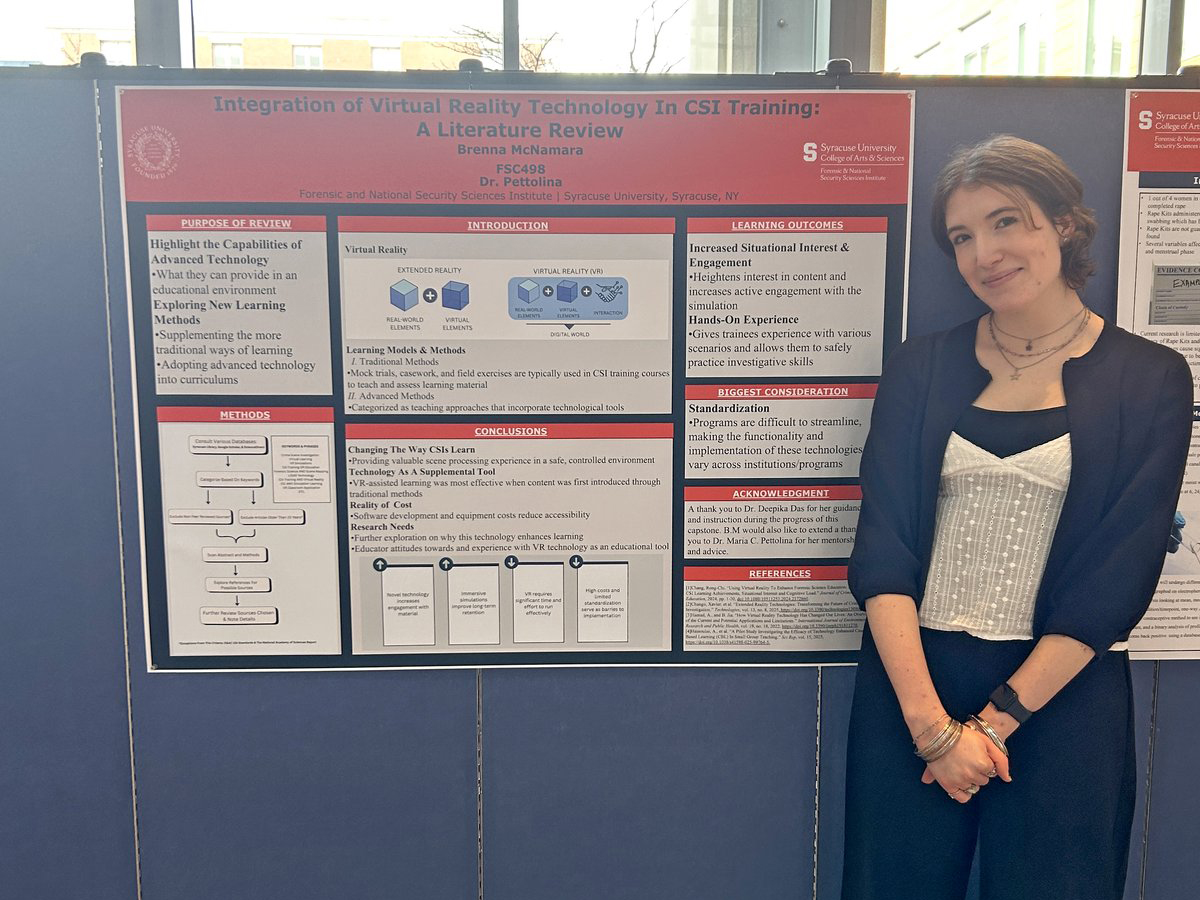
Solving criminal investigations requires curiosity, a careful eye for detail and a keen focus on piecing together facts from evidence in the pursuit of justice. Brenna McNamara honed these critical skills through an interdisciplinary path in A&S that blended coursework in forensics, psychology and computer science.
These experiences have prepared her to contribute to the growing field of digital forensics, which involves finding, preserving and analyzing information from computers, phones and other digital devices to understand what happened in a particular situation.
McNamara secured an internship with the National Student Leadership Conference, which proved transformative. “My internship taught me more than I ever expected,” she says. “Sharing my knowledge, working as a team, communicating clearly—those were essential lessons.”
As she looks ahead, McNamara is most excited about immersing herself in the growing intersection of technology and forensics. “Studying both fields simultaneously at Syracuse allowed me to see how well they complement each other,” she says. “Now I can combine what I know about both.” This fall, she will begin Boston University’s master’s program in computer information systems with a concentration in digital forensics, taking the next step toward a career defined by inquiry, innovation and an unwavering commitment to uncovering the truth.
Answering Really Big Questions at the Molecular Level
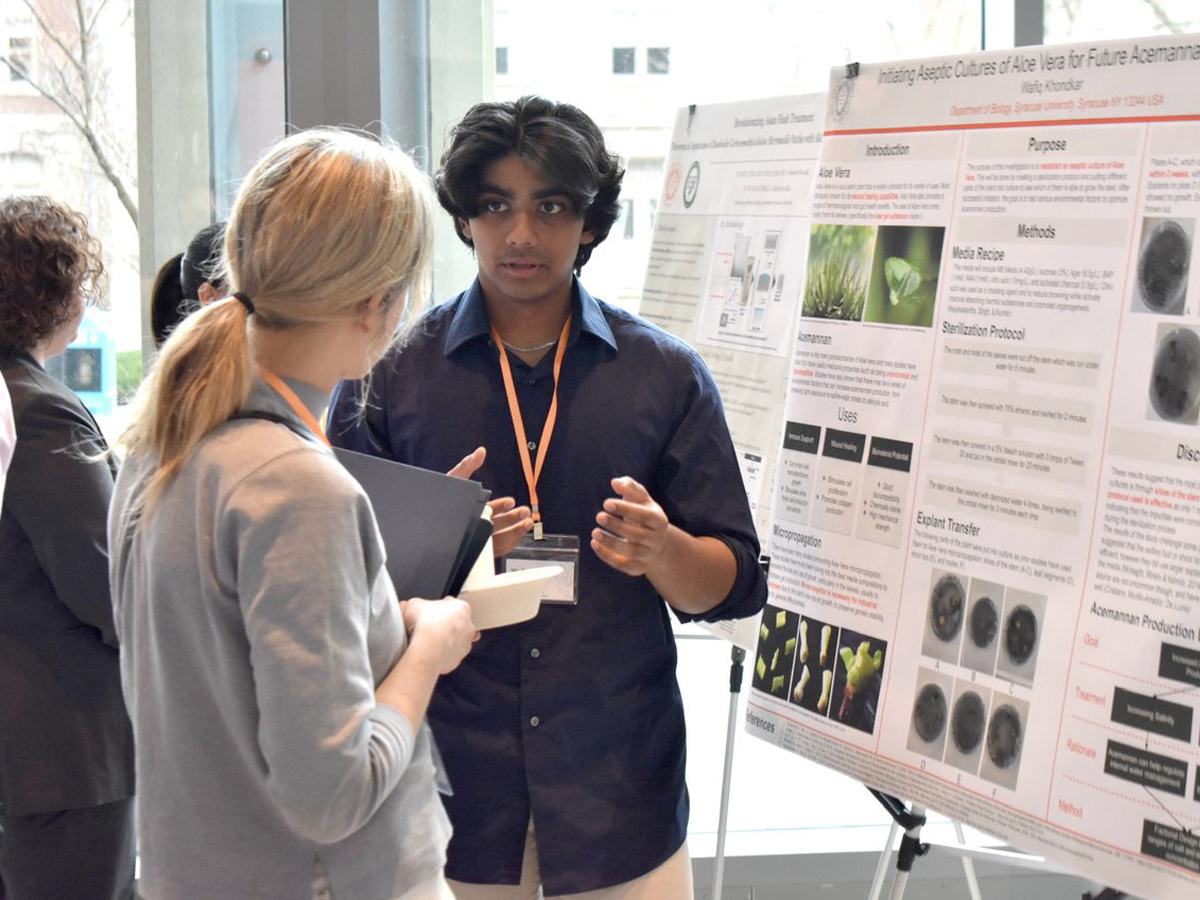
Curiosity about what governs human health at its most fundamental level has shaped the academic and research path of Wafiq Khondkar, a biotechnology and philosophy major whose work bridges molecular science, medicine and ethics. His interdisciplinary research investigates how molecular interactions shape biological function, with implications for therapeutics, personalized medicine and public health.
Khondkar coauthored multiple peer-reviewed publications spanning protein chemistry, endothelial biology and cardiovascular genetics. His published work includes studies examining the role of L-arginine (an amino acid involved in key biological processes) in vascular health, as well as research into how stress signaling and genetic variation contribute to calcium buildup in the heart. By investigating these molecular mechanisms, his research supports a growing movement toward personalized medicine, in which treatments are tailored to individual biological profiles.
“Working on simulations pushed me to move beyond simply running models and toward actually designing questions, interpreting complex datasets and refining methods when results weren’t straightforward,” Khondkar says.
After graduation, Khondkar plans to attend medical school, where he hopes to continue biotechnology research while deepening his engagement with medical ethics and health policy. Looking ahead to a career as a physician, he is particularly interested in using computational biology to develop new therapeutics and contributing to policy discussions surrounding AI, ethics and human rights in medicine.
Probing the Universe’s Secrets
A fascination with the most extreme phenomena in the universe has guided the academic journey of Julia Fancher, a physics and applied mathematics major whose research explores how stars behave under the immense gravitational forces near black holes.
Fancher joined the astrophysics lab of Eric Coughlin, assistant professor of physics in A&S, where she began studying tidal disruption events (TDEs), which occur when a star is torn apart by a black hole’s tidal forces. Her research helps improve how astronomers interpret observational data from these phenomena, potentially leading to new insights into the behavior of black holes and the structure of galactic centers. Already, her work has led to national presentations and published research, marking significant contributions at the undergraduate level.
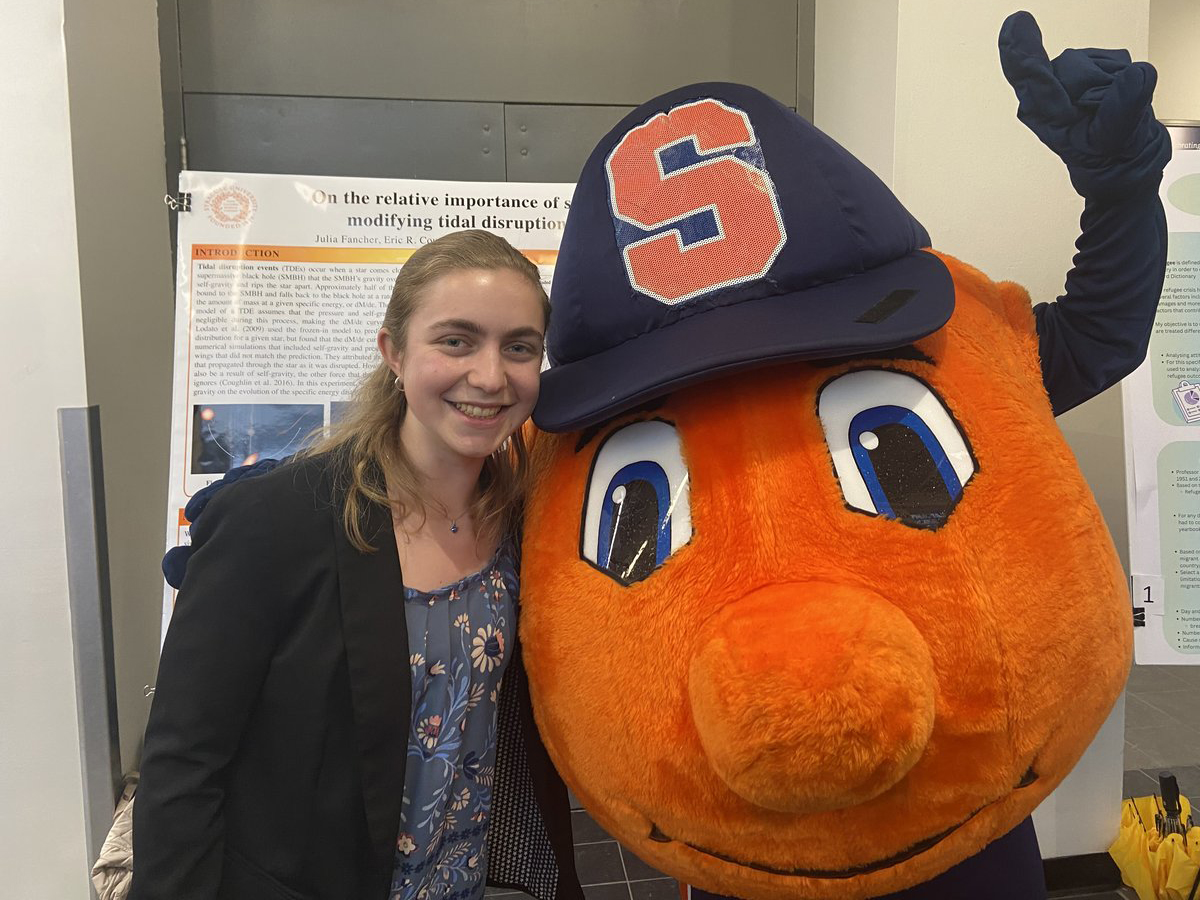
Fancher is a two-time Astronaut Scholar, and she says faculty mentorship has played a central role in shaping her path, from research guidance to encouragement in pursuing competitive scholarships and awards. “My mentors have been wonderful,” Fancher says. “I would not be where I am today without their help and guidance.”
After graduation, Fancher will continue her academic journey at The Ohio State University, pursuing a Ph.D. in astronomy. There, she is especially eager to explore questions related to stability in radiative stars, building on her foundation in computational and analytical astrophysics. Looking ahead, she hopes to join a research university or national laboratory and, ultimately, become a professor where she can continue expanding our understanding of the universe while mentoring the next generation of scientists.