The Winter Olympics in Milan and Cortina, Italy, represent an opportunity for Olympians to strengthen their personal brand on social media. (Photo courtesy of kovop58 – stock.adobe.com)
How Olympians Turn Social Media Fame Into Sponsorship Deals
It happens every two years. An athlete captures our imagination with a stirring performance during the Olympics, and this year’s Winter Olympics in Milan and Cortina, Italy, will be no different.

But for the Olympian who wants to build a large following on social media, Brad Horn says the time to add followers is not when they’re on the medal podium, but in the years leading up to the Games.
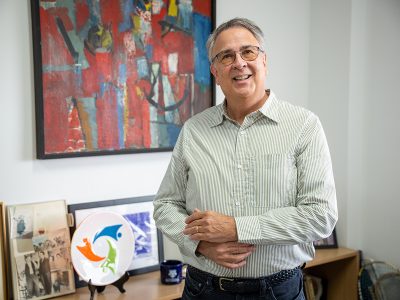
“We started seeing athletes use social media to document their journeys and provide insightful moments that ‘go viral’ with the 2012 Summer Games,” says Horn, associate dean for strategic initiatives and professor of practice in public relations in the S.I. Newhouse School of Public Communications.
“Over the last four or five Olympic Games, we’ve found that the athletes who take the time to invest in brand-building before the Olympic Village opens are best positioned to take advantage of the moment should success give them the spotlight.”
Championing Causes to Connect Online
During this social media era of the Olympics, endorsement deals and commercial success comes to those athletes who deliver authentic, relatable content that shares their personal experiences with a captivated audience.
The best examples treat posting to social as an extension of their training, committing hours each week to cultivating engaging posts to share online, says Horn.
One of the best examples is Ilona Maher, a two-time rugby player with Team USA.
Maher’s popularity grew during the Olympic Games Tokyo 2020 (held in 2021 due to the COVID pandemic) when, due to COVID protocols, she couldn’t mingle with her fellow Olympians in the Olympic Village. She first posted humorous TikTok videos before delivering messages about the importance of body positivity, body image and embracing who you are to her TikTok and Instagram followers.
Maher’s popularity continued to grow after winning a bronze medal during the 2024 Summer Olympics in Paris. She now has 5.4 million Instagram followers and 3.9 million TikTok followers and parlayed her inspirational messages into sponsorship deals with Adidas, T.J. Maxx, L’Oréal, Maybelline, Coppertone and other companies.
“Ilona used the Olympics as a launch platform for the content that ultimately gained her notoriety, success and fame, and these partnerships all came years after the Tokyo Olympics,” Horn says. “She landed these sponsorships by staying true to her message.”
Social Media Popularity Not Tied to Winning
Pita Taufatofua instantly gained fame and notoriety worldwide during the 2016 Summer Olympics, but not for his successes in taekwondo.
By wearing a traditional Tongan costume as flag bearer for the tiny island nation—a feat he would repeat in both the 2018 Winter Olympics as a cross-country skier and 2020 Summer Olympics—Taufatofua made an immediate impression on millions of fans watching the opening ceremonies as Tonga’s bare-chested flag bearer.
Taufatofua lost in the first round but that mattered little to his followers who flocked to find him on social media, Horn says, adding that it would have been unheard of for an athlete to be remembered for something other than winning a medal even 10 years ago.
“This is about thinking of the digital media space and social media as your legacy building ground, rather than thinking people will remember the result of your accomplishments in competition,” Horn says. “But that’s the power of social media and the power of curated content with a strategic focus.”
Regulating What Athletes Can and Cannot Share
The IOC is fairly restrictive when it comes to the types of messages they will allow athletes to share during the Games.
Among the stipulations, athletes cannot:
- Livestream their event(s)
- Produce content longer than two minutes
- Post within an hour of their competition start time
- Share content showing medal ceremonies
- Promote products
Additionally, there are social community guidelines that reflect what the IOC refers to as the spirit of Olympism, emphasizing that athletes champion fair play, respect, and diversity and inclusion, uphold human dignity and build bridges, not walls.
Horn says it’s “a highly risky proposition” for athletes to make a political statement or take a stand on a social issue during the Olympics.
“This is an ecosystem where the athletes are not in control. The athletes’ opportunity is to create brand-building and brand-following and then monetize that after an Olympic Games,” Horn says.
Familiar Faces on Team USA
Team USA boasts seven five-time Olympians: Lindsey Vonn (alpine ski racing), Evan Bates (figure skating), Elana Meyers Taylor (bobsled), Nick Baumgartner (snowboarding), Faye Thelen (snowboarding), Kaillie Humphries (bobsled) and Hilary Knight (ice hockey), along with popular four-time Olympians Mikaela Shiffrin (alpine skiing) and Chloe Kim (snowboarding).
Horn says these household names have established presences on social media and understand how to deliver compelling and engaging content.
“The question is who will we be talking about one month from now because they burst onto the scene with a social plan that captured engagement in ways that companies and brands can embrace?” Horn says.
A great nickname certainly helps: Horn points to charismatic figure skater Ilia Malinin as someone to watch. Malinin is known as “the Quad God” for his proficiency in landing quadruple jumps—four-rotation jumps known as “quads” on the ice.