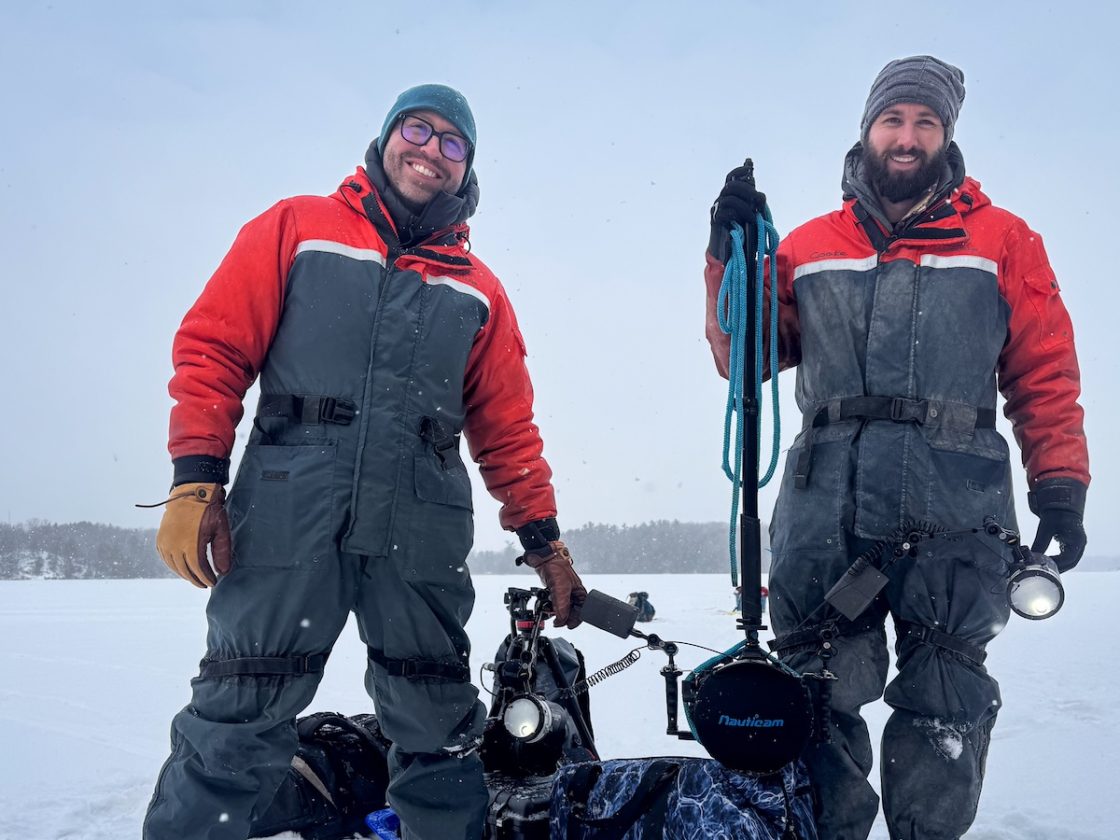
Michael Snyder and Justin Dalaba on their shoot for Preserving Legacies.
Newhouse Grad, Professor Team Up for National Geographic Shoot
On Jan. 2, Justin Dalaba’s phone rang.
It was his former professor, Michael Snyder, who teaches photojournalism, documentary photography, filmmaking and visual storytelling at the S.I. Newhouse School of Public Communications, with a question.
Did Dalaba G’25 want to come with him on assignment for National Geographic to photograph turtles under the Canadian ice? Before he could second-guess himself, Dalaba said yes.
“It was definitely a rare opportunity,” Dalaba says. “Those kinds of stories don’t just happen in that way. And he pretty much said, ‘Well, we’ve got to leave in about an hour. So are you ready to go?’”
Luckily, Dalaba had his go-bag ready and the batteries for his cameras were charged. Later that day, the Newhouse graduate was driving to Canada with his former graduate advisor.
Peering Under the Ice
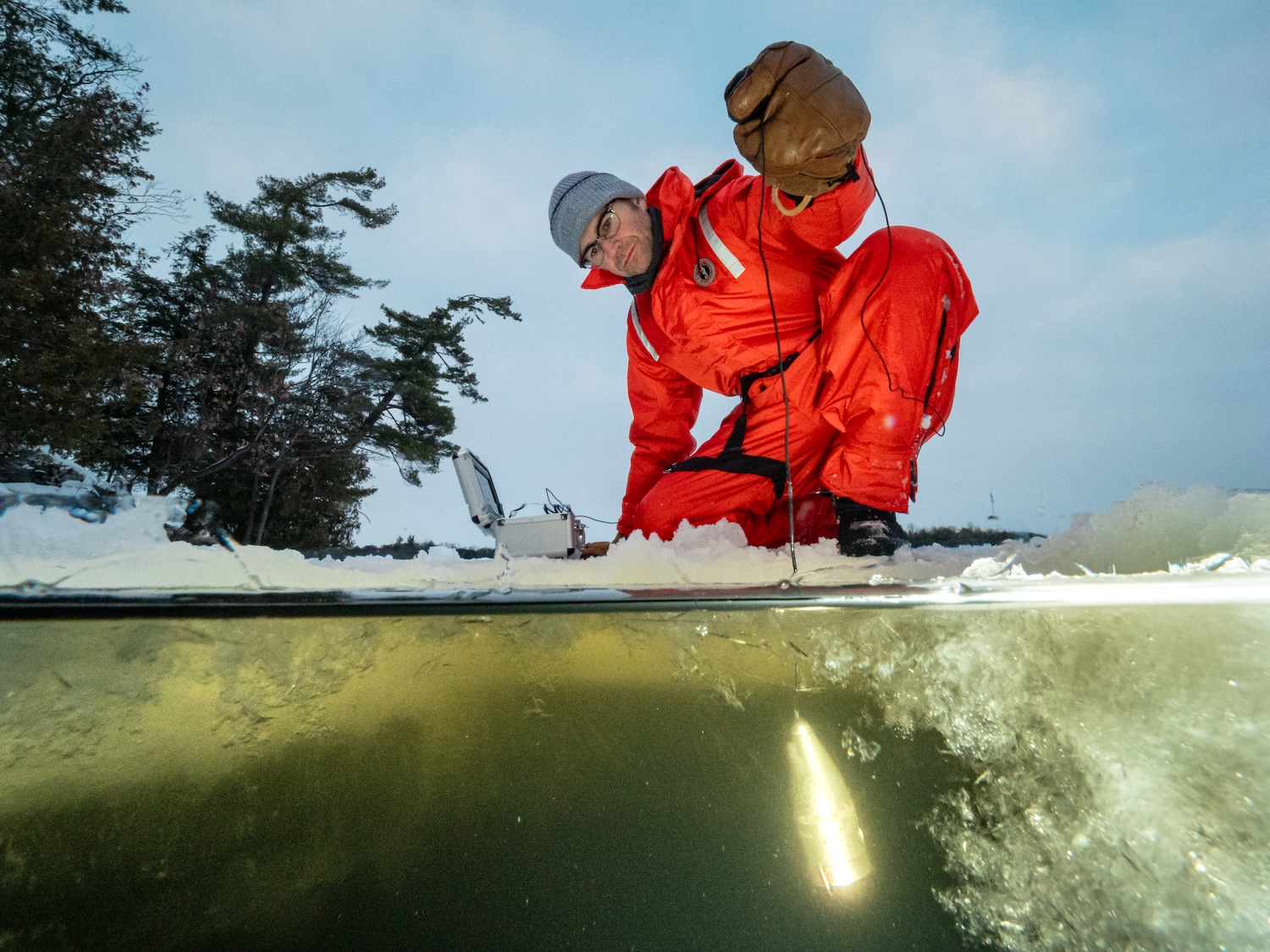
The January assignment Snyder brought Dalaba onboard for is part of work he’s been doing for the last three years for the Preserving Legacies project. The organization funded by the National Geographic Society highlights how World Heritage Sites, along with cultural heritage and natural heritage sites, can be adapted to climate change. Working on a long-term grant, Snyder tells the stories of communities working to adapt and preserve the sites.
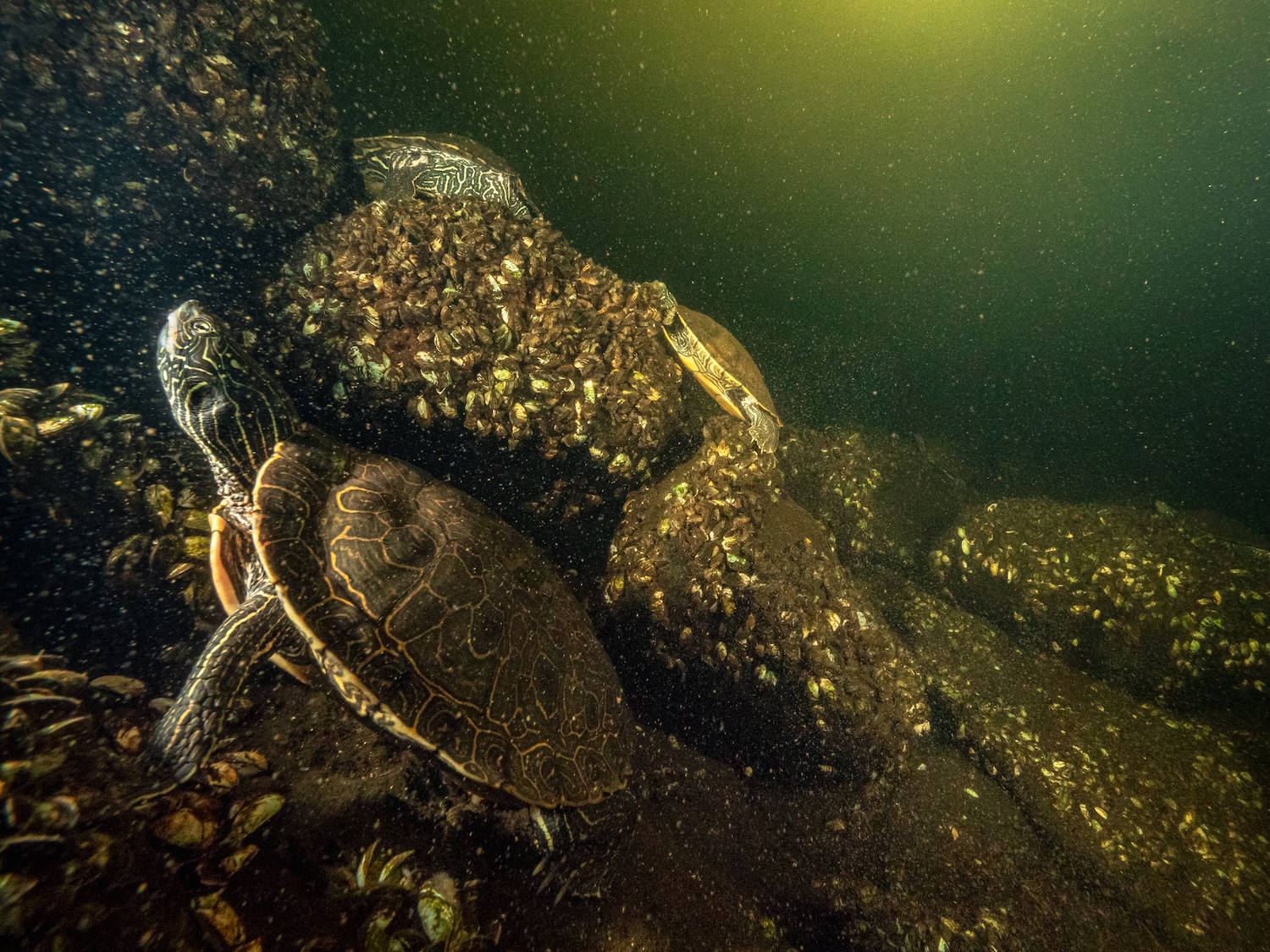
One of the stories he was assigned to work on was about how biologist Grégory Bulté is studying a recent surge in deaths of Canadian map turtles. The creatures are one of the world’s northernmost reptile species in the Rideau Canal system, a UNESCO World Heritage Site that runs from Ottawa to Lake Ontario. During the winter months, the turtles live underwater and bring their body temperatures down to near-freezing. They don’t eat, breathe or mate, waiting under the ice until they can emerge in the spring.
Bulté, who has been studying the turtles for 20 years, has observed when ice thins during the winter, principally because of climate change, it allows river otters to slip under and eat the turtles. In 2022, he documented 10% of the turtle population in Ontario’s Opinicon Lake died, likely because of otters.
“Because they can’t move, it’s a free snack,” Snyder says.
In 2025, Snyder went up to do a story on Bulté and his work, but a blizzard prevented him from getting the images he needed.
For the return trip in January, Dalaba helped Snyder design a rig system to capture the images of the turtles under the ice. Not only was it freezing and underwater with low visibility, but they had to be sensitive to the turtles and avoid disturbing them.
“They’re not supposed to move very much,” Snyder says. “You have this tiny window to operate.”
The videos and photos they captured were published as part of a January feature story in National Geographic, one of the publication’s most-viewed stories of the month. The images may also be the first-ever published of turtles under the ice.
What Went Into the Shoot
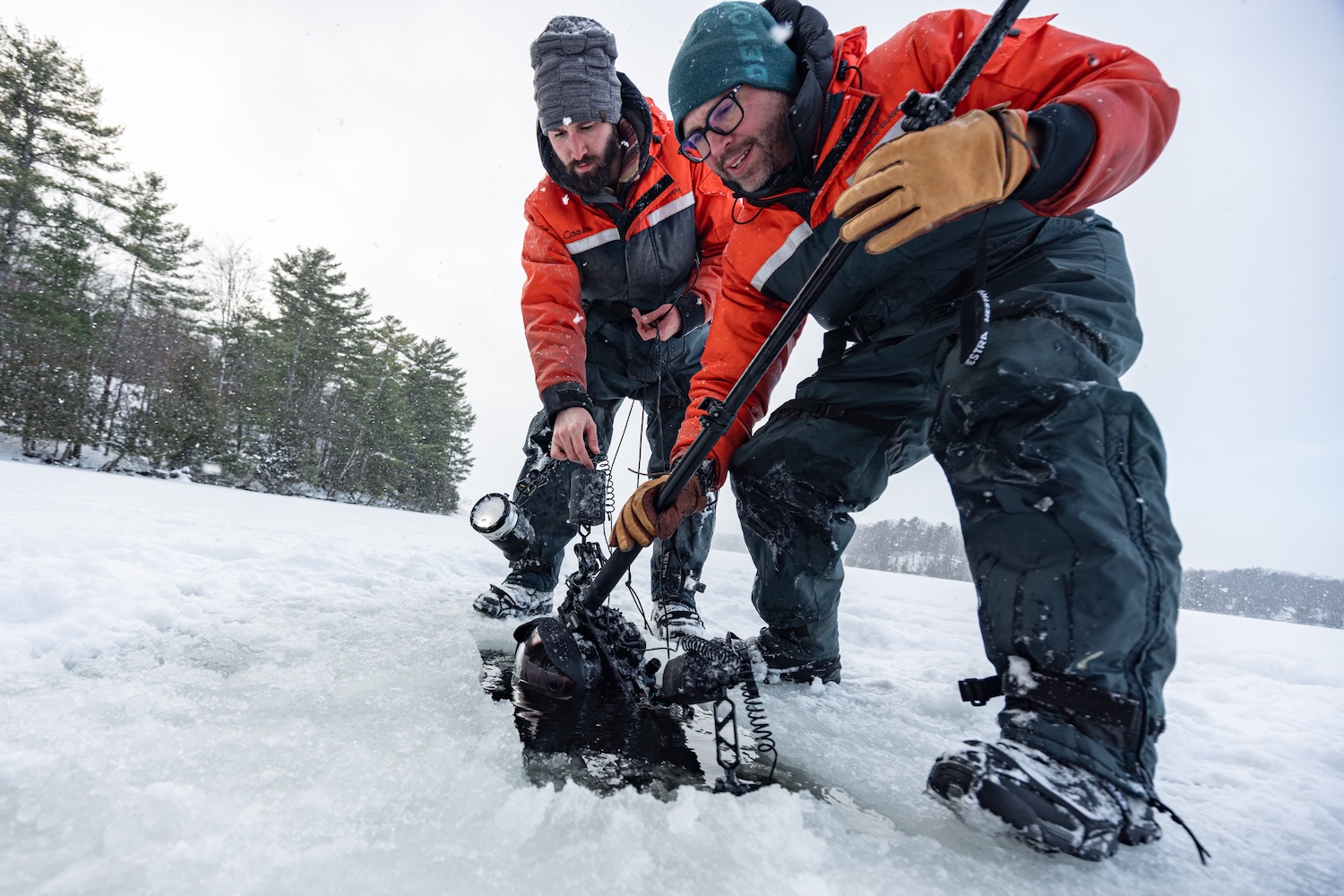
Snyder says the recent Newhouse grad proved “instrumental” in helping him get video and photographs on the shoot.
“He’s both incredibly technically capable and he’s a very, very good image maker and storyteller,” Snyder says. “He can do that across platforms with photo, design, video, and that’s super, super important.”
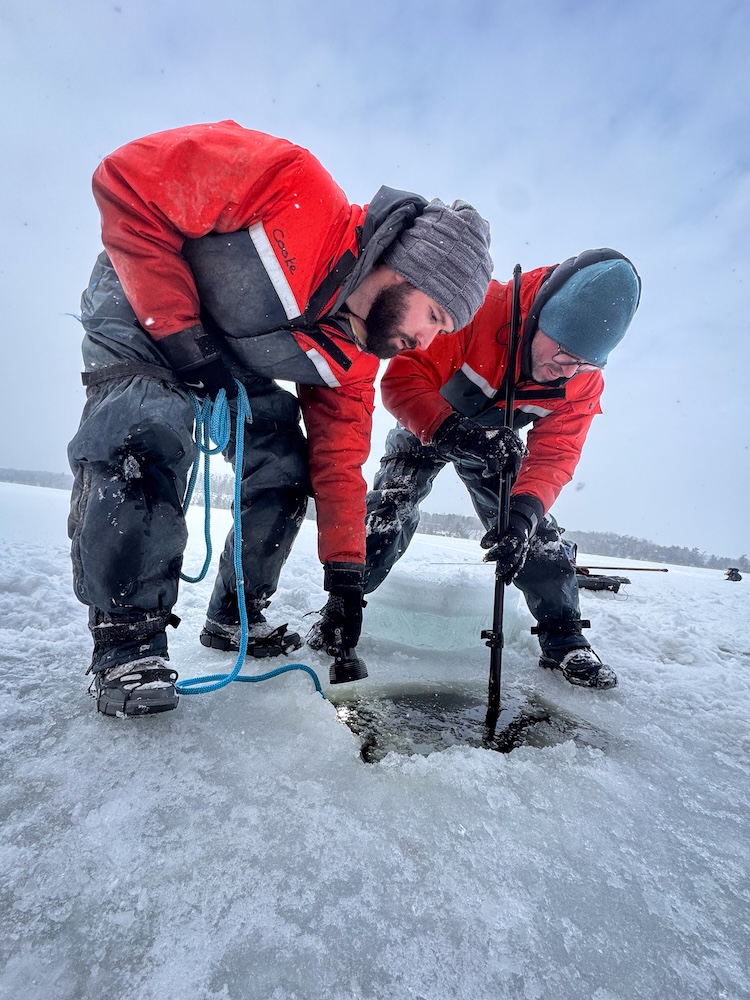
The shoot required them to get up at 4 a.m. and trek through the snow, pulling their gear on a sled across the frozen lake. At one point, the equipment got too cold and the mount they were going to use to submerge the camera broke, so they had to remount their gear on the fly.
The pair also had to work closely and build trust with Bulté, listening when the scientist expressed concern about the impact on the turtles if they pushed the shoot longer.
“That’s a powerful learning opportunity for someone working in the documentary space to understand—it’s not all about you, it’s not even all about the image,” Snyder says. “At the end of the day, it is about the ethics that underlie this practice. It is about relationships, and it is about doing the maximum amount of good with the work you’re doing.”
He says Dalaba had the ability to be adaptive, not just with the changing weather around them and the physical demands of the assignment, but to be collaborative and responsive to the other people and species involved.
“Both the practice and the product of documentary work is relationship building,” Snyder says. “You need to be highly relational. It’s a soft skill in a lot of ways, and he has this aplomb.”
Dalaba and Snyder both came to photojournalism and documentary work with science backgrounds. Dalaba previously worked as a wildlife biologist in conservation, while Snyder is a geologist and climate scientist by training.
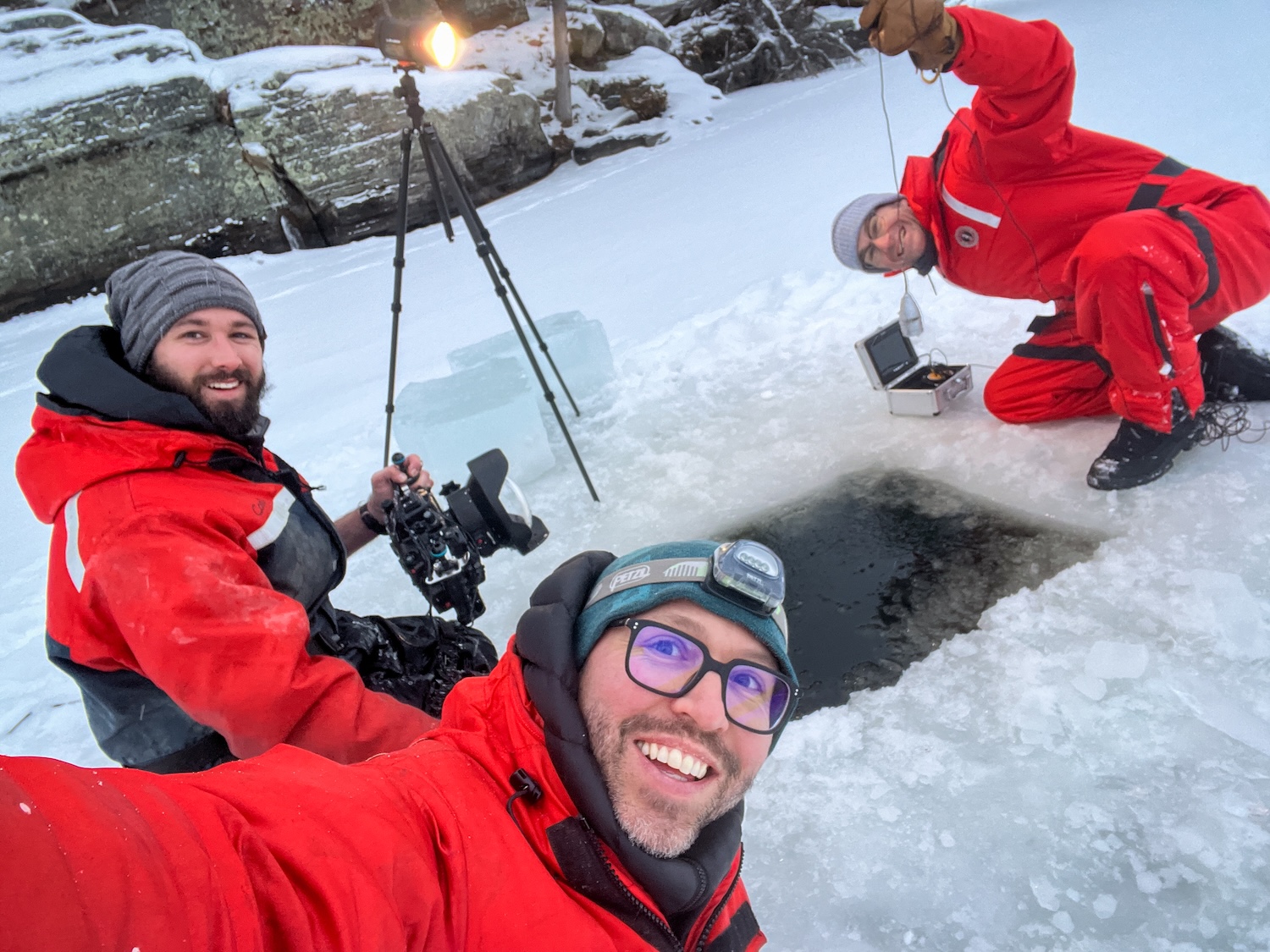
For Dalaba, working on the assignment felt like the culmination of his path as a wildlife biologist turned storyteller.
“Seeing that come together went beyond the personal gratification and more of that deep hearted feeling of this is what a collaboration feels like,” he says. “It was a collaboration between two storytellers, scientists, multiple climate custodians who are working to adapt their heritage in Canada.”
The experience also resulted in additional work for Dalaba with Preserving Legacies. The former wildlife biologist says he’s excited to continue that work, telling stories of hope and resilience related to climate change.