How a Newhouse Student Reported on White House Correspondents’ Dinner Attack
When shots sounded at the White House Correspondents’ Dinner on April 26, Ben Bascuk’s first instinct was to reach for his phone to start reporting.
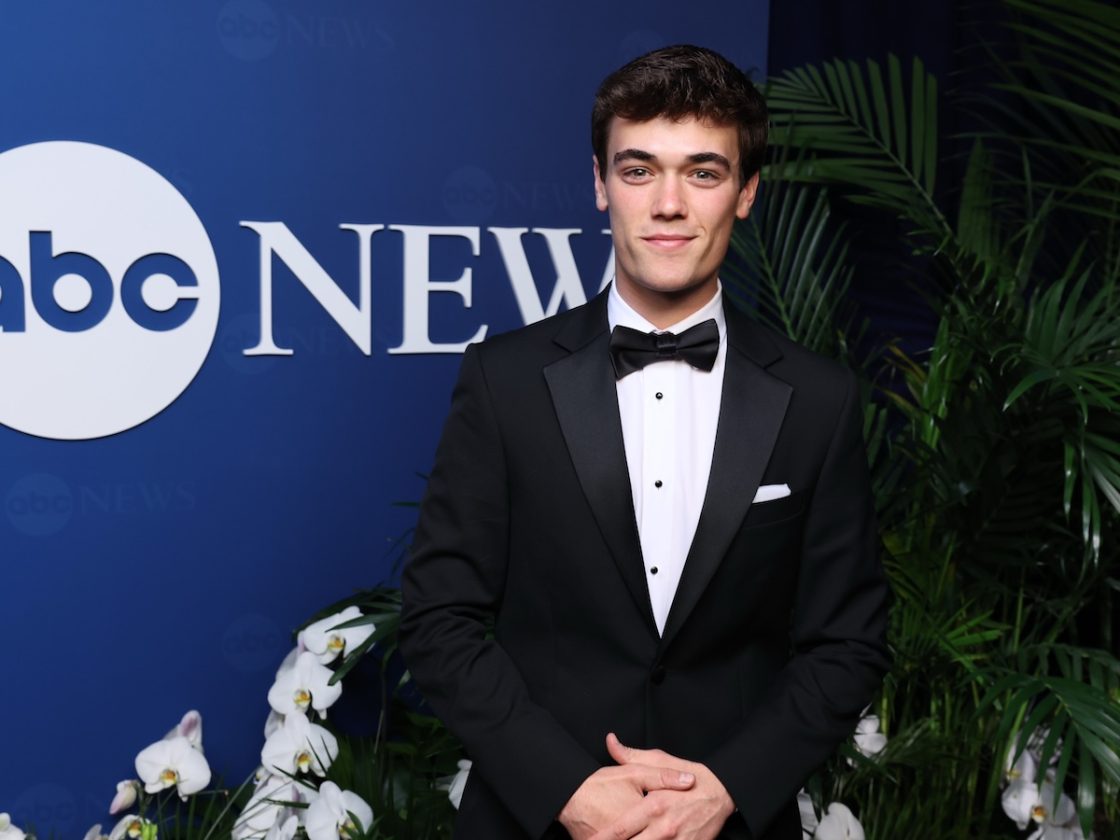
Bascuk ’27, a broadcast and digital journalism major in the S.I. Newhouse School of Public Communications, was attending the event as a White House Correspondents’ Association (WHCA) scholar and was seated in the ballroom of the Washington Hilton. Recounting the events to Syracuse University Today, he says he heard a series of muffled pops.
At first he thought it was an issue with the music playing—or a tray being dropped or someone pounding on a table.
“Those noises were anything but gunshots,” Bascuk says. “When the music stopped, I sat there staring at the back of the room. The room fell into an unnerving quiet. Around me, students began ducking under tables as red wine seeped across white tablecloths.”
Soon Secret Service agents rushed past, shouting “shots fired, get down,” he says. The agents brushed against his chair as they moved toward the stage, where counter assault teams raised weapons toward the crowd from the podium.
Bascuk says he watched as Tulsi Gabbard, the director of national intelligence, was escorted out behind him.
With one hand gripping the back of his chair, Bascuk says his other hand held his phone, recording. He soon called his mom and began answering a flood of texts to let loved ones and friends know he was safe.
“Moments later, a CSPAN photographer told me the shots had been fired in the hotel lobby, not inside the reception room,” Bascuk says. “That was the relief I needed to start reporting.”
The man accused of attempting to storm the dinner early into the evening allegedly tried to run past a security barricade near the ballroom, exchanging gunfire with Secret Service agents. The man, later identified as Cole Tomas Allen, was tackled and taken into custody. He has been charged with the attempted assassination of President Donald Trump.
Once he knew the danger was not immediate, Bascuk, who has been interning for Spectrum News in Washington, D.C., made his way to his network colleagues in the banquet room. He began sending updates to CitrusTV, the University’s student-run television station, and his Spectrum colleagues.
In the hour following the shooting, Bascuk says he went fully to work in reporter mode “without fully processing what had happened.”
“I wouldn’t say I was ever scared or in fear of danger,” he says. “I was shocked and startled. Others, especially those closer to the back, experienced it differently. Some cried, some gasped and others continued eating their dinners. In that moment, there was confusion, but not chaos. My first priority was making sure my family knew I was OK.”
Even when focused on reporting, he says it was important to take a moment “to be human.”
“Journalists are some of the most loving, caring and kind people you will ever meet, and that was truly on display [that] night,” Bascuk says. “Reporting in crisis situations isn’t something you think about in the moment or even remember after. What I do remember are the conversations I had and the faces of those around me.”
Bascuk has been in Washington for the spring semester reporting for Spectrum News while studying away at Newhouse DC. The dinner was his first time reporting on an active scene.
In those moments, he says he found, “instinct is everything.”
“Instinct comes from practice,” he says. “Before any reporting happens, you have to protect your own safety and the safety of others, mentally and physically. Every story, no matter how small, helps build the skills you’ll rely on when you least expect it. A live shot from a derby race, a feature of a local butcher shop or a story about Christmas lights—each one builds the instincts you’ll rely on when it counts.”
Newhouse Dean Mark Lodato was also in attendance that night, present as a guest of alumna Weija Jiang G’06, the current WHCA president and senior White House correspondent for CBS News. In a post on LinkedIn, Lodato pointed to Bascuk’s reporting during the unsettling circumstances.
“Ben, like so many other journalists in the room, jumped into action and reported for CitrusTV, Syracuse University’s student-run television studio,” Lodato wrote. “I want to note when the Newhouse team checked in on Ben, he immediately replied to let them know he was safe, so not only was he being a professional journalist, but he was also keeping the school informed.”
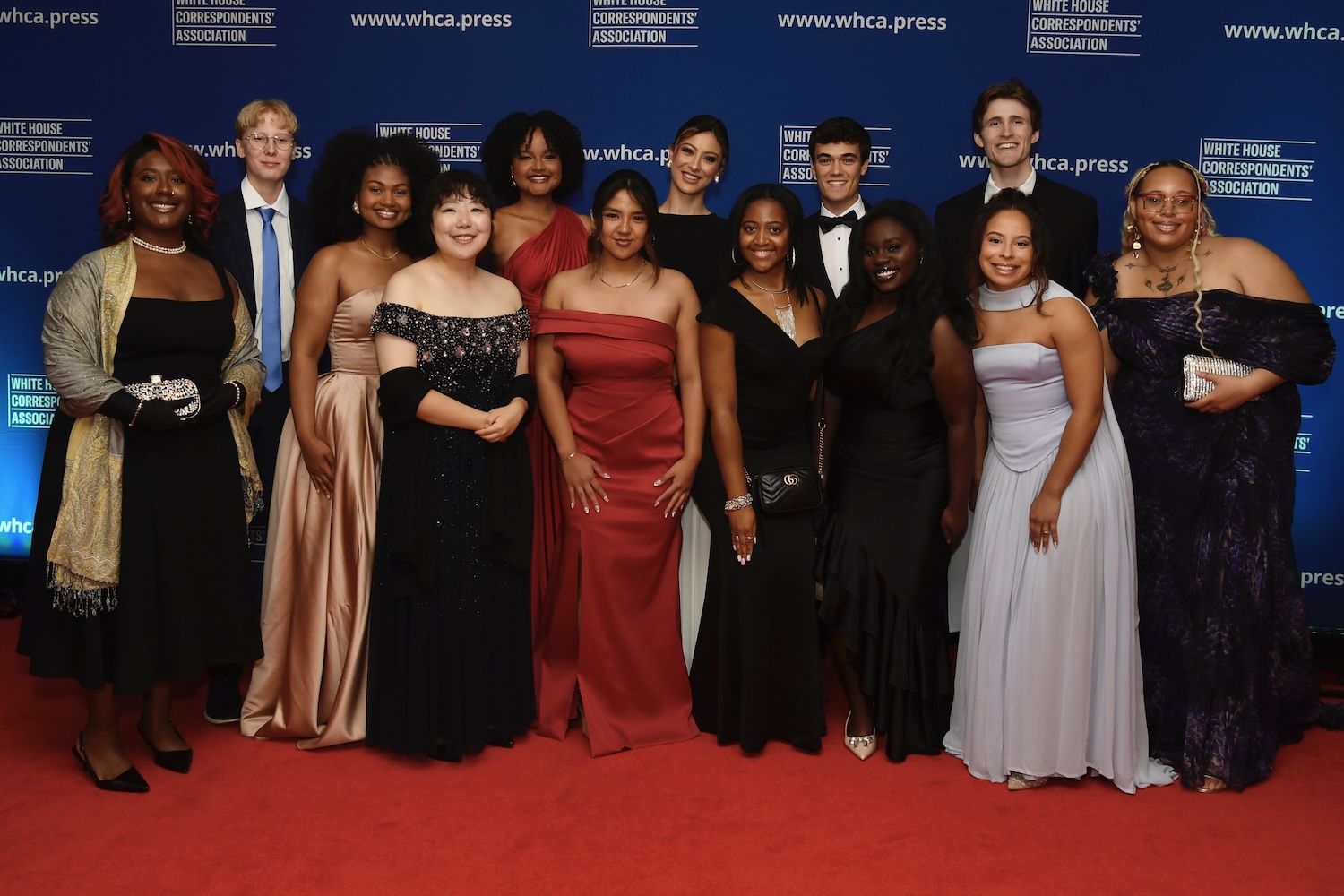
Bascuk, for his part, says he’s not sure he could have continued to report the events of the evening without the support of his fellow WHCA scholars and Spectrum colleagues.
“They were my crutch in the moment and in the days that followed,” he says. “I feel incredibly fortunate to have such a strong support system in Washington, D.C., Syracuse and back home in Ohio. I’m deeply grateful to my friends, family, professors, the WHCA and my mentors for their continued support and outreach after [that] night. The Newhouse community was spread throughout the ballroom at the Washington Hilton, and somehow, I was able to connect with so many of them before and after everything unfolded.”
Even with what he experienced, Bascuk says it was an honor to attend the dinner.
“Although the evening didn’t go as expected, it hasn’t discouraged me from reporting; in fact, it reinforced just how vital storytelling is to our democracy,” he says.