Alumnus Donates 48 Works to Art Museum
A glowing sculpture cast in rubber. A photo-print-drawing hybrid that defies easy categorization. An aquatint that looks nothing like your usual aquatint.
The works are among the 48 that alumnus John Thompson ’72 has gifted to the Syracuse University Art Museum. The donated pieces are just as stunning as they are unconventional, showcasing what happens when artists refuse to accept the limits of their medium. And their gift to the University presents a unique educational opportunity for an academic museum.
Thompson, a graduate of the College of Visual and Performing Arts with a B.F.A., is himself a working printmaker with studios in Waltham, Massachusetts, and Harpswell, Maine. He has taught at Massachusetts College of Art and Design, Framingham State University and workshops across the country.
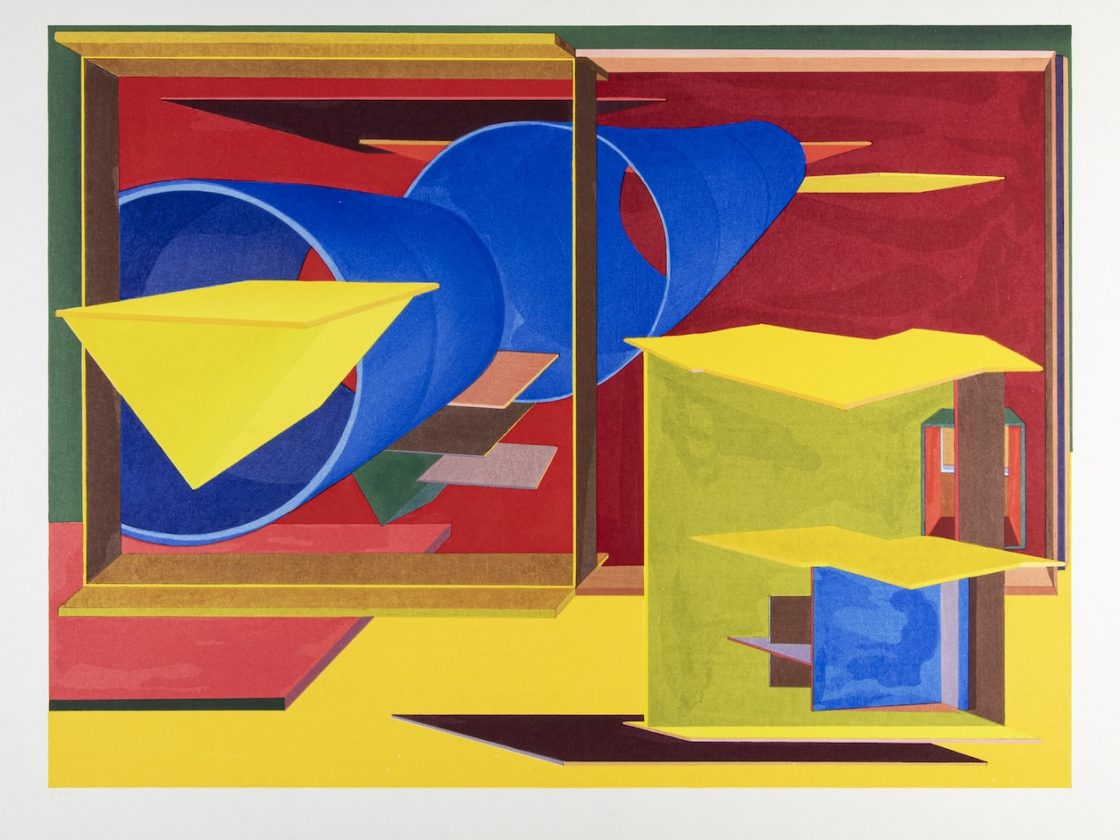
The significant gift acquired by the museum throughout 2024 and 2025 from Thompson represents a collection shaped around works that demonstrate mastery through innovation. The collection includes pieces by artists such as Al Held, Trenton Doyle Hancock, Niho Kozuru, Robert Freeman and Jean-Baptiste-Camille Corot, among others.
The Collector’s Eye
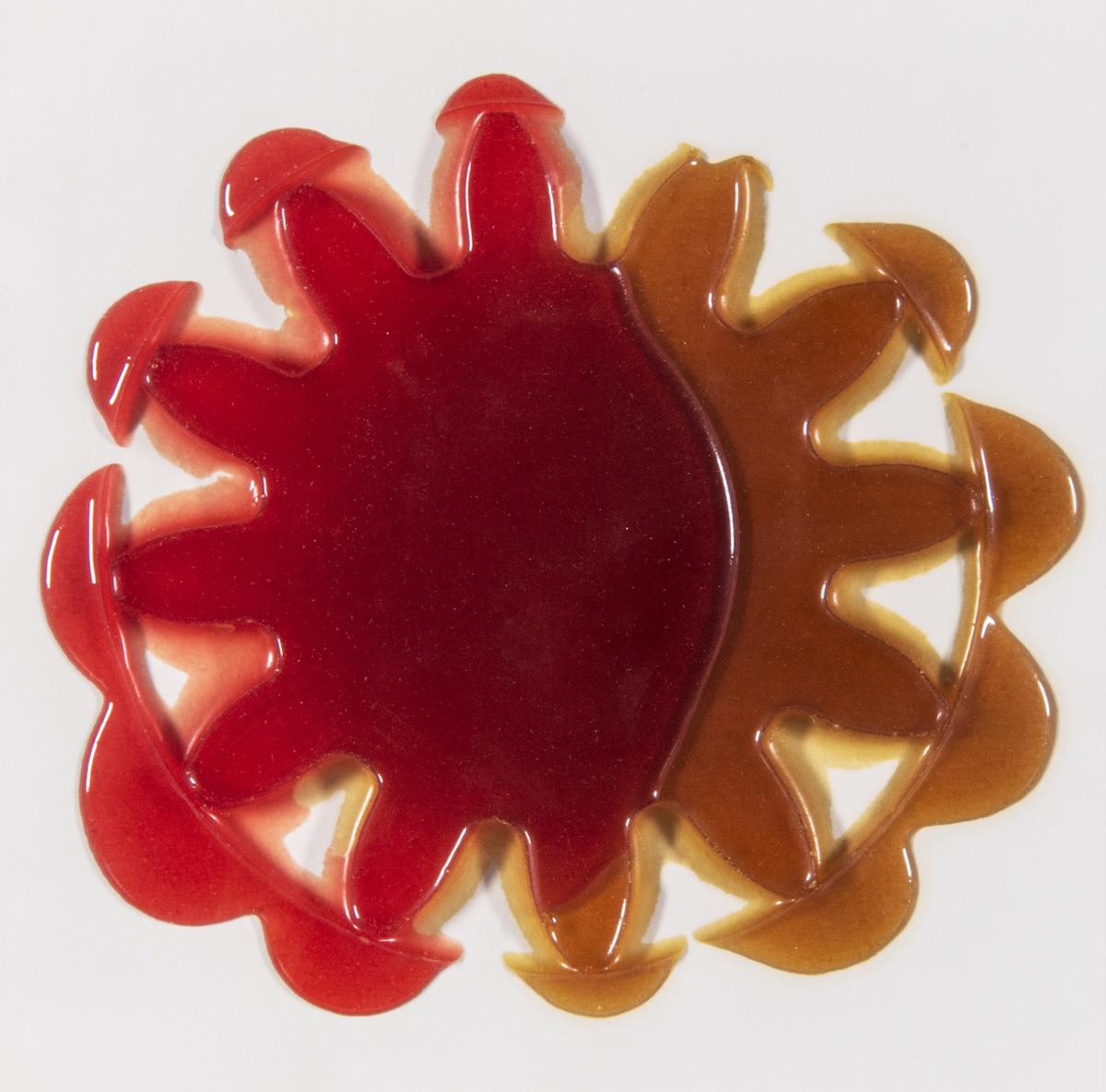
Among the gift’s most striking pieces is Niho Kozuru’s “Cosmic Glow,” a relief sculpture cast in rubber.
“[Kozuru’s sculpture] is glowing and it’s made out of rubber,” museum curator Melissa Yuen says. “It looks like jello, so you really expect it to wobble, but texturally it’s surprisingly firm.”
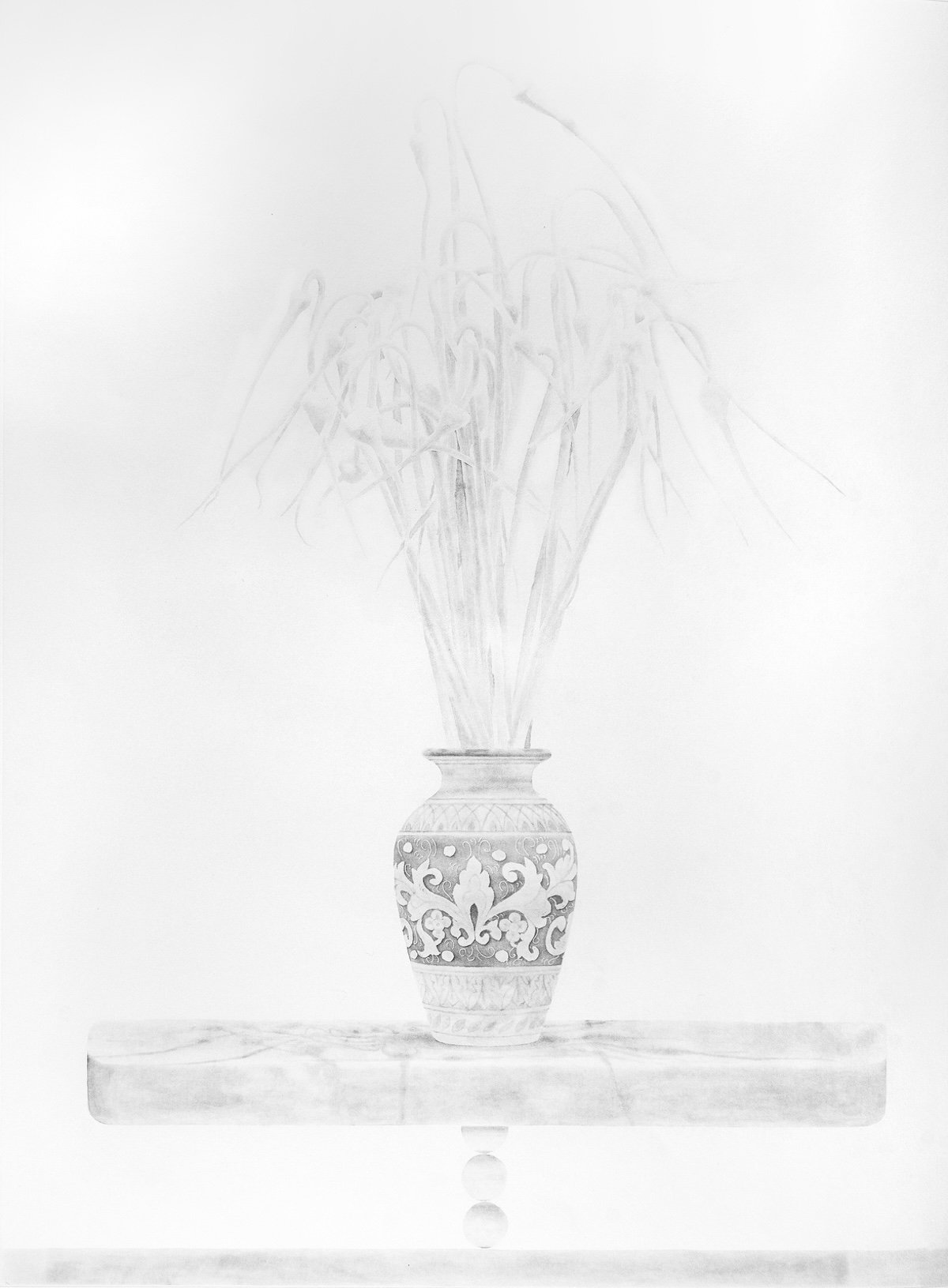
Meanwhile, Richard Ryan’s aquatint “Scapes II” pushes technique in another direction, demonstrating a surprising delicacy.
“It’s rare to see an aquatint that looks as painterly as ‘Scapes II’ does,” Yuen says.
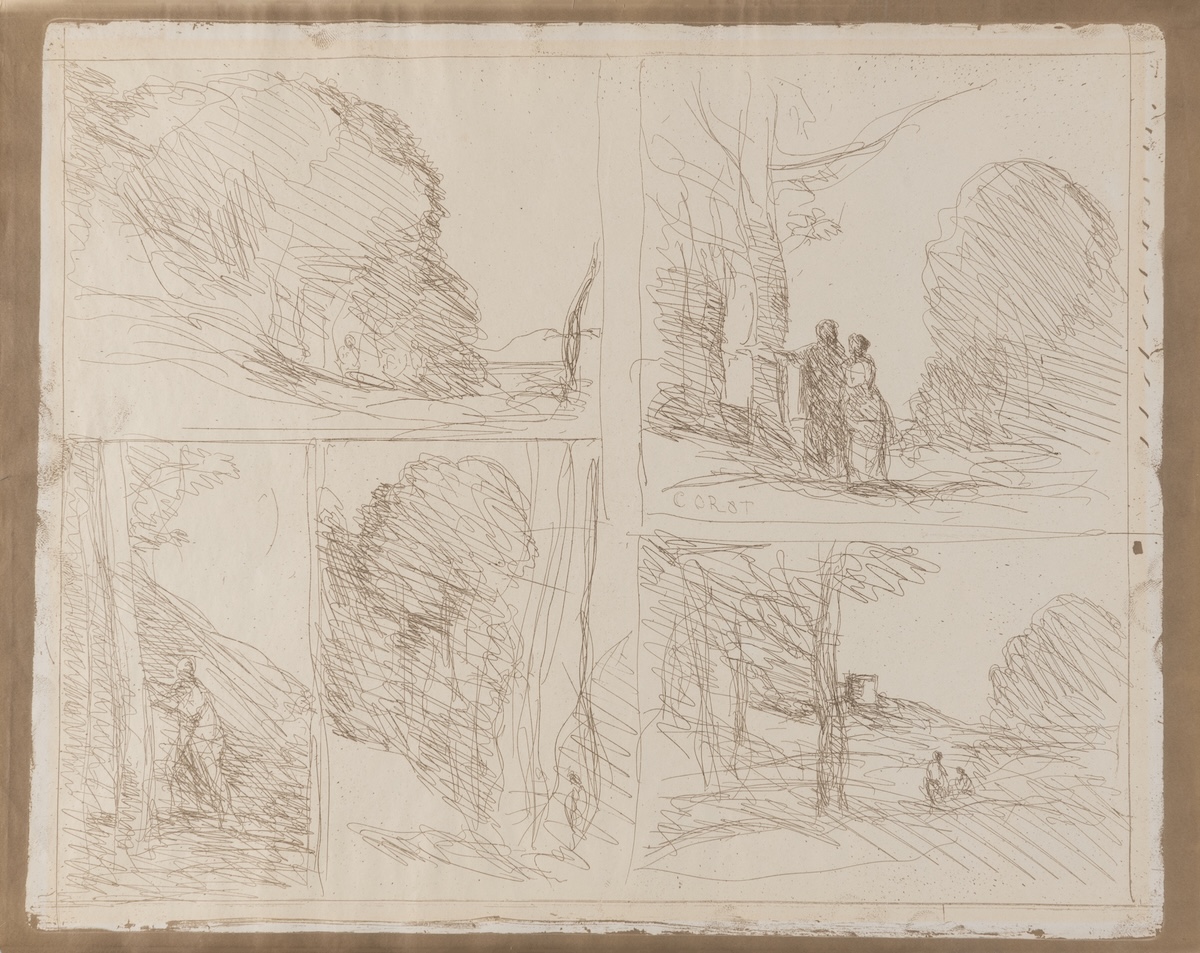
And Jean-Baptiste-Camille Corot’s “Cinq Sujets réunis” employs a hybrid technique called cliché-verre. The artist draws an image on a glass plate, which is then printed onto light-sensitive paper.
For the Students
That these works will now serve students isn’t incidental— it’s why Thompson chose Syracuse as their new home.
As an undergraduate, Thompson received a full scholarship. He travelled extensively throughout Europe with the University’s support, and nearly five decades later, he is returning the investment.
“I feel like I have a responsibility to give back what Syracuse gave me,” Thompson says.
His years as an educator sharpened his sense of what students need. When Thompson was a student, access to original works was limited.
“We only saw slides or picture books,” he says. “There wasn’t a study room. You couldn’t go see Rembrandt prints as you can with the museum now.”
He hopes his gift changes that for current and future students and that the work will strengthen the teaching potential of the museum across campus.
“Part of what I would hope is that the works I’m donating are not treated as precious objects,” Thompson says. “I want students to look at it, examine it, feel that their lives and their emotions are as important as any piece of art.”
A Teaching Collection
The art museum, located adjacent to the College of Visual and Performing Arts, in the Shaffer Art Building serves as a teaching museum for the University and broader community. Thompson’s gift reinforces that mission.
“We are honored that John Thompson has donated this incredible collection of work to the museum,” says director Emily Dittman. “These 48 works expand our potential as a teaching museum and embodies the spirit of our mission to be a museum-laboratory for learning, engagement and exploration.”
For Thompson, the gift is mutual.
“It is a gift to me too,” he says, “to be able to give some of this great work to an institution I believe in.”