Q&A: Alum Brings Award-Winning Documentary to Syracuse for Screening
As a student in the College of Visual and Performing Arts, Brian Oakes ’96 recalls attending symposiums each week to hear alumni share their work and speak about their careers.
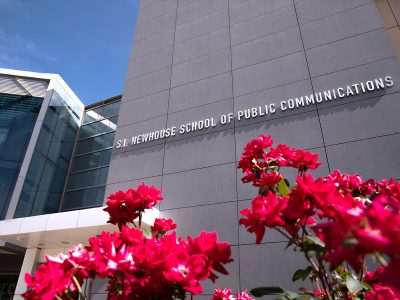
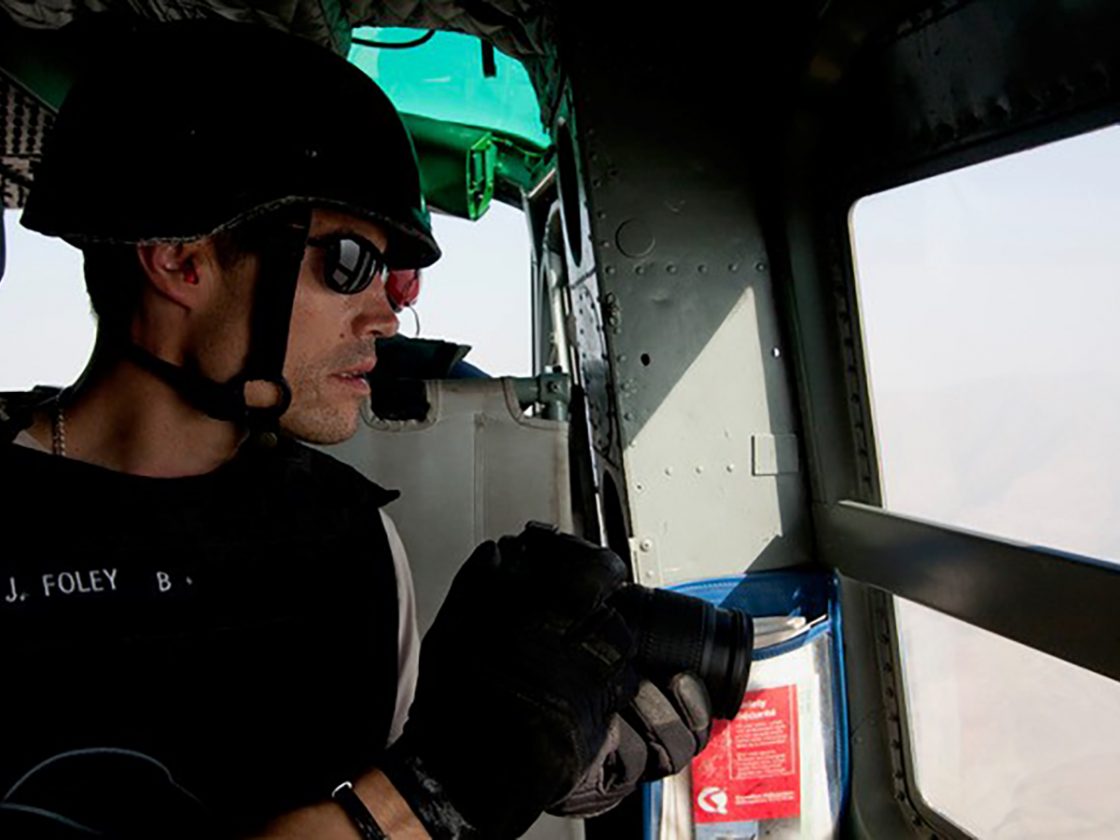
Now, the award-winning director is returning to campus on Thursday for a screening and discussion of his 2016 documentary “Jim: The James Foley Story” at the S.I. Newhouse School of Public Communications. The film, which won the Audience Award at the 2016 Sundance Film Festival, delves into the life and work of the journalist, who Oakes grew up with in New Hampshire.
Foley was taken hostage by Islamic State militants in 2012 while he was reporting in Syria and killed in 2014. His name is among those listed on the memorial display outside the Joyce Hergenhan Auditorium in the Newhouse School that lists the 2,510 journalists killed globally since 1992, along with the date and location of their death. The memorial is part of “Silenced: Targeting Journalists and the Fight for Truth,” a project and event series that seeks to honor media professionals who have been killed related to their work and raise awareness about the threats journalists face.
The screening of “Jim: The James Foley Story,” is being held as part of the “Silenced” event series, which has included discussions and workshops on risk assessment and trauma-informed journalism. Thursday’s screening, which begins at 6 p.m., will be followed by a discussion about the risks conflict journalists face and the importance of a free press.
Oakes told Syracuse University Today he hasn’t had many opportunities to return to campus since he graduated, and he’s looking forward to returning to share his work with students and the campus community.
“I am happy to now be one of those people talking to the next generation of Orange,” he says.
Below, Oakes shares more about his experience at the University and what he hopes people take away from his film.
I started in the architecture school and then transferred into communications design [at VPA] during the second semester of my freshman year. Being in the design disciplines at Syracuse, one of the lessons I still draw on in my work is how to approach a design problem—theory of design. Whether it’s a logo, a website or a film, my education at Syracuse taught me the “whys” of problem-solving. Ask yourself: “Why does this story need to be told?” I find that to be the work. Once you have a foundation in the theory behind what you’re creating, executing it becomes the easy and fun part.

James Foley and journalist Nicole Tung are pictured while covering the news in a conflict zone. Tung is interviewed in the HBO documentary “Jim: The James Foley Story,” created by Brian Oakes ’96, an award-winning director. Oakes will screen his documentary Thursday at 6 p.m. in the Joyce Hergenhan Auditorium in Newhouse 3.
First and foremost, I hope people take away a visual portrait of who James Foley was.
Jim was a childhood friend of mine so making this film was extremely personal and difficult. I decided to make the film because I wanted to change the narrative of how the world knew James Foley—an image of him being murdered by ISIS in the deserts of Syria. This was unacceptable to me, and as filmmakers we use storytelling to put forth our own truths and narratives.
Jim was a freelance conflict journalist who was desperately telling the stories of civilians who had no voice in the depths of war. He was empathetic, caring, trustworthy and just an all-around great human being. A lot happened leading up to the moment of his death, and I wanted to share that story not only for audiences, but also for Jim and his family.
The central question I asked myself was why Jim kept choosing to return to these extremely dangerous areas of the frontline. Answering that question became the North Star of the film. The answer is layered and sits within an uncomfortable truth.
For students pursuing journalism, I hope that the film challenges them to think about this and discuss it with their peers.
It’s been 12 years since Jim’s death, and I hope the film continues to carry his legacy and give people a window into the world of conflict journalists. The fight for a free press and for freeing hostages around the globe continues.
The Foley Foundation was established to advocate for American hostages held abroad and to promote journalist safety. If you have a chance, please check out the inspiring work they do.
I look forward to my return to Syracuse and hope to see you at the screening.