Newhouse Memorial Wall Honors Journalists Killed Since 1992
Cheryl Hatch knew as soon as she saw a video clip capturing the columns of names stretched across a wall inside the S.I. Newhouse School of Public Communications, that she had to see it.
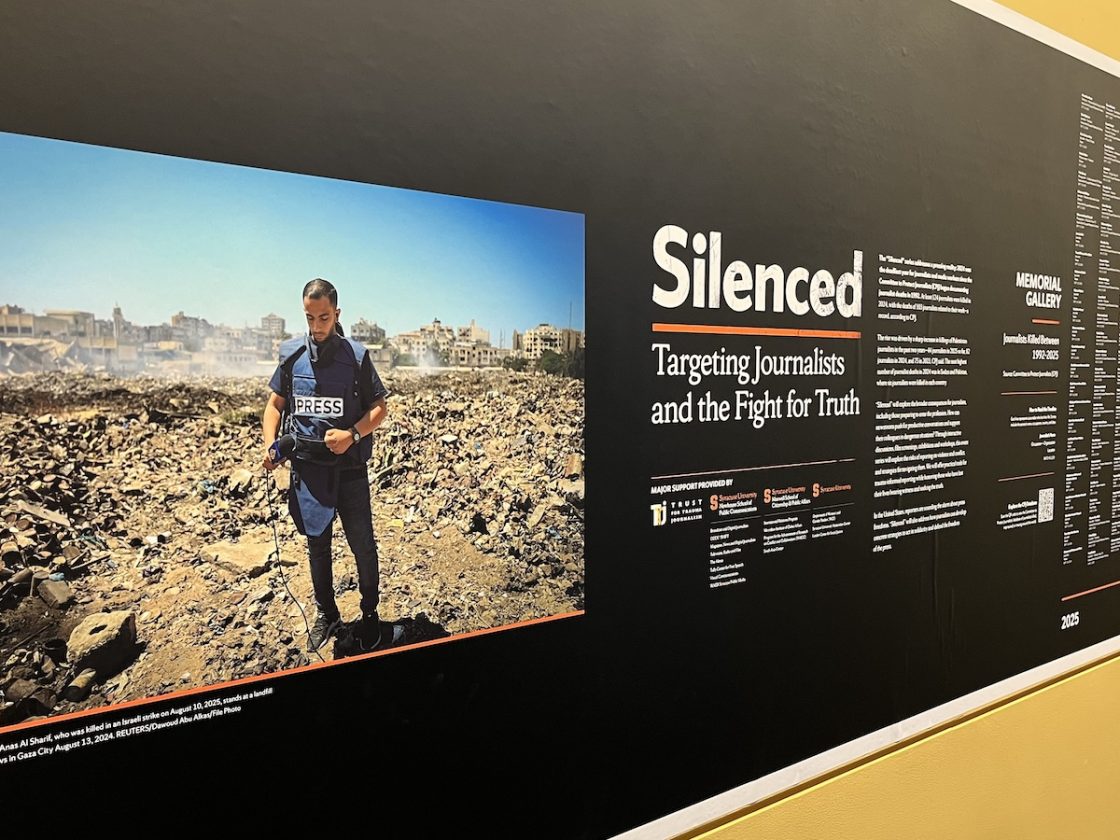
The memorial display outside the Joyce Hergenhan Auditorium lists the 2,510 journalists killed globally since 1992, along with the date and location of their death.
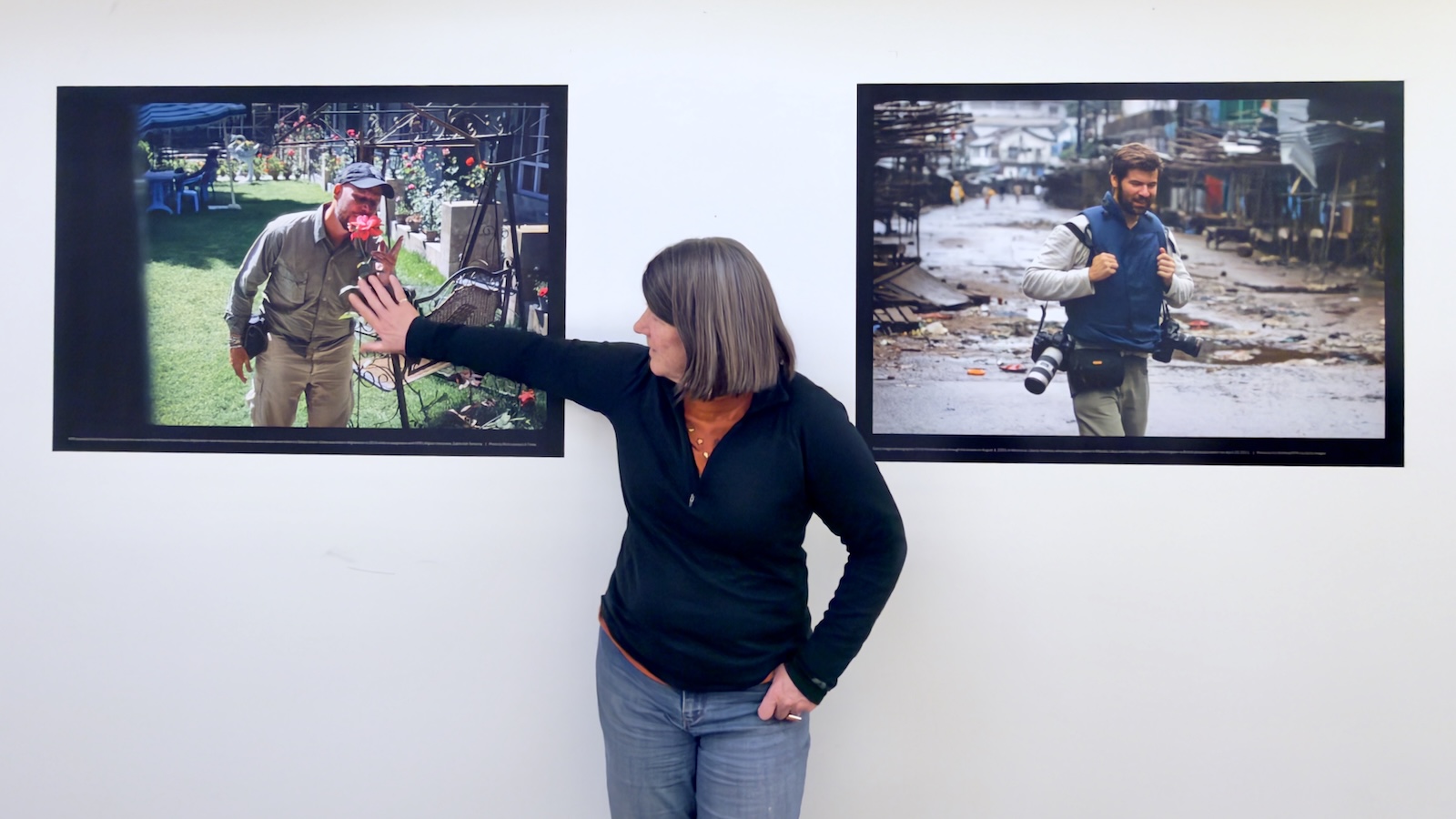
Hatch, a photojournalist and documentary photographer, covered conflict and its aftermath in the Middle East and Africa. She drove five and a half hours to see the memorial, to find the names of friends and colleagues she’s lost. When she arrived, she helped mount a photo of her friend, David Gilkey, in the gallery. Then, she placed her hands over each of her friends’ names: Gilkey, Chris Hondros, Ilaria Alpi, Raffaele Ciriello.
“Each year, sadly and horrifically, there are more and more journalists being killed,” Hatch says. “And when I was working in conflict zones, yes, people got killed, but now more frequently people are targeted. Some of my friends were targeted. It’s incredibly important to remember those names and remember their commitment to witnessing and documenting what’s happening in the world, literally giving their lives for it.”
Raising Awareness
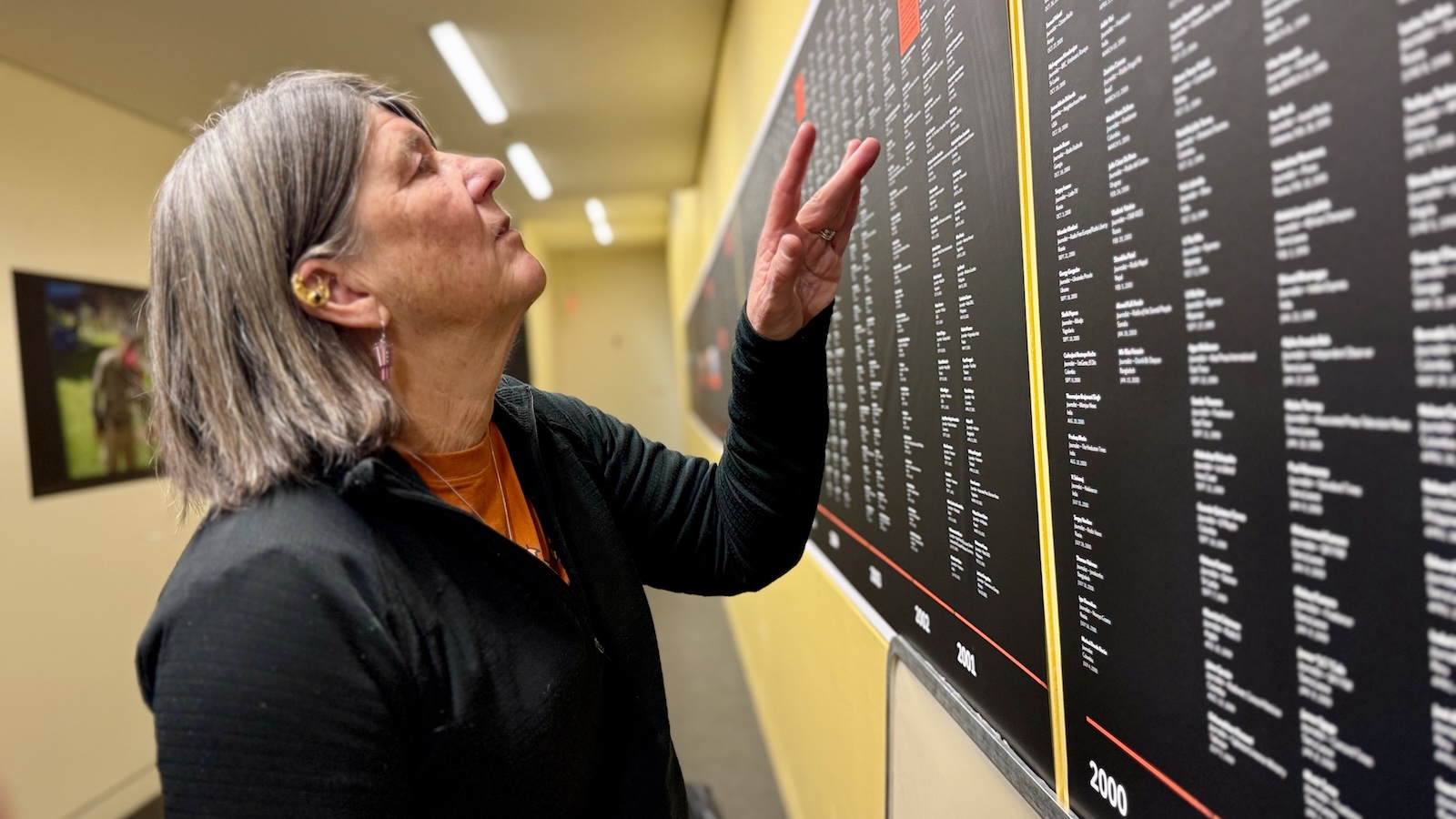
The wall is part of a project developed by Ken Harper, an associate professor of visual communications and graduate program director for multimedia, photography and design at Newhouse, that seeks to honor media professionals who have been killed and raise awareness about the threats journalists face.
Harper says he was moved to create the memorial gallery and its accompanying event series, “Silenced: Targeting Journalists and the Fight for Truth,” in response to the record number of journalists and media workers killed in 2024.
According to the Committee to Protect Journalists (CPJ), at least 124 journalists were killed in 2024, with 103 of the deaths related to their work. The rise was driven by the increase in deaths of journalists during the Israel-Hamas war, which has seen 250 journalists killed during the course of the ongoing war, according to the nonprofit organization dedicated to global press freedom.
“I thought, is there anything I can do to further the conversation?” Harper says. “To remember those people who gave their lives, to bring the truth forward and to shed light in places that are really hard to be. They gave everything for it, and the least we can do is recognize that.”
Addressing Challenges
Harper says his hope is to bring people together for inclusive conversations around the broader consequences for journalism, exploring the risks of reporting on violence and conflict, while also preparing students planning to enter the profession.
Harper worked with fellow Newhouse professors Lauren Bavis, Tula Goenka and Nausheen Husain to develop the event series, which includes discussions, film screenings and workshops on risk assessment and trauma-informed journalism. Events were held in the fall and will continue through the spring.
The memorial wall, which uses data from CPJ, was unveiled on Nov. 6 and will be on display until July. Harper collaborated on the design for the wall with Jeff Passetti, lead artistic designer for the office of communications at Newhouse.
“Intellectual discussion is critical because it reminds us how real this is,” Harper says. “And then now what do you do about it? If journalism is anything, it’s about practical ideas and solutions to real problems we bring forward to the community to address.”
Beyond the spring, Harper says he hopes to find a permanent home for the memorial on campus. He’s also looking for funders to create a traveling exhibition for the project, to bring the memorial wall to other journalism schools around the country and internationally.
Loghman Fattahi, U.S. advocacy representative at CPJ, says documenting and preserving the stories of every journalist who’s been killed is vital for pursuing accountability.
Until its closure in 2019, the Newseum honored journalists killed related to their work on a memorial wall. But Fattahi says he is not aware of any other current memorial to slain journalists listing the collective names as the “Silenced” project has, giving visitors a concrete visual for understanding the risks journalists around the world take in service to their vocation and society.
“The journalists have fallen in different places, in different contexts, different years, their lives are taken by different actors and circumstances,” Fattahi says. “But seeing all their names together brings a sense of cohesion and wholeness to the bond among journalists and the role and importance of press freedom in bringing credible information, reliable information, independent information, to audiences all around the world.”
Remembering—And Continuing the Work
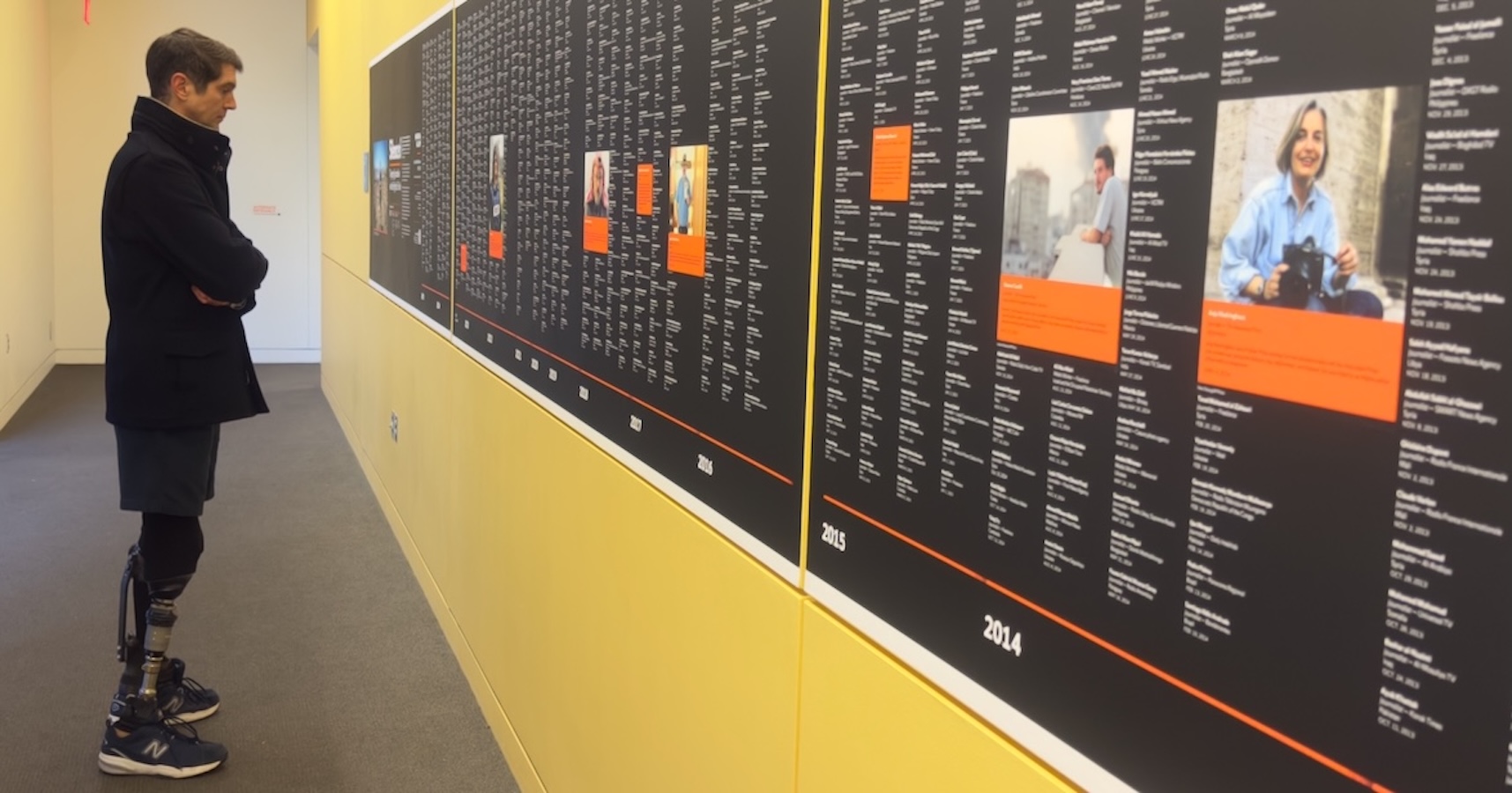
Benjamin Hall, a Fox News senior correspondent, was on campus in November for his own reporting when he learned about the memorial gallery and that two of his former colleagues were included in the display. Hall was in Ukraine covering the Russian invasion alongside photojournalist Pierre Zakrzewski and Ukrainian journalist Oleksandra “Sasha” Kuvshynova in March 2022 when their vehicle was struck by Russian fire, severely injuring Hall and killing his colleagues.
“I knew no matter how busy it was, I had to go down and see it,” Hall says. “Not only to pay respects to Pierre and to Sasha, and to every other journalist who’s lost their lives covering conflict, but to also just thank Syracuse for having this wall.”
Like Hatch and Fattahi, he says the memorial reminds people of the importance, not only of journalism and covering conflict, but of having reporters on the ground.
“In my eyes, journalism is more than just a job,” Hall says. “It’s more than just something you go and you do, to write stories here and there. It is something that has a vast impact on how society sees the world. It strives to educate people so they can help make better decisions, so they can hold governments to account, so they can hopefully try and change the world for the better.”
Zakrzewski and Kuvshynova, and other former colleagues remembered on the wall, believed the work they were doing was essential, he says.
“They cared so deeply about what we were doing, and I know they would not want what happened to them to stop journalism,” he says. “They would not want people to stop telling these stories. No, they would want people to continue doing the work that they thought was so important.”