How Digital Devices Took Over and How to Reclaim Our Relationship With Them
On the “’Cuse Conversations” podcast, Matt Mulvaney and Zahra Vahedi unpack why our phones are so hard to put down and what it actually takes to change that.

We all do it countless times a day.
Tap our smartphones, fire up our laptops and tablets and log into social media to see if we have any new notifications.
The average American reaches for their digital device approximately 186 times each day, according to a recent study of 1,000 U.S. adults ages 18 and older.
Our screens have become a vital part of our day-to-day lives, but sometimes, having access to technology can cause us to not be present in our interactions.
“The effects are pervasively harmful in terms of their impact on how people relate to each other and how people make connections. Those real-life interactions with other people are what give us richness to our lives,” says Matt Mulvaney, undergraduate program director and associate professor in the Department of Human Development and Family Science in College of Arts and Sciences (A&S).
“It is important that we become more mindful about and intentional about how we’re using our technology, ensuring we have safer times and spaces where we do allow for that non-task specific use. But it’s becoming difficult, especially in the classroom,” says Zahra Vahedi, assistant teaching professor in the Department of Psychology in the College of Arts and Sciences.
On the latest “’Cuse Conversations” podcast, Mulvaney and Vahedi examine the complex roles our digital screens play in our lives and offer tips to reestablish a healthy relationship with our devices.
How would you assess the current state of our relationships with our cell phones and our digital devices?
Matt Mulvaney: These devices move us away from in-person interactions, and [using our screens] produces loneliness, unhappiness, depression and failure to connect with people. That is one of the most critical and important human features. We should approach this as a public health risk and understand how we can change the way that we approach technology on a fundamental level.

You researched smartphone usage and its link to stress and anxiety. Does how someone uses their device matter more than how much they’re using it?
Zahra Vahedi: There was a small-to-moderate relationship between smartphone use frequency and stress and anxiety levels. But what really moderated that relationship was what you’re doing when using a device. We categorized our findings as compulsive use: use where you don’t feel like you’re in control. We’re seeing more of this in young adults and adolescents. We’re moving from just pure frequency to what you’re doing when on your device, and whether you’re in control of that time.

What can we do to reestablish a healthier relationship with our devices?
Mulvaney: The antidote to a lot of this is reading. Reading and social media scrolling are two opposite processes. Reading requires attention. It allows for imagination and engagement with complexity rather than simplicity, which is the hallmark of scrolling. Reading over the course of childhood is an exceptionally powerful tool. It gives you this window into the inner lives of people who are complex and have different views.
Vahedi: Become more mindful of how you use your technology. Put your phone on mute. Mute any non-essential notifications. Get students to go back to old-school pen and paper. Facilitate more in-person interactions.
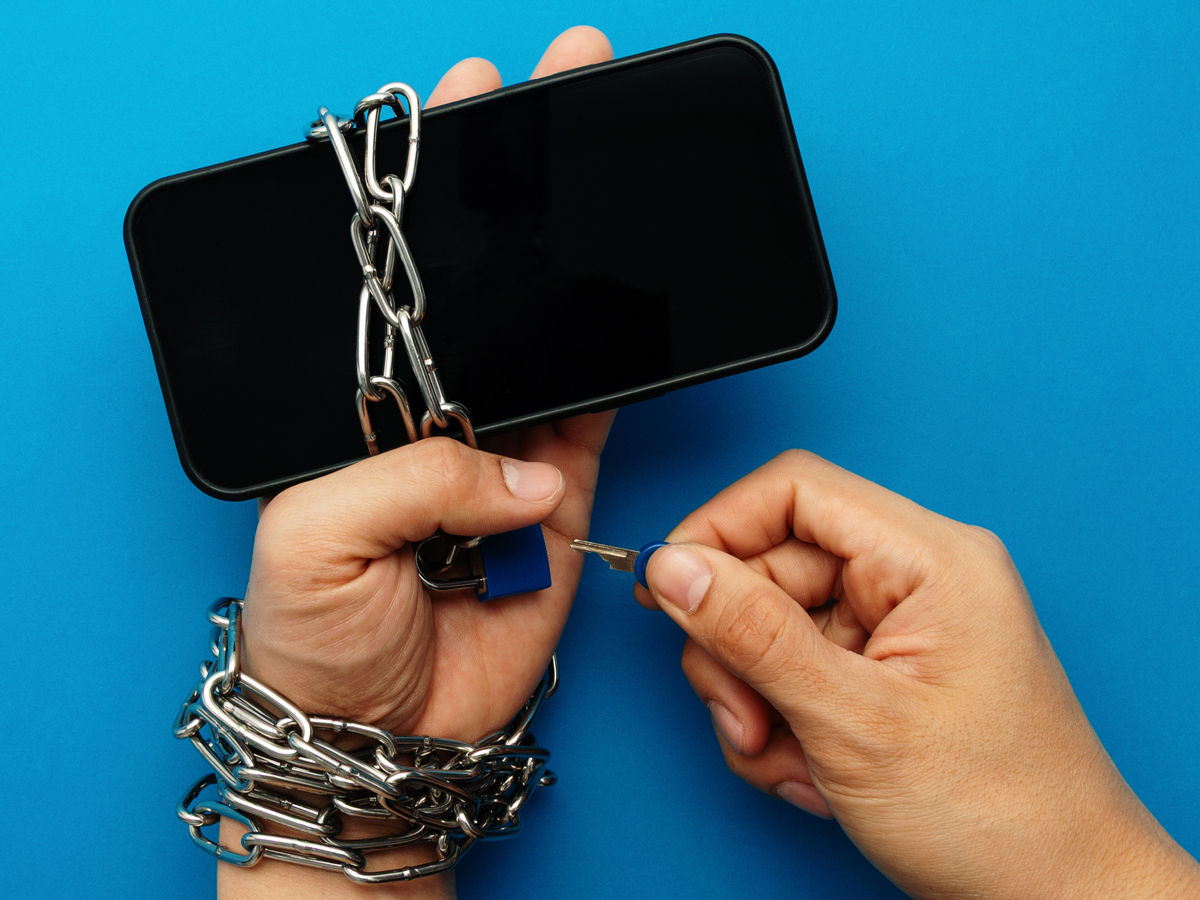
How does reliance on screens stunt personal development?
Mulvaney: Nobody likes getting rejected. On social media, that never happens. You can connect with people all the time. There’s this fear of rejection that comes because we haven’t learned how to get rejected, manage our expectations or modulate our emotional reactions to those social interactions. These devices have been engineered by the smartest people in the country to transfix our attention spans, and our devices tap into our very core emotions of social relationships.
Vahedi: Smartphones and instant access to social media remove the discomfort associated with adolescence. As a society, it’s so important to lean back into that awkwardness, that discomfort and that figuring out who you are, especially during adolescence. I also worry about my children’s generation who grew up with technology. I worry whether those effects are going to become even more solidified in the next generation.

Do digital detoxes (taking a break from your phone and devices) work?
Vahedi: Digital detoxes are difficult when there’s years of a habit that’s been ingrained in them. We need individual determination coupled with societal cultural shifts in what we consider acceptable technology use. People have a lot of success when they go through detoxes with very young children, eradicating usage from the house. No iPads, no cell phones and movie nights once a week. That’s how we’re going to do this. Can you do that with a 15-, 16- or 18-year-old? Not necessarily.
What can parents and family members do to control cell phone and screen usage?
Mulvaney: Sitting with your child and having screen time be a facilitator of discussions and conversations rather than being a replacement for parent and child conversations is important. The fundamental thing that helps children develop is language, both spoken and written language. The more parents can do with their children instead of having [screens and devices] replace time with their kids is key.