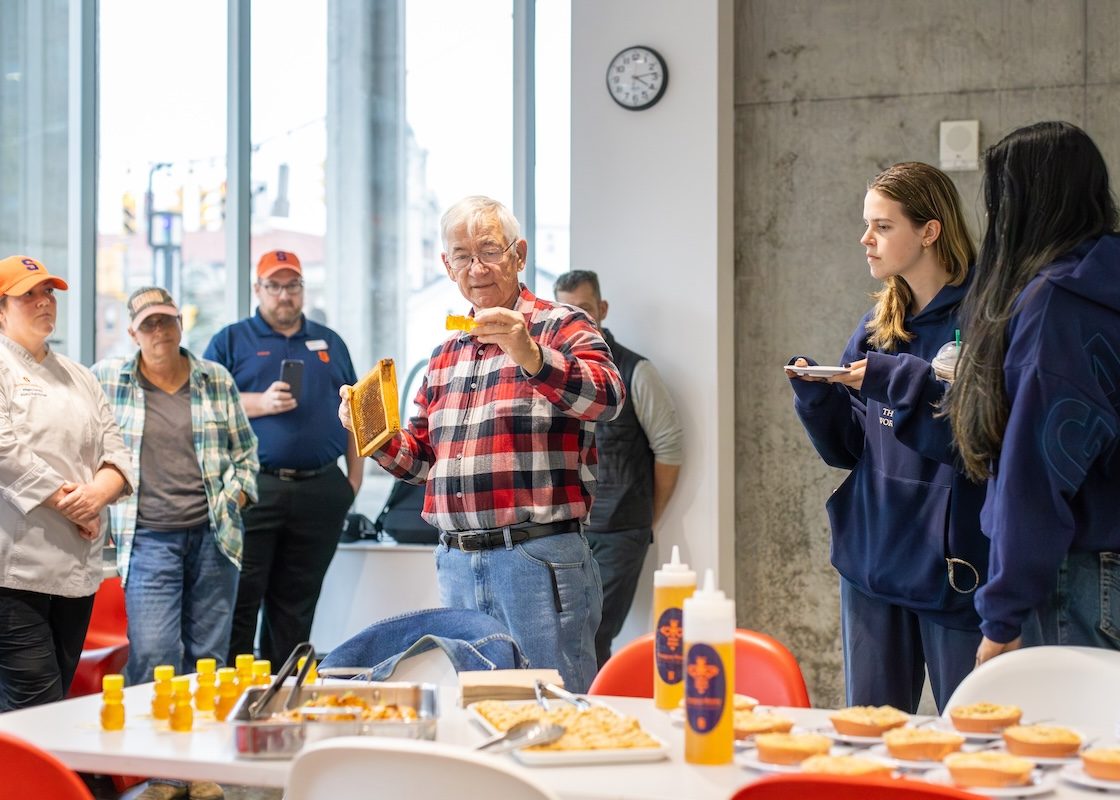
Bob Faulkner of Syracuse Honey describes the honey harvesting process. (Photo by Jeremy Brinn)
University Celebrates Honey Harvest With Sweet Treats
Talk about a tasty way to celebrate the local honey harvest. The Syracuse University Sustainability Management office and Campus Dining delivered a sweet ending for Sustainability Month in October by inviting students to Ernie Davis Hall to sample honey-inspired culinary treats and meet beekeeper Bob Faulkner. “Bees are absolutely the most amazing creatures on the planet,” he said.
For the past three years, in partnership with Sustainability Management, Faulkner, the proprietor of Syracuse Honey, has tended the University’s hives, which were placed on South Campus in spring 2020. He manages the 10 hives, each home to between 60,000 and 80,000 bees, and harvests the University’s honey, which is sold on campus.
All told, Faulkner collected nearly 7,000 pounds this year from 150 hives across the region. “People volunteer their land to help out the bees,” he said.
First-year student Riya Raj found herself in the right place at the right time.
“Around this time of year, my mom will always whip out all the honey jars,” said Raj, who shares her mom’s enthusiasm. “It’s so homey. I love honey. I love honey.”
Showcasing Honey as an Ingredient
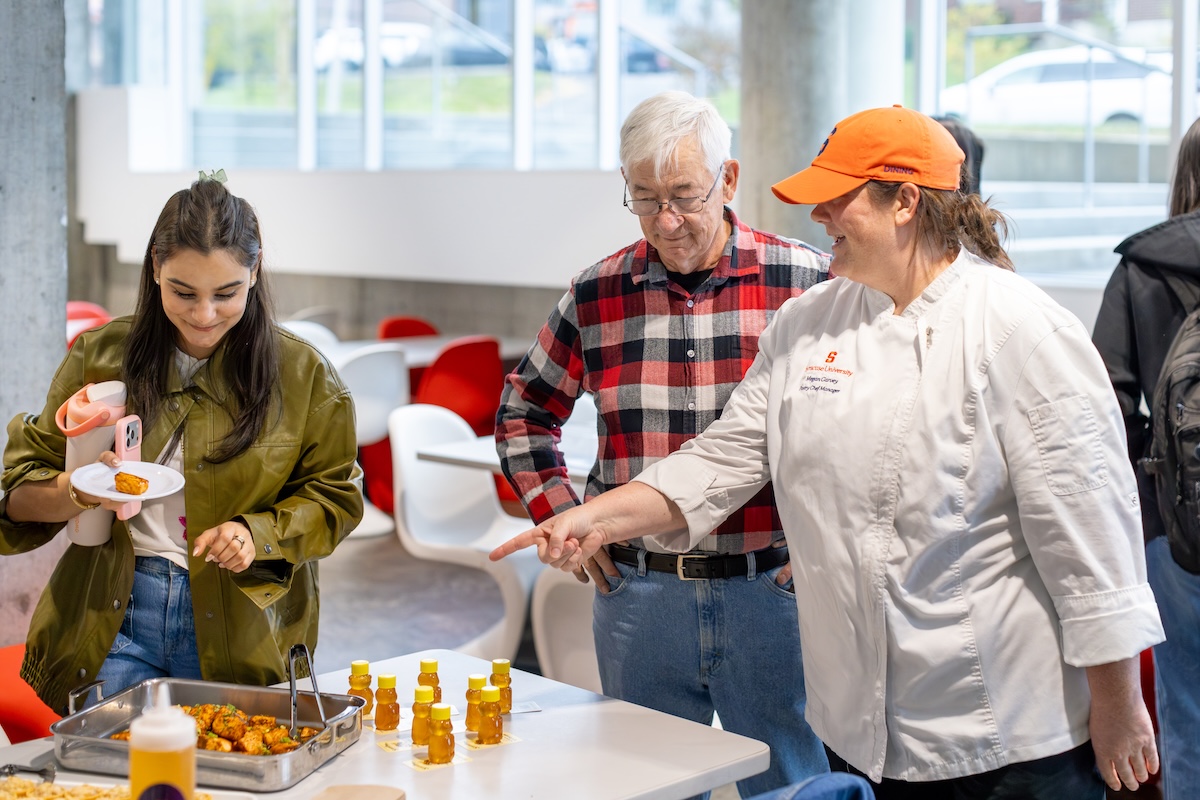
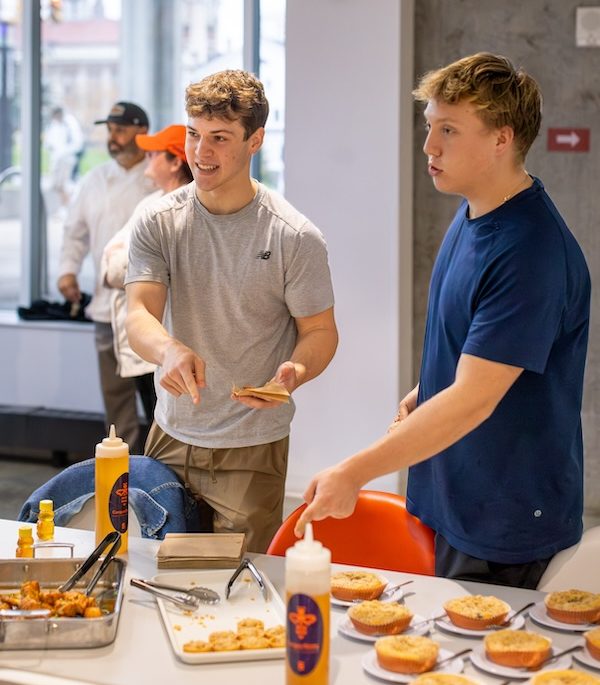
On a table in front of Raj were delectable treats created by Campus Dining: lemon blueberry coffee cake and a pear honey ginger tart with streusel topping and a drizzle of honey “to give it that extra honey flavor,” said Megan Garvey, pastry chef manager. “These are a specialty tart that we did just for this event.”
Ditto that for the salmon with roasted raw chili and a honey glaze.
“We wanted to showcase the honey in a savory way as well,” said Richard Leonardo, corporate executive chef. “Honey is great as an ingredient.”
Students Jordan Hass ’30 and Sam Richardson ’30 gravitated to the tarts.
“That is terrific,” Richardson said.
“Absolutely fantastic,” Hass said. “Very satisfying.”
Different Sources, Different Flavors
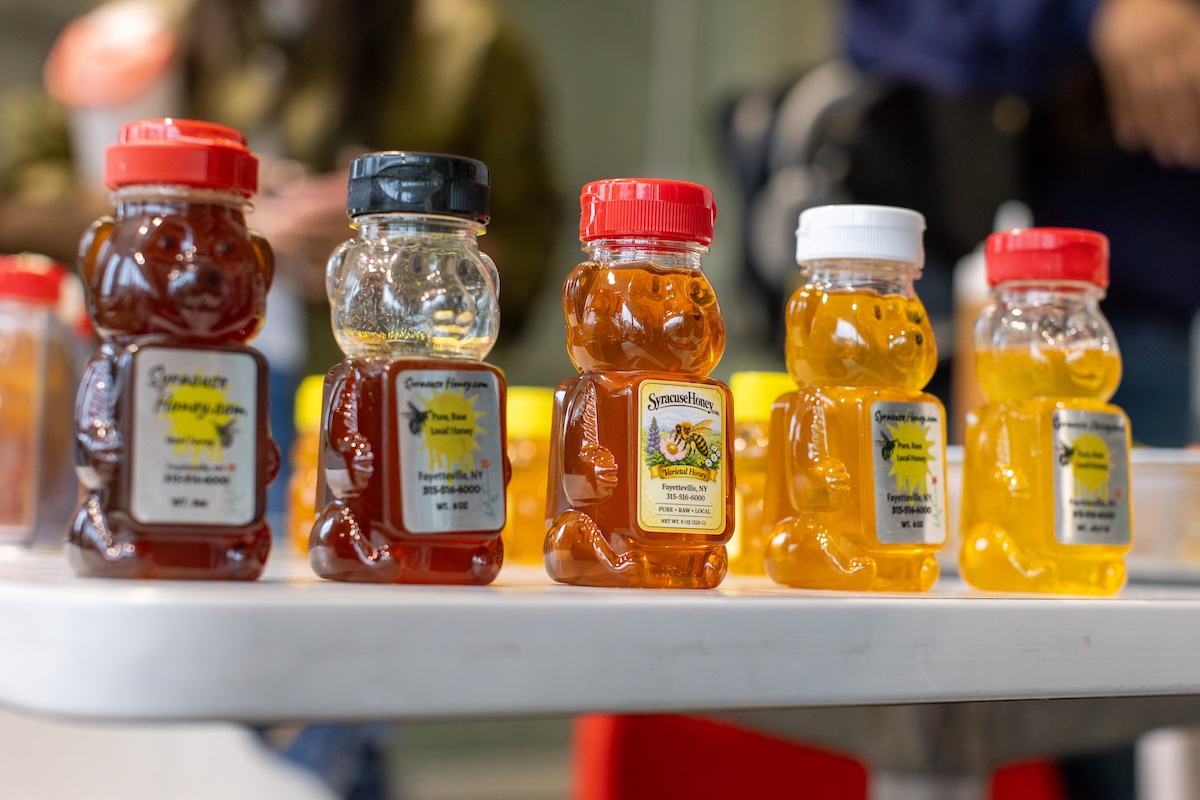
On another table, Faulkner and assistant beekeeper Yonat Klein shared samples of creamed honey and a handful of different honeys: Acacia, Buckwheat, Buttercup, Crazy Copper, Waffle, Cortland. The light-colored samples were from spring and summer harvests, while darker samples came from the fall.
According to Faulkner, it’s all about the floral source, time of year and bees’ location.
“For them it’s grocery shopping. They go out wherever they are, and they harvest whatever’s nearby,” he said. “They find different flowers at different times of the year, and that’s what changes the flavor of the nectar, which is what gets turned into honey with the unique, different flavors.”
Faulkner and Klein discussed the lives of honeybees and the harvesting process, showing how a hive box is equipped with frames where the bees work their magic.
“The nectar is about 80% water and 20% sugar,” Klein said. “And when the bees convert it to honey, they have to evaporate all this moisture that’s in it to 18% or less, then it is food forever.”
One student marveled at the assortment of honey flavors. “This is so awesome that you guys are doing this,” he said. “I love it.”