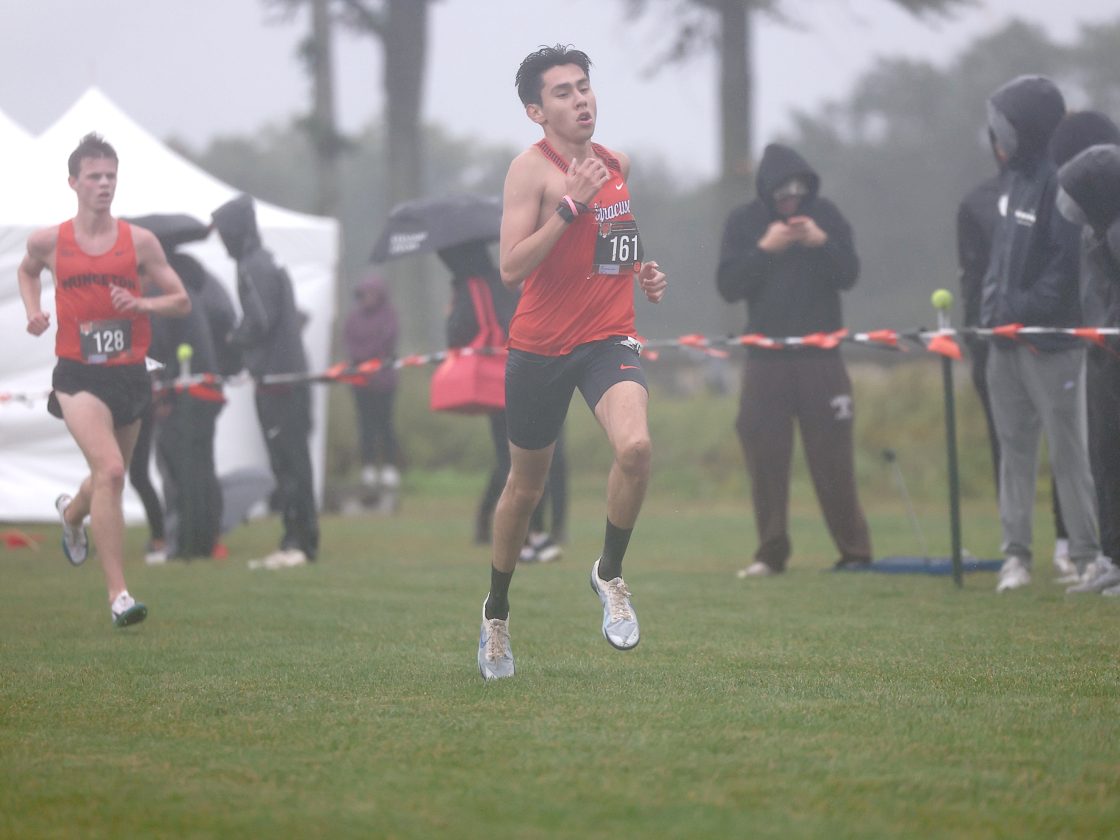
Orange cross country runner Ruben Rojas Betanzos heads for the finish line at the Princeton Meadows Challenge in September. (Photo courtesy of SU Athletics)
Orange Distance Runner Gives Voice to Fellow Student-Athletes
Distance runners learn to strategize for the long run, and Ruben Rojas Betanzos ’26, G’27 has carried that mindset well beyond the cross country course.
As former co-president of Syracuse University’s Student-Athlete Advisory Committee (SAAC) and current vice chair of the Atlantic Coast Conference (ACC) SAAC executive board, he gives fellow student-athletes a voice on campus, across the conference and in Washington, D.C., as intercollegiate athletics undergoes major change—all while excelling in the classroom and research lab and competing for the Orange cross country, indoor and outdoor track teams.
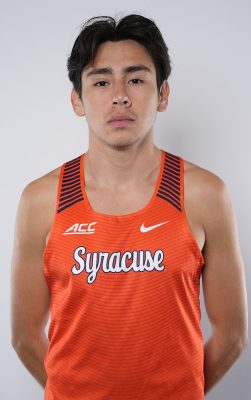
For Betanzos—now in his final season of cross country—it all began on his first visit to the University.
The Katy, Texas, distance-running standout felt right at home after meeting members of the nationally ranked cross country team and coaches.
“The biggest attraction was the team culture and the coaching staff,” says Betanzos, who earned a bachelor’s degree in biomedical engineering from the College of Engineering and Computer Science (ECS) and is now working on an MBA at the Martin J. Whitman School of Management through the H. John Riley Dual Engineering/MBA Program. “I think the way we support each other is unique to the NCAA, and the coaching staff is really about development and keeping the personal aspect of it alive as well. That has stayed true my whole five years of being here.”
Advocating for Student-Athletes
As an advocate representing the interests of student-athletes, Betanzos has advised and collaborated with University administrators on issues related to athletics, academics, the ACC and the NCAA.
“By getting involved in SAAC, I’ve made connections with senior leadership, and they’ve all been extremely supportive,” he says. “Anytime I feel like I need to voice something, I know they’ll listen.”
Beyond campus, Betanzos carries that voice to the national level. He was elected vice chair of the ACC SAAC executive board in August by a conference-wide vote of fellow student-athletes.
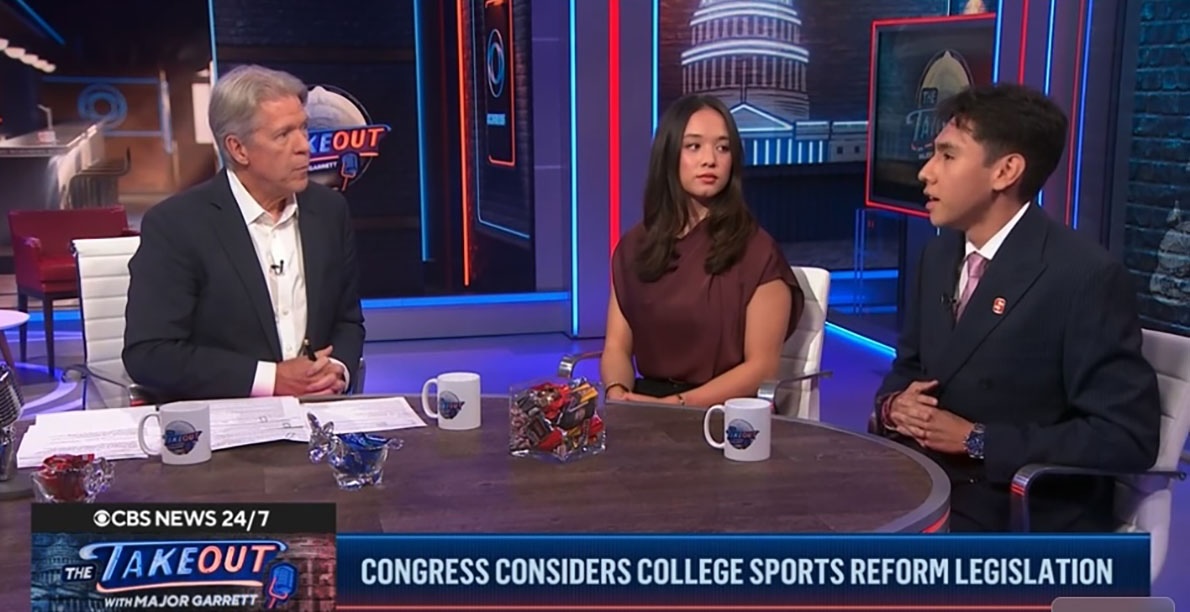
Through the committee, he has advocated for the Protect College Sports Act, a legislative bill under consideration in Congress that would establish laws to address the current uncertainty in intercollegiate athletics, including providing financial support for Olympic and non-revenue sports.
“I saw that there was so much instability being added to the NCAA system that I didn’t want opportunities for future student-athletes to be taken away,” he says.
This summer, he met with senators and staff from the Senate Commerce Committee and participated in a panel discussion on CBS News. He also published an op-ed column in USA Today, stressing that the non-revenue sports “provide thousands of student-athletes with the same kind of opportunities that have changed my life.”
Those opportunities often provide the highest level of competition for college-age students in the Olympic sports, he says. “Preserving that is extremely important. You also give kids opportunities to go to school. College athletics are the reason they get a degree.”
Experimenting With Nanoparticles
Betanzos started competitive running in eighth grade, around the same time his older sister was diagnosed with lupus. The experience heightened his awareness of the medical system and influenced his decision to study bioengineering.
“I became inspired by the fact that the experimental treatments she was getting can improve someone’s quality of life,” he says.
Amid MBA classes and competitions, Betanzos works as a research assistant in the BioInspired Institute lab of Yaoying Wu, an assistant professor of biomedical and chemical engineering who specializes in nanomaterials and immunology.
“We create nanoparticles and then coat them with cell membranes to create targeted drug delivery,” he says. “The hope is that this type of technology could work for a lot of autoimmune diseases, like lupus.”
Betanzos’ academic success earned him an ACC postgraduate scholarship that supports his MBA studies, and he credits Whitman for its career support and alumni networking opportunities. Eyeing the pharmaceutical industry, he hopes to pair his bioengineering experience with business skills to improve people’s lives.
“Knowing that your voice matters is powerful,” says Betanzos, who was honored with the Student-Athlete Award at the One University Awards ceremony last spring. “You can create an impact and hopefully make the student experience better for a lot of people—just seeing how that tree grows and grows is super amazing.”