Architecture Student Helps Build the Residence Hall She Once Toured
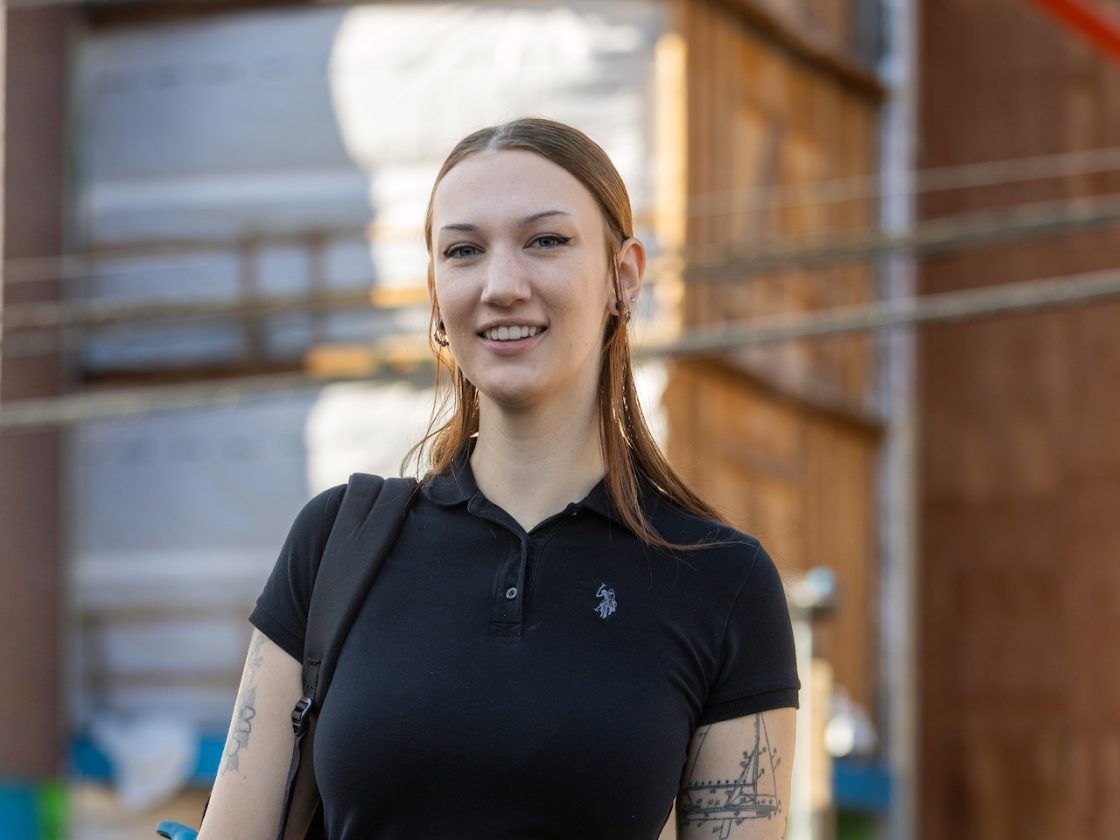
Katie Mason ’27 spent her summer learning how buildings come together. This fall, she’s helping put one up on campus.
The fifth-year architecture major in the School of Architecture spent the summer interning with construction management firm Whiting-Turner on a project in Maryland.
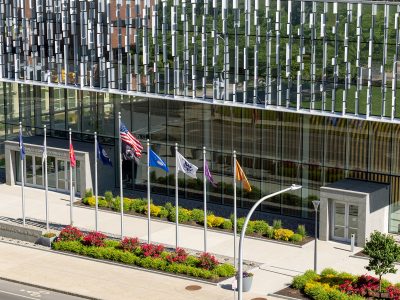
This fall, she’s back in Syracuse, but she’s continuing to work with the firm—this time on campus for the 544 University Place residence hall project. The project is one of three new residence halls currently under construction, which will house second-year students starting in fall 2027 and bring nearly 1,900 new beds to campus.
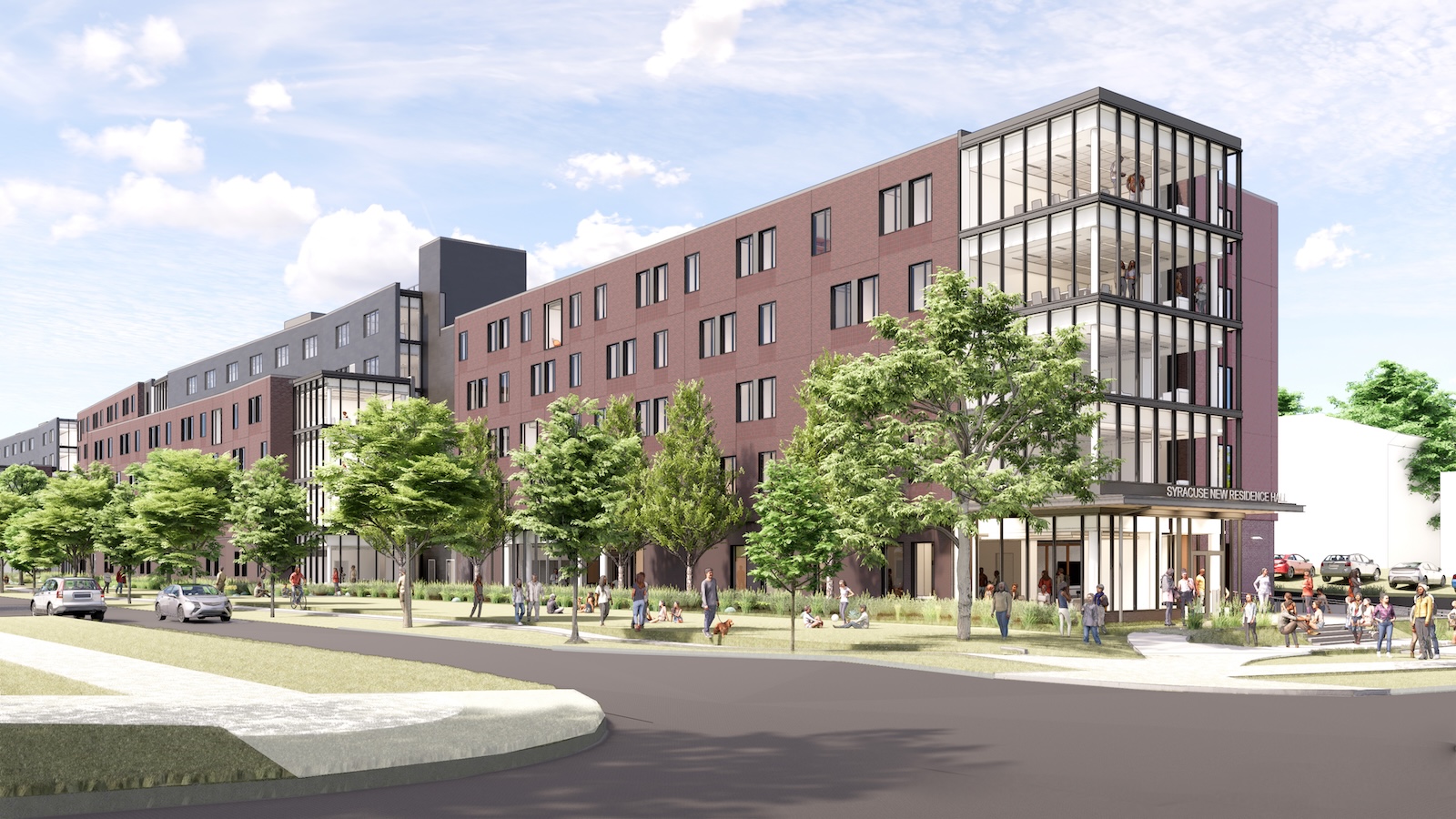
Mason first connected with Whiting-Turner last year, when her Advanced Building Systems class toured the site at 544 University Place while the structure was being raised. Now, as a project engineering intern with the company, she spends two days a week on site.
“Career-wise, my internship experiences have helped me discover a passion and excitement for working in construction, an option I wasn’t aware of when I started college,” she says. “I’m looking forward to continuing into the field of construction project management following graduation.”
Below, she tells Syracuse University Today more about the experience of seeing classroom concepts come to life and what it means to work on a new campus building.
Knowing this was my last year for internships, it was really important to me to understand the similarities and differences from project-to-project and how it feels to transition from project-to-project. Working on more than one project with the same company is helping me see what different projects feel like when they are on different scales, in different places, with different people.
My days on site start by getting to the trailer at 8 a.m. I’m able to sit in on our weekly subcontractor meetings, which are immensely helpful in wrapping my head around aspects of the project I’m unfamiliar with.
Because I’m a project engineering intern, I’m learning how to coordinate on the office side of the project rather than the field side of the project. These are things like material procurement tracking, understanding contracts and scopes of work, tracking the project schedule and all associated costs with those focus areas.
I have picked up so much from the superintendents on both sites I’ve interned on that I make sure I’m walking the site multiple times every single day. For me, the most important part is asking questions, observing and listening and then hopefully being able to help out where I can.
The most beneficial moments for me were when I could draw on my previous internships in architecture and construction and how I was able to apply them to our Integrated Design studio last spring. My partner, Alana Mitchell ’27, and I were very focused on keeping construction in mind from the very first stages of design, so it felt like the right time to push ourselves and apply what we’d learned from our internships.
Practically speaking, there was so much we didn’t know at that point. For me, one of these “ah-ha” moments was when it came to putting in the mechanical systems for our Integrated Design studio project. It was a lot of guesswork.
When I got on site this summer, I walked around staring into the ceilings. I remember thinking to myself, “Wow, yep, mechanical systems really do weave and bend to fit everything up there, and wow that is not a lot of space.” I’ve heard it referred to as ceiling spaghetti, and I see why now.
When I say, “put yourself out there,” I mean make yourself known. The first step is showing up, and then showing what you can do, showing you are willing and capable of learning and not letting the “intern” title stop you from connecting with those at your internship.
To me, “I helped build that,” means I know there will always be a little piece of me on this campus, not even metaphorically speaking. I’ll be able to carry with me that even one small task I worked on over the course of this internship will have made a difference at some stage of the construction on something that will remain on this campus, and I think that’s pretty cool.