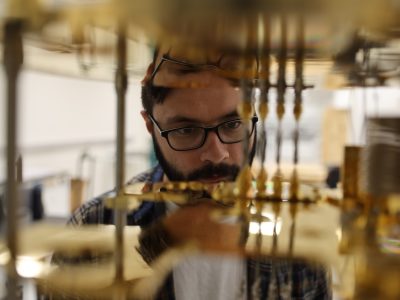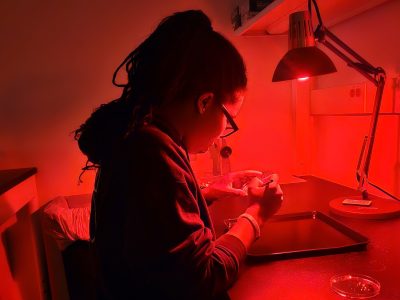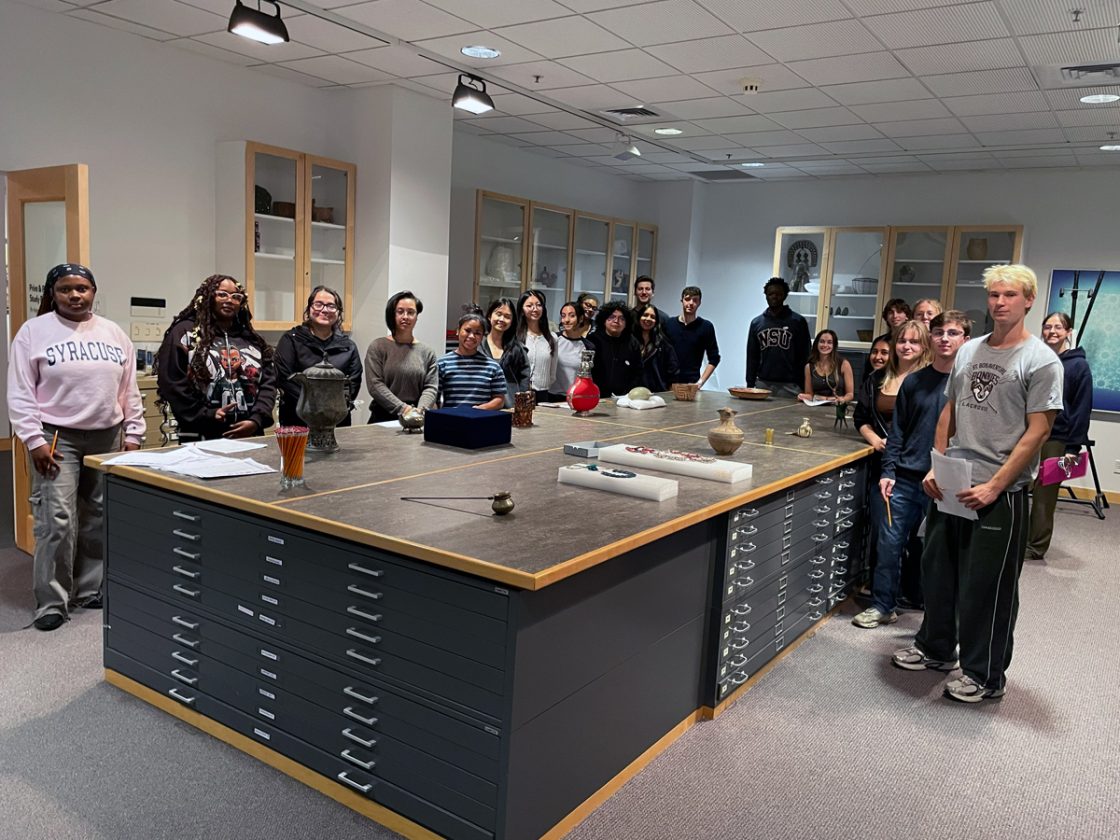
Students in Shikha Nangia's Engineering Materials, Properties and Processing class visit the Syracuse University Art Museum. (Photo by Kate Holohan)
Engineering Students Mine History to Invent Tomorrow’s Materials
What will the water bottle of the future be made of? What fabrics will be used 100 years from now in the next popular clothing line?
As a Syracuse University Art Museum Faculty Fellow for the 2025-26 academic year, College of Engineering and Computer Science (ECS) professor Shikha Nangia developed a course where ancient artifacts meet modern engineering, bringing museum pieces into the classroom and challenging students to imagine the materials of tomorrow.
In Engineering Materials, Properties and Processing, students visit the Art Museum and study artifacts made of metals, ceramics, textiles and wood, linking core engineering principles to historical, cultural and artistic contexts while devising new materials for common household items like water bottles.
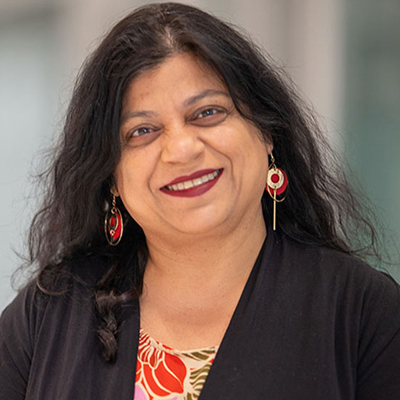
By looking to the past, Nangia says her students learn to understand how properties of materials drive design and function through the ages, lessons that go beyond textbook learning of how materials act.
“Students can learn what is required for scientific development so they can design new materials, but it’s equally important to study what we’ve done in the past. History is an excellent teacher,” says Nangia, the Milton and Ann Stevenson Endowed Professor and chair of the Department of Biomedical and Chemical Engineering. “If you look at the materials used at the same time in different continents, what was made was based on what’s available. Humans have always been resourceful.”
Bringing Historical Items to Life
Nangia collaborated with Kate Holohan, the museum’s curator of education and academic outreach, to introduce the students to historical artifacts, including examining the textiles and fabrics used in ancient clothing.
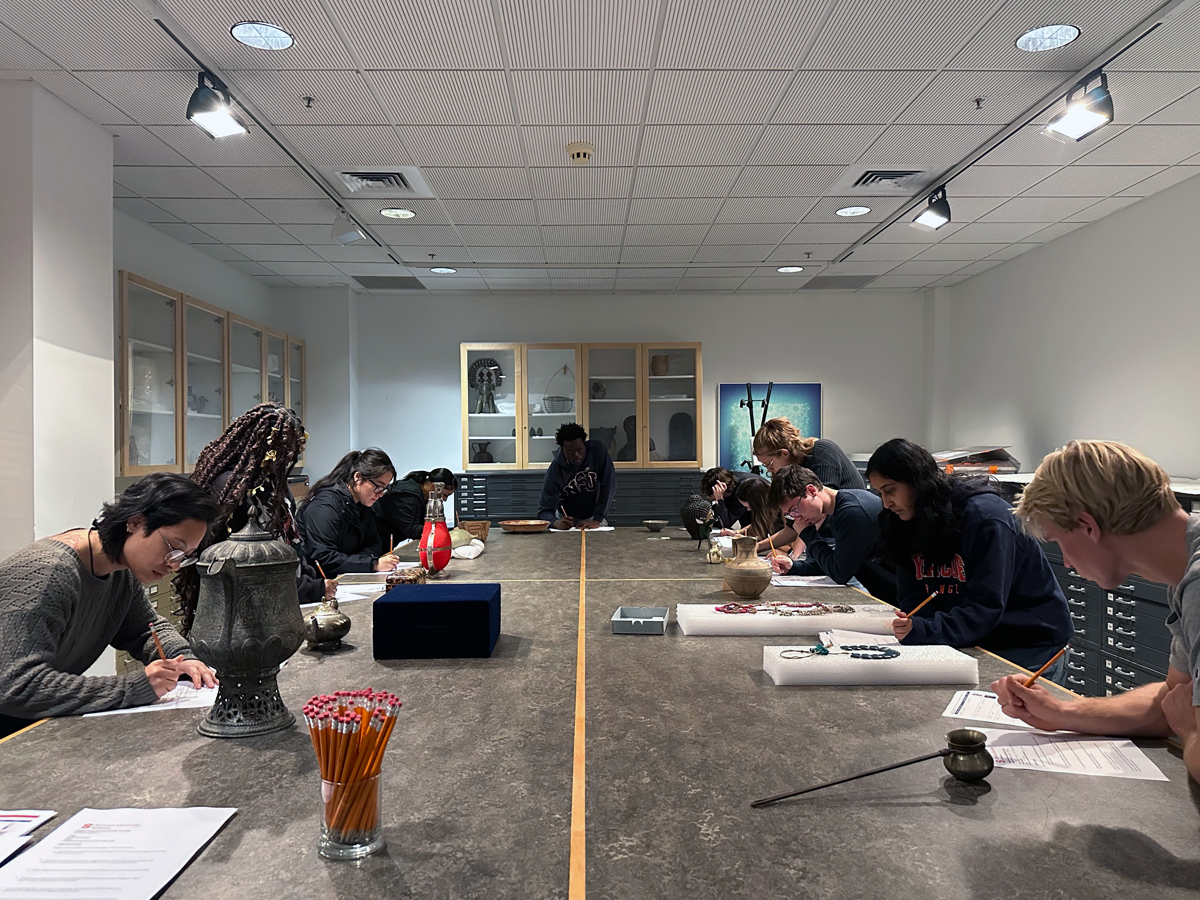
“Everything students touch now is engineered material, and those materials come from the knowledge that we have, a background of historical importance and culture,” Nangia says. “Integrating these materials from our global cultures into the class matters because history is important. I’ve always liked art and history, and I’m a scientist, too.”
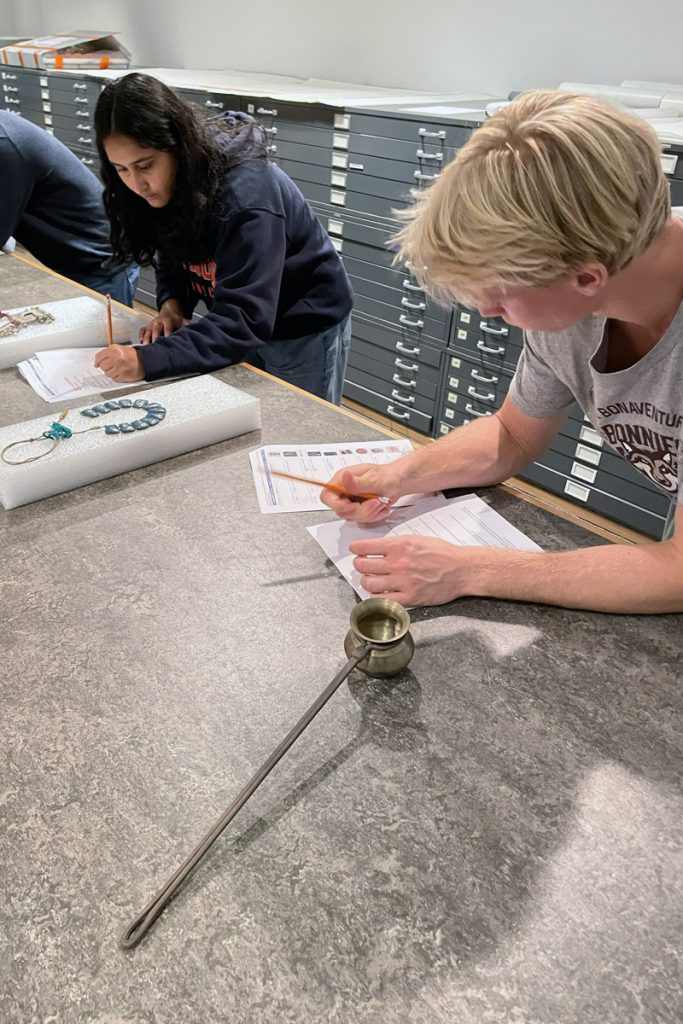
Nangia’s class used AI tools as a starting point for brainstorming, exploring new materials inspired by the historical artifacts. The students analyzed new materials for desired properties, affordability, cost of synthesizing, practical usage and ergonomic design before the new materials could be created.
For their final project, students presented AI-aided designs for the next popular fabric in clothing or the next durable material for a tea kettle that is cold to touch but keeps the tea hot.
“Those are the engineering problems our students will need to solve,” says Nangia. “But it’s not always about the best material; it can be about what makes a better design. Being a logic- and statistic-oriented scientist, there’s something poetic about blurring those lines and saying I’m going to create something that looks beautiful.”
Pratima Khadka and John Sackey, Ph.D. students in the biomedical and chemical engineering department, serve as Nangia’s teaching assistants for the class.
What’s Next
The Faculty Fellow position may have ended, but Nangia parlayed the success of the fellowship into a three-year appointment as a Laura J. and L. Douglas Meredith Professor. The Meredith Professorship Program recognizes and rewards outstanding teaching at Syracuse University.
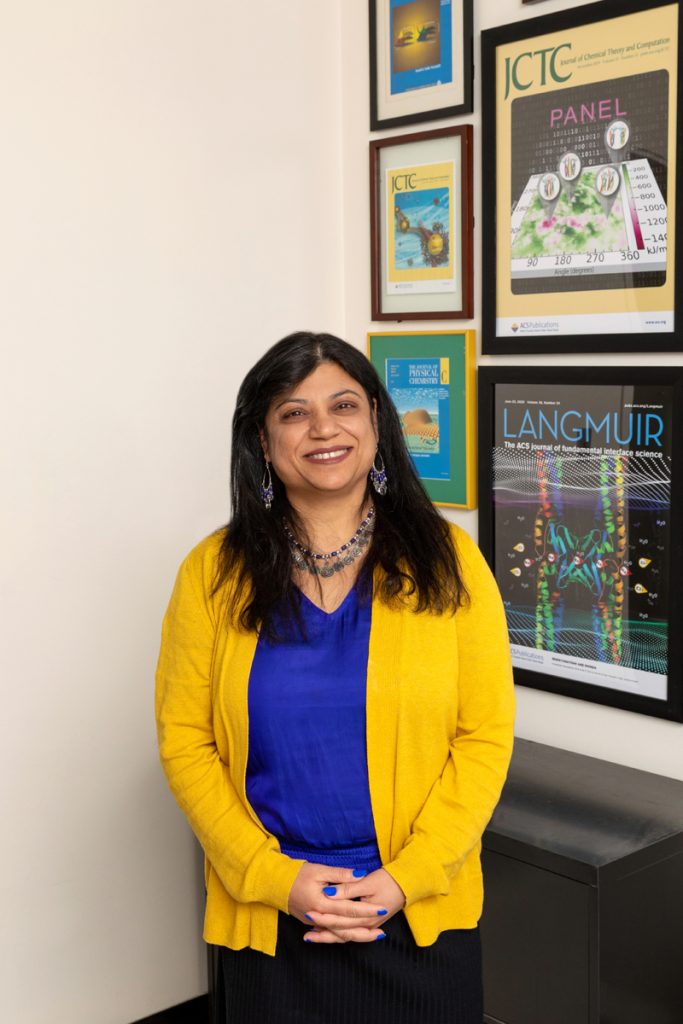
Outside the classroom, Nangia studies the blood-brain barrier—a tightly locked network of cells that protects the brain from harmful substances and pathogens—in hopes of finding pathways for delivering drugs to the brain that could treat Alzheimer’s and Parkinson’s diseases.
Her research has frequently appeared in medical journals, often with cover illustrations she created herself to make complex science easier to understand.
“This is an expression of both my love for science and my creativity,” Nangia says. “When I’m designing a cover, I’m thinking about the message I want to convey, and how I can use art to share that message. I love using colors because they bring this research to life.”
Beginning this fall, the Meredith Professorship will allow Nangia to not only expand the class but also offer workshops for other faculty interested in learning how to incorporate Art Museum artifacts into their classroom instruction. Those faculty workshops will be aided by the Center for Teaching and Learning Excellence.
For the next iteration of her class, Nangia says one idea she hopes to adopt is a “tablescapes” exhibition on display at the Art Museum, comparing the different eras of something like the materials on a dining room table throughout history. Students would then design and present their vision for what the dining room table of the future will look like.