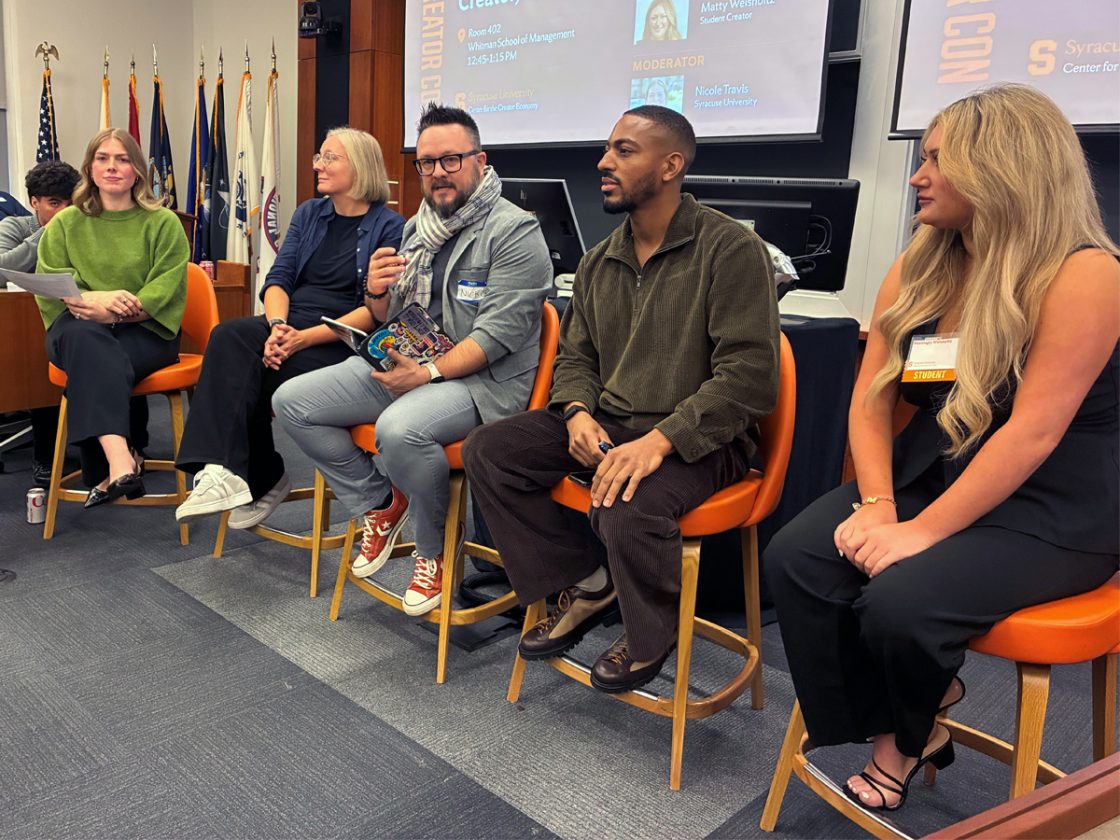
From left: moderator Nicole Travis facilitates a research conversation with Carrie Welch, Nick Bowman, Malik Evans and Matty Weisholtz. (Photo by John Boccacino)
What Makes a Creator Different From an Influencer?
The creator economy is a growing global industry that Goldman Sachs Research reports could be worth $480 billion by 2027. But what is a creator, and what is the difference between a creator and an influencer, a celebrity or everyone else who posts online?
The main differentiator between a creator and an influencer? Nearly 84% of U.S. adults surveyed define creators by their craft and their long-term dedication to it, which sets them apart from influencers, celebrities and everyday social media users.
That was one of the key findings unveiled by Syracuse University’s Center for the Creator Economy (CCE) during the second annual ’CUSE Creator Con, which brought together top creators, industry executives and thinkers. The two-day event featured a kickoff celebration Thursday, Oct. 22, and several sessions the following day that explored various aspects of the creator economy.

“‘Creator’ has become one of the most important words in media and one of the least defined,” says Ryan Schram, executive director of the CCE. “This research gives the industry a definition grounded in what audiences, creators and the professionals who work with them told us. Their answer is clear: being a creator is about craft and commitment.”
In its inaugural long-form research study, the CCE defined a creator as “an independent studio: a 360 enterprise that collapses whole industries into one person…sharing knowledge with the audiences they build and carrying the expectations once placed on celebrities and institutions. They are defined by a love of the craft, a sustained commitment to it over time and an authenticity that earns trust and keeps audiences coming back… .”

During the “Signature Research Unveil” panel at Creator Con, Carrie Welch, the CCE’s launch director, shared one of the research’s more surprising takeaways about how creators and influencers relate.
“There are creators who also influence, but there was a growing trend in our research that while creators can be influencers, influencers cannot be creators,” says Welch. “There’s an art and a craft attached to the creator that is not present for the people we spoke with for the influencer. The influencer was read as transactional: someone you employ for a marketing tactic. The creator is an artist: someone you want to formulate a long-term relationship with as a student of the craft.”
Among the other findings:
- 75.5% of respondents see creators as a distinct professional role
- 66.7% see a difference between a creator and an influencer
- 87.2% see a difference between a creator and a celebrity
- 69.7% accept creators running their channels purely as a business
- 64.7% say changing content to chase sponsors compromises integrity
Want to Grow an Audience? Authenticity Matters
Matty Weisholtz ’27, a content creator and president of ’Cuse Creative Studios, has turned what started as a hobby into a growing personal brand. She was among the 40 creators and industry professionals who provided insights that helped the CCE define a creator.

Since landing her first brand collaboration with Valentino, Weisholtz has pitched and partnered with brands on her own, creating between five and 10 brand partnership videos each week.
“Authenticity is everything. I’m able to accept bigger campaigns because my engagement rate is so high and because people genuinely interact with my content and like to view it,” says Weisholtz, a marketing management major in the Whitman School of Management who served as a student panelist during the “Signature Research Unveil” session.
One of the most important breakthroughs came when she realized she could build her own brand algorithm because she knew “what my audience likes, because my audience is a bunch of me’s.”
From that point, Weisholtz vowed to always produce authentic content.
“Authenticity came up in every interview we conducted,” Welch says. “Authenticity is the special sauce that runs through the creator economy. If you’re not authentic, you’re not making really good content. You’re becoming an ad and selling something.”
Defining a Creator to Protect the Future of the Industry
The research was built on a census-matched national survey of 989 U.S. adults conducted via Prolific in October, along with initial findings from 40 in-depth interviews with creators and creator economy industry professionals.
Welch handled the qualitative research, including interviewing Weisholtz and Malik Evans, a growth advisor with Meta, while professor Nick Bowman, who oversees doctoral and master’s programs in mass communications and media studies in the S.I. Newhouse School of Public Communications, handled the quantitative research.
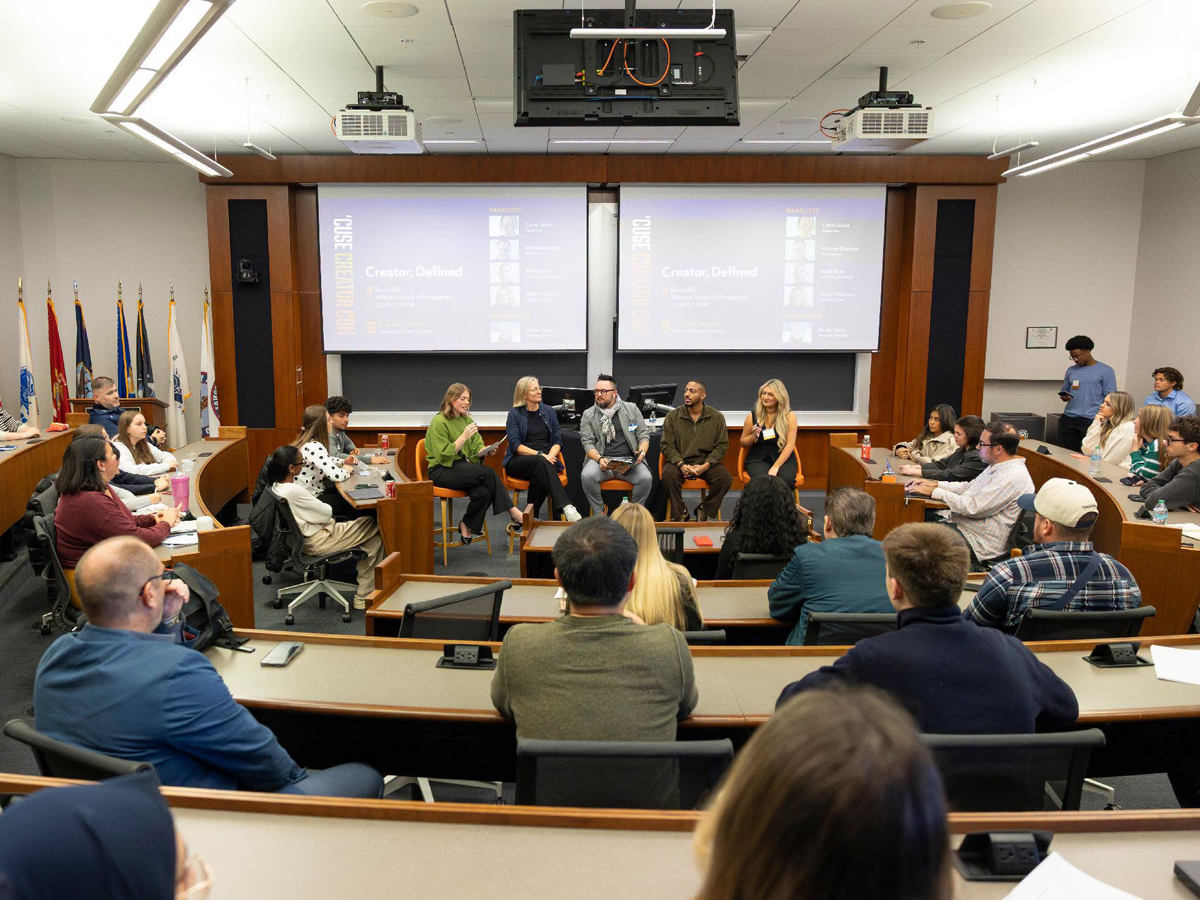
Welch, Bowman, Evans and Weisholtz discussed the key takeaways during the panel conversation. Welch says the resulting definitions are vitally important to the future of the industry and will affect creators at every level, from those with millions of followers to those just getting started.
“These definitions need to constantly be redefined and updated, and this research is evolving,” Welch says. “We’re not just teaching our students how to be influencers. There are real business implications. If being a creator is the modern version of an entrepreneur, there are laws and regulatory problems we have to solve. The infrastructure isn’t there yet. In trying to define what a creator is, we’re hoping to protect this group of people.”
What’s Next
Welch says the CCE is already working on its next flash research report, examining how creators influence holiday shopping, including whether consumers prefer to create gift wish-lists or follow their favorite shopping influencer on social media.
Launched in 2025, the Center for the Creator Economy is led jointly by the Newhouse School of Public Communications and the Whitman School of Management.
Scroll through images from the second annual ’CUSE Creator Con below.
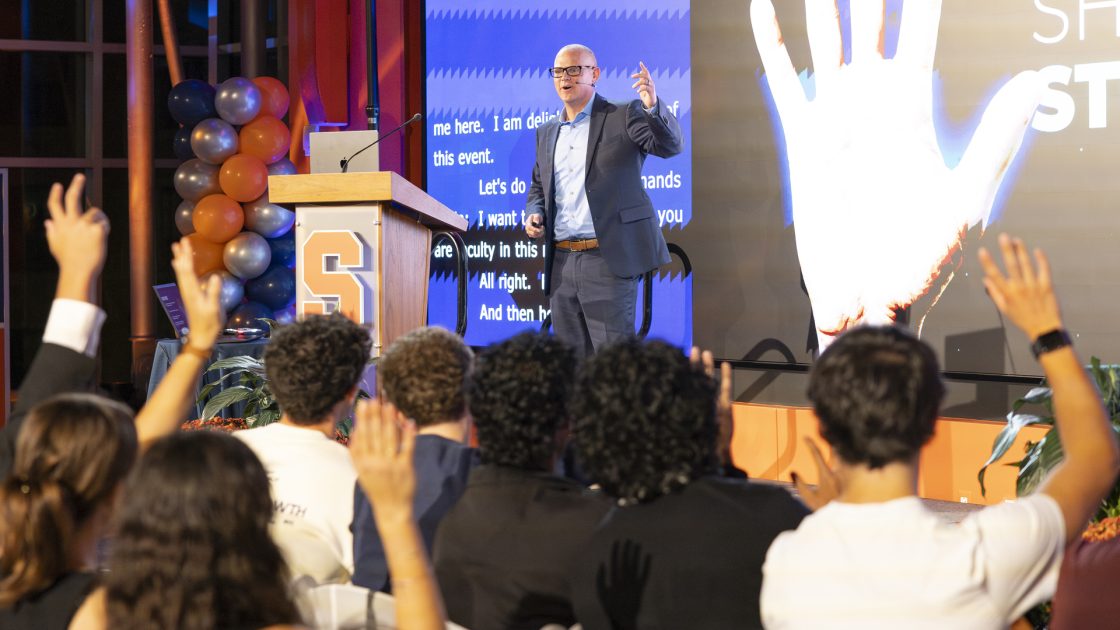
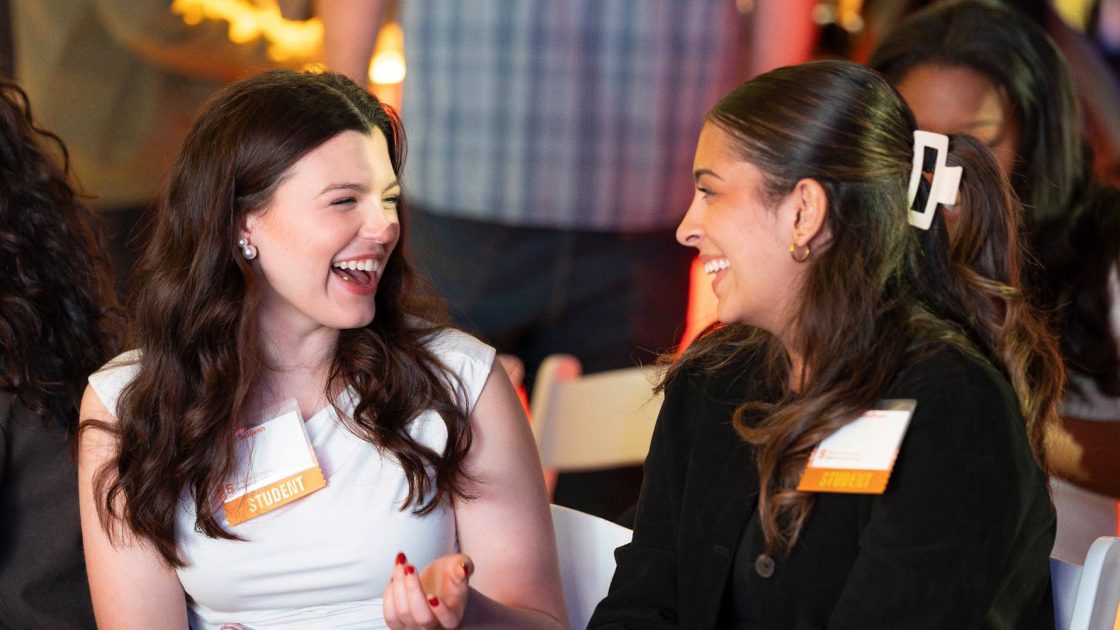

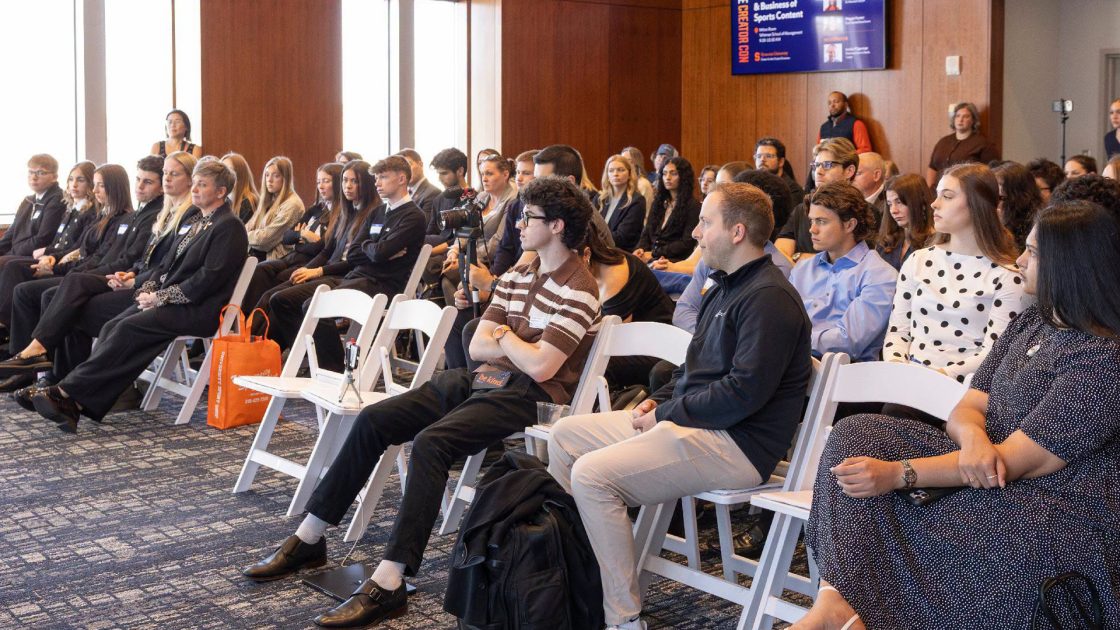

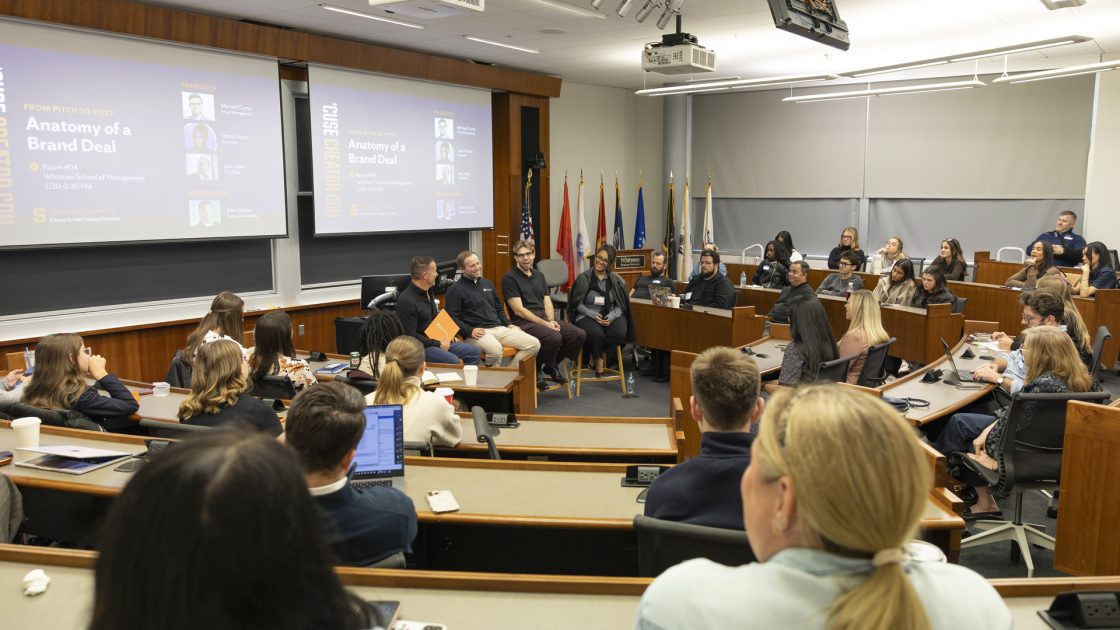


Ted Murphy, founder of IZEA and COEY, delivers the keynote on the past, present and future of the creator economy at the ’CUSE Creator Con kickoff celebration Thursday, Oct. 22, in Flaum Grand Hall in the Whitman School. (Photo by Julie Herman)
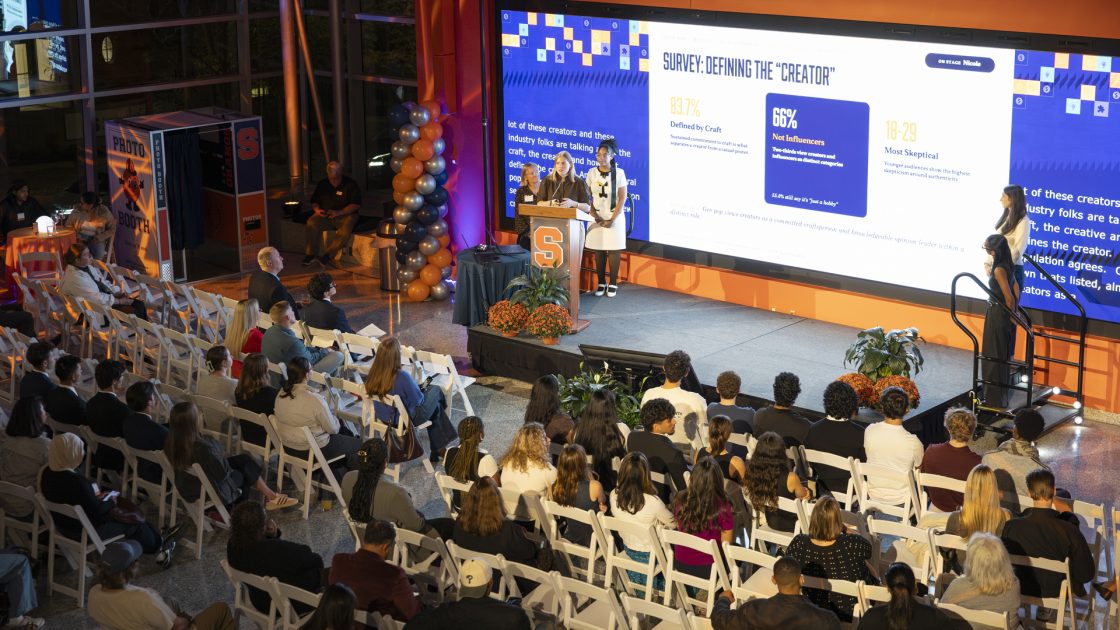
Findings from the Center for the Creator Economy’s inaugural long-form research study were shared during the Kickoff Gala. (Photo by Julie Herman)
(Photo by Julie Herman)
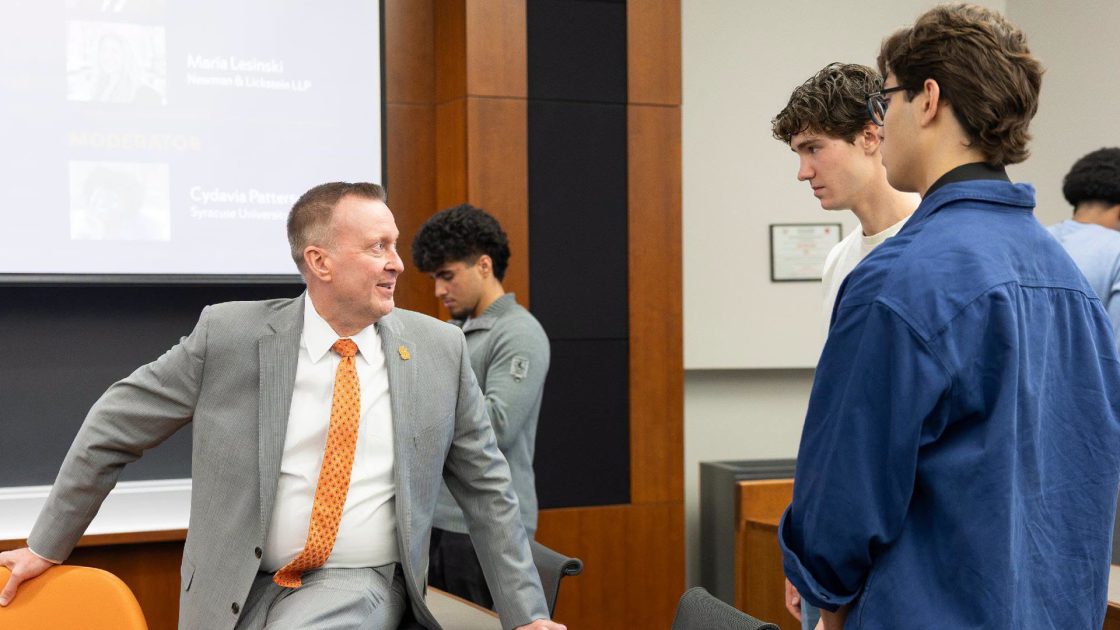
Chancellor J. Michael Haynie speaks with students after a panel discussion during ’CUSE Creator Con. (Photo by Julie Herman)
Director of Athletics Bryan Blair (second from the left) speaks during the Culture and Business of Sports Content panel conversation. (Photo by Julie Herman)
(Photo by Julie Herman)
(Photo by Julie Herman)
(Photo by Julie Herman)
(Photo by Julie Herman)
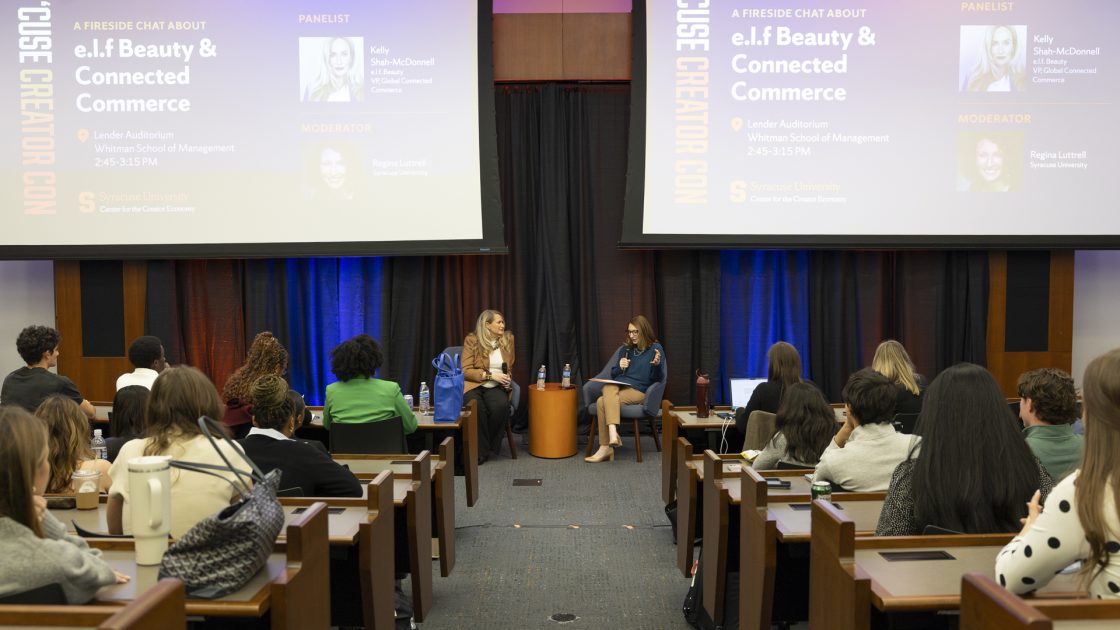
Kelly Shah‑McDonnell (left), vice president of Global Connected Commerce, and moderator Regina Luttrell lead a fireside chat about e.l.f. Beauty and connected commerce. (Photo by Julie Herman)
(Photo by Julie Herman)
(Photo by Julie Herman)