Is Syracuse University Haunted?
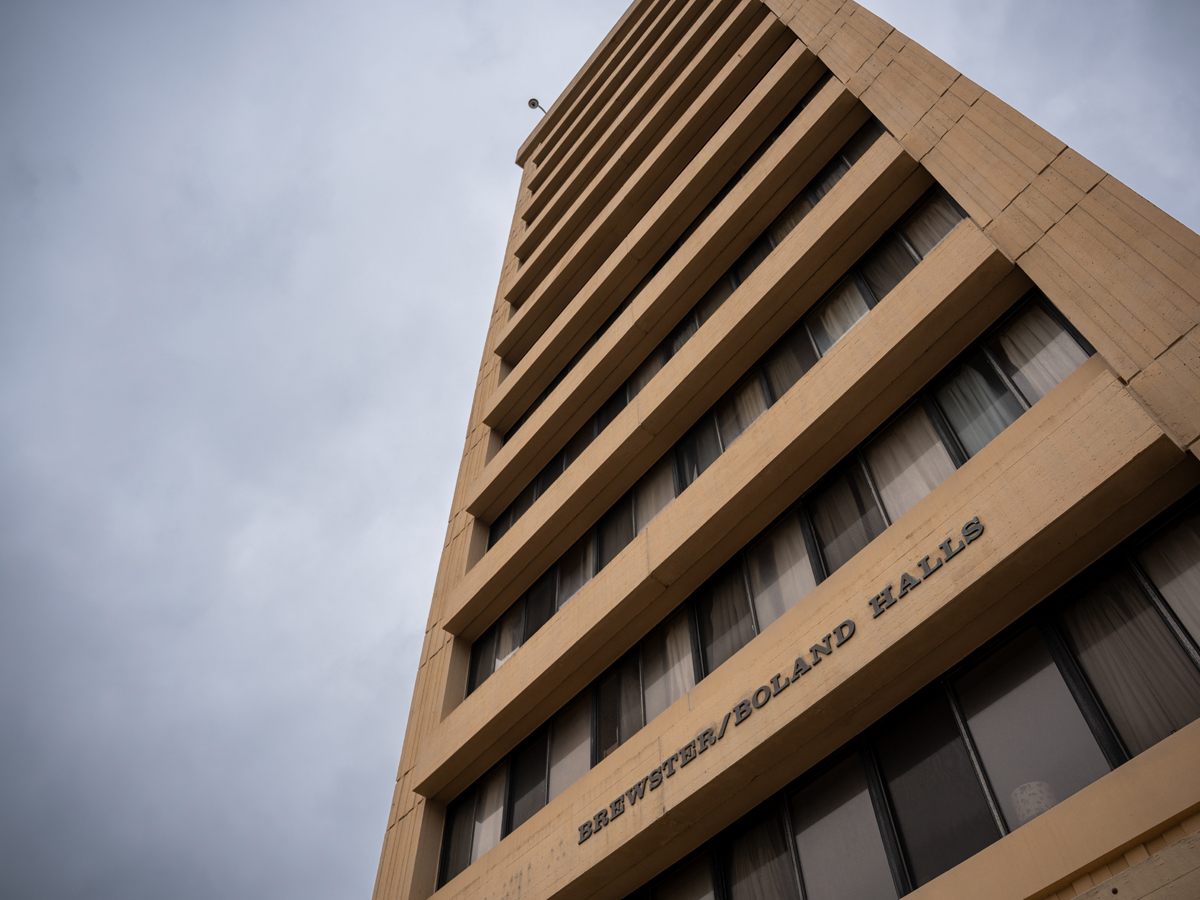
Brewster, Boland and Brockway (BBB) Halls have welcomed thousands of Syracuse University students over the years. But it’s the buildings’ unofficial residents that possess a special kind of staying power.
According to the Onondaga Historical Association, BBB was built atop the former site of Old St. Mary’s Cemetery, a hillside burial space that used to mark the edge of town. No sooner had BBB opened in 1968 than its residents began hearing unexplained noises, voices and footsteps at night.
“It was pretty creepy,” Alex Carrieri told The Daily Orange in 2009, referring to “loud” classical music that inexplicably surfaced in nocturnal voice recordings that she and her roommate made in Boland Hall.
Meanwhile, several Brewster residents complained of an invisible weight pressing against them while they tried to sleep.
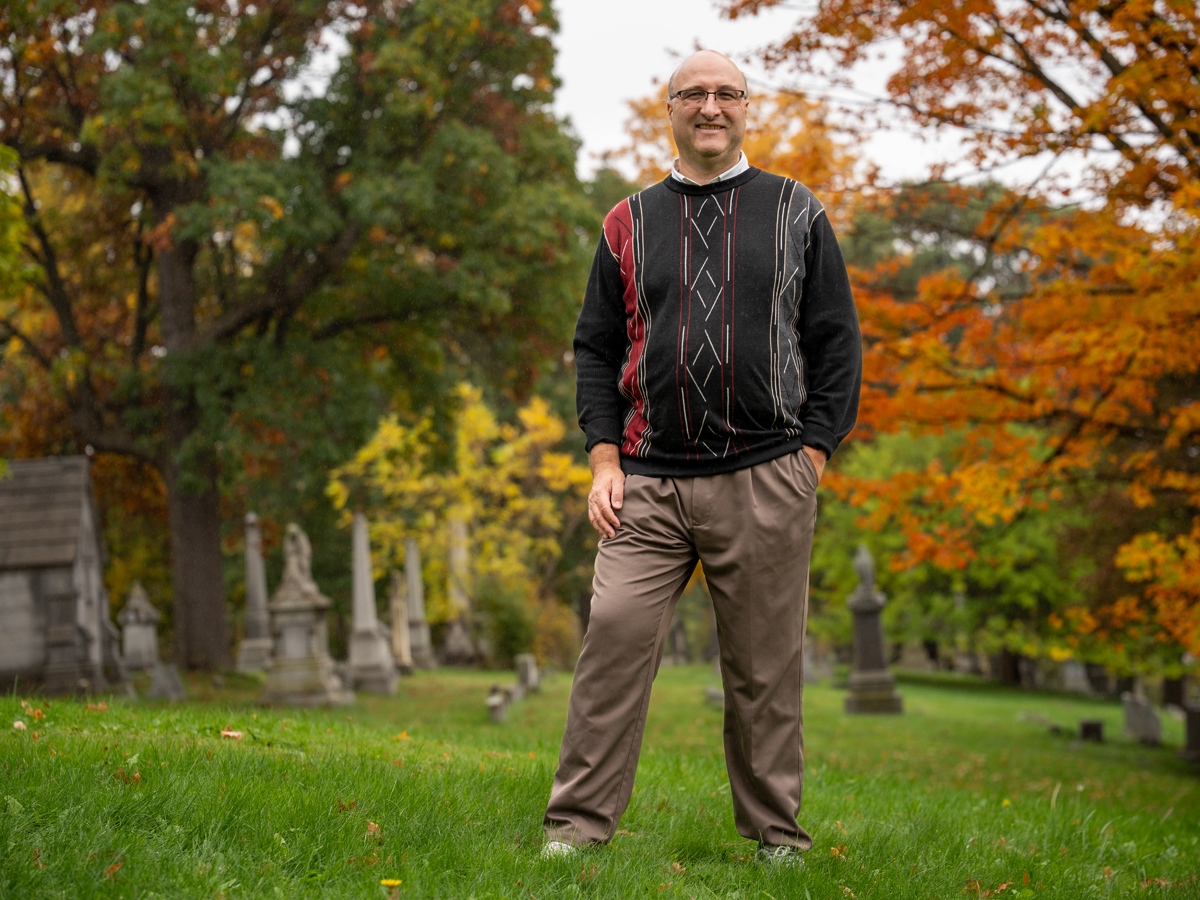
“Ghosts, graveyards and cemeteries go hand in hand,” says Gareth Fisher, associate professor and chair of religion in the College of Arts and Sciences. “They tap into our deepest fears and curiosities about the unknown.”
He teaches a popular course called Ghosts and Ghostbusters, which examines ethnographic studies of people’s encounters with ghosts. The class considers what ghosts represent, culturally and socially speaking, and why they fascinate us.
“Ghosts cut across cultures, generations and geographical boundaries,” says Fisher, who views ghosts through an anthropological lens. “Their stories bridge the known and unknown, especially when conventional science lacks answers.”
The Lure of Lore
Central New York is a hotbed for ghost lore, driven by centuries of turbulence and conflict.
“Themes of mortality and remembrance are everywhere you look,” says Fisher, noting the high density of graveyards, cemeteries and historic properties throughout Syracuse.
He admits that, like most campuses, Syracuse has its share of urban legends. Consider the following:
- The faint sounds of shuffling feet and closing doors in the 120-year-old Butterfield House, home of the Alpha Chapter of Alpha Gamma Delta. Some residents have experienced vivid nightmares and bouts of sleepwalking.
- Horrific shrieks piercing the night in Lawrinson Hall, whose upper floors are believed to be haunted.
- Mysterious echoes and sudden drafts in Slocum Hall, presumably the work of a spirit of someone who died there in 1921.
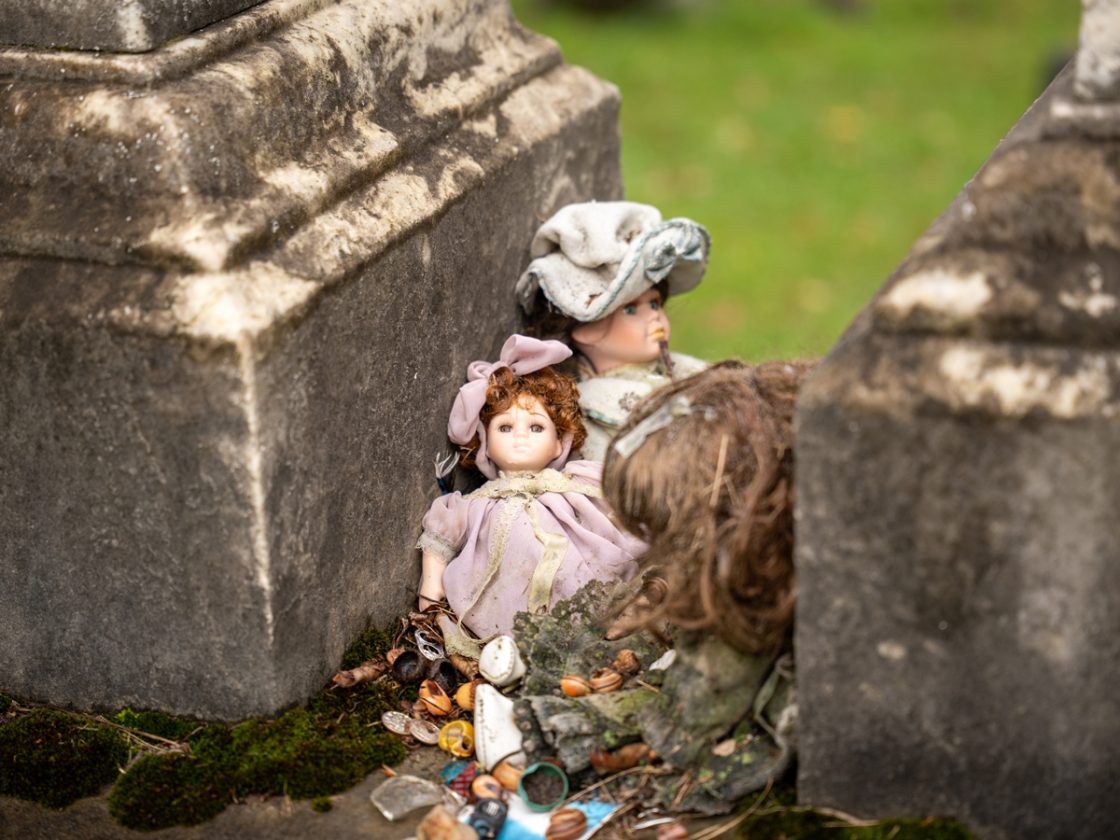
John Harris isn’t surprised by these eerie tales. A renowned paranormal anthropologist, he regularly accompanies Fisher and his students to nearby Oakwood Cemetery, one of the oldest and largest cemeteries in Central New York.
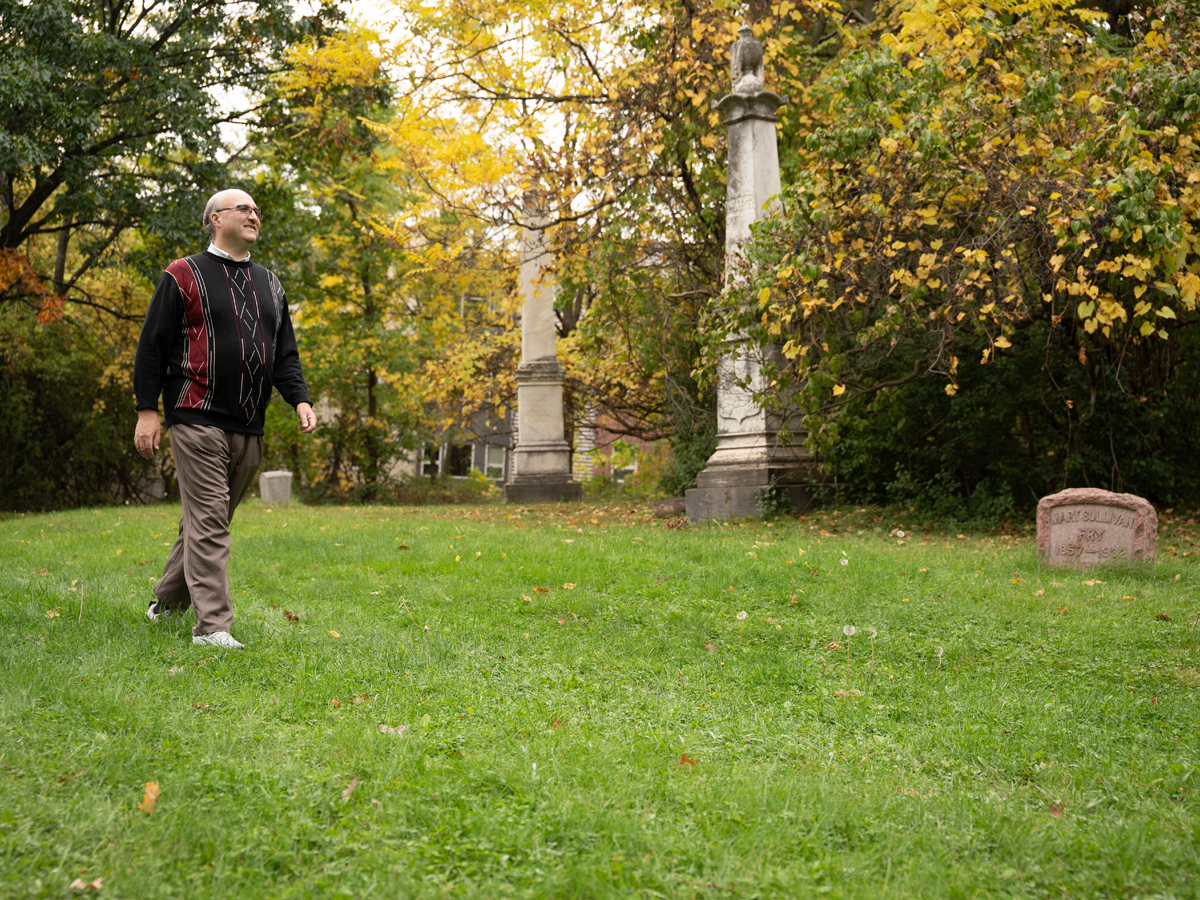
“I had a friend get ‘rushed’ there once by a ghost,” says Harris, who has conducted more than 400 investigations. “It ran up on her so quickly that she felt attacked, like a pick in basketball. It was pure energy.”
The Science of Fear
While a vast number of people believe in ghosts, there’s no such thing as a ghost that’s universal to all societies and cultures.
“Ghosts are understood within their own historical and ethnographic contexts,” says Fisher, a scholar of lay Buddhism in contemporary mainland China, where ghosts figure prominently in religious cosmology. “They’re vivid reminders of our mortality.”

Amy Tran ’27 credits Fisher for helping her see ghosts in a new light. “By learning about different types of ghosts and reading about people’s real-life encounters with them, I’ve realized that they don’t have to carry an evil or scary stigma,” she says.
With ghosts, Fisher says there are skeptics and believers—and that his students are “somewhere in the middle.”
One of the highlights of the class is a spirited, end-of-semester debate.
“Whether or not ghosts are real is less important than how they make us feel,” he says. “Their stories teach us about ourselves.”