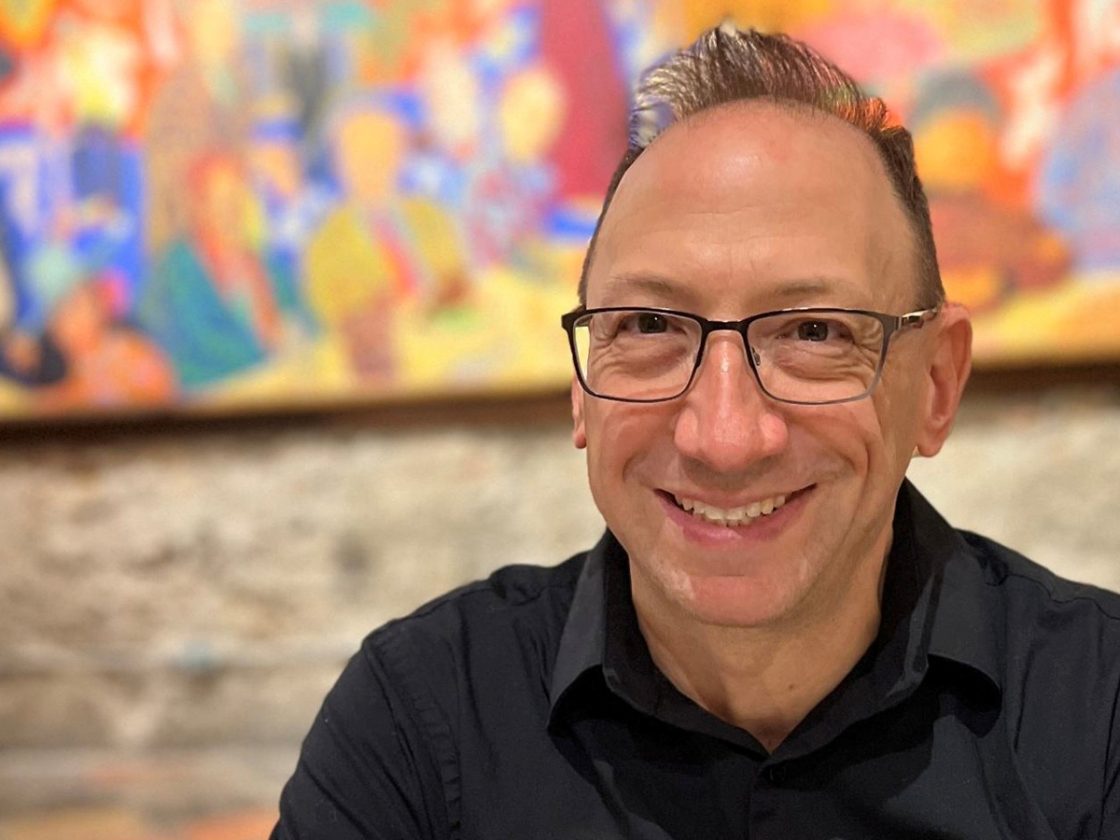
Jordan Potash ’98 to Headline LGBTQ+ History Month Observance Oct. 22
When Jordan Potash ’98 graduated from Syracuse University, he never thought his resume would keep bringing him back to campus.
“The last time I returned was in 2019, when the LGBTQ+ Resource Center named a speaker series after me,” says Potash, a Washington, D.C., resident who is an author, educator and licensed art therapist.
Potash also is an advocate for “general peacebuilding and community development, leading arts-based dialogues to bridge differences.”
This ethos will be on display on Oct. 22, when he and student leaders headline the eighth annual Potash Keynote Speaker Series. They will engage in an informal panel discussion about LGBTQ+ community building, running from 7 to 9 p.m. in room 304ABC of the Schine Student Center.
The event, which is part of the University’s observance of LGBTQ+ History Month, coincides with the center’s 25th anniversary.
“The discussion will touch on how queer culture has changed at Syracuse University,” says Emily Stewart, director of the LGBTQ+ Resource Center, which is a member of the University’s Intercultural Collective (IC). “It will examine how our center meets student needs today and how LGBTQ+ students and allies can contribute to change in the current landscape while taking care of themselves.”
Credited for laying the groundwork for the center as a student, Potash is excited to engage in an open dialogue about LGBTQ+ history and activism.
“Our identities and priorities are everything,” says Potash, who teaches art therapy at George Washington University. “It’s our diversity that makes the LGBTQ+ Resource Center viable and sustainable.”
‘I Wanted To Create Support Systems for People Like Me’
If anyone embodied interdisciplinary learning at the University in the late ’90s, it was Potash, a senior class marshal who majored in psychology and studio arts in the College of Arts and Sciences.
Potash’s non-academic pursuits—he was a student leader, resident advisor and peer mentor—also shaped his trajectory. “I was heavily involved with Hendricks Chapel, Syracuse Hillel and what became the Division of the Student Experience,” he says.
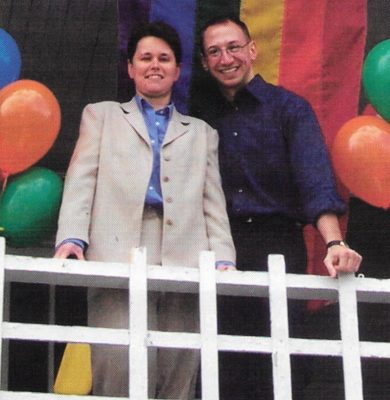
Before his senior year, Potash heard about an LGBTQ+ safe space campaign at Beaver College (now Arcadia University) in suburban Philadelphia, where his mother worked and underwent LGBTQ+ ally training.
Not wishing to be outdone by Arcadia, he approached Barry Wells, then senior vice president and dean of student affairs, about bringing an ally training program to Syracuse University.
“I wanted to create support systems for people like me,” Potash says.
Numerous people rushed to his aid, including Missy Mathis-Hanlon G’95, now director of Parent and Family Services. She not only helped Potash put his ideas on paper but also encouraged him to expand the program into a center.
Convinced of its potential, Wells brought the proposal before the University Senate, which, in turn, passed a motion to form an ad hoc committee.
In 2001, more than two years after Potash graduated, the resource center opened its doors. “It was an unforgettable moment,” he says, smiling.
A Welcoming Space for All
Located on the first floor of the Schine Student Center, the LGBTQ+ Resource Center takes a holistic approach to education, health and wellness, and advocacy.
All are welcome at the center, which facilitates systemic change on campus and offers a range of services, resources and programs.
“I see it as a safe space for students dealing with issues about their sexual orientation and gender identity,” says Potash, whose advocacy is rooted in the teachings of Martin Luther King Jr. that were instilled in him by his mentor, Francis McMillan Parks. “It’s uplifting to see so many LGBTQ+ allies—friends, family members, colleagues—there, as well.”
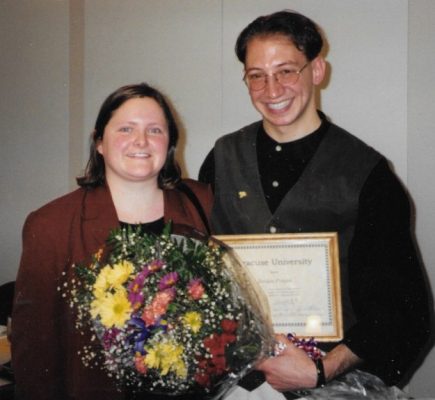
Mathis-Hanlon says that, despite evolving societal and political pressures, the center remains true to the original vision.
“As part of the IC, the center is thoughtfully placed to help students embrace their intersectionality,” she says.
Potash admits that while the LGBTQ+ Resource Center remains a “group effort,” certain people, like founding director Adrea Jaehnig (who stepped down in 2010), have left an indelible mark on it.
“Adrea helped grow the center from a single-person office into a robust resource hub for the community,” he says. “She epitomized how to lead with care.”