YouTube Overtakes TV as Top Source of Political News, Study Finds
The Center for the Creator Economy at Syracuse University—the nation’s first academic center dedicated to the advancement of interdisciplinary academics, independent research, policy engagement and support for creator-based ventures—today released the findings from its inaugural industry Flash Report. Published monthly, these reports examine the issues creators, brands and audiences are talking about right now.
The inaugural edition examines public trust and credibility in news: specifically, how Americans weigh independent news creators against traditional journalists. The findings draw on a demographically representative survey of 1,001 U.S. adults conducted via Prolific.
Social media is now a core news source for Americans: 59% access general news from social media often or always and 55% get political information there at the same rate. Reliance runs highest among younger adults and those that identify as African Americans and Republicans.
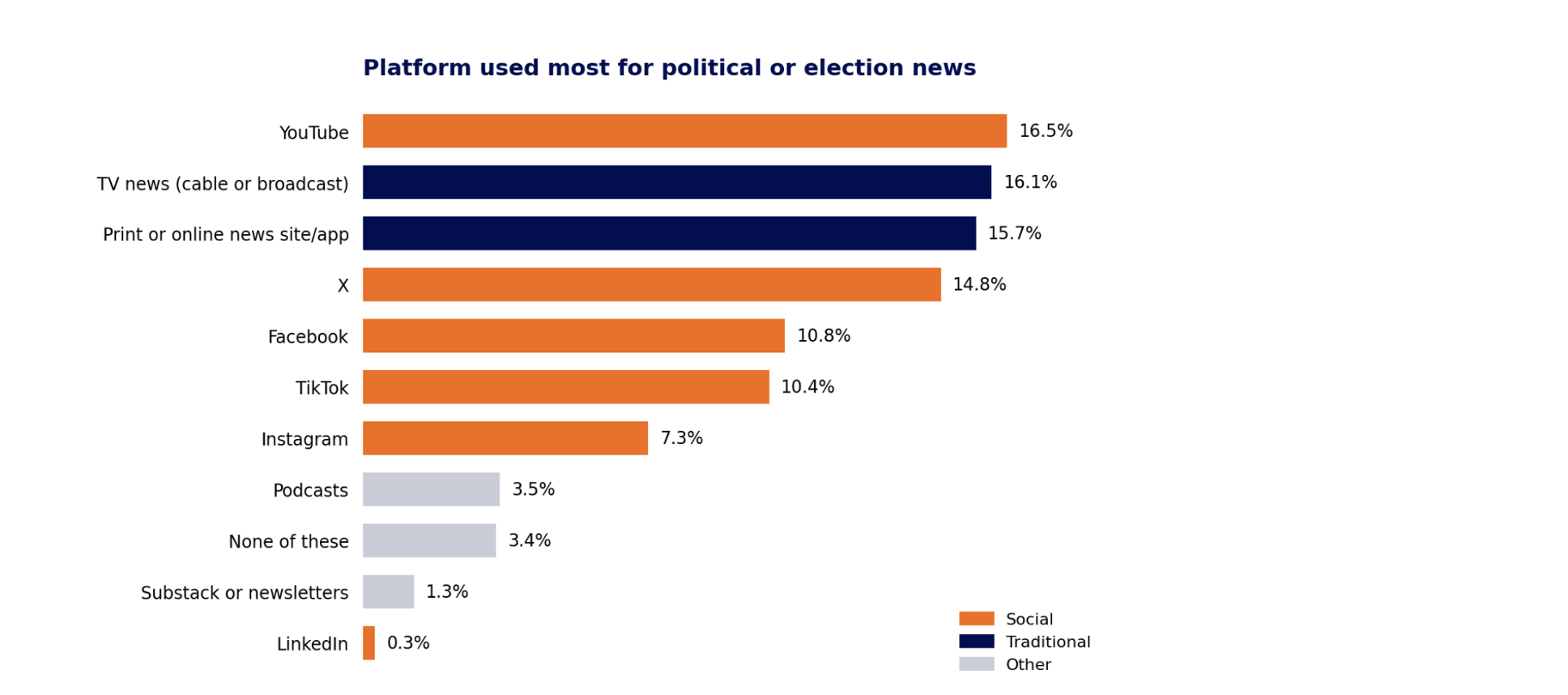
YouTube ranks as the single most-used platform for political and election news at 16.5%, closely followed by broadcast and cable TV news (16.1%) and print and online news sites (15.7%). Combined, TV and news sites outpace YouTube nearly 2 to 1. Social platforms as a group, however, lead traditional sources 60% to 32%.
Perceptions of trust present a nuanced picture:
● 61% of Americans trust a well-known independent news creator as much as a
well-known professional journalist or a major news organization on political topics.
● 67% say doing the reporting matters more than formal journalism credentials.
● 86% trust independent news creators more when they publicly correct their mistakes, the strongest trust signal in the study.
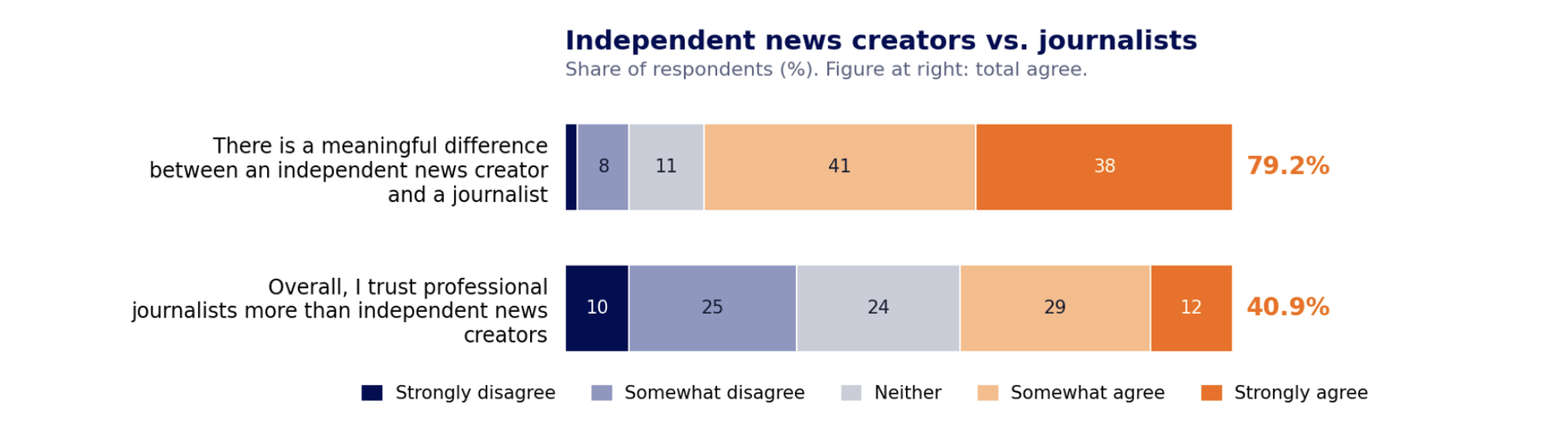
● 79% still see a meaningful difference between an independent news creator and a
journalist.
Social media use and political affiliation both shape trust. Respondents who use social media for news and politics more often rate independent news creators as more credible.
Party lines matter too: compared with Independents, Republicans place greater trust in independent news creators, while Democrats place greater trust in professional journalists and news organizations.
Across these patterns, respondents recognize a clear distinction between independent news creators and professional journalists:
● 79% see a meaningful difference between an independent news creator and a journalist.
● Views divide on which is more trustworthy overall: 41% trust professional journalists
more, 35% disagree and 25% are neutral.
● Trust in independent news creators rises with social media news use. The link is weak
for professional journalists and absent for news organizations.
The findings show Americans trust independent news creators and professional journalists about equally on politics, but they see them as different roles. For both, the clearest path to trust is accountability: 86% say public corrections make them trust an independent news creator more.