Light Work Exhibition Explores Deep Time Narratives
“To grasp the Anthropocene is to apprehend, at once, both the enormous power and bewildering fragility of human beings,” says Syracuse University professor Susannah Sayler, alongside her collaborator, Edward Morris.
Such irony underscores “museum,” a collective photographic exhibition at Light Work running through Dec. 11. The project, which includes a companion book, is the brainchild of artists Sayler and Morris (known as Sayler/Morris) and Christina Seely.
A professor of art photography in the Department of Film and Media Arts in the College of Visual and Performing Arts (VPA), Sayler says that “museum” is 10 years in the making.
“The project features unmanipulated photographs taken during our time as Smithsonian Artist Research Fellows,” she says, referring to the trio’s 2014 fellowship that coincided with the disassembly of the iconic Fossil Hall at the Smithsonian National Museum of Natural History. “Only later did we find out that the space was being redesigned and rebranded as the ‘David H. Koch Hall of Fossils—Deep Time.’”
Sayler/Morris and Seely were awarded the fellowship to study climate change, species extinction and ecological consciousness in context of Deep Time (i.e., geological time spanning billions of years). Fate had other plans.
“We ended up chronicling the dismantling of the hall,” says Morris, a former VPA Professor of Practice. “The drama of it all seemed to contain everything that we were curious about.”
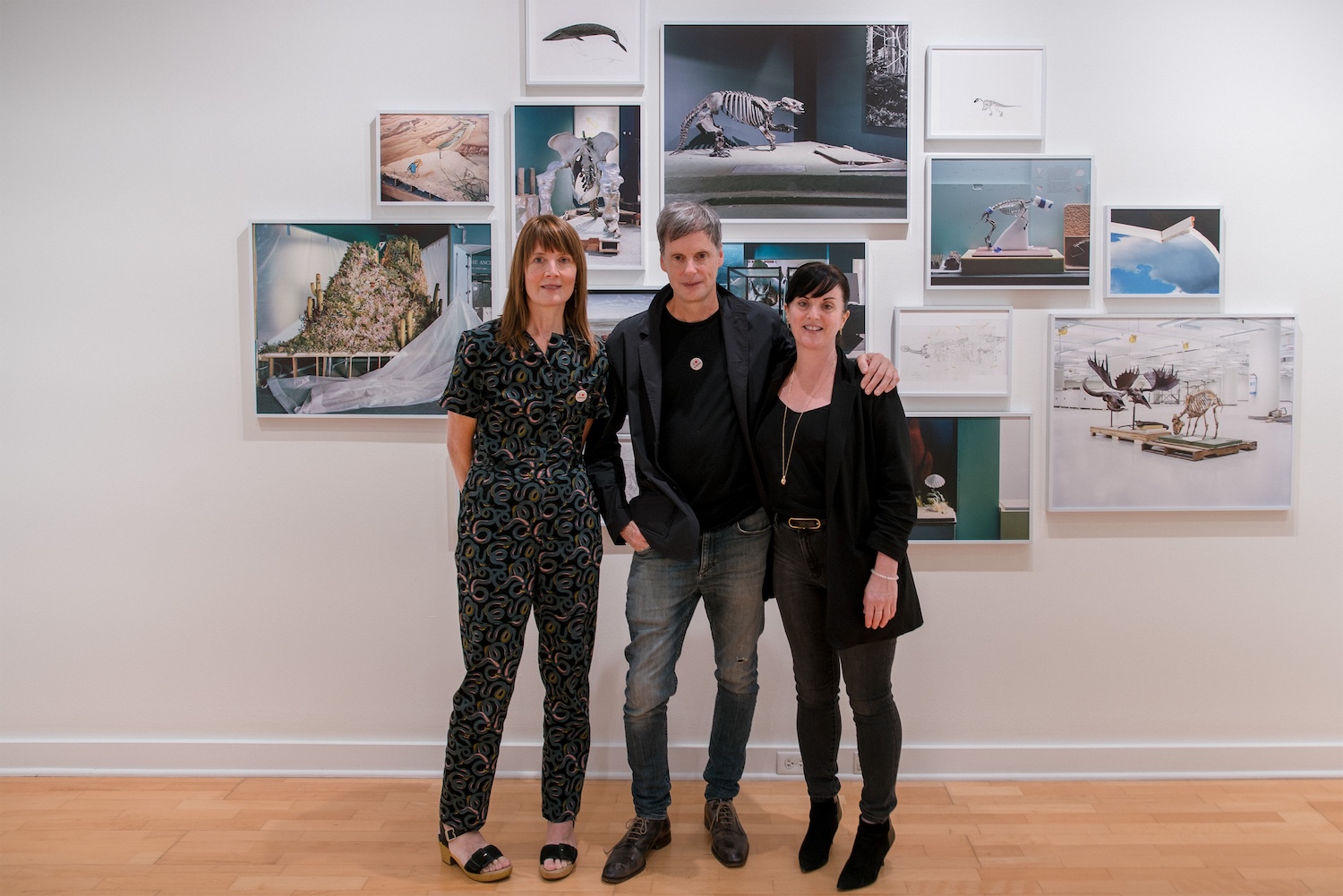
The trio had free rein of the space for more than a month, documenting (often after hours) the packing of fossils, tearing down of venerable murals and dismantling of dioramas and reconstructed dinosaurs.
Two years ago, a studio visit with a curator impelled the artists to reexamine the images.
“Time amplified their dreamlike qualities,” says Seely, a visual artist and independent scholar who, like Sayler/Morris, is a former Guggenheim Fellow. “We saw the photographs in a new light.”
A Site for Muses
During the Smithsonian fellowship, the trio engaged with brilliant minds. Chief among them were Kay Behrensmeyer, Senior Research Geologist and Curator of Vertebrate Paleontology, and Mary Parrish, the Smithsonian’s legendary paleo artist.
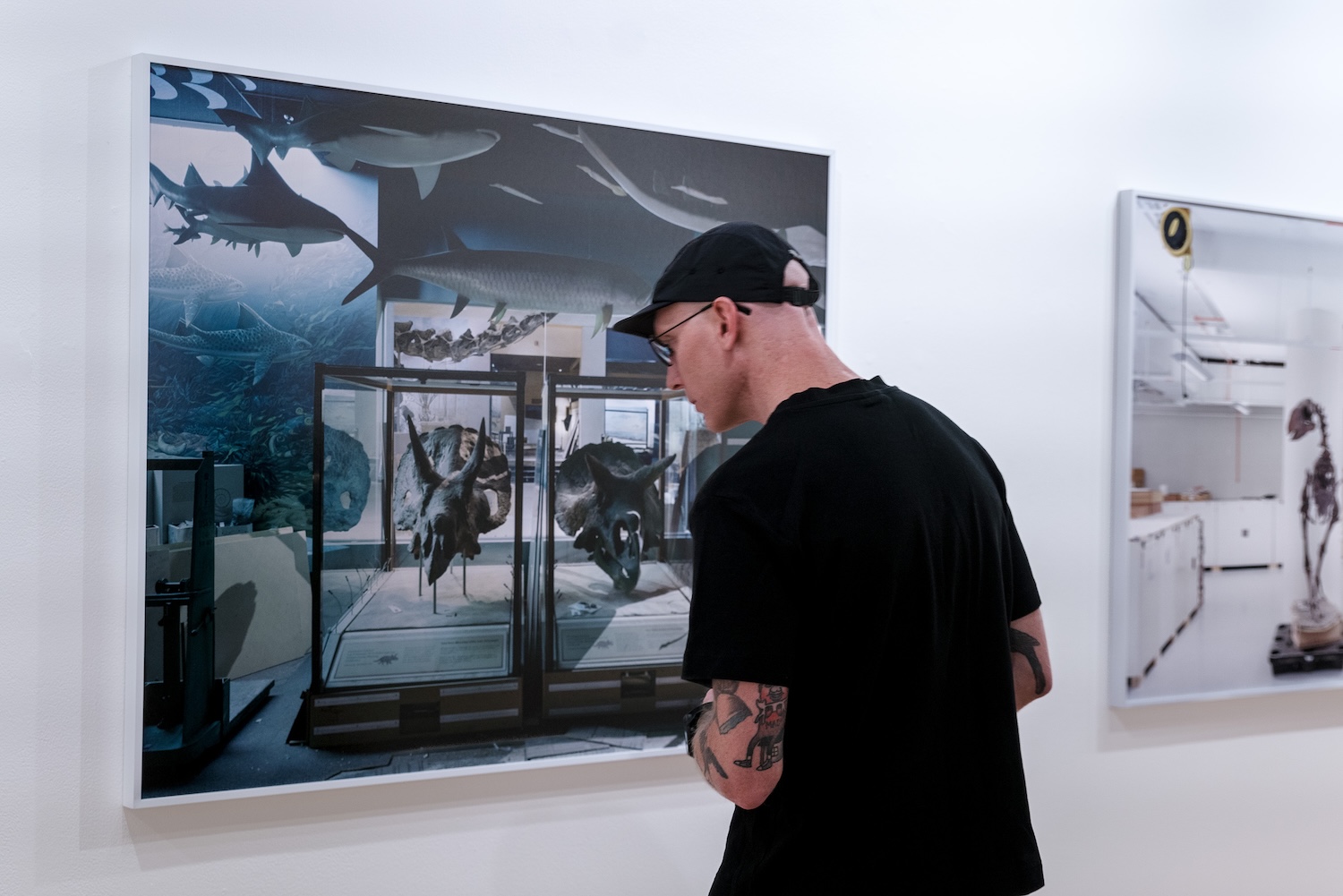
“Kay was our mentor who gave us access to her research, slides and tools. Mary let us photograph her drawings, drafts and artworks,” says Seely, characterizing the women as “pioneers in a male-dominated field.”
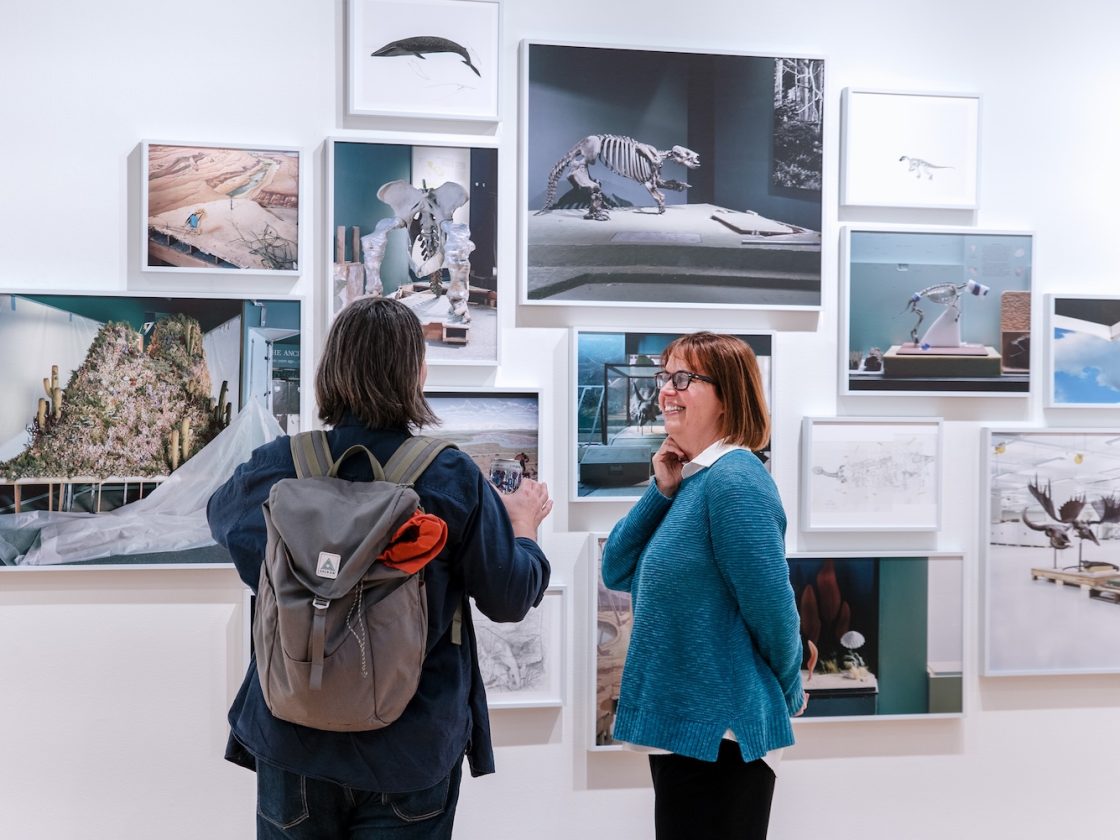
Set against the dark ambience of the century-old hall, the photographs conjure up a flurry of adjectives. “Bizarre.” “Sad.” “Humorous.” “Poetic.” Some images depict dinosaur skeletons draped in plastic costumes; others portray them propped like stilt puppets.
“We captured the breaking down of a museum exhibit, literally and figuratively,” says Sayler. “Gone is the air of certainty and authority, and in its place is the rediscovery of the original meaning of museum—a site for muses, where knowledge is always changing.”
Of Breath and Bone
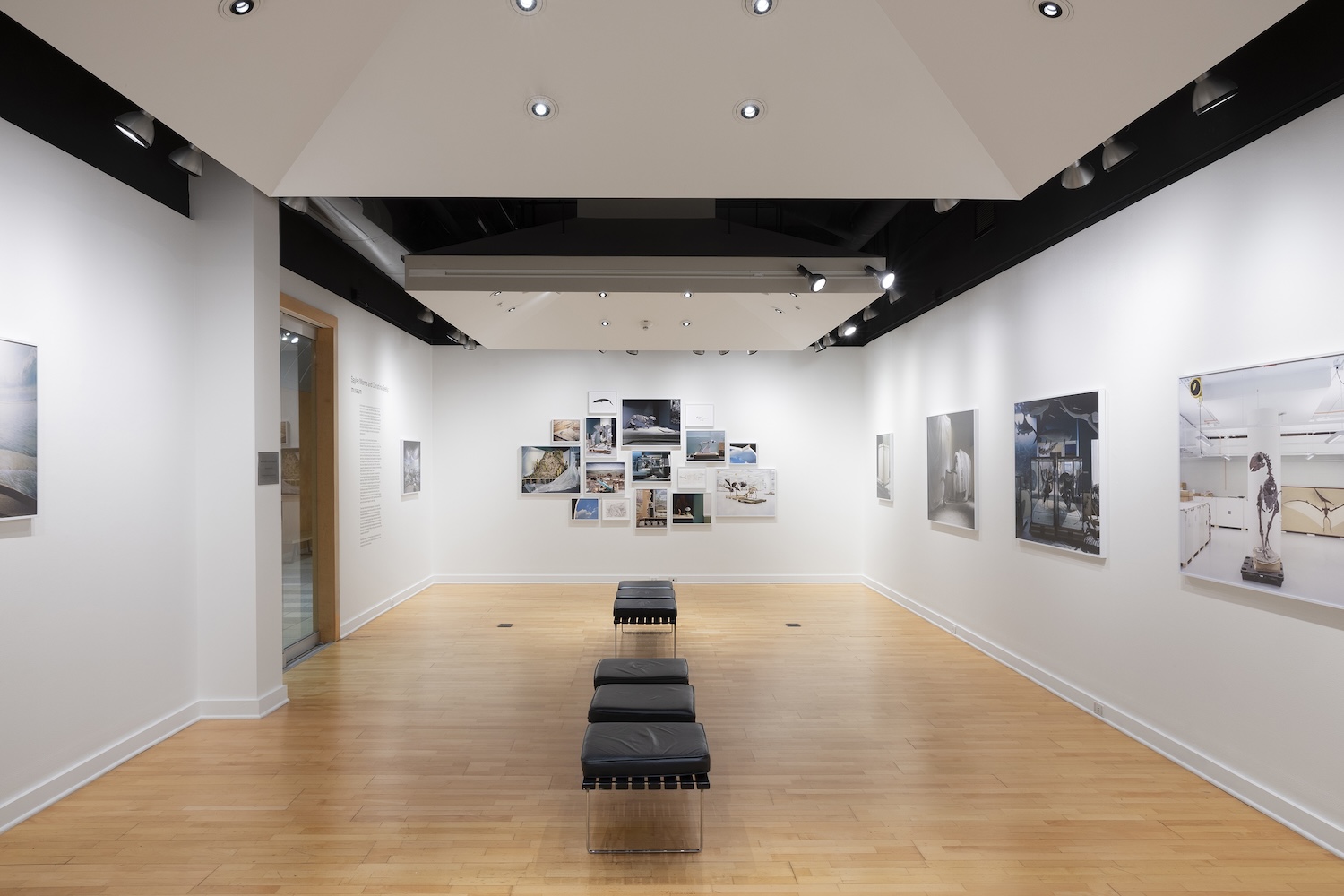
Al Newberry G’26 was a member of the MFA program in art photography while serving as Sayler/Morris’ assistant. One of his jobs was to remove dust, scratches and emulsion marks from film scans, which eventually found their way into “museum.”
“Susannah and Ed taught me to situate my art as a social practice,” says Newberry, who is the University’s multimedia operations manager. “Their approach to art and ecology has influenced my work significantly.”
Such curiosity plays out in other ways in “museum.” For instance, one of the artists’ favorite images serves as the frontispiece for their monograph, co-published by Gnomic Book and Light Work with support from the Syracuse University Humanities Center.
The photograph in question shows an ink drawing of dinosaur footprints. At the top-right corner, Parrish has scribbled a note, asking if she should add a fourth toe to the back foot.
“Looks good,” the recipient (presumably a curator) responds, proving that the combination of data and what Parrish calls “informed imagination” helps bring illustrations of the Deep Past to life.
“It’s a deeply collaborative process between artist and scientist,” Sayler says.