Daughter Keeps Mom’s 26-Year Tradition Alive at the Maxwell School
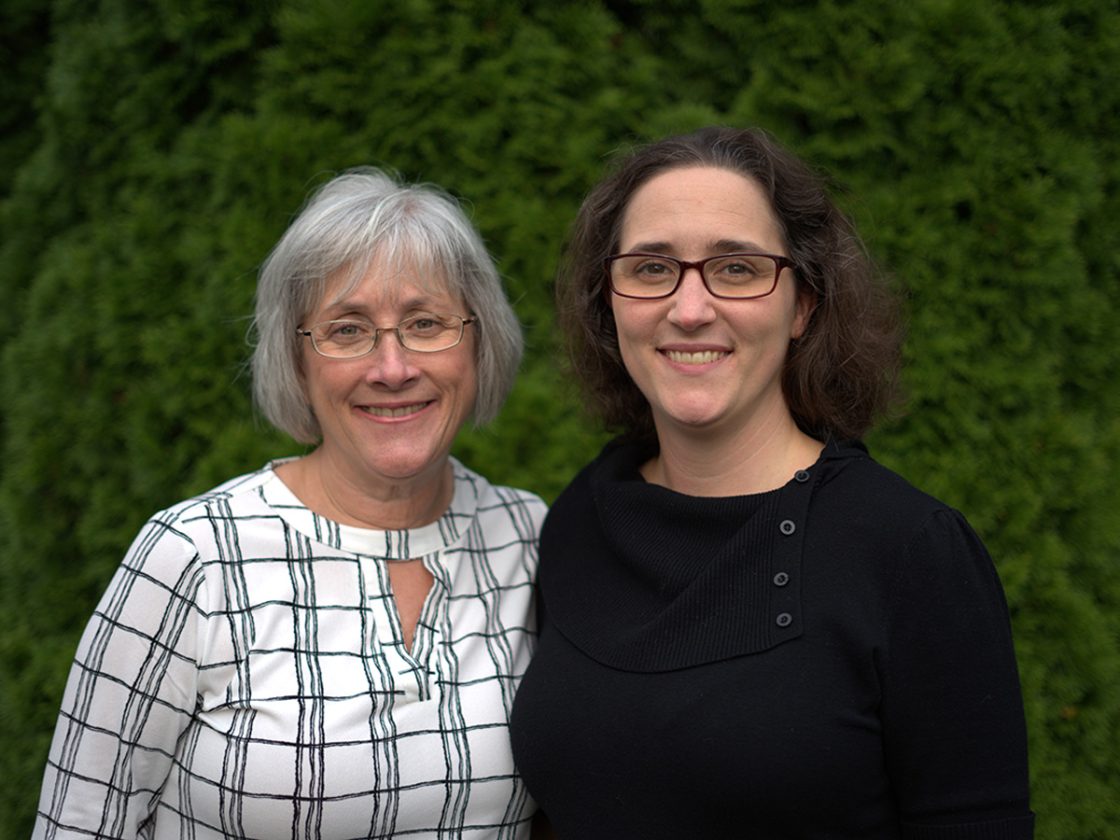
When Peg Austin agreed to take over a small American Red Cross blood drive in the Maxwell School of Citizenship and Public Affairs in 1999, she had no idea how long it would last.
Or that it would eventually pass to her own daughter a quarter century later.
The drive began modestly, run by a student as a community service project. When that student prepared to move on, she needed someone to keep it going.
Austin—the Center for Policy Research associate director, who had been a blood donor since age 16—didn’t pause.
“No hesitancy,” her daughter, Cassandra Ashman ’08, says. “My mother is unstoppable.”
Working with fellow CPR staff members Ann Wicks and Karen Tavernese, Austin built the drive into a fixture of campus life, eventually growing it to six sessions a year—the maximum allowed under the American Red Cross’s 56-day donation cycle.
Outreach and Hard Work
In the early years, registration happened through their outreach and hard work: phone calls, handwritten signup sheets, personal reminder emails and pizza to draw a lunchtime crowd. Austin, who made those phone calls and built relationships with donors on campus, eventually moved it to online registration, which was easier to manage.
One of the most memorable moments during Austin’s 41-year tenure at the University and her work with the blood drive remains with her forever.
A drive had already been scheduled for the day after Sept. 11, 2001, held in what was then Maxwell’s atrium, now known as the Commons in Eggers Hall. People arrived that day in droves, desperate to help.
With only 50 slots available, Austin found herself turning grieving, frightened people away.
“This one woman was just crying, ‘I have to,’” she remembers. “I’m like, ‘All right, I’m just going to put you in.’”
In 2005, Austin received the American Red Cross Real Heroes Award for her work with the Maxwell drive.
Family Legacy
Ashman grew up alongside the blood drive. On days off from school, she would come to work with her mother, helping sign in donors and walk them back to where the blood was drawn.
When the staff member who had taken over the drive after Austin’s retirement in 2024 went on maternity leave, Ashman, now a budget analyst in Maxwell’s Department of Public Administration and International Affairs (PAIA) and a Maxwell alumna herself, was asked to step in. She didn’t hesitate.
“I really like doing it,” Ashman says. “It’s the knowledge that you’re helping someone … that’s empowering.”
Today, the American Red Cross faces the second national blood-supply shortage crisis in its history, with less than a day’s supply of type O blood, the type most commonly transfused and used for immune-compromised newborns.
Ashman says the need has never been more urgent. Donors can now track exactly where their blood goes: one of her recent donations stayed close to home at Crouse Hospital.
For Ashman, carrying the tradition forward wasn’t something she planned, but it felt inevitable.
“It’s amazing how things come around,” she says.
If you are interested in donating, there are several upcoming blood drives on campus.