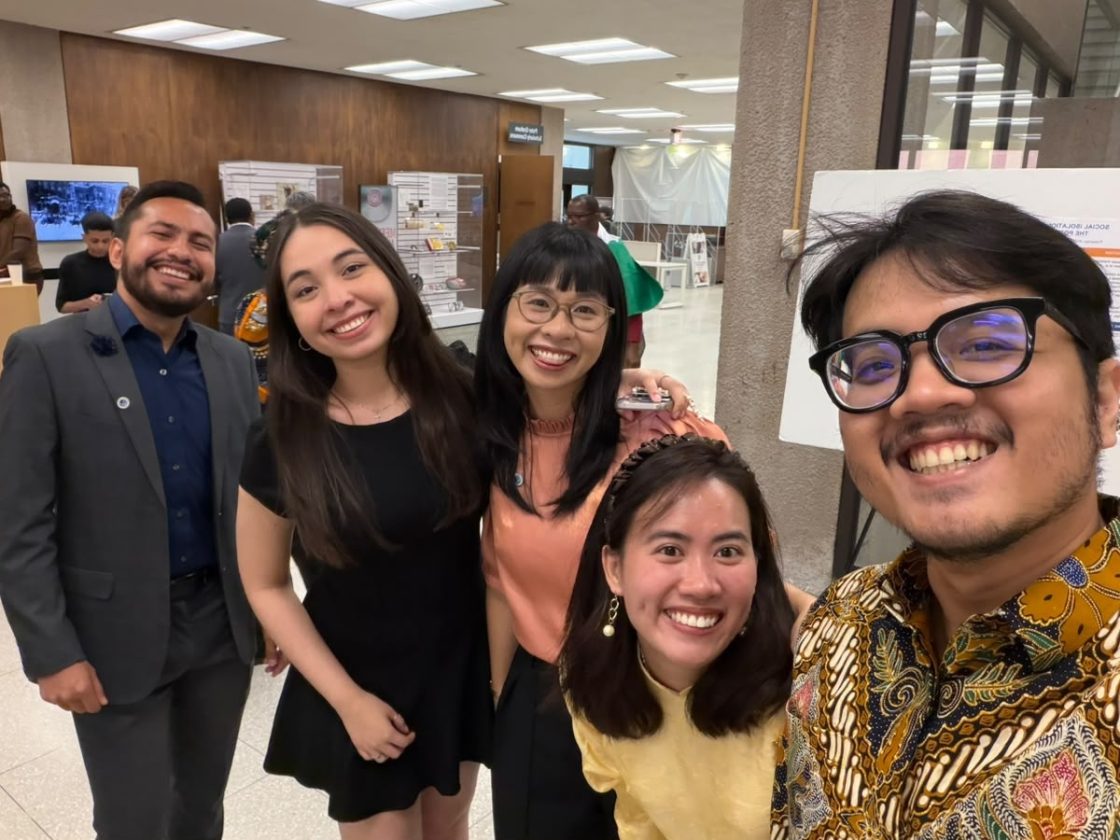
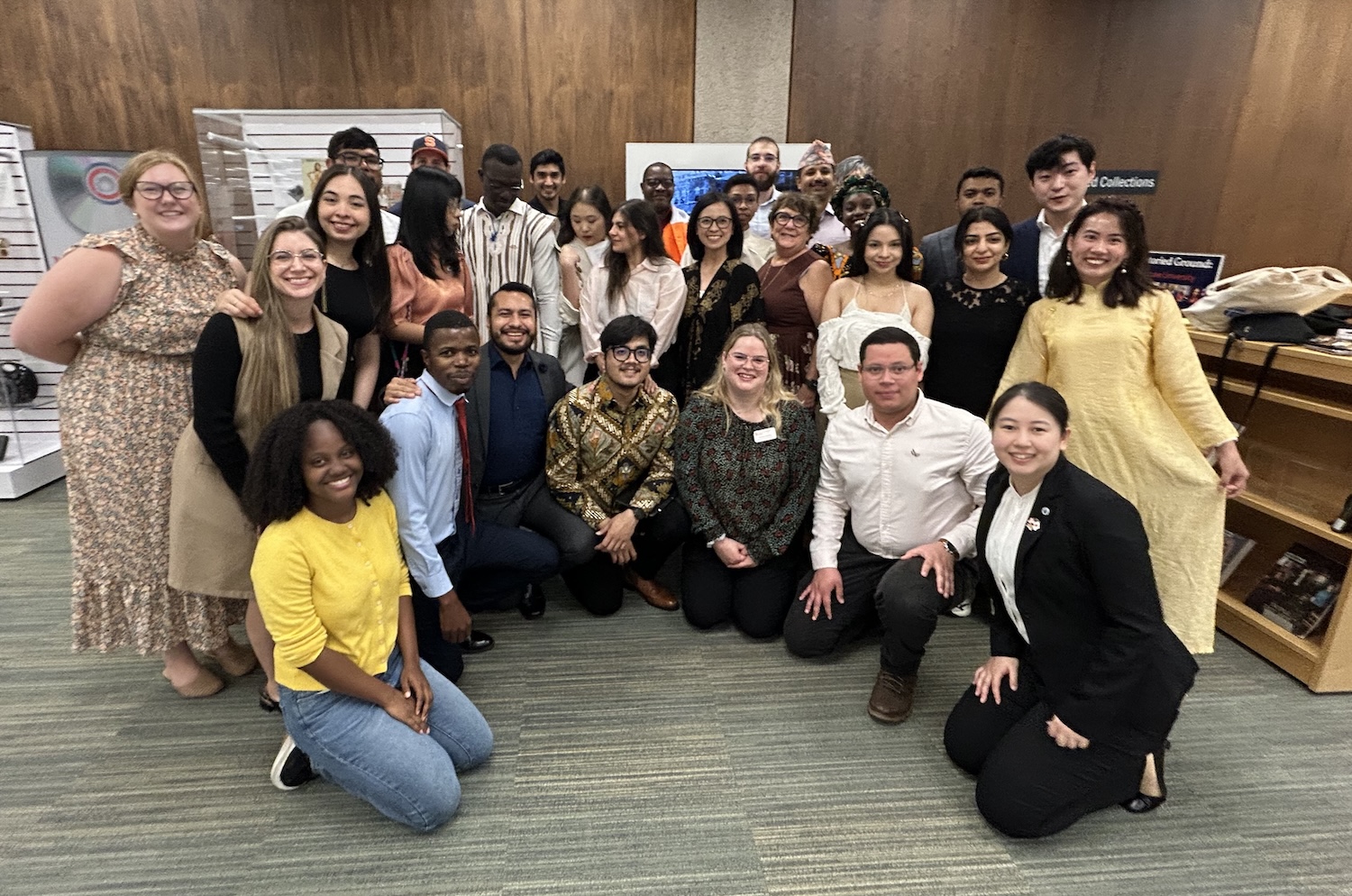
Ryan Nugraha (far right) and Melanie Lemus (second from left) pose with other Fulbrighters on campus.
Fulbright Scholars Find Warmth on Campus, Gain Readiness for Graduate Study in US
The journey to Syracuse from Yogyakarta, Indonesia, took Ryan Nugraha 28 hours. He arrived at night, exhausted.
But the greeting he and other Fulbrighters received from administrators of the Fulbright Pre-Academic Program gave a boost.
“Suddenly, to me at least, it didn’t feel as tiring anymore because we got to see the warmth of Syracuse,” Nugraha says.
Nugraha was one of 26 students from 20 countries who spent four weeks on the Syracuse University campus over the summer, participating in the program designed to prepare international graduate students for academic life in the United States.
The program, which returned this summer after a yearlong hiatus, is administered through the English Language Institute in the College of Professional Studies. The scholars spend their mornings sharpening their English and academic skills, and their afternoons meeting guests—librarians, deans and experts who offer information on topics ranging from conducting research to the U.S. political system to mental health.
The rest of the time, scholars are provided experiences outside the academic realm: dinners with host families and field trips to regional historic sites and cultural experiences.
David Lind, director of international programs, says the dinners in particular offer a cultural exchange that runs both ways.
“Families offer scholars a personal window into local life, and scholars offer families their own introduction to a new country and culture,” he says. “That kind of exchange is really the heart of what Fulbright is about.”
The program culminates with a poster session where the scholars present on a topic within their academic focus. When the program is over, the scholars head to their home institutions, where they will begin their graduate study in the United States.
But even after their departure, the program’s impact is felt on campus, Lind says.
“Faculty, staff, and students across departments get a chance to connect with incoming international scholars early, building relationships that often carry into the academic year and beyond,” he says. “It gives the university a meaningful way to live out its global engagement mission, showing that Syracuse invests in international students’ success.”
The Experience for Scholars
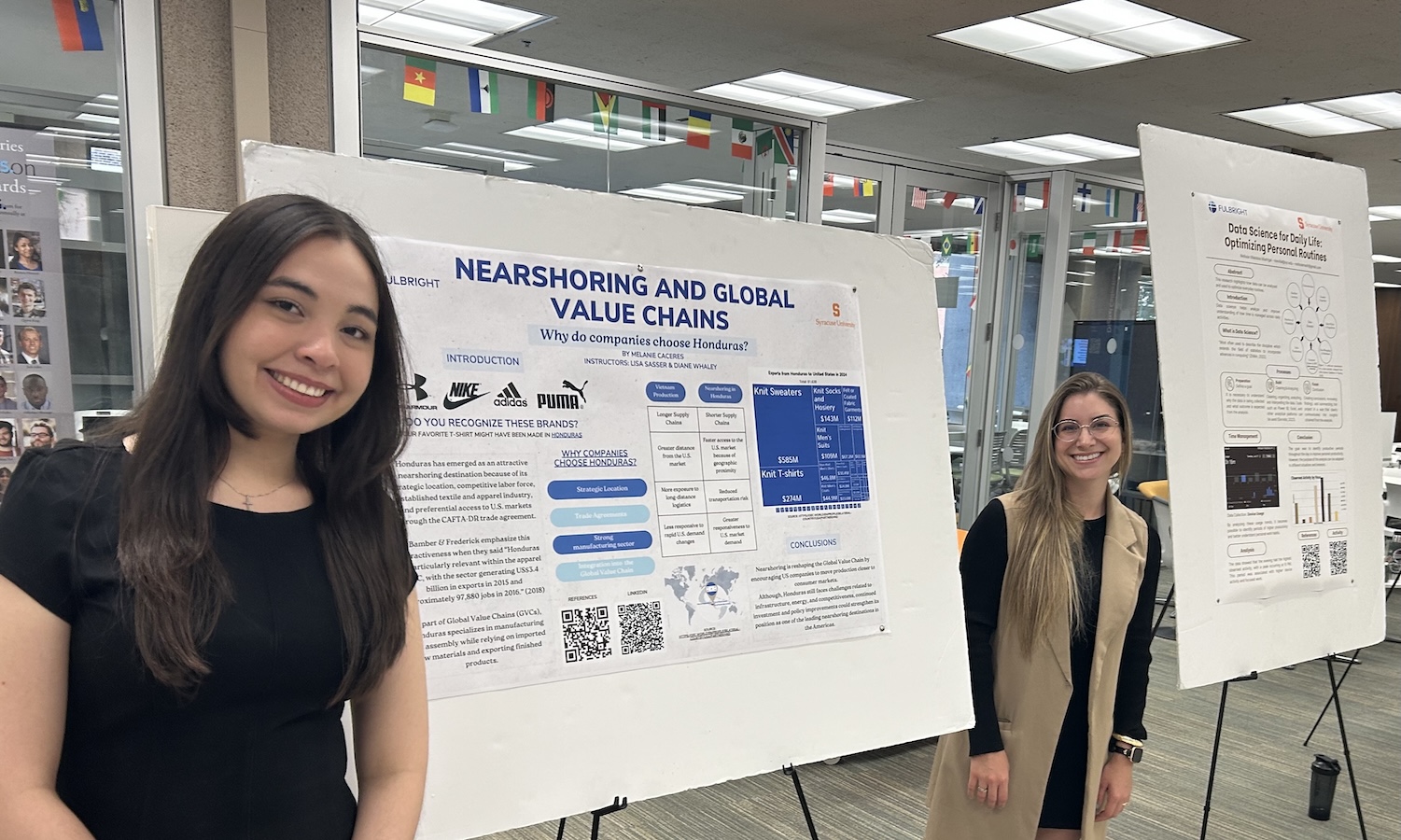
For Melanie Lemus, who participated in the program before going on to pursue a master’s degree in global studies at Oklahoma State University, her arrival in Syracuse marked her first time leaving home. She was nervous and scared when she said goodbye to her family in Honduras.
“I was almost crying because it was my first time away,” she says of her arrival. “It was at night. It was tiring. I was so homesick and so nervous.”
Within a few days, she says the warmth of the people participating in and administering the program and the many engaging activities—a trip to Niagara Falls was a favorite experience for both her and Nugraha—overtook her homesickness as she found support and friendship in her cohort.
“The professors were really warm and really kind,” she says. “It was really nice to feel supported by them, the facilitators, too. We have a really good group of Fulbrighters. We all got to know each other, and we had a great time with each other.”
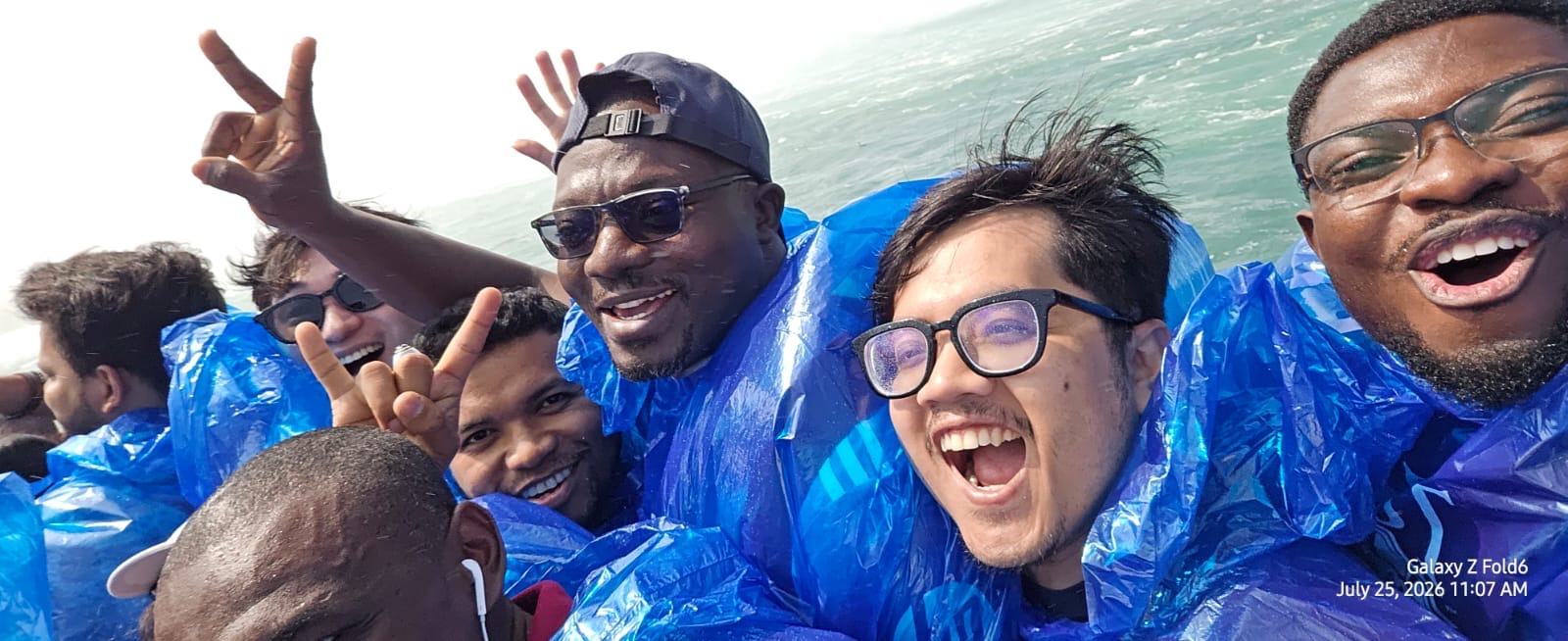
Coming into the program, Lemus says she wasn’t expecting to learn so much outside of the classroom and academic preparation or for those experiences to prove so meaningful.
“I love how everything was planned to make us enjoy not only the academic side, but also to know where we are, what is in our surroundings,” she says.
The Impact on Campus—and Beyond
Nugraha, who is pursuing his doctoral degree in health service policy and management at the University of South Carolina, agrees that it was the warmth of the people of Syracuse and the program’s administrators that made the experience amazing.
Academically, Nugraha says that even though he’s been working in classrooms as a lecturer in Indonesia, the program helped him get back in touch with “being on the other side of the table.”
“This program really warms up our academic brain before actually getting to our home institution,” he says.
Getting a re-introduction to balancing classes, assignments, events and excursions gives a preview of what academic study will be like for him, he says.
“We’re getting exposed to that academic environment again, to that social environment again and also to really know and get in touch with other cultures,” Nugraha says.
Lemus says the program was essential to providing an introduction to that academic system in the United States.
“We can go to our home institutions, knowing what is going on, knowing what we are going to face,” she says.
The Fulbright Pre-Academic Program has been hosted by the College of Professional Studies for a decade, but what Lind says makes it so successful is how many people from all corners of the University participate.
“The Fulbrighters get plugged into conversations with deans, professors and specialists from Syracuse University Libraries, the College of Engineering and Computer Science, Newhouse, Hendricks Chapel, and the Barnes Center, to name just a few collaborating units,” he says. “That kind of reach only happens with institutional backing behind it. Administrative and academic leadership have consistently championed the program’s value to the University, treating it not as a one-off but as a standing part of Syracuse’s international mission.”