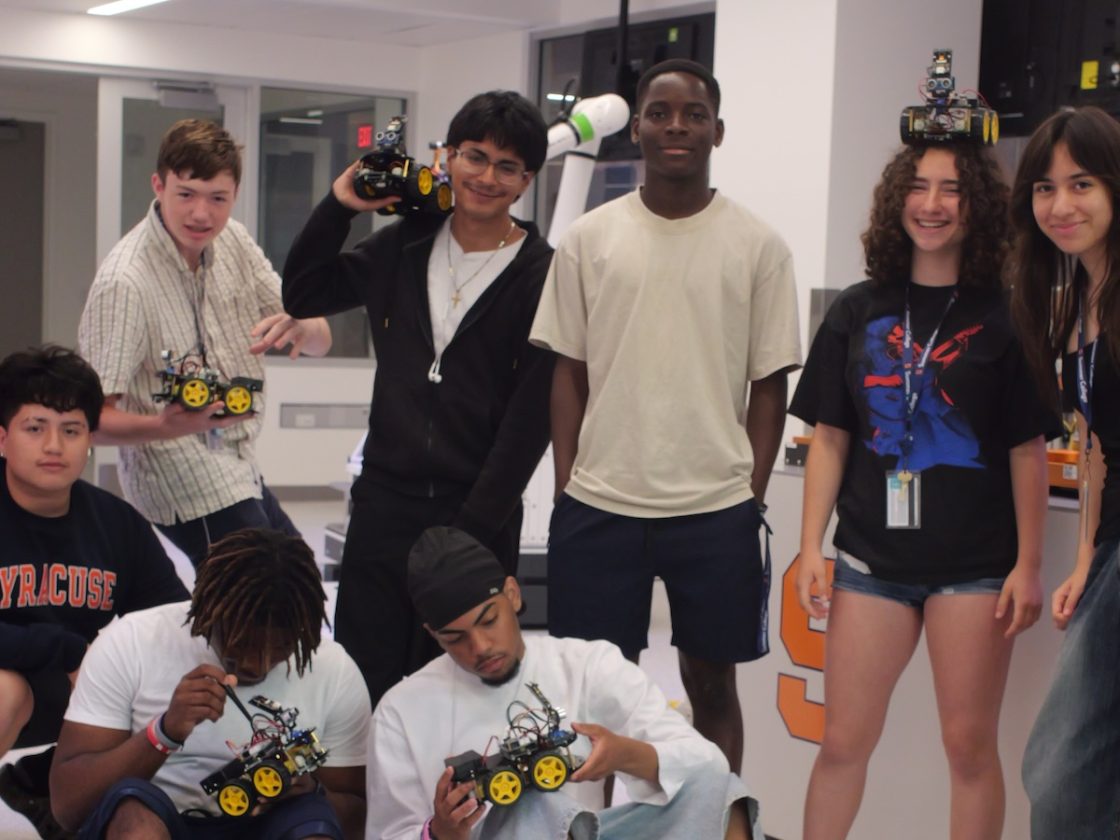
Summer College students taking an electrical engineering course pose with their robots during the 2026 program. (Photo by Alex Cao)
How the Summer College Program Prepares High Schoolers for Higher Ed
Hundreds of high school students spent their summer at Syracuse University. They experienced life as a college student—taking a university-level course, living in a dorm and eating with friends—before starting their higher education journey.
Syracuse University’s Pre-College Programs have been giving high school students the chance to explore potential majors and careers since 1965. Today, students get the option of attending on campus, online or on location at the University’s Manhattan and Los Angeles academic centers for the Summer College program.
“Students not only learn what it’s like to be a college student, but they leave the program feeling confident, enthusiastic and ready for college,” says Christopher Cofer, executive director of the Office of Pre-College Programs in the College of Professional Studies.
This year, 1,275 students attended from across 38 states; Washington, D.C.; Puerto Rico; Guam and 28 countries.
What It Offers Students
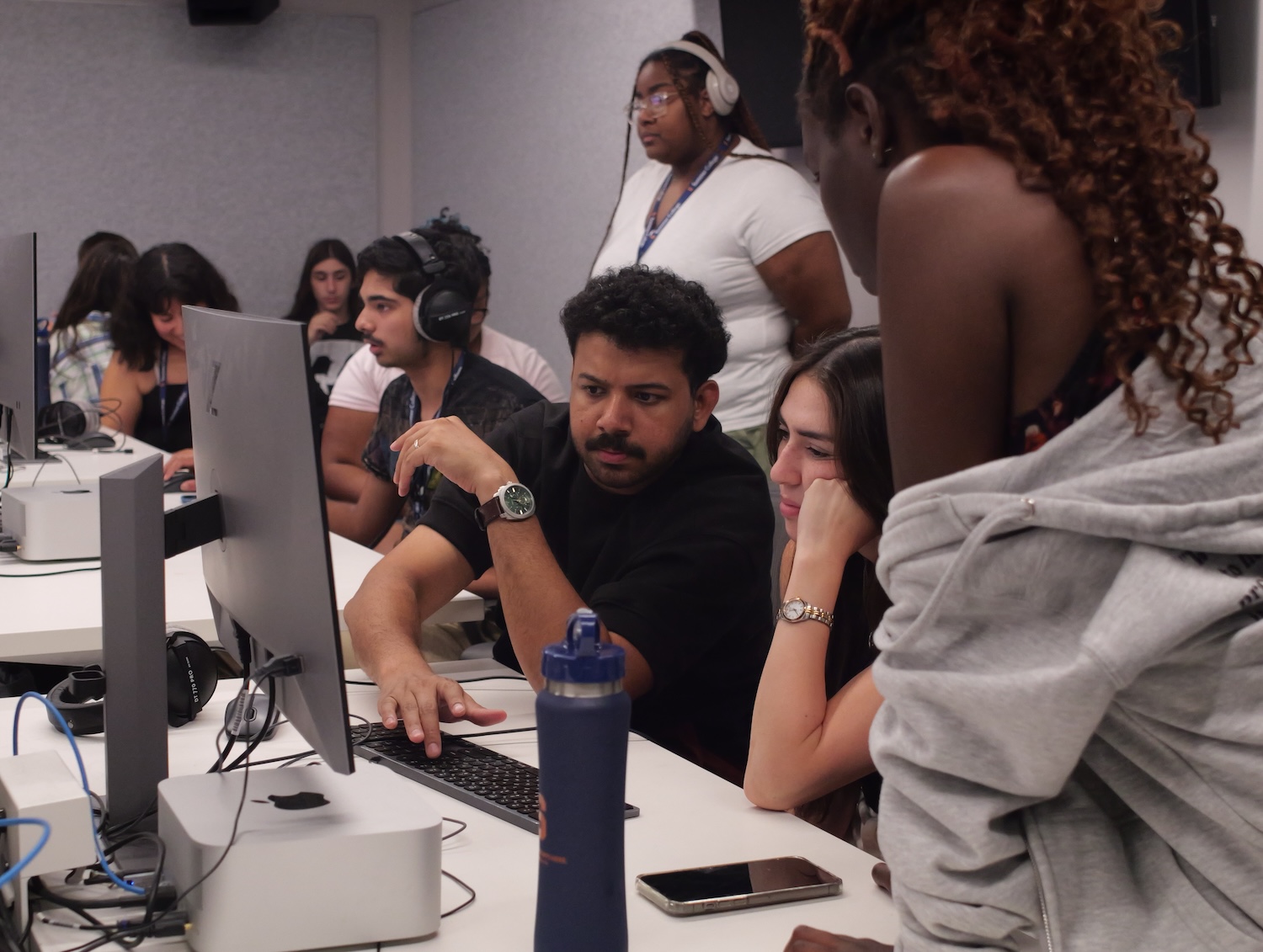
The on-campus program gives high schoolers as much of the undergraduate experience as possible: living in residence halls, eating in dining halls, attending evening and weekend social events and field trips, and taking a college-level course taught by a faculty member.
“Being away from home in the environment Summer College provides is a transformational experience for many students,” Cofer says. “Students and their parents often report how the Summer College experience was the most significant factor in preparing the student for applying to, and then leaving home for, their undergraduate career. ”
Students can confirm the major they want to pursue—or discover it is not what they want to study in college. Those in credit classes receive a Syracuse University transcript with a letter grade, and credits may transfer to other institutions.
Many also seek and secure a letter of recommendation from the professor to include in their college applications.
“Attending a pre-college program can be a transformational experience and not just here,” he says. “The transition (the gap) from high school to college is larger than most realize and attending a pre-college program provides a low risk experience where students go back home to process it while finishing high school and before they begin their college applications.”
Students who attended in recent years say it helped solidify their plans to attend Syracuse as undergraduates.
What Students Say
Evan Gohil ’29, College of Arts and Sciences
Attended on-campus Summer College in 2023
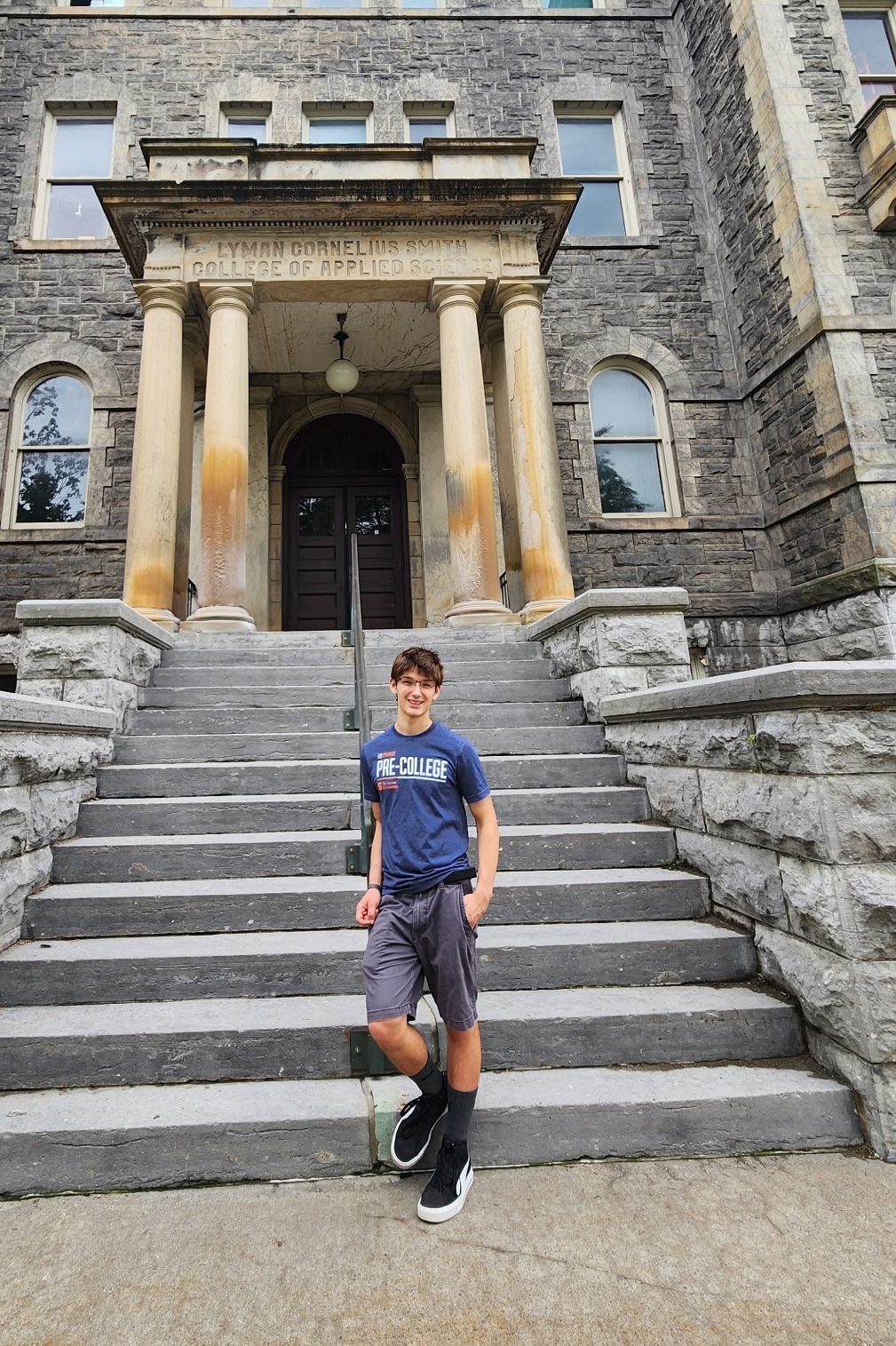
Evan Gohil learned about Summer College during his sophomore year of high school and attended for free through a partnership between the University and the Syracuse City School District. He says the program, where he studied neuroscience, convinced him that Syracuse University was where he belonged.
The program clarified the college experience for Gohil.
“Going through the program, I gained memories and a clearer idea of what to expect,” Gohil says. “In retrospect, the first few weeks of college were very similar to what Pre-College was.”
Learning to manage on his own and being given a level of freedom in the program was eye-opening, he says. Taking the neuroscience course, he also learned that he could pursue a pre-med track in areas beyond just biology.
The entire experience was invaluable for students with no reference for what college will be like, he says.
“This is especially important with first-generation students like myself,” he says.
Talia Klein ’27, Newhouse School of Public Communications
Attended on-campus Summer College in 2022
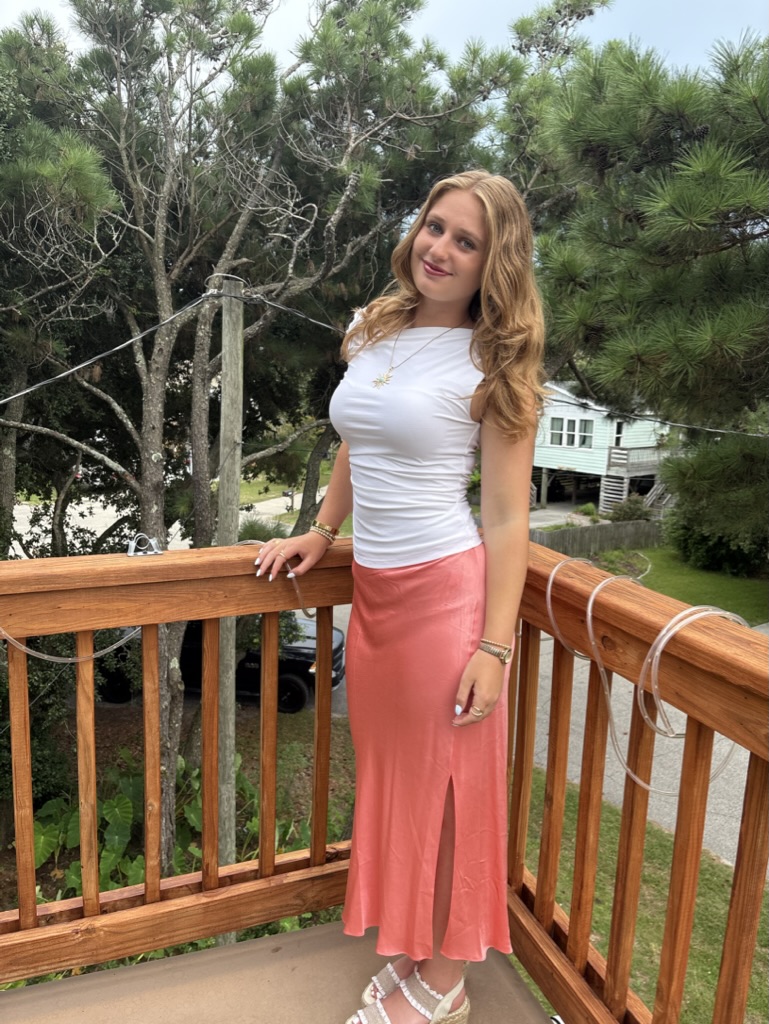
Talia Klein attended the program because she wanted to experience what college life was like before making “such a big decision,” she says.
“Being able to spend time on campus, take a real college course and meet current students made everything feel much more real,” she says. “By the end of the program, I could genuinely picture myself at Syracuse, and it confirmed that it was the place where I wanted to spend the next four years.”
The course gave her a glimpse of the creative, collaborative environment at Newhouse, reinforcing her excitement to pursue media and entertainment.
What also stuck with Klein was how independent she became in a short time, navigating campus, collaborating with classmates and balancing assignments.
“It was the first time college felt less intimidating and more exciting,” she says.
It also showed her how welcoming and supporting the Syracuse community is.
“It made the transition to Syracuse so much easier because I already felt connected to the campus and community,” she says.
Elena Pantoja ’29, Falk College of Sport
Attended online Summer College in 2023
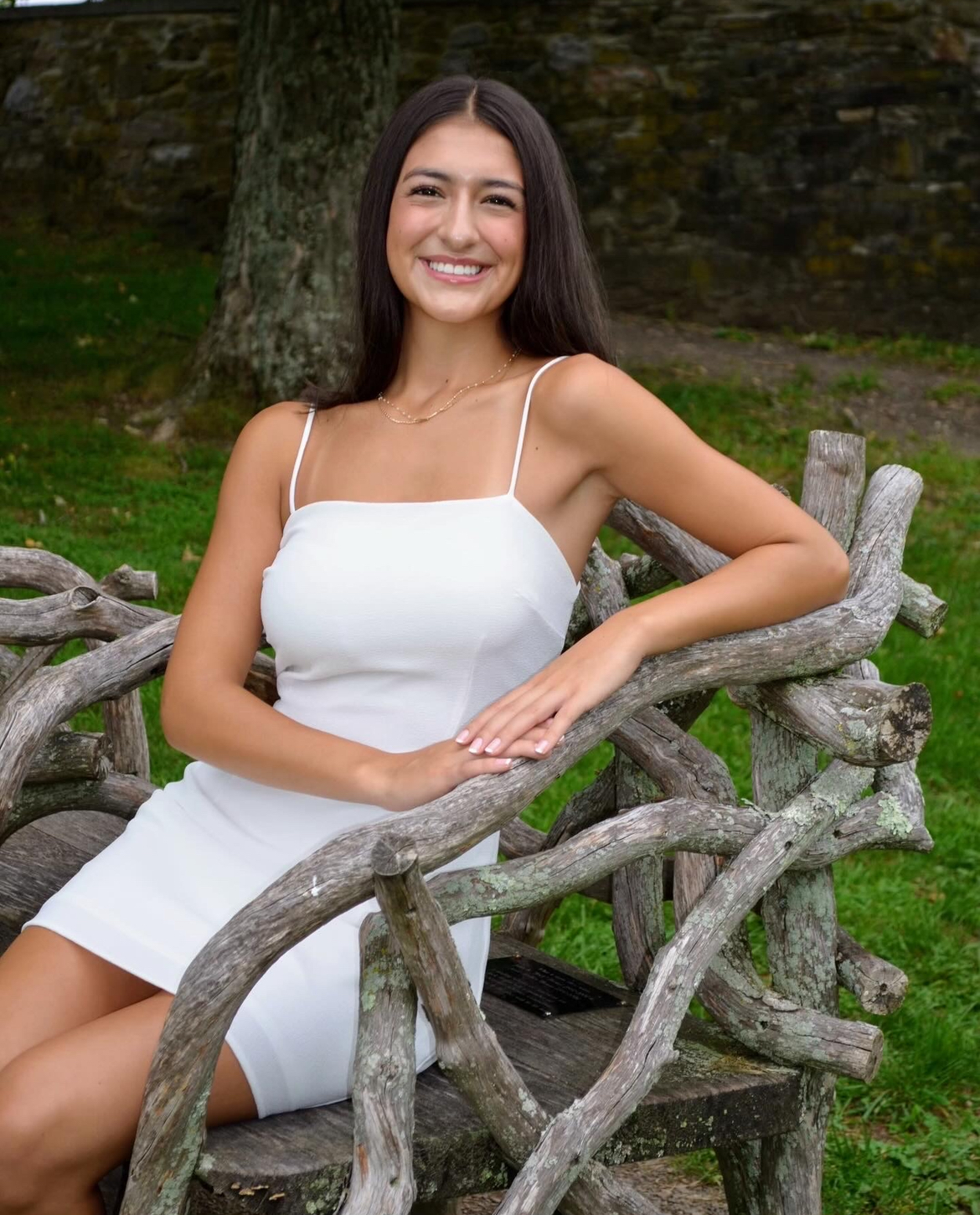
For Elena Pantoja, taking an online nutrition course through Summer College was the biggest factor in her decision to return to Syracuse for her undergraduate degree. Now majoring in nutrition, she’s taken classes again with Jane Burrell, associate teaching professor in the Falk College.
Pantoja says the online experience surprised her with how productive the learning environment was. One moment she still remembers is the course’s final assignment.
“My professor had us go to a farmers market and purchase one item of our choice, research the process the farm took to get that product to the market and cook it,” she says. “I appreciated my professor’s dedication to getting us off the Zoom meeting and into our community.”
Pantoja encourages high schoolers to consider Summer College.
“Even if you can’t take a class for your major, take one that interests you just to get an idea of what your classroom expectations will be in upcoming years,” she says.
High school students and families: the 2027 Summer College application opens in mid-December, but it’s never too early to start planning ahead. Visit https://precollege.syr.edu/ for more information.