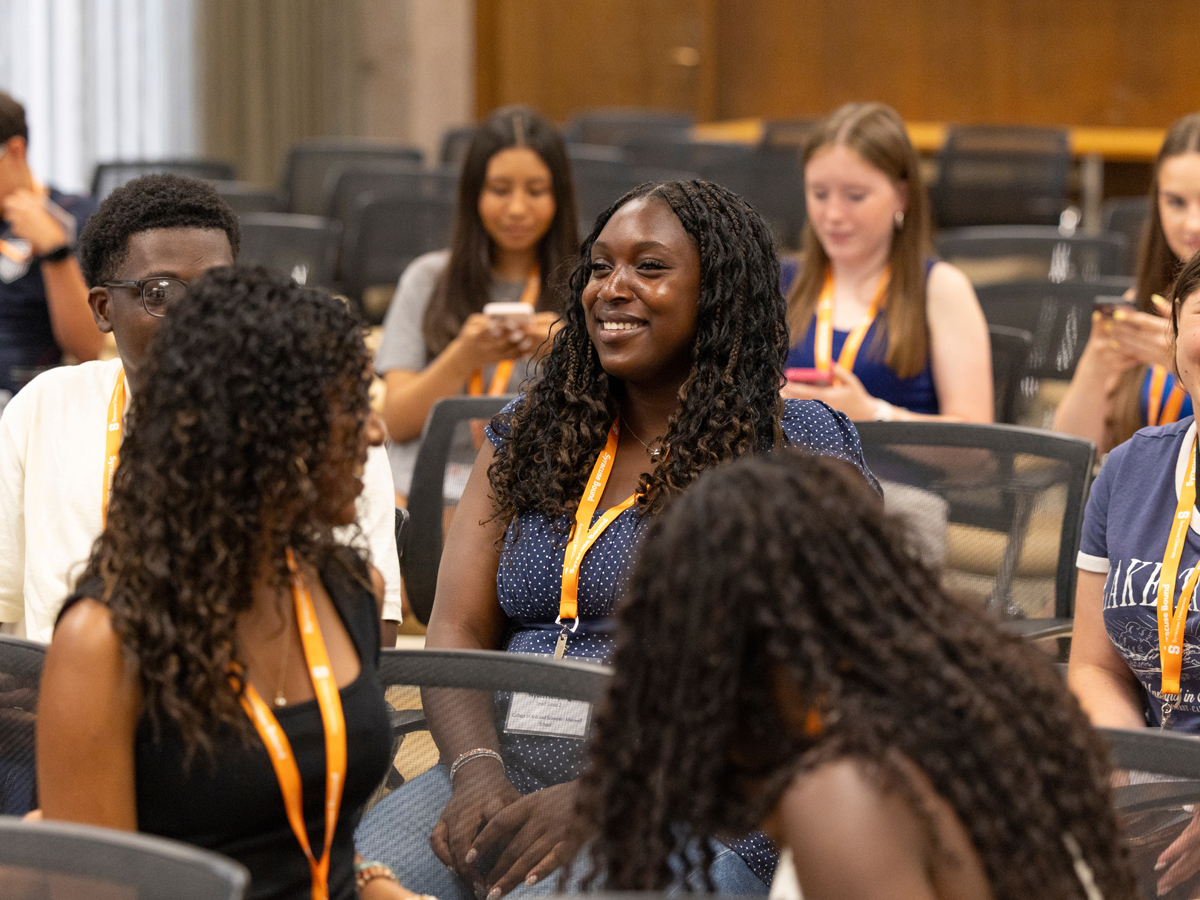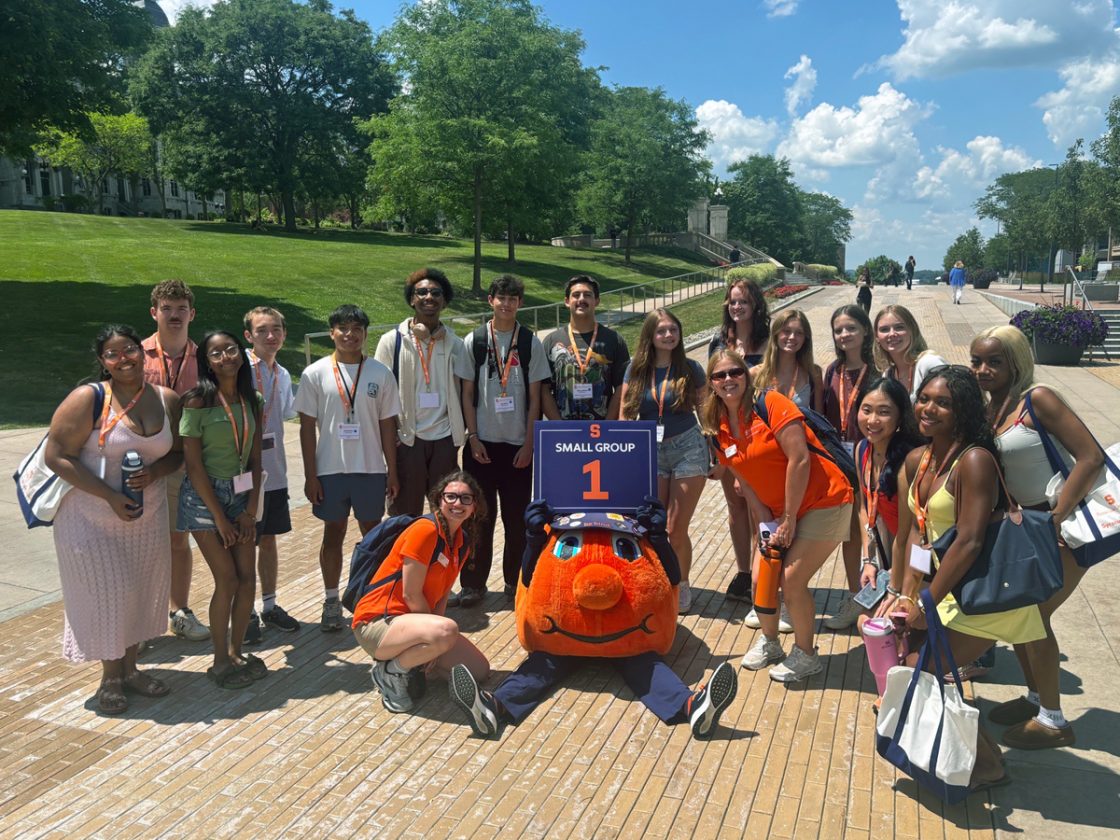
"New students get to see the beauty that Syracuse offers, not only by getting to know the students who make up the incoming class, but through all of the incredible resources and engaging opportunities available to them,” says Johanna Schober, orientation leader.
New Student Orientations Help Incoming Students Feel at Home
Index cards get passed around a circle of strangers. On one side: someone’s hope for the year ahead. On the other: a looming fear. Students take turns reading a stranger’s words aloud and realize everyone in the room is experiencing the same feelings.
It’s one moment in Syracuse University’s New Student Orientation sessions, which New Student Programs launched in the summer of 2024 with smaller groups, more personal conversations and programming built around what incoming students and their families most want to know.

As a result, everyone involved—from new students to their family members—leaves orientation with a stronger sense of community, says orientation leader Johanna Schober, a rising sophomore studying international relations and law, society and policy in the Maxwell School of Citizenship and Public Affairs.
“These new students get to see the beauty that Syracuse offers, not only by getting to know the students who make up the incoming class, but through all of the incredible resources and engaging opportunities available to them,” Schober says. “These sessions help us guide students, so they feel prepared to start their Orange journeys.”
Starting Small to Build Community
At the heart of the New Student Orientations are small groups: intimate settings led by orientation leaders that turn strangers into a connected group. Sessions open with friendly icebreakers before building to the index card exercise, which Schober says is the moment new students realize “everyone is in the same boat.”
“Everyone has the same feelings of excitement, but also nervousness,” she says. “It just really helps make the orientation experience a little more personal.”

When Wes Sullivan, an incoming accounting major in the Martin J. Whitman School of Management, arrived on campus after traveling four hours from his home in Yardley, Pennsylvania, he knew only one person there. By the end of his first orientation day, he went from feeling like a stranger to feeling like he belonged.
“I was a little nervous at first but being in these smaller groups and having that smaller bond is really impactful,” Sullivan says. “Now I know 10 or 20 people, and it feels much more welcoming. We all are starting to find a community on campus.”
The same was true for Samantha DiCrisi, a musical theater student in the College of Visual and Performing Arts from Costa Mesa, California. DiCrisi is the first member of her family to leave home to attend college, and orientation created an unexpected sense of belonging.

“I walked in for breakfast and just sat at a table of people I hadn’t met before,” DiCrisi says. “By the end of it, I felt really connected to them. That’s the spirit of what they were talking about. Being Orange is being welcoming and leading with an open mind.”
The two-day programs are led by the Student Experience Division, featuring small group meetings during the day and social activities in the evening. Students attended open houses and participated in activities in Hendricks Chapel, the Barnes Center at The Arch, Syracuse Abroad, the Intercultural Collective and Student Engagement. They also sat in on sessions hosted by the Center for Student Excellence and Campus Safety and Community, as well as the Barnes Center at The Arch, where staff discussed navigating the first year and the transition to Syracuse University, among others.
Students Aren’t the Only Ones Adjusting
Heading off to Syracuse University isn’t just an adjustment for new students. It’s also a time of change for the students’ support system at home.
As part of New Student Orientation, Parent and Family Services planned and implemented a Family and Supporter Orientation for family members and supporters of incoming students. The sessions offered expert resources, guidance on critical conversations families may want to have with their student and insight into the student perspective from Family Support Navigators, a group of trained student leaders.

Eric Nestor, director of apartment and off-campus living in Residential Living, led presentations about living on campus. Drawing on his own experience as a parent sending his oldest daughter to college for the first time, Nestor helped reshape the sessions around practical concerns: safety, mental health, roommate conflicts and the logistics of Welcome Week.
“This is an adjustment for the whole family,” Nestor says. “You’re giving up some sense of control, and your student is gaining independence. We’re here to help your student grow through this journey.”
The feedback has been rewarding.
“We’re receiving a lot of positive feedback and thank-yous from families now,” Nestor says. “We’re giving them exactly what they’re looking for.”
For these new students, the payoff is a renewed sense of confidence heading into the fall.
“The idea of starting college is so thrilling, and I feel ready to throw myself into this experience,” DiCrisi says.
“Once you take that first leap, everything else in college comes so much more naturally,” Schober says. “You’re one step closer to being incredibly independent.”