Professor Emeritus of Physics Peter Saulson Elected to the National Academy of Sciences
Peter Saulson, the Martin A. Pomerantz ’37 Professor Emeritus of Physics in the College of Arts and Sciences (A&S), has been elected to the National Academy of Sciences (NAS), one of the most prestigious honors awarded to a scientist in the United States.
According to the NAS website, election to the Academy recognizes “distinguished and continuing achievements in original research” and is widely regarded as a mark of the highest level of scientific excellence. Its members include many of the world’s most influential scientists, including hundreds of Nobel laureates.
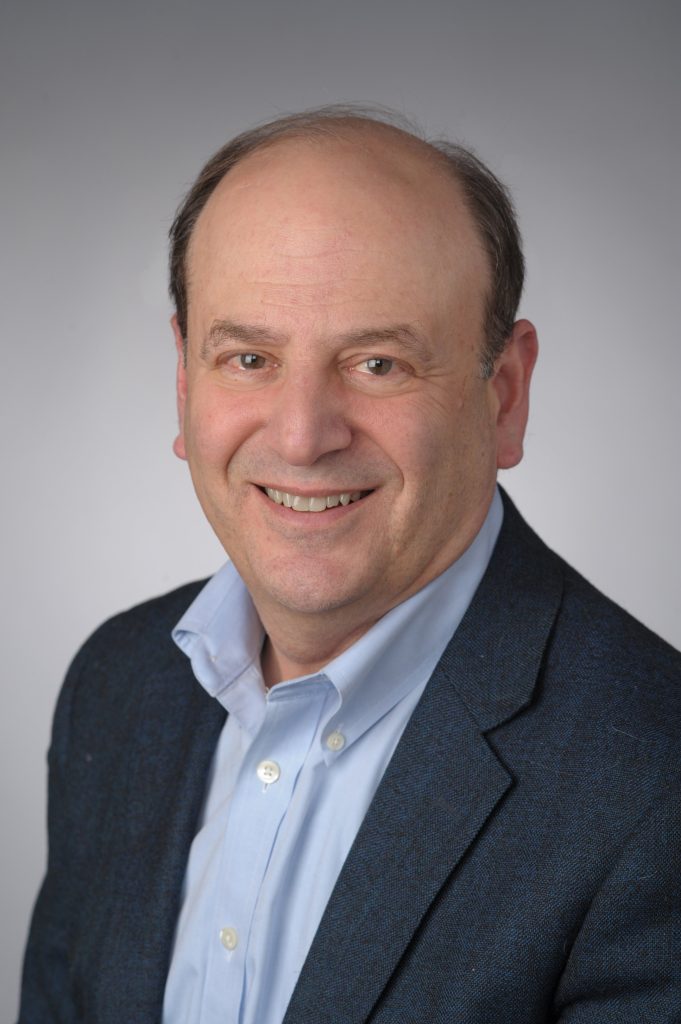
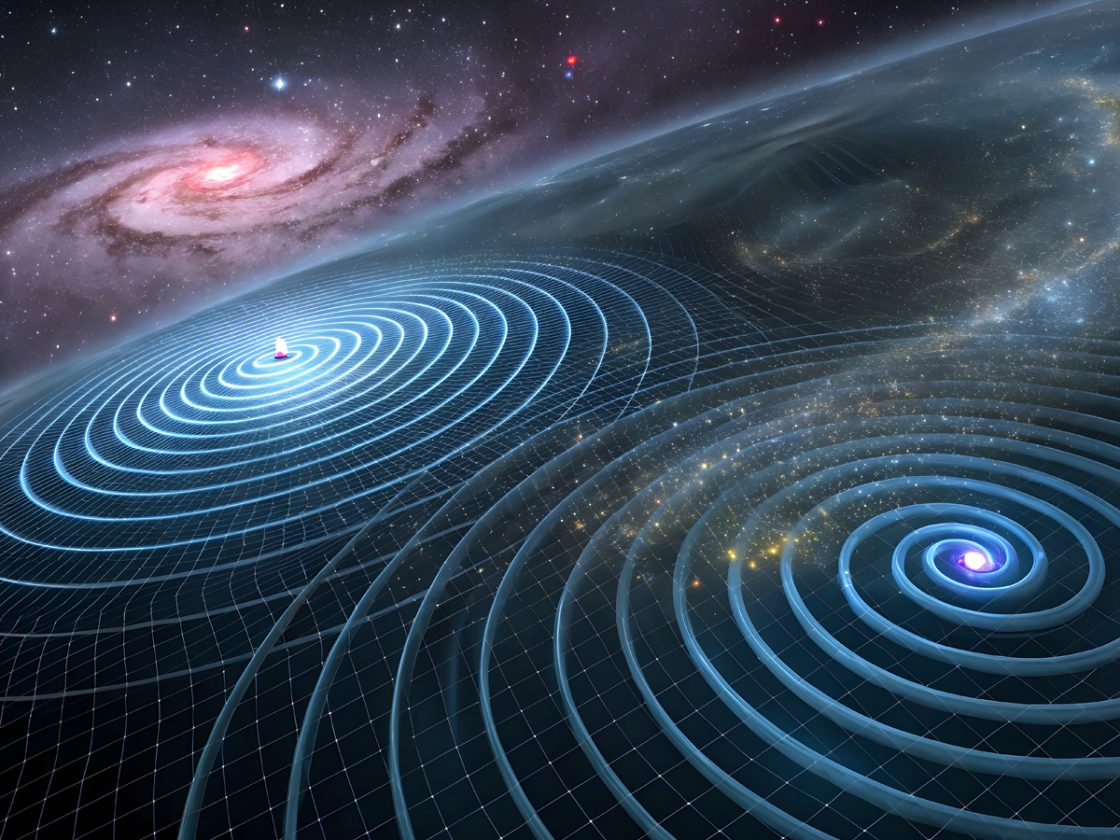
The NAS recognized Saulson for his foundational contributions to the field of gravitational-wave astronomy, including work that led to the first direct detection of gravitational waves at the Laser Interferometer Gravitational-Wave Observatory (LIGO) in 2015.
Saulson’s work is part of a long tradition of gravitational physics at Syracuse that stretches back nearly eight decades to Peter Bergmann, a former research assistant to Albert Einstein. Bergmann joined the Syracuse faculty in 1947 and founded one of the first research groups in general relativity in the United States.
Bergmann, along with his students and colleagues—among them Joshua Goldberg, Ezra Newman and Rainer Sachs—helped revive Einstein’s theory in mainstream physics and laid the theoretical groundwork for gravitational-wave science. Saulson transformed that theoretical legacy into an experimental one, building the group that made Syracuse a central player in proving that gravitational waves are real.
After earning a Ph.D. in physics from Princeton University and spending nearly a decade as a research scientist at MIT—where he worked with LIGO co-founder Rainer Weiss on the earliest interferometer prototypes—Saulson joined the University’s Department of Physics in 1991. There, he established the first LIGO research group at any university outside the LIGO Laboratory at Caltech and MIT.
Saulson’s experimental program advanced the understanding of thermal noise in interferometric detectors, work that proved essential to the design of Advanced LIGO. His 1994 textbook, “Fundamentals of Interferometric Gravitational Wave Detectors,” remains the standard reference in the field, having trained a generation of scientists in the physics of gravitational-wave detection. From 2003 to 2007, he served as the first elected spokesperson of the LIGO Scientific Collaboration, the international partnership of more than 1,000 scientists who carried out the search.
Saulson brought the same dedication to his students as he did to the search for gravitational waves. Over three decades at Syracuse, he taught introductory physics and astronomy courses to hundreds of undergraduates, served as the physics department’s undergraduate program director and honors advisor and co-organized a program that brought astronomy into local elementary school classrooms.
He was named the University’s Scholar-Teacher of the Year in 2003. He mentored generations of graduate students, among them Gabriela González, who served as the LIGO Scientific Collaboration spokesperson when the first detection was announced in February 2016. He also recruited the faculty who continue to build on his work, including physicist Stefan Ballmer, now director of the University’s Center for Gravitational Wave Astronomy and Astrophysics.
“Peter Saulson exemplifies what it means to be a scholar of the highest caliber. His election to the National Academy of Sciences reflects not only the extraordinary impact of his research, but also the way he has elevated our physics department and inspired colleagues and students alike,” says A&S Dean Behzad Mortazavi.
Duncan Brown, vice president for research and the Charles Brightman Endowed Professor of Physics, was recruited to Syracuse by Saulson and credits him with building the foundation for the University’s leadership in the field.
“Peter Saulson created gravitational-wave astronomy at Syracuse. He built the group from scratch, brought Syracuse into LIGO and trained the scientists who would go on to lead the collaboration through its greatest discovery,” Brown says. He adds that what set Saulson apart was his seamless integration of research and teaching, mentoring Ph.D. students who became leaders in the field while also introducing undergraduates to astronomy.
“Every gravitational-wave discovery that Syracuse has contributed to traces back to Peter’s vision, and his election to the National Academy of Sciences is a recognition the scientific community has long known was deserved,” Brown says.