Maxwell’s Katherine McDonald Honored by National Disability Organization
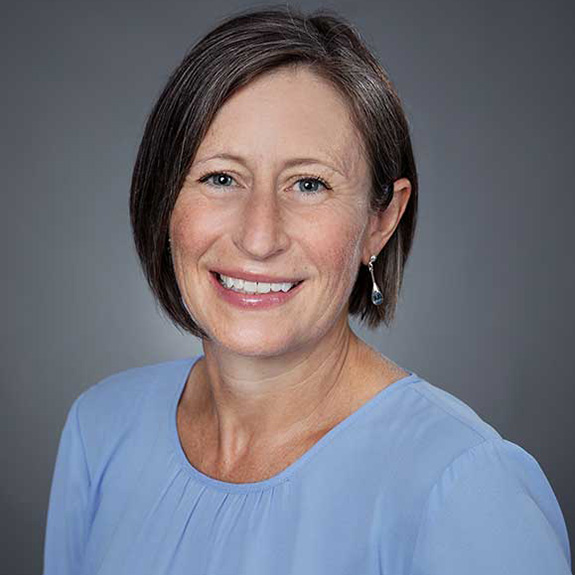
Katherine McDonald, professor of public health in the Maxwell School of Citizenship and Public Affairs and associate vice president for research for Syracuse University, has been honored with a Sesqui Award for Research from the American Association on Intellectual and Developmental Disabilities (AAIDD)—recognition of nearly two decades of scholarship advocating for the inclusion of people with disabilities in research.
The AAIDD is the nation’s oldest and largest organization of professionals in the field and promotes evidence-based policies, research and universal human rights for people with intellectual and developmental disabilities. The Sesqui Award for Research recognizes members for outstanding contributions and will be presented at the organization’s 150th annual meeting in June in Chicago.
McDonald was nominated by peers and selected by the AAIDD board of directors for her work. Her professional journey is deeply personal: as a young person, she lived with people with intellectual disability in L’Arche communities in Syracuse, and outside of Geneva, Switzerland. She developed lifelong relationships and came to understand the pressing need to advance disability rights and belonging. Using socioecological theory and community-engaged research, her work focuses on the ethical, legal and social implications of research involving adults with developmental disabilities, as well as strategies to promote the responsible inclusion of people with disabilities in scientific study.
With collaborator Ariel Schwartz from the University of New Hampshire, McDonald created Research Ethics for All, an accessible research ethics education program designed specifically for community research partners with developmental disabilities. They also created the Equipped to Engage Toolkit which provides resources to support the engagement of people with intellectual disabilities as research partners.
McDonald’s research has been supported by grant funding from the National Institutes of Health; the U.S. Department of Education; the National Institute on Disability, Independent Living, and Rehabilitation Research; and the Patient-Centered Outcomes Research Institute, among others. She is published in leading journals including the Disability and Health Journal, American Journal of Bioethics and the American Journal on Intellectual and Developmental Disabilities.
McDonald is a faculty affiliate at the Aging Studies Institute, the Burton Blatt Institute, the Consortium for Culture and Medicine and in the disability studies program, and is a research affiliate at the Lerner Center for Public Health Promotion and Population Health. As associate vice president for research, she supports faculty scholarship, strengthens mentoring and identifies strategic opportunities to advance the University’s research enterprise.
“Katie’s research sits at the intersection of science and social justice, and this recognition from AAIDD reflects the significance of the real public health impact she has had over nearly two decades,” says David Larsen, professor and chair of public health. “Her commitment to ensuring that people with disabilities are not just subjects of research but active participants has set a global standard.”
This marks McDonald’s third major honor from AAIDD; she received the Early Career Award in 2012 and the Research Award in 2023. She is also a fellow of the AAIDD and serves on the editorial board of Autism in Adulthood. Her work has also been recognized with a Chancellor’s Citation for Faculty Excellence and Scholarly Distinction from Syracuse University in 2024.
—Story by Mikayla Melo