Engineer Explains Why Ice Storms Are So Devastating to Power Grids
As a massive winter storm continues to pummel the eastern United States with dangerous ice and freezing rain, more than a million customers across multiple states remain without power. Tennessee, Mississippi, Louisiana and other Southern states have been particularly hard hit, with some officials warning that outages could persist for days or longer.
Sara Eftekharnejad, associate professor of electrical engineering and computer science in Syracuse University’s College of Engineering and Computer Science, studies power system stability, reliability and the integration of renewable energy into electrical grids. She explains what makes ice storms so destructive to electrical infrastructure and what lessons this storm offers for building more resilient power systems.
She answers several questions below, and her responses can be quoted directly. She is also available for interviews.
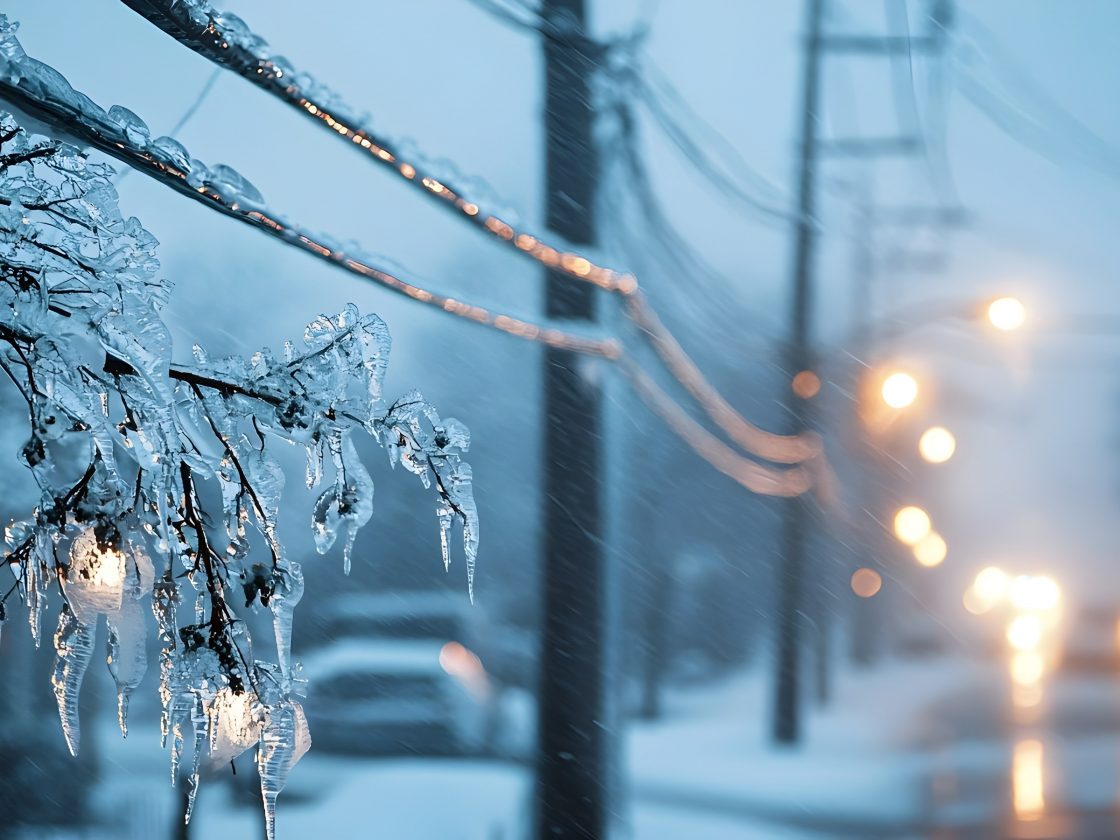
Multiple factors contribute to the more widespread outages we see during ice and winter storms. Ice storms, in particular, can cause extensive power line failures because of the heavy weight of ice and snow accumulating on lines and on nearby trees. When those trees or branches fail, they often bring down multiple lines at once, leading to outages that are not localized but spread across large portions of the system.
Restoration is also more challenging under these conditions. Crews often have to rely on customer reports to identify outages, and severe weather can make it difficult or unsafe to reach affected locations and complete repairs.
At the same time, colder temperatures drive higher electricity demand, which puts additional strain on the system. Increased heating loads can push power lines and generation resources closer to their limits, making it more difficult to reliably meet customer demand while crews are working to restore service.
It really depends on the nature of the problem: whether crews are dealing with downed power lines, equipment failures, limitations in available generation, or the overall scale and geographic spread of the outages.
Those states don’t necessarily design their grid infrastructure to withstand ice storms. Instead, their systems are engineered to handle more common regional threats, such as hurricanes or extreme heat. As a result, factors like vegetation management challenges, a greater reliance on overhead power lines and less routine experience responding to ice-related outages can all contribute to increased vulnerability during winter storms.
First, ensuring that critical transmission and generation facilities are designed to be resilient to a wider range of extreme events can help protect essential equipment from failure. Another key factor is enhancing operational tools with more advanced predictive models for outages and component failures. By anticipating where and how outages may occur as events unfold, grid operators are better equipped to make timely, informed decisions and respond more effectively in near real time.
To get more information or to request a time to connect with Professor Eftekharnejad, please contact Daryl Lovell, dalovell@syr.edu.
Faculty Expert