India and the EU Sign the Mother of All Trade Deals
Maxwell School professor explains how this historic agreement reflects broader changes in international trade.
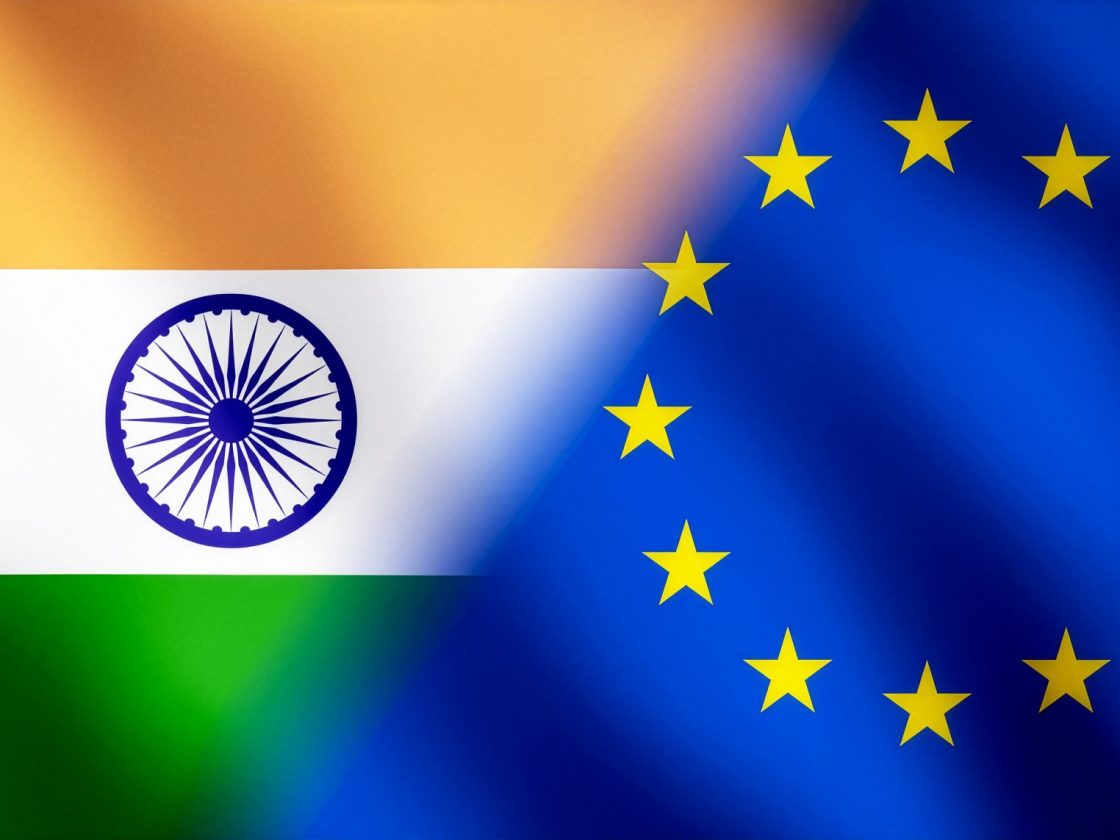
India and the European Union (EU) signed a free trade deal, the largest such deal ever closed by either side. The agreement will strengthen economic and political ties between the 27-nation bloc and the world’s fourth-largest economy.
Devashish Mitra, economist and the Gerald B. and Daphna Cramer Professor of Global Affairs in the Maxwell School of Citizenship and Public Affairs, is available to speak to reporters about the deal and its ramifications. He offered these comments about the deal and how it is related to the U.S. tariffs.
- “After the Liberation Day tariff of 25% on U.S. imports of Indian goods, the U.S. further added another 25% tariff as penalty on India for buying Russian oil. Recently, President Trump has threatened India that he might raise that penalty much further. While these threats were aimed at arriving at a U.S.-India trade deal, the talks are stalled in that, as of today, they have been unable to arrive at any kind of agreement,” says Mitra.
- “The U.S. has recently threatened Europe with another 10% tariff for not supporting President Trump on his desire to acquire Greenland after President Trump agreed on a deal with the EU last year. The U.S. has also threatened South Korea recently after a deal with them in which South Korea had agreed to all U.S. demands. Unsurprisingly, countries are viewing the U.S. as an extremely unreliable partner. It seems to them that no deal is a real deal with the U.S., which is not at all hesitant in reneging on any deal it signs on to. This is pushing other countries into trade agreements with each other, without involving the U.S. It has moved India to have deals with other nations (or groups of nations), such as the United Kingdom, New Zealand and just yesterday with the EU. India is working with a few more countries on trade deals,” says Mitra.
- “The combined population of India and the EU is over 2 billion (a fourth of the world’s population). In terms of economic size (GDP), these together represent a quarter of the world economy and a third of world trade. Various sectors in the EU and India are going to benefit from their trade deal. In the EU, the biggest beneficiaries are the auto manufacturers as Indian tariffs on European cars will go down from 110% to 10%. European wine manufacturers are also going to gain from India’s tariff cuts on European wines from 150% to 20%. India’s tariffs on European chemicals and industrial machinery will also be removed. Europe will get privileged access to India’s financial sector. These are huge gains for Europe due to the sheer size of the Indian market. These are gains that the U.S. could have had but are being diverted to the EU (a result of high tariffs imposed by the U.S. on India). In fact, these represent losses to the U.S.,” said Mitra.
- “And, India will be able to sell its textiles and apparel, gems and jewelry and maritime products (seafood) duty free in the EU. A lot of mobility restrictions on Indian professionals, including those in IT will be removed and there is a guarantee of a nine-month work visa upon graduating for Indian students in the EU. This will be a big boost to India’s services exports that have seriously been hurt by America’s recent immigration restrictions. Clearly, there are lots of gains on both sides (India and the EU), some of which are likely to come from the diversion of U.S.-India trade in the direction of EU-India,” says Mitra.
For interviews, please contact Ellen James Mbuqe, executive director of media relations, at ejmbuqe@syr.edu.
Media Contact
Ellen James Mbuqe
Executive Director of Media Relations