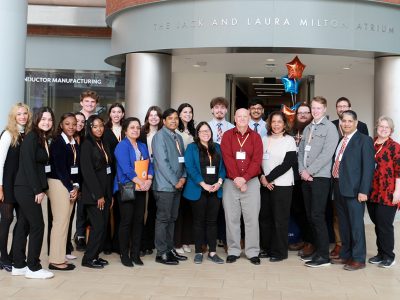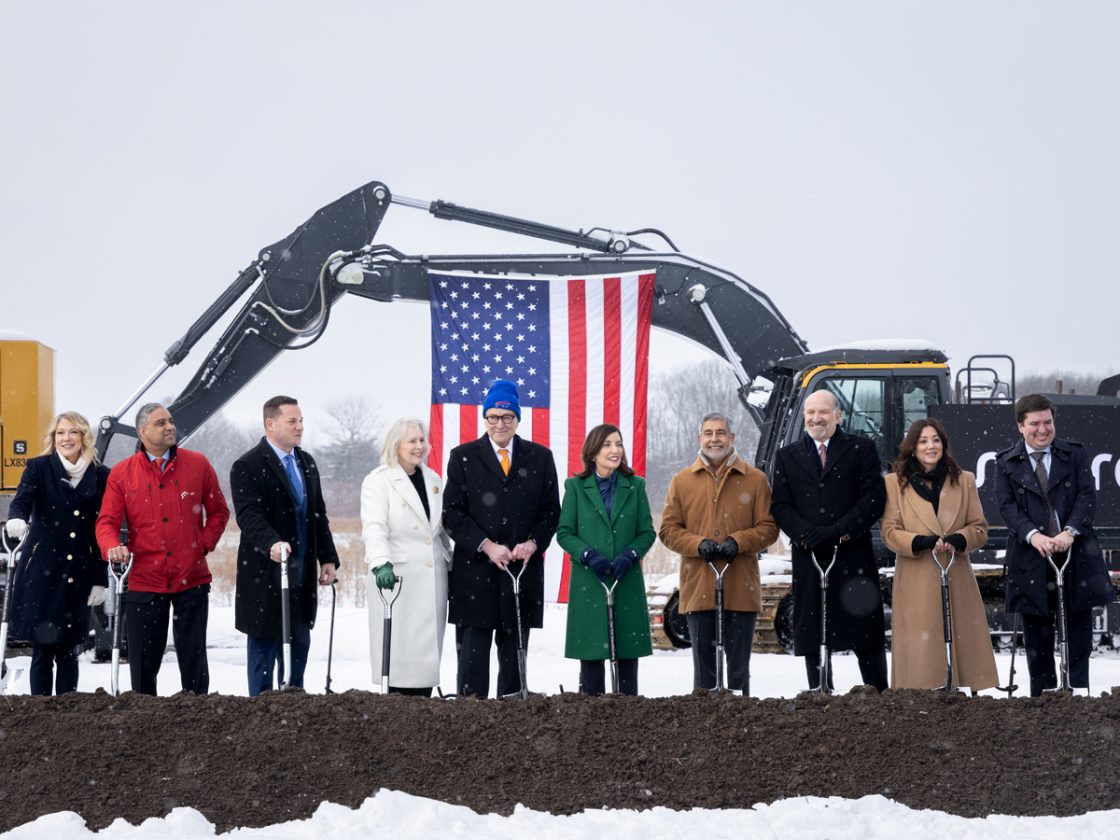
Micron officials pose with elected officials during a groundbreaking ceremony in Clay, New York. (Photo by Marilyn Hesler)
University’s Commitment to Creating Jobs Lauded During Micron Groundbreaking
On a day when Micron Technology broke ground on its $100 billion memory chip facility in Clay, New York, the largest private investment in New York state history, Syracuse University was celebrated for its partnership with Micron in helping to prepare its future workforce, including a focus on training veterans for those roles.
Chancellor Kent Syverud told a crowd Friday afternoon inside the National Veterans Resource Center at the Daniel and Gayle D’Aniello Building (NVRC) that nearly 500 veterans and transitioning service members are currently enrolled in essential training through the D’Aniello Institute for Veterans and Military Families’ Semiconductor Hub, creating a veteran workforce pipeline that prepares them “for promising new careers in the chips industry.”
“Here at the NVRC, the focus is exclusively on our nation’s veterans, and veterans have been among the first to contribute to Micron executing its vision,” Chancellor Syverud said.

Additionally, in 2024, Syracuse University and Onondaga County announced a combined $20 million investment to launch the Syracuse University Center for Advanced Semiconductor Manufacturing (CASM), which will train workers across all education levels for careers in the semiconductor industry.
More than three years after the initial announcement that Micron would construct four factories or fabs in the Town of Clay, the semiconductor company celebrated this historic first step on its biggest expansion ever in the U.S. with a groundbreaking, followed by an event at the NVRC.
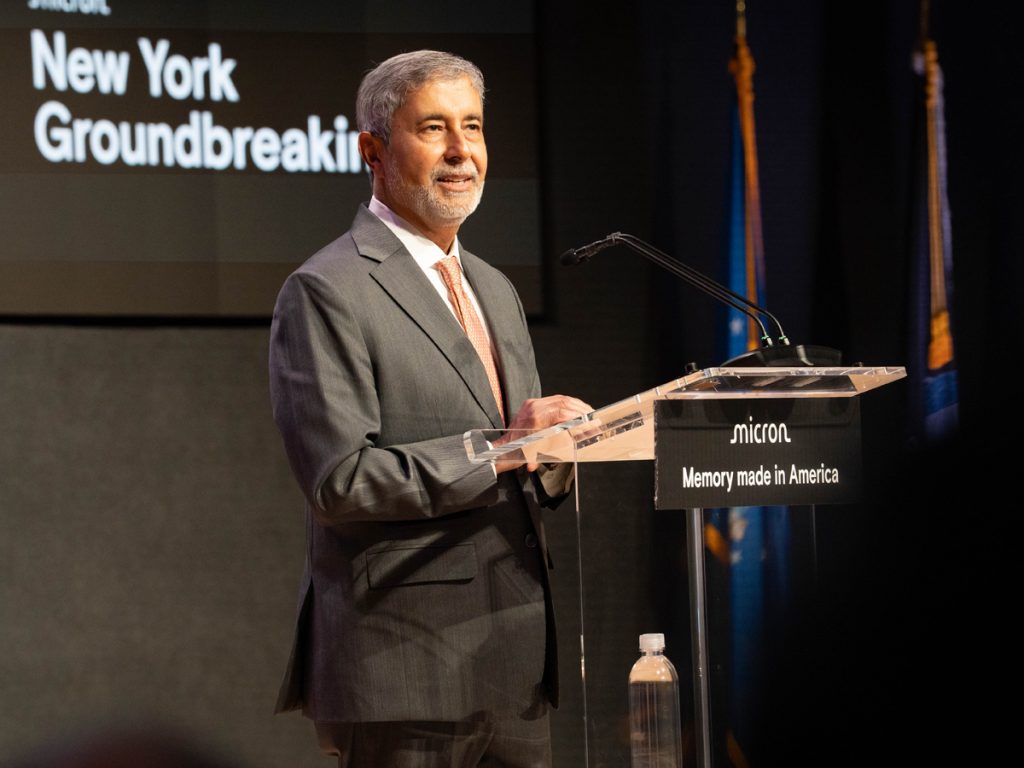
Micron CEO Sanjay Mehrotra thanked Chancellor Syverud for the University’s support of this investment “from the very beginning,” for the Chancellor’s “leadership at this great University,” and for Syracuse’s willingness to create “pathways to jobs for veterans.”
Onondaga County Executive Ryan McMahon credited Chancellor Syverud’s “steadfast leadership” in collaborating on “a partnership [with Micron and Syracuse University] that will go down in the history books” thanks to “Syracuse’s commitment to the workforce infrastructure for a critical segment of the population that is going to help drive this industry: our veterans.”
“This once-in-a-generation investment in this community was met with excitement and optimism, and people from every corner of this region have come together to move this project forward,” Chancellor Syverud said. “Syracuse University is proud to be part of this work. This is a great day to be Orange.”
“Syracuse University is recognizing our veterans and what they can contribute to the workforce. Thank you for your devotion to our veterans,” said U.S. Representative Claudia Tenney, whose son currently is a major in the U.S. Marine Corps.
Micron says it will start producing chips at its new manufacturing site in four years, and that it plans to build up to four chipmaking factories in Clay to manufacture billions of tiny computer chips that are needed for everything from cell phones and cars to artificial intelligence and household appliances.
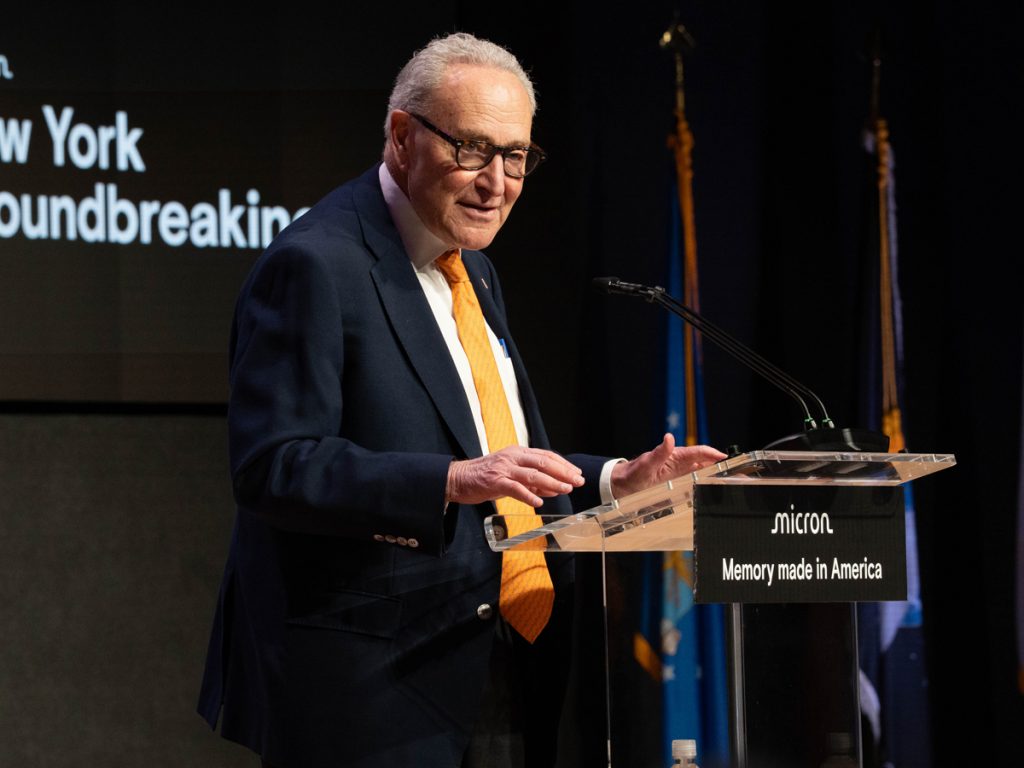
“Today is Syracuse’s day, and I am orange from my head to my toes,” said U.S. Senator Charles E. Schumer, who proudly showcased his orange tie and bright orange socks. “Micron is here and it is here to stay. When I wrote the Chips and Science Act, I had a vision to transform Upstate New York into the semiconductor manufacturing center of the country. We are achieving that dream.”
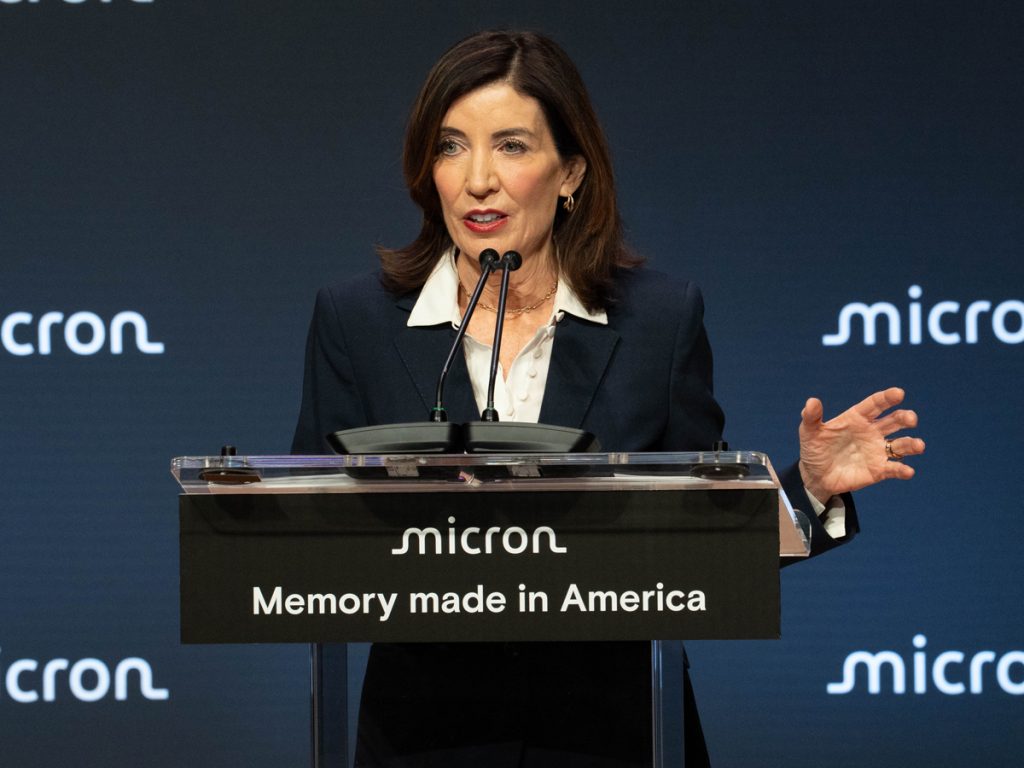
For Gov. Kathy Hochul ’80, who first became involved with government and activism as a political science undergraduate student in the Maxwell School of Citizenship and Public Affairs, commemorating Micron’s groundbreaking was a full-circle moment.
“We’re here talking about a lot of memory on these chips, and I have so many memories just bursting from my heart from my time at Syracuse,” Hochul said. “This University was a place of new beginning for me, and this is now a place for new beginnings for Micron.”
Mehrotra said Micron could have 9,000 employees on site once it is in full production 20 years from now, and that this investment could create an additional 40,000 jobs in categories ranging from semiconductor suppliers and other supporting roles.
Attending the groundbreaking with Chancellor Syverud, Mehrotra, Schumer, Hochul, McMahon and Tenney were U.S. Commerce Secretary Howard Lutnick, U.S. Secretary of Labor Lori Chavez-DeRemer, and U.S. Representatives John Mannion and Paul Tonko.