Advocating for Disability Rights in Higher Education
Mary J. Goodwin-Oquendo L’09 learned what true advocacy looks like long before she ever stepped into a law school classroom. Growing up, she watched her mother tirelessly fight to secure appropriate educational services for her younger brother, who has autism and learning disabilities. Seeing firsthand how complex systems can fail families, she began to ask a powerful question: Who helps students who do not have anyone able to challenge the system for them?
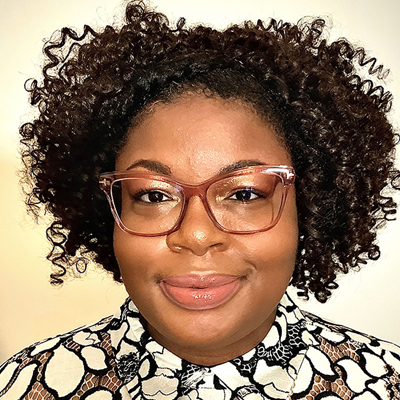
Today, Goodwin-Oquendo is that advocate. As the founder of The Goodwin-Oquendo Law Firm in New York City, she champions disability civil rights, particularly related to education, standardized testing, professional licensing and employment. Getting to this point took grit, talent and determination. She credits the College of Law for providing the foundation, flexibility and mentorship she needed to earn her law degree and pursue the work that drives her—advocating for others through the legal system.
Goodwin-Oquendo will speak about her experiences and the process of advocating for bar exam accommodations later this spring during a webinar hosted by the Disability Law and Policy Program (DLPP).
The presentation was purposefully planned as a virtual event, as it accommodates Goodwin-Oquendo’s disability-related needs, as well as those of attendees with disabilities, and allows both on-campus and online JDinteractive students—in addition to other guests around the country—to participate.
Walking in the Steps of Justice Ruth Bader Ginsburg
Goodwin-Oquendo’s desire to be a lawyer started early. She studied at the James Madison High School Law Institute in Brooklyn, New York—the same school the late U.S. Supreme Court Justice Ruth Bader Ginsburg attended.
The four-year program helps students understand the legal system through law classes, moot court and mock trials. She came to see attorneys as “helpers,” and realized the law could be her pathway to advocate for those who needed a voice.
Facing Her Challenges and Finding a Mentor
While pursuing her undergraduate degree at St. Joseph’s University in New York, Goodwin-Oquendo was diagnosed with fibromyalgia and learned first-hand how difficult it was to navigate higher education with “an invisible, poorly understood disability.”
However, she learned how to self-accommodate her disabilities, graduated as valedictorian and set her sights on law school. She ultimately chose the College of Law because of its various clinics, particularly the Family Law Clinic, because she knew the challenges from clients who felt vulnerable or unheard would make her a more respectful and transparent lawyer.
Her first year wasn’t easy, as Goodwin-Oquendo navigated the demands as a first-year law student while managing a physical condition that fluctuated day to day. This was compounded by her lack of health insurance (prior to the Affordable Care Act), which limited her ability to receive the care she needed.
“I went from graduating first in my class in college to struggling in my first semester of law school because I didn’t have the physical stamina to keep up the pace,” she says. “Some of the strategies that had worked in high school and college just didn’t work anymore because the expectations of law school were much higher.”
Fortunately, she enrolled in a class led by Professor of Law Arlene Kanter, who took emeritus status in 2024. Kanter is an acclaimed expert in international and comparative disability law and helped Goodwin-Oquendo understand the accommodations she was entitled to. (Kanter founded the DLPP at Syracuse Law in 2005, one of the nation’s most extensive disability law programs in the U.S.)
She is forever grateful to Kanter—who remains a role model—for helping her find ways to manage her disability and continue to succeed. For the past five years, Goodwin-Oquendo has been an adjunct professor at Fordham University School of Law, in part, she says, “to be for my students what Professor Kanter was for me.”
Professor Kanter had many resources, including this ‘holy book’ of disability law firms in the New York area, which were few and far between. She encouraged me during my 2L year to reach out to Jo Anne Simon, a disability civil rights attorney in Brooklyn, who later became a state assembly member, to learn more about working in this part of the legal field.
They connected, and soon Simon offered Goodwin-Oquendo a summer job at the firm. In 2008, the Americans with Disabilities Amendments Act was passed, reaffirming Congress’s commitment to disability rights. That law shaped a lot of the work Goodwin-Oquendo did at the firm.
“It was not light work,” she says, “but the job training I received was nothing short of phenomenal—so much so that I joined her firm after law school and stayed there for the next 14 years. Jo Anne remains a dear friend and mentor, and she has done so much to advance the rights of individuals with disabilities.”
Establishing Her Own Firm for Educational Advocacy
In 2024, she launched the Goodwin-Oquendo Law Firm in New York City, dedicated to representing individuals with cognitive, physical and psychiatric disabilities who face discrimination or need accommodations in education for admissions tests, professional licensing exams, state bar exams and medical boards.
“People come to me because they clearly need certain accommodations to fully access and complete an exam, for example, and they are being denied this for the highest stakes exam of their lives,” she says. “Others come to me because they’ve received a diagnosis later in life or have been living with a disability that wasn’t as challenging for them until they reached college, law school or medical school, and now they need someone to help them understand their options and advocate for their rights.”