New CW Network Series Features Newhouse Faculty and Alum
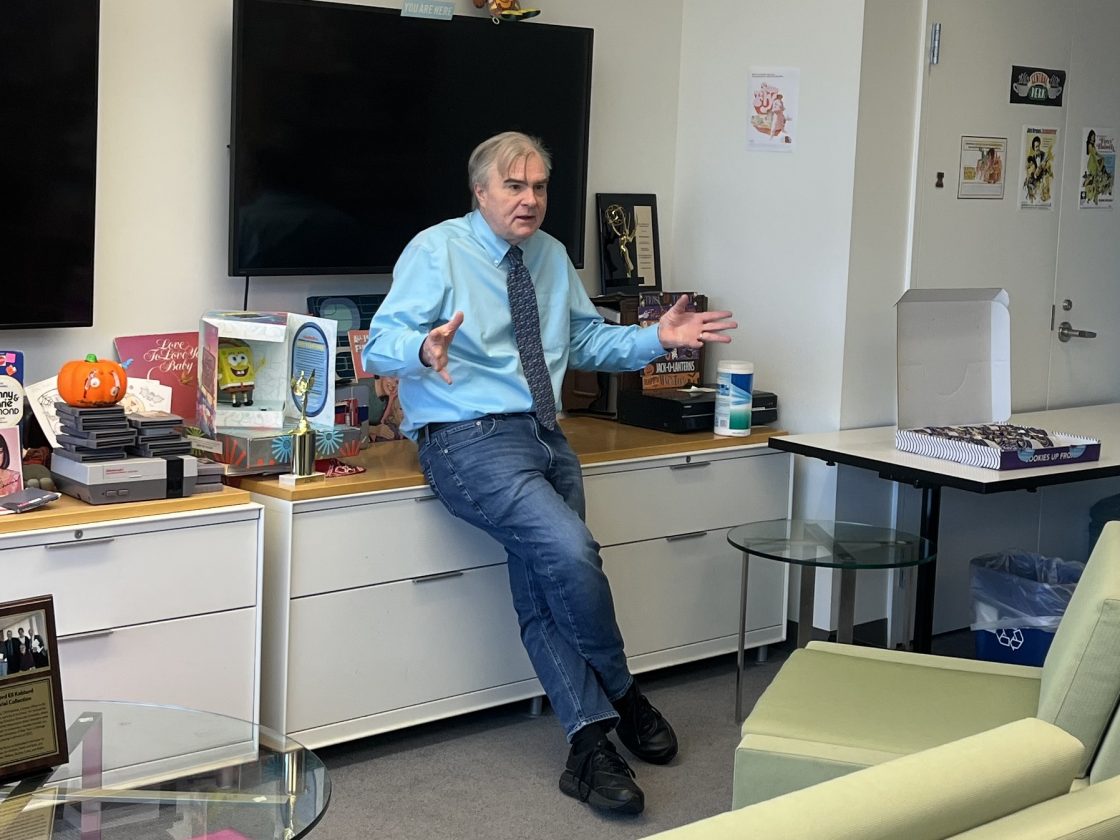
The CW Network’s “TV We Love,” a new documentary series exploring iconic American television shows, features Trustee Professor of Television and Popular Culture Robert Thompson, in what marks his first appearance as a regular guest on a weekly prime-time entertainment network series.
The eight-episode series recently concluded on The CW. “TV We Love” examines such programs as “I Love Lucy,” “The Brady Bunch,” “The Love Boat,” “The Honeymooners,” “Dynasty,” “Touched by an Angel” and “Happy Days.” Thompson, who teaches in the S.I. Newhouse School of Public Communications, filmed all eight episodes in a single day at the National Comedy Center’s Lucille Ball Desi Arnaz Museum in Jamestown, New York.
As a nationally recognized authority on popular culture and the author of numerous books on television history, Thompson brings a scholarly tone to the program. During filming, he spent about 45 minutes discussing each show, drawing on decades of research into how television shaped American culture.
“It was fun to be sharing casting credits with people like Newhouse Alum Bob Costas ’74, H’15 and Captain Stubing from ‘The Love Boat,’” Thompson says. “These shows were important to me as a young adult, and being part of their history, even retrospectively, is amusing.”
The prime-time network platform represents new territory for Thompson’s public scholarship. While he has contributed expertise to various television programs, from CNN documentaries to other network specials, this ongoing series offers a different kind of reach and visibility with entertainment audiences.
Thompson observes how documentary storytelling has evolved. Modern productions often feature cast members from the original shows alongside expert analysis, creating programming that’s both nostalgic and informative.
“You get that excitement of seeing what ‘The Brady Bunch’ cast looks like now,” he says, while experts provide historical context. Thompson appreciates the series’ approach to its subject matter. Shows like “The Love Boat” and “Happy Days” were designed as lighthearted entertainment. “It was masterpiece stupidity—it did what it did beautifully,” Thompson says.
His analysis also reveals deeper truths beneath the surface fun: “Shows like ‘Mister Ed,’ the talking horse, and ‘The Flying Nun’ were absurdly ridiculous, but they still hold up. What they were doing was really brilliant.”
Thompson’s contributions help audiences understand why these shows remain significant in American cultural history. View all episodes on the CW website.