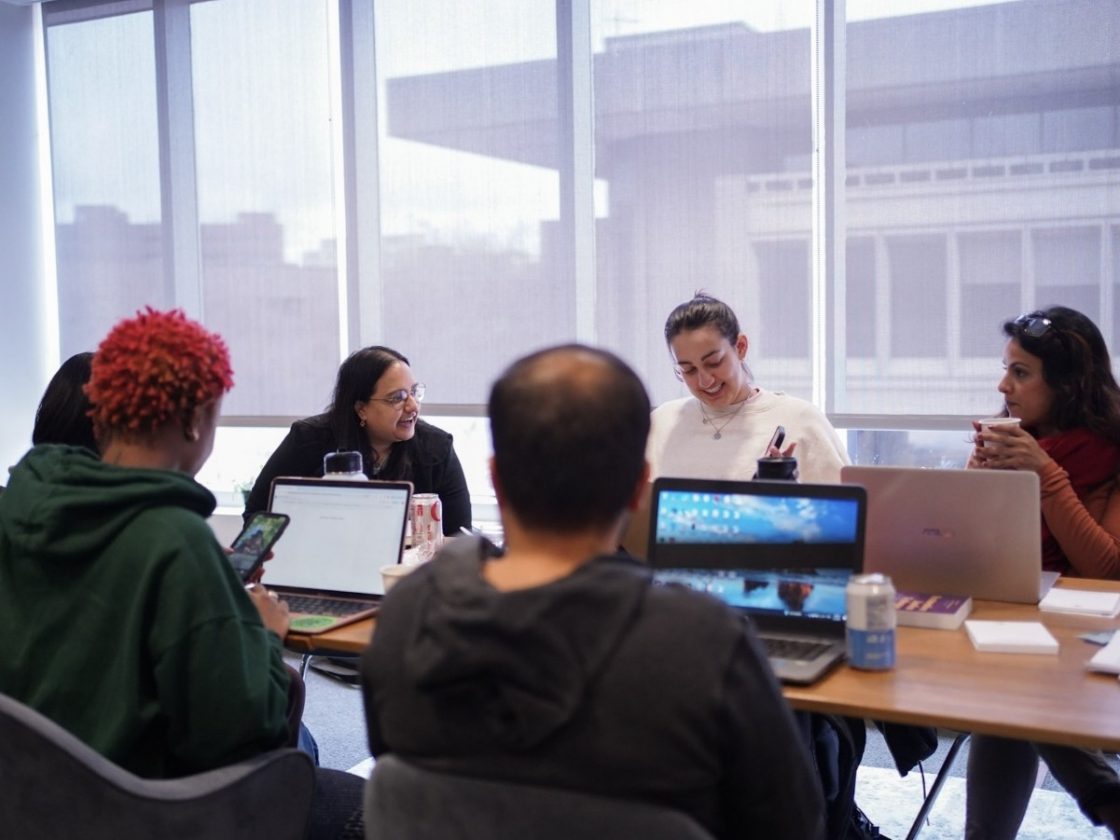
"The Stories We Told Ourselves: The American War on Terror" research team conducted both data and anecdotal reviews of words, headlines and news story framing to arrive at their conclusions. (Photo by Leigh Vo)
Research Reveals How Post-9/11 Media Coverage Shaped a Controversial Conviction
Yassin Aref was an Iraqi Kurdish refugee and respected imam living in Albany, New York, when he was arrested as part of a controversial FBI sting operation in 2004. Though critics argued that the government failed to provide evidence of Aref’s guilt, he was convicted and spent almost 15 years in prison before being deported to Iraq.
What role did media coverage play in Aref’s story? That was the focus of a research project sponsored by the Lender Center for Social Justice and conducted by 2023-25 Lender Faculty Fellow Nausheen Husain and five Lender Student Fellows.
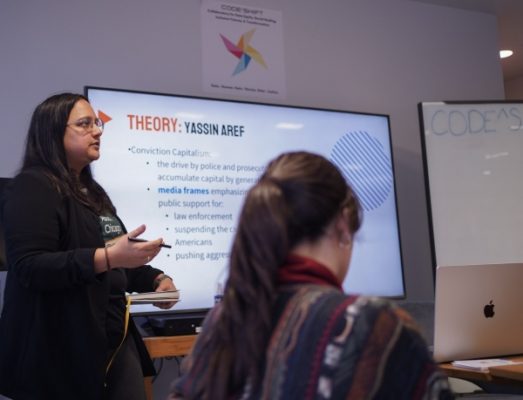
Their findings, which will be presented at a symposium, “The Stories We Told Ourselves: The American War On Terror,” on Nov. 7 and Nov. 8, showed how local and regional news coverage shaped public understanding in ways that supported prosecution narratives and made conviction more likely.
The findings are also being showcased as an exhibition on Nov. 8 and Nov. 9 at ArtRage Gallery. That event is sponsored by the Lender Center with support from the New York Humanities Center, Coalition for Civil Freedoms, Muslim Counterpublics Lab and Syracuse Peace Council.
The research team’s comprehensive examination of news coverage around the case found the following themes and patterns.
Over-Reliance on Official Law Enforcement Sources
- Reporting contained official government narratives and cited law enforcement and government officials more frequently than any other source, an imbalance that presented readers with primarily one perspective on the case.
- Coverage failed to question the legitimacy of the sting operation via independent experts.
- Alleged connections to terrorist organizations in news reports were based on weak or unverified evidence.
- Most media misreported, and then failed to correct, a claim by federal government translators that Aref’s name was found with a Kurdish word meaning “commander” in front of it; the word actually means “brother.”
Uncritical Framing of Sting Operations as a National Security Necessity
- 60% of articles portrayed terrorism stings as essential to national security and helped normalize controversial law enforcement practices.
- Coverage celebrated the sting as a counterterrorism success before the trial had concluded.
- Articles linked the arrest to heightened terror alerts, even when officials said cases were unrelated.
Direct Impact on Public Perception
- An emphasis on potential terrorist connections influenced how the public viewed Aref’s credibility.
- News coverage emphasized Aref’s identity as a Muslim more than any other identity he held.
- Most reporting was incomplete and did not include the voices of his family, community or even his lawyer.
Gauging Fair Reporting
Husain, an assistant professor of magazine, news and digital journalism in the Newhouse School, examines and reports on the ongoing “war on terror,” including the impacts of its news coverage. She believes that newsrooms have the potential to use their resources to assure more accuracy in reporting, and that the public has the ability to assess the reliability of news coverage they see.
“One of the big solutions is to give journalists enough time to properly report a story using objective and investigative methods,” she says. “It’s Journalism 101, but reporters speaking to many and varied sources about a situation is an important step in getting as close to the truth as you can.”
News outlets can also guard against poorly reported stories and assure better accountability to their audiences “by making sure their reporting is driven not by those in power, but by the people who are most affected by the decisions of those in power,” she says.
Journalists can also audit their own systems to make sure their reporting is not harming communities, she says. “When newsroom leadership fails to do this, it falls upon individual journalists to take responsibility. Reporters have always been able to push editors and higher-ups to change coverage or to pursue certain stories.” Husain also cites the resource Fairness and Accuracy in Reporting and its media literacy guide as a tool for news consumers.
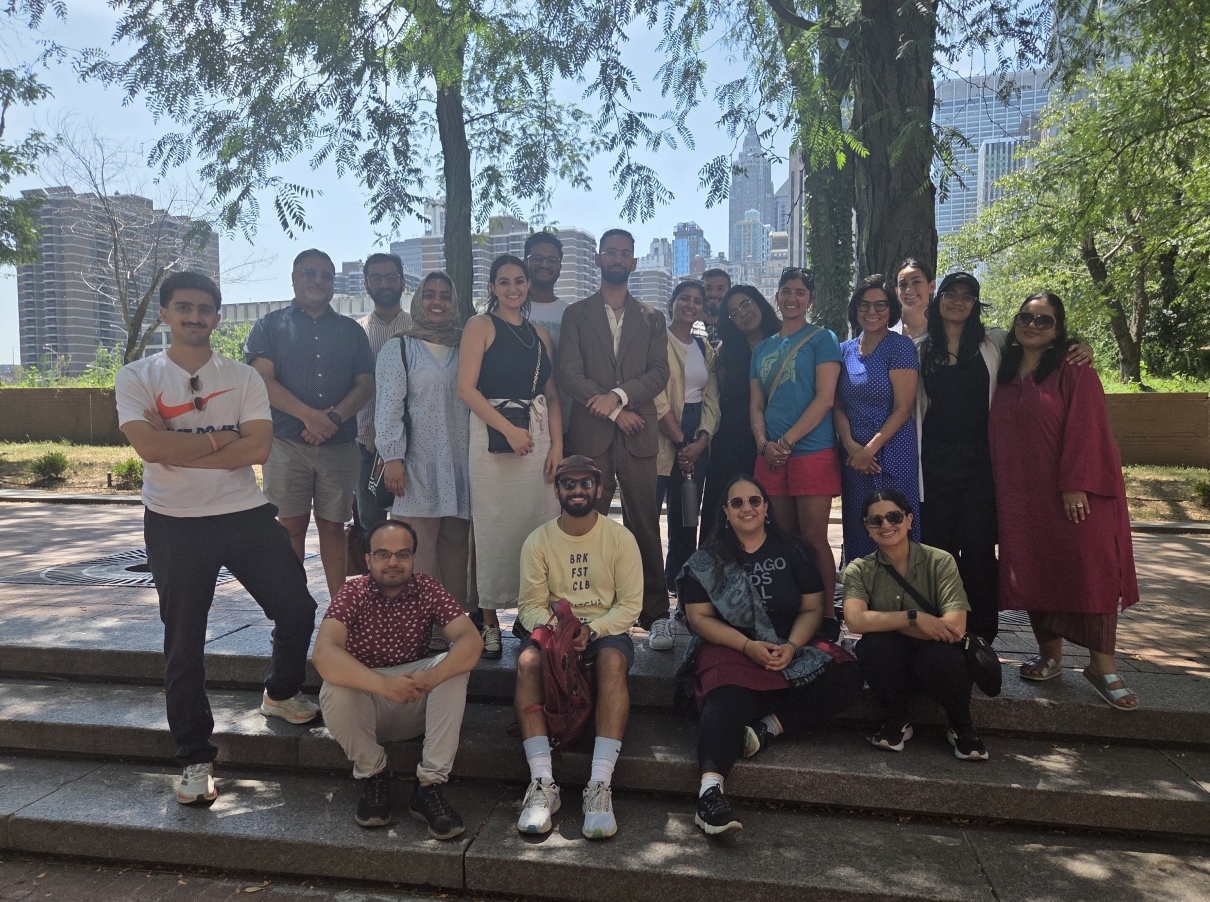
The student fellows for the project are:
- Mohammad Ebad Athar (College of Arts and Sciences/history); and Azadeh Ghanizadeh (College of Visual and Performing Arts/writing studies, rhetoric, and composition); both current doctoral candidates
- Olivia Boyer ’26 (S.I. Newhouse School of Public Communications/magazine, news and digital journalism)
- Mary Hanrahan ’25 (College of Visual and Performing Arts)
- Tia Poquette ’25 (Maxwell School of Citizenship and Public Affairs)