Before Florence, Students Follow Mediterranean History Through Italy
For some students studying abroad in Italy, the fall semester began before they even reached Florence. An 11-day traveling seminar took them from Ravenna to Venice and into Italy’s northeastern borderlands, where mosaics, monuments and centuries of cultural exchange became the starting point for their semester.
From Aug. 22 to Sept. 1, students joining Syracuse Florence for Fall 2026 traveled together as part of Empires of Exchange: The Visual Cultures of Power, Mobility, and Erasure in the Mediterranean, a signature seminar led by art history professor Sean Nelson. The class brought students face-to-face with the works and places they would be studying, using the cities themselves as part of the classroom.
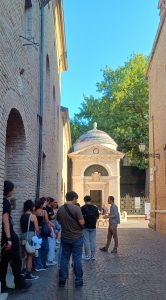
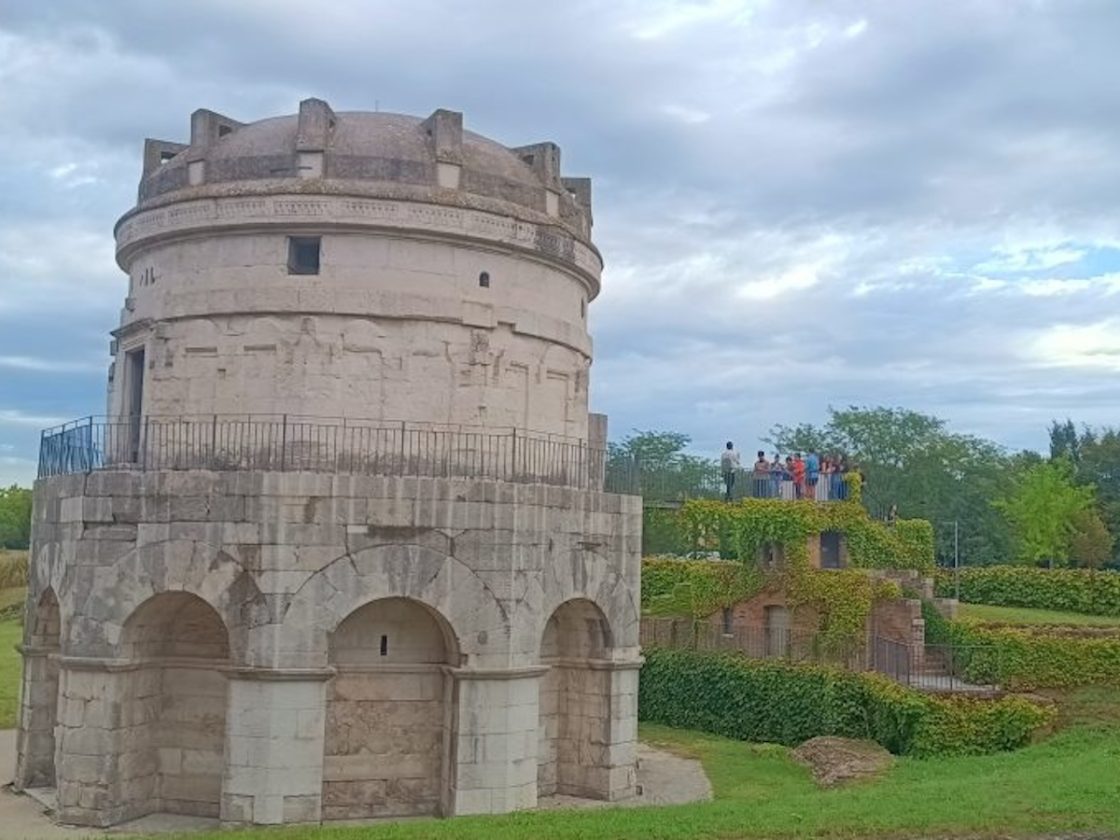
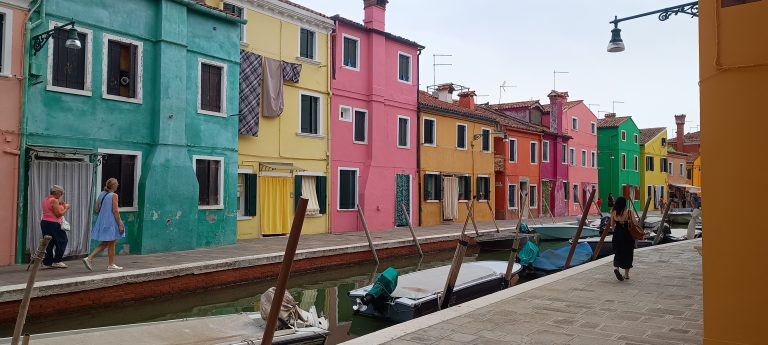
In Ravenna, the group visited the Basilica of San Vitale and its celebrated mosaics. In Venice, students explored the city’s layered history at St. Mark’s Basilica and the Scuola Grande di San Rocco. Visits to Torcello and Aquileia took them farther into the northeastern reaches of the peninsula.
“The students visited several sites, traveling the distance the Romans did through time and space, chasing precious works of mosaic,” said Sara Muellner, who assisted Nelson on the trip.
The itinerary reflected the course’s central questions: What happens when cultures meet, borrow from one another, and reshape what came before? How can the art and architecture that was left behind help us understand those encounters?
Students encountered evidence of the many communities that have shaped the region. Roman, Byzantine, Slavic, Arab, Ottoman, Jewish and Christian influences are part of the visual and cultural history explored throughout the seminar. Students examined how those influences moved across the Mediterranean, how they became part of shared urban spaces and how some histories became less visible over time.
The course focuses on the Middle Ages and the Early Modern period, roughly the years 1000 to 1700, while also asking students to consider what those histories mean today. Questions of migration, cultural identity and European political identity remain connected to the histories of the cities and communities the students encountered.
The timing of the seminar made the experience particularly distinctive. Students began their study abroad experience together on the road, visiting major works and historic sites before settling into the classroom. By the time they arrived at the Syracuse Florence Center, they had already covered hundreds of miles and encountered centuries of history firsthand. Their semester began with a journey that gave them a different way of looking at the country—and at the Mediterranean connections that continue to shape it.